> Jacek Wielemborek <[email protected]> writes:
>
>> George Kadianakis pisze:
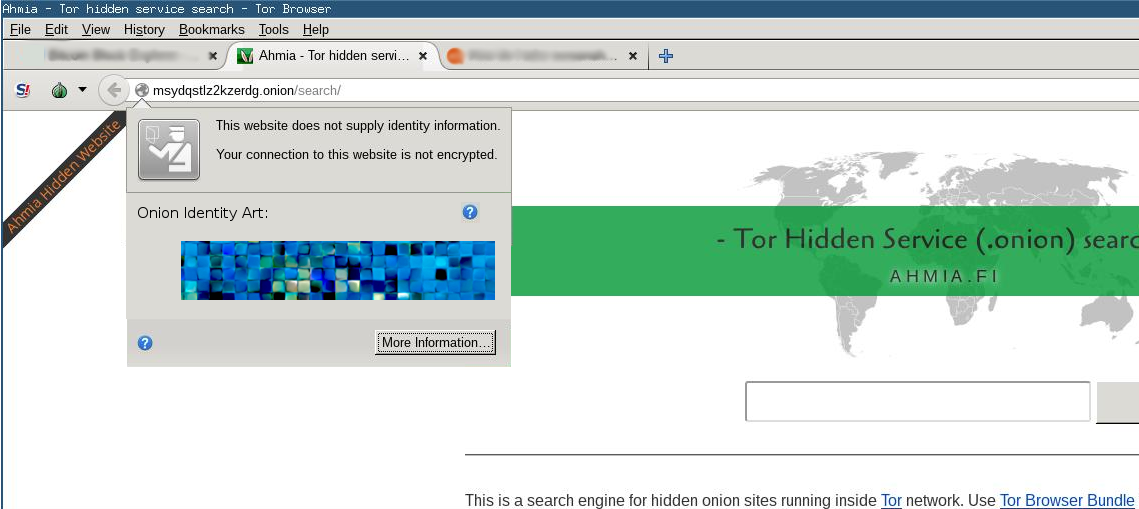
>>> Some real UX research needs to be done here, before we decide something
>>> terrible.
>>
>> Just curious, has anybody seen any cognitive studies on the SSH
>> randomart visualisation? I always found them impossible to remember.
>> Perhaps adding a bit more color could help...
> Hm. Indeed.
>
> I can remember the general shape and edges of my SSH server's key, but not any
> details.
>
> I doubt I would remember the randomart of like 10 onion websites, especially
> if
> I didn't visit them regularly. But maybe I would remember the randomart of my
> webmail better than my SSH server's.
>
The main issue is that there's always going to be a tradeoff between
memorability and security. It's difficult to cram sufficient entropy into a
visualization and expect people to remember it. I agree that coloring schemes
or perhaps faces stand the best chance of memorability, but they are difficult
to deploy. I wonder if a simpler scheme is sufficient.

I suggest using a word-bank to generate a series of words. First, take the
.onion address or the hidden service public identity key (basically the same
thing for 224) and run it through scrypt or similar algorithm. Then, based on
the output, select a series of words from the dictionary. Present the series of
words in George's mockup
(https://people.torproject.org/~asn/tbb_randomart/randomart_mockup.png) in lieu
of the art. It's not a new idea to use a word-list for this purpose: I recall
reading a paper suggesting to use a word-list to encode .onion addresses rather
than base32. The scheme has also been deployed by websites; Gfycat, for
example, shows a series of words in its URL to provide an identifier to user
images. It's also successful in practice: everyone in the /r/globaloffensive
subreddit recognizes the DelayedAutisticGuppy reference before they even open
the gif.

People remember random information best if it's grouped, but usually the
maximum group size is about 4, which is why phone numbers are split with
delimiters. To make it simple, I suggest showing one row of four words. Each
character in a .onion address has 32 possible combinations. If you used a
word-bank of 1,024 words, you cover two characters per word. If your dictionary
consists of 32,768 words, you can capture three at a time. Assuming this latter
case, if four words are used, you can cover 12 characters, or 60 bits. If you
combine that with the number of characters in the address that users
intrinsically check subconsciously, it's extremely difficult for an attacker to
match all of them. The Shallot README indicates that it would take nearly 10
millenia to find a 12-character match, and this of course does not take into
account a round of scrypt before the word-list is used. Everyone remembers
"correct horse battery staple", right?
 signature.asc
Description: OpenPGP digital signature
_______________________________________________
tor-dev mailing list
[email protected]
https://lists.torproject.org/cgi-bin/mailman/listinfo/tor-dev