> On 21 Aug 2015, at 02:56, Jesse V <[email protected]> wrote:
>
>
>> Jacek Wielemborek <[email protected]> writes:
>>
>>> George Kadianakis pisze:
>>>> Some real UX research needs to be done here, before we decide something
>>>> terrible.
>>>
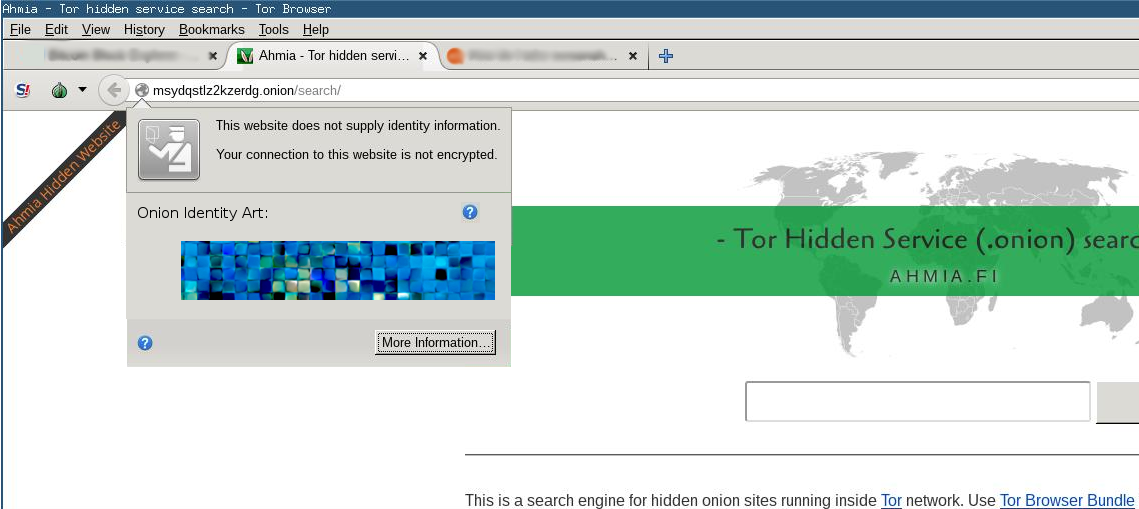
>>> Just curious, has anybody seen any cognitive studies on the SSH
>>> randomart visualisation? I always found them impossible to remember.
>>> Perhaps adding a bit more color could help...
>> Hm. Indeed.
>>
>> I can remember the general shape and edges of my SSH server's key, but not
>> any
>> details.
>>
>> I doubt I would remember the randomart of like 10 onion websites, especially
>> if
>> I didn't visit them regularly. But maybe I would remember the randomart of my
>> webmail better than my SSH server's.
>
> The main issue is that there's always going to be a tradeoff between
> memorability and security. It's difficult to cram sufficient entropy into a
> visualization and expect people to remember it. I agree that coloring schemes
> or perhaps faces stand the best chance of memorability, but they are
> difficult to deploy. I wonder if a simpler scheme is sufficient.
Visual schemes are only helpful to users who have the appropriate level of
visual ability or processing:
* as has already been mentioned, colouring schemes are not as useful to the
colourblind;
* facial recognition schemes are useless to the face-blind (including many
autistic people);
and any visual scheme would need to have a text alternative for screen readers
or other tools used by the visually impaired.

> I suggest using a word-bank to generate a series of words. First, take the
> .onion address or the hidden service public identity key (basically the same
> thing for 224) and run it through scrypt or similar algorithm. Then, based on
> the output, select a series of words from the dictionary. Present the series
> of words in George's mockup
> (https://people.torproject.org/~asn/tbb_randomart/randomart_mockup.png) in
> lieu of the art. It's not a new idea to use a word-list for this purpose: I
> recall reading a paper suggesting to use a word-list to encode .onion
> addresses rather than base32. The scheme has also been deployed by websites;
> Gfycat, for example, shows a series of words in its URL to provide an
> identifier to user images. It's also successful in practice: everyone in the
> /r/globaloffensive subreddit recognizes the DelayedAutisticGuppy reference
> before they even open the gif.
>
> People remember random information best if it's grouped, but usually the
> maximum group size is about 4, which is why phone numbers are split with
> delimiters. To make it simple, I suggest showing one row of four words. Each
> character in a .onion address has 32 possible combinations. If you used a
> word-bank of 1,024 words, you cover two characters per word. If your
> dictionary consists of 32,768 words, you can capture three at a time.
> Assuming this latter case, if four words are used, you can cover 12
> characters, or 60 bits. If you combine that with the number of characters in
> the address that users intrinsically check subconsciously, it's extremely
> difficult for an attacker to match all of them. The Shallot README indicates
> that it would take nearly 10 millenia to find a 12-character match, and this
> of course does not take into account a round of scrypt before the word-list
> is used. Everyone remembers "correct horse battery staple", right?

If we choose a list of English words, is that going to cause recognition issues
for people who are non-native English speakers, or whose native script is a
non-Latin script?
(We could test this out.)

Tim (teor)


_______________________________________________
tor-dev mailing list
[email protected]
https://lists.torproject.org/cgi-bin/mailman/listinfo/tor-dev