Coal, Land, Platinum: Stewardship thrice failed
April 5, 2014 Nathaniel
Manheru<http://www.herald.co.zw/category/s7-blogs/c59-nathaniel-manheru/>,
Opinion &
Analysis<http://www.herald.co.zw/category/articles/opinion-a-analysis/>
[image: Elio Di
Rupo]<http://www.herald.co.zw/wp-content/uploads/2014/04/DI-RUPO.jpg>
Elio Di Rupo

*Nathaniel Manheru The Other Side*
I am trying to visualise President Mugabe sunk in an EU conference chair in
Brussels, listening to the following words from one Mr Di Rupo: "We cannot
tolerate that some are denied their rights and persecuted for their
origins, sexual orientation, their religion and their convictions." Mr Di Rupo
is no nobody. He is Belgium's openly gay premier, something which leaves me
wondering whether my use of the pronominal gender "he" is accurate, is
shorn of unwanted connotations even. For all we know, Di Rupo might very
well be the cooing side in the amorous gay equation that rules his
passionate side! By the way, is "he" officially married, or does "he"
freelance? If "he" is, then for once I will agree with the EU philosophy
that spouses should be disallowed!

I mean can you imagine Mr Di Rupo or Mrs Something (nee Di Rupo) taking an
open, intimate complementary kiss from her/his spouse in Sheraton's
Jacaranda Room, after a good delivery at a State Banquet thrown by the
Government of Zimbabwe? Or by any African State? The world seems more and
more complex by the day, with the primary, formative pronouns he/she the
usage of which humanity has always taken for granted, now assuming new and
unnerving semantic ranges, never mind what physical clarity bodily limbs
and organs might suggest. We seem to have drifted into the age of the
unconventional, the age of the womanly man and the manly woman, with
neither adjective suggesting anything martial, but sexual.

*The emperor's orders*
Now, can you imagine R.G. sitting nonchalantly in that European seat,
taking in meekly and mutely this message from an European gay prime
minister -- apparently the second one on that accursed subcontinent -- to say
to African leaders, "please accord homosexuality the status of primary
rights", or else we, the Europeans "will not tolerate it"? And all that
delivered in a tone which is decidedly peremptory, behind which lies
expectations of unstinted compliance by Africans? And as always, both the
antecedent postulates in this European leader's instruction to Africans --
denial of rights, persecution for origins - and closing ones -- religion and
convictions -- are put there not for real meaning and options, but merely as
props to the goal postulate, that of sexual orientation which has now
become the new rights frontier for activist Europe seeking to globalise
this decadent terminator culture that gay-ism is, once it is stripped bare
of all its verbal adornments and pretensions.

If it was not so, why would Di Rupo fail to notice that he was yoking
together incompatibles, notice that he was making a stupid argument? Surely
if Africans are not denied their rights, are not persecuted for their
origins, for their religions and for their convictions, then the issue of
sexual orientation would not have to be inflicted on them from anywhere,
let alone at such a captive summit? But then this is emperor-talk: it
projects orders without countenancing any objections. Could that be why the
emperor would not have First Ladies in his Court? I mean can you imagine
such a message from on high, pelting ears of Africa's First Ladies? Would
all that be what African leaders would have chewed vast distances to hear?
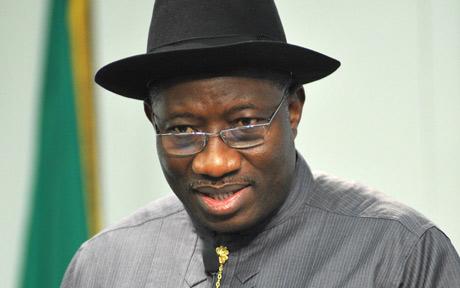
[image: Goodluck
Jonathan]<http://www.herald.co.zw/wp-content/uploads/2013/11/Goodluck-Jonathan.jpg>

Goodluck Jonathan

*The ruse of CAR*
There is a larger point. I have googled, googled far and wide, to get some
idea of what the real outcomes of the EU-Africa Summit were, are. So far I
have got just two, apart from the opening and closing of the Summit itself.
The first one is the Belgian Premier's appeal for gay rights, to mum
African leaders who included Presidents Museveni and Goodluck Jonathan, the
two presidents who have taken a legally enforceable position on the same
matter. The other outcome I met has to do with CAR, the Central African
Republic, where the Europeans are reported to have undertaken to deploy a
thousand soldiers and police officers. I think the more accurate way of
reporting this matter is to say Europe merely used the EU-Africa summit to
formalise this decision it took some time back, possibly last year, and
which was tabled at the recent AU Summit held in Addis in January. So this
is an old outcome reissued to suggest some bustle in the otherwise drooling
tale from Brussels. And of course if you site CAR on the map, principally
who its neighbours, and the fact of an Islamic element in its cocktail
conflict, you will understand why it is true the EU was bound to deploy,
has to deploy, EU-Africa Summit or not.

*Trade figures with no bearing*
Reportage which tries to suggest more material outcomes on peace and
prosperity (note the nebulous theme) do in fact go back to trade statistics
between the EU and Africa. Nothing wrong with that for as long as we all
agree those figures are historically rooted in our colonial past, and did
not need an EU-Africa Summit for them to come into being! It also helps to
recall that between Lisbon in 2007 and Brussels in 2014, these figures have
changed in ways traceable to deeper incorporation of the continent of
Africa as a minor into the powerful or dominant western world. The
indifference between these figures and pious resolutions of past Summits is
truly remarkable.

*The holy Belgians of yore*
Talking about Belgium, I have been reading "Journey to Gubuluwayo", itself
a compendium of letters of two Catholic priests: Fathers Depelchin and
Croonenberghs as they made their way to Bulawayo between 1879 and 1881.
These were catholic priests of Belgian descent, who ran well ahead of
Rhodes and his gang, but well after Protestant missionaries led by the
London Missionary Society of Moffat,  and all those who then followed him.
The book is a fascinating, must-read for black Zimbabweans who wish to know
where the rains began to beat us. Put together, I found letters of Father
Croonenberghs quite honest and candid, quite revealing. He makes amazing
admissions that seem to poke open the myth of missionary goodness and
unalloyed holy pursuits in the run-up to the "opening" and occupation of
Zimbabwe. Of course one has to be careful to remember that Catholic
missionaries who had lost the trophy of pioneering proselytisation in
Matabeleland, were very hostile to, and critical of, Protestant
missionaries. That apart, Father Croonenberghs makes indicative
observations.

*The cross that hung out dry for gold*
He gloatingly noted that Protestant missionaries had failed dismally to
convert the Ndebeles and Kalangas, something which these pioneering
missionaries blamed on "the character and social organisation of the
Matabele". He is himself sceptical about that, and instead writes: "I would
not wish to criticise the Protestant ministers of the London Missionary
Society. But these gentlemen themselves agree that their activities among
the natives have been diplomatic and commercial rather than moral and
religious. That may well be the reason why Lo Bengula did not worry much
about allowing new missionaries and religious ministers into his country".

*Eaten by the secular*
Put simply, these Protestant missionaries were punting for traders, hunters
and empire-builders, than for God and his gospel. Their preoccupation were
secular, or would soon become so as their days in Matabeleland wore on,
each sinking them deeper and deeper into the world of Mammon and Caesar.
And evidence is abundant. Charles Helms played a crucial mediation role in
concessions through which our destiny was swindled. Reverend John Smith
Moffat, son of Robert Moffat, who had founded Inyathi for the LMS in 1879
resigned only to become a civil servant, and even negotiated for a treaty
of friendship between Lobengula and Britain. Reverend Morgan Thomas Morgan
who was also part of the Matabele Mission quarreled with his fellow
missionaries Sykes and Moffat over a distracting trading focus, leading to
his dismissal in 1872. He then set up an independent missionary-cum-trading
concern based at Shiloh, close to Inyathi. I could go on and on, to
illustrate how the cross gave way to trade, gave way to hunting and empire
building. Or enmeshed with all of these. But that is a story for another
day.
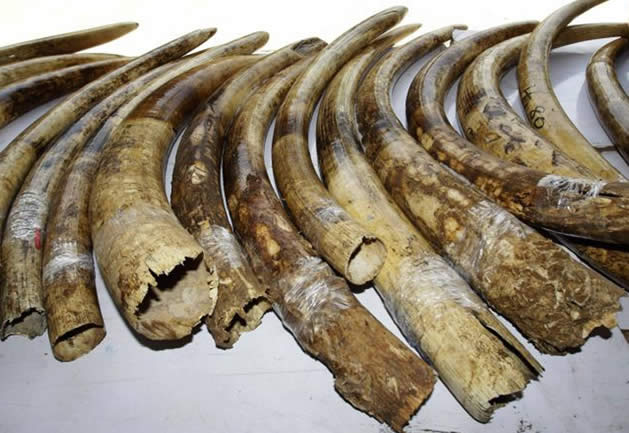
[image: Ivory]<http://www.herald.co.zw/wp-content/uploads/2013/11/Ivory.jpg>

Ivory

*Ecological plunder and colonisation*
The story for the day relates to the same Father's letter dated Sunday, 16
November 1879. The letter (or is it diary entry?) reads: "Commerce on a
large scale seems to have greatly decreased for some time now. Five years
ago, Matabeleland alone produced more than 80 000lb of elephant's tasks,
worth 6 to 7 shillings a pound (lb). They also exported a considerable
quantity of ostrich feathers. At the present time it is doubtful whether
the hunters succeeded in collecting 20 000lb of ivory. The elephants are
moving further away. The ostriches are moving away too; besides, the
breeding of these birds on farms in the Cape offers strong competition to
the work of the hunters. Fearing, and not without reason, that both
elephants and ostriches may disappear entirely, and take refuge on the left
banks of the Zambesi, Lo Bengula has been thinking of restricting hunting
permits. This idea would show quite good administrative powers and could
even find its place in the realm of political economy."

*Forebears who saw*
These are awesome statistics, moreso when you consider the average weight
of a tusk, which was roughly between 20-25 pounds. 80 000 pounds of
elephant tusks amount to a huge haul of our elephants, a real massive
destruction of a key component of our national wildlife heritage. We have
no studies which lay bare the cost of encroachment and colonisation from
the point of view of destruction of our flora and fauna, from the point of
view of our wildlife heritage. Of course then there was no CITES! But,
lamentable though that is, that is not my focus.

What I found quite fascinating was the response of the Ndebele State to
this destruction. It sought to introduce hunting restrictions through
permits, or  even outright hunting bans, both of them real novelties in the
science of political economy. Two points loom large. Here is a white priest
contradicting the myth and image of Lobengula as a fat, cruel and
unthinking savage awaiting redemption and enlightenment from the goodly
White Man. No, this African potentate was sophisticated enough to open a
"new realm" in political economy! This emphatically puts the colonial
mythology of the not-so-noble savage on its head, and all that done through
evidence provided by a white man of the cloth!

*Ruling the commons*
The second point -- it is staggering for me -- is the realisation that the
Ndebele state was alive to its economic dimensions, well beyond personal
and monarchical wealth. It was acutely alive to its larger stewardship role
in respect of the nation's "commons", exemplified by wildlife. More
literature  from gold hunters reveal that correspondingly, there was very
stringent allocation of the State's mineral wealth, with concessions being
given parsimoniously, being policed effectively. This is a staggering
consciousness, one made even more awesome by the realisation that the
Ndebele Kingdom, at that point in history, was alive to the notion of
sustainability in the exploitation of the environment. It was, in other
words, an Economic State. What has gone wrong? Is the Ndebele State, are
the Ndebeles, not part of our collective forebears?
[image: Billy
Rautenbach]<http://www.herald.co.zw/wp-content/uploads/2014/04/BILLY-RAUTENBACH.jpg>

Billy Rautenbach

*Billy and Temba*
Here is what triggers these existential questions. This week we had
screaming headlines of one Billy Rautenbach, and one of our own, Temba
Mliswa. The two are said to be locked in mortal combat regarding alleged
breached contracts, or alleged foiled attempts at corporate swindling. I
don't know what is what, which is which. I am not so sure I care to know.
Because of this story, the national opinion is divided. There are some who
vehemently condemn Temba, however, much he now tries to wrap himself cosily
in the national flag. He sought self-gain, and lost, and it is a bit bald
to pose today as a lonely national warrior, selflessly defending the
national interest. Was the nation going to realise its interest through his
opulence, if this Billy guy had proved foolish or generous, or both?

But there are others who praise Temba as an empowerment warrior who dares
take the war right into the belly of the swindling white man. Whatever the
motive, Temba must be lauded for tackling Billy, himself a personification
of continuing white power, well after Independence. The sentiment goes
deeper. It pities Temba for falling victim to politics of factions, which
is why and how his otherwise laudable soldiery is being impugned. Dear
reader, I leave you to find a side on this sharp, polarised altercation.
Again, I am not interested.

*Land, coal and platinum*
In both afore-summarised arguments, Billy seems out of the loop, except as
the target which the martial Temba Mliswa must demolish, or as the
whetstone on which to test the moral bearings of this loudmouthed, even
impulsive MP. Billy comes across as a passive target, the crucible in which
to test the post-independence African actor or personality. That even
creates the illusion that Billy is not an actor, the actor. The illusion
that Temba is, a foremost actor even, alongside a coterie of senior
officials hankering to save the day, whether for Billy or for Temba. Is
that the fact? Have we, as Zimbabweans grasped the true meaning of this
matter, beyond persons? Here are interesting allegations.
[image: Temba
Mliswa]<http://www.herald.co.zw/wp-content/uploads/2014/03/Themba-Mliswa.jpg>

Temba Mliswa

Three key national resources are at stake: land, coal and platinum. All of
them are emotive. Or should be. Two races are in the race: blacks
represented by Temba and his motley crowd; Billy representing his varied
and complexly configured corporate interests and permutations representing
white interest. Billy, we are told, got coal concessions in the hope he
would up our energy generation. Mliswa says all the coal and its
by-product, coke, which Billy extracted was exported, never to redound to
this economy, this country. He sold all of it abroad, with proceeds getting
externalised. Temba never sought to own or exploit coal, but sought rent
from those exploiting it!

*Unki and Chisumbanje*
Billy, we are again told, secured platinum concessions at Unki. He
speculatively kept them for a while, again as told us, and then disposed of
them for a whooping billion US dollars. The billion-dollar proceeds from
the disposal of Unki concession is what, Temba tells us, went into building
Chisumbanje, both by way of sugar plantations, and by way of the ethanol
plant whose value Mliswa puts at US$650million. In between, helicopters fly
and land, all the time ferrying multiracial busy bodies. The cockpit gives
an illusion of multiracial actors. Ten percentage shareholding is asked and
granted, but never gets honoured. In the end someone gets hurt and the
deals, all along arcane, burst into the open like a long simmering but
always denied abscess. But in both cases, our Temba never sought to control
platinum, to own Arda land at Chisumbanje. He sought rent from those who
did!
[image: Chisumbanje
plant]<http://www.herald.co.zw/wp-content/uploads/2013/07/Chisumbanje-plant.jpg>

Chisumbanje plant

*The generation that won't see*
The Herald runs the story and everyone reads: politicians and
non-politicians, rulers and the ruled. They all read to be informed about
what is going on, more accurately what has gone on in Jerusalem, the city
of their residence. And each reading creates questions which the reader
cannot answer. Much worse, the interest fizzles out, faster than the
salary-gate scandals, all put together. The intensity of reading and
life-span of the two stories suggest Zimbabwe has more to fear from
salary-gate than from this new shares-gate saga.

Could that be true?
There is a deeper question. How do national resources get parcelled back
and forth, up and down, sideways, but without those in authority knowing?
For goodness sake we are talking about coal in Hwange, which is mined
visibly, noisily. We are talking about a huge chunk of our platinum,
billion worth, if Temba is to be trusted. We are talking about a huge
swarthe of land, all now carpeted by cane whose rough "leaves" rustle so
audibly in the restless national wind. It is very visible from the main
road to Chiredzi. Politicians have been there. Yet all the three are
unseen, undetected, unknown. It is the quarrel over a paltry US$165million
consultancy fee charged by a diminutive fitness trainer, which generates
enough noise for national arousal and notice. Which strains our focus.
Please!

*Lobengula saw well*
And the focus falls of this little man called Temba Mliswa, and his
faction, real or perceived. Falls on little politicians and ministers
scrambling for crumbs off the rich white man's well bulwarked table. That
is what transfixes the national mind. Let me be provocative. Nowhere do
white missionaries show us a Lobengula who obsessed about black acolytes of
white hunters, white gold-diggers. He worried about the encroaching white
man, the depletable national resource. His focus was right, substantive. He
knew what threatened the national interest and confronted it, albeit with
small sophistication and ever diminishing capacity. But he had read right,
seen well. This is what is missing today, and the media, please help this
nation focus on the real, the substantive. Government, please wake up to
the economic dimensions of the State you run. Please see! Don't be so
blind. And then daft. Where were the arms of State as all this happened?
Why does one white man seem stronger than a whole Government, wiser than a
whole people, more deserving than our modest rent-seeking aspiration?

*Pathetic stewards*
Mliswa only soils our sense of morality, our collective conscience, and it
is only a sense which he soils. He exposes our false moral fastidiousness,
our moral emptiness and the silly bravado we show in denying, defending or
policing that emptiness. But Billy Rautenbach steals a country, steals our
destiny, pawns it, before selling back to us the owners, leftovers from
that pillaged destiny. He robs us of a whole economy. Lobengula never got
the time to shape a wildlife policy. Larger, existential events overtook
him. But he, at the very least, showed a strong sense of stewardship, with
a tiny fraction of the knowledge we of this generation now have.

Come to think of it, Caliban-like, we showed white gold-seekers all sites
of old workings of gold, iron and coal. Early Rhodesia's geological maps
came from African knowledge. We had worked gold, worked iron, worked
copper, building a formidable knowledge base. Today the white man has the
knowledge, is the main actor. We do not have the knowledge, much worse even
the curiosity. We do not care, we never wake up to our responsibilities of
stewardship. Does this country have to know what is happening to its
resources through a chance altercation between one small black man and one
dribbling white man? Or from journalistic curiosity? Come on, Zimbos. We
are better mheni. Simuka Zimbabwe.

Icho!

*[email protected] <[email protected]>*
_______________________________________________
Ugandanet mailing list
[email protected]
http://kym.net/mailman/listinfo/ugandanet

UGANDANET is generously hosted by INFOCOM http://www.infocom.co.ug/

All Archives can be found at http://www.mail-archive.com/[email protected]/

The above comments and data are owned by whoever posted them (including
attachments if any). The List's Host is not responsible for them in any way.
---------------------------------------