Ryan,

just a quick question: couldn't external strings solve the problem for
you?  They sound pretty much like Buffer you describe as far as I can
judge from your email.
yours,
anton.

On Thu, Apr 22, 2010 at 3:03 AM,  <[email protected]> wrote:
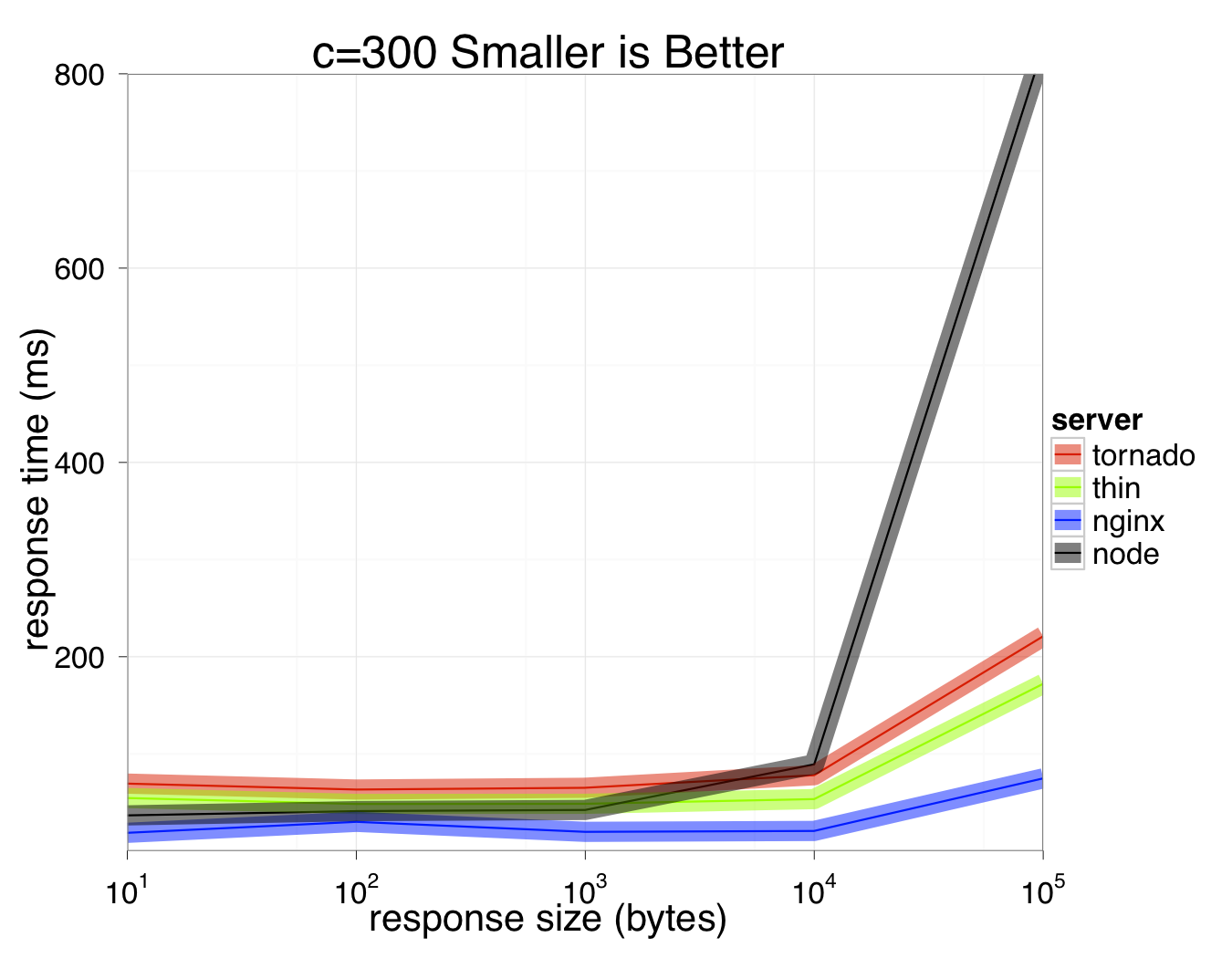
> I'm experiencing a bottleneck in my application, Node, when writing
> strings to socket. Here is a benchmark where I create a web server and
> write a string of X bytes as a response. Compared to other systems
> which can do write() directly from the string buffer to file
> descriptor, Node is quite slow:
>
> http://s3.amazonaws.com/four.livejournal/20100421/response_string.png
>
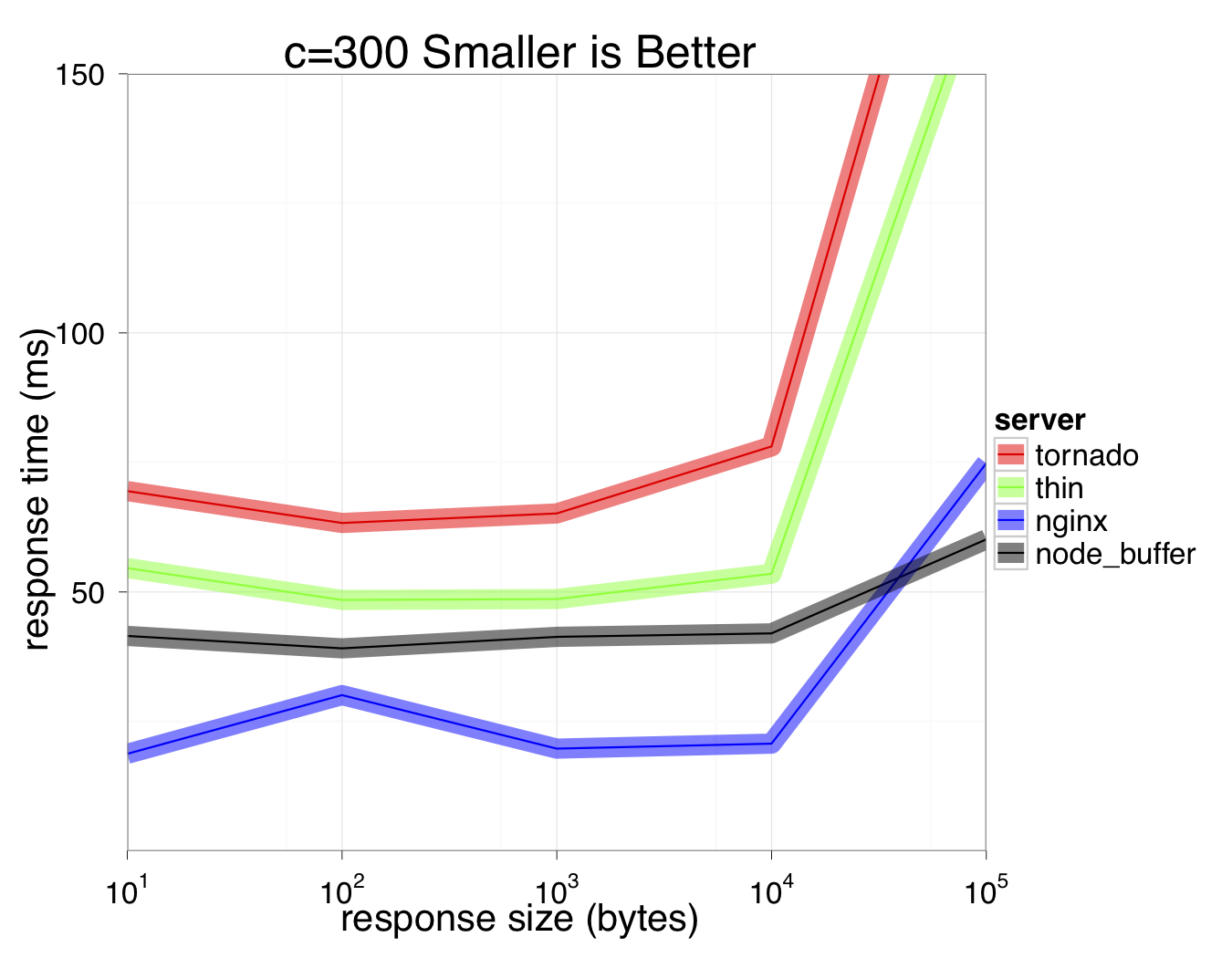
> I've created a "Buffer" object which allocates memory outside of V8's
> heap and allows one to write directly to the socket. When doing the
> benchmark with a "Buffer" the results are quite good:
>
> http://s3.amazonaws.com/four.livejournal/20100421/response_buffer.png
>
> So it's clear that the memcpy of a string out of V8 is the bottleneck
> in the previous benchmark, not the networking code. Using "Buffer" is
> a fine for certain situations but optimizing for strings is still
> important.
>
> I acknowledge that V8 cannot give raw memory access to strings due to
> the fact that objects get moved around - and that in most cases
> they're 16bit arrays, so they'd need to be UTF-8 encoded first.
> However, what would people think about passing the write system call
> to V8?  I imagine a function which would take a string and file
> descriptor, utf8 encode it in the v8 heap (using i::ByteArray), and
> write that data out to the kernel, returning the number of bytes
> written. Something like this:
>
>  ssize_t String::SocketWriteUtf8 (int fd, size_t offset);
>
> The second time SocketWriteUtf8() was called, it wouldn't need to
> re-encode the string, it would just use the existing data.
>
> --
> v8-users mailing list
> [email protected]
> http://groups.google.com/group/v8-users
>

--
v8-users mailing list
[email protected]
http://groups.google.com/group/v8-users