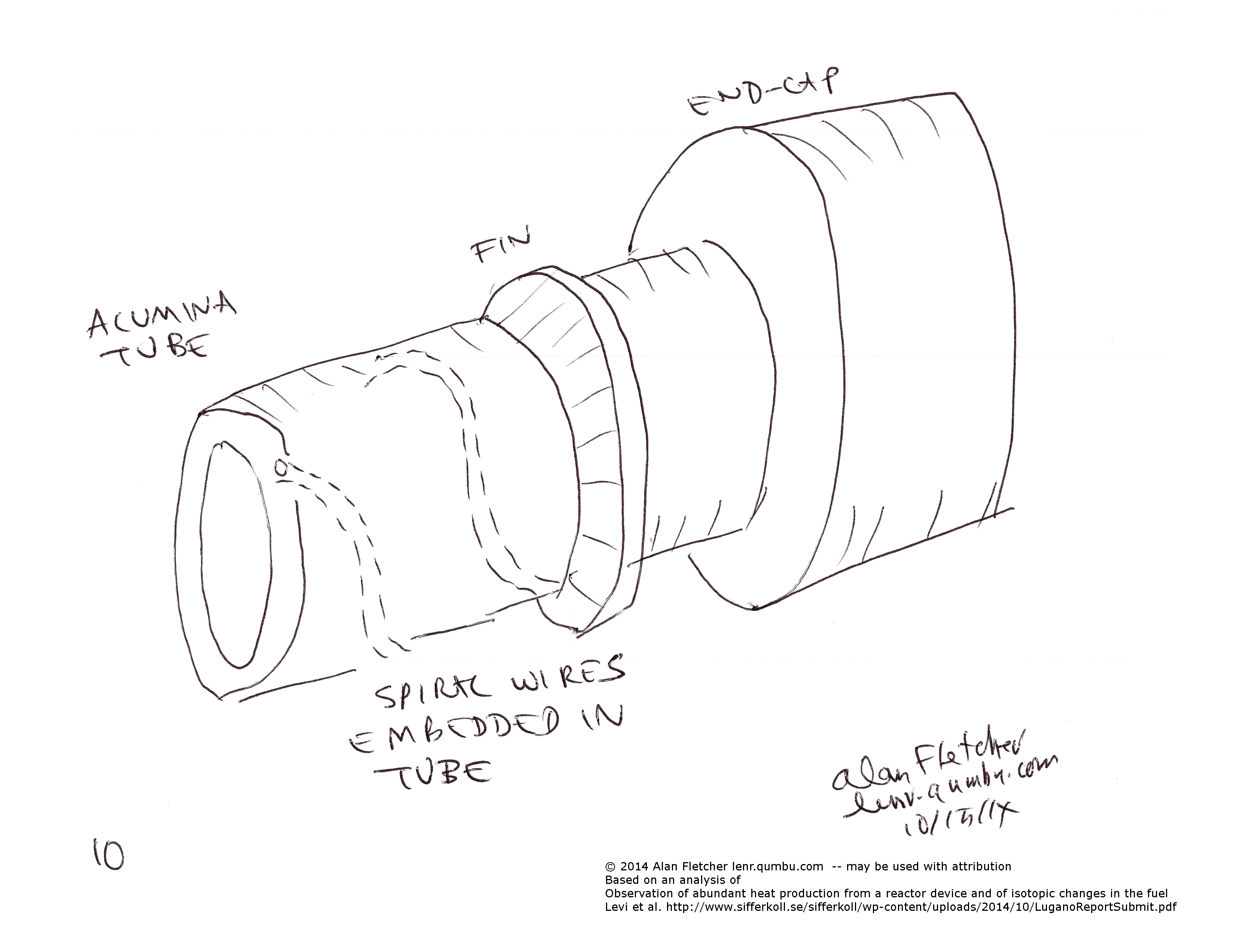
Alan, Alumina fires at an extremely hot temperature, 1600-1700C for 96%,
and for high purity aluminas, the firing temperature may be over 1800C.
Firing must also occur in an oxygen (air) environment or the alumina will
lose some of it oxygen during firing.  Embedding any metals in this and
having them come out as metals is seriously problematic.  Most heaters
begin with a pre-fired ceramic form and then apply the heater coil and back
fill the heater wire volume with a lower temperature glass-ceramic and fire
it again at a lower temperature.  With the right filler, it can continue to
sinter as the heater is operated.
The outer hot alumina tube looks like an early prototype.  Its finish is
poor and it is not fired perfectly straight.  There is a problem with
having appropriate setters in a kiln for something like this - setters that
won't ruin the surface or let it sag at the high temperature at which it is
fired.  This doesn't appear to have been entirely worked out in what is
shown in the Lugano demo.  I suspect the outer tube is just that - a tube
that was plain on the inside and having 3/4" rod threads cast into the
outside.

On Wed, Oct 15, 2014 at 11:16 AM, Alan Fletcher <[email protected]> wrote:

> I now think the general structure is more like this :
> http://lenr.qumbu.com/web_hotcat_pics/hotcat_141014_1_010.png
>
> See http://lenr.qumbu.com/rossi_hotcat_oct2014_141014b.php in my other
> thread for details
> ------------------------------
> *From: *"Bob Higgins" <[email protected]>
> *To: *[email protected]
> *Sent: *Wednesday, October 15, 2014 9:24:07 AM
> *Subject: *Re: [Vo]:Engineering and materials issues with high
> temperature hot-cat Lugano demo
>
> I just suggested the following as the construction of the latest hotCat to
> MFMP:
>
> Here is a section drawing of the end of the new hotCat as I see it (
> https://drive.google.com/file/d/0B5Pc25a4cOM2WXBNRjE2bDVVT1U/view?usp=sharing
>  ).
>
>