Hello SRP,
I am wondering where MP Mu Sochua is? She should be together with Boeung
Kak woman right now.
Is she too busy compainging some where in PP?
Thank you,
Meeng,
Thavary
On Tue, Nov 29, 2011 at 1:05 AM, Monibuth Hun <[email protected]> wrote:

>
> * ===> More on
> **http://editorials.cambodia.org/*<http://editorials.cambodia.org/>
>
>    - Download report: Eviction and resistance in Cambodia: Five women
>    tell their
> stories<http://www.amnesty.org/sites/impact.amnesty.org/files/PUBLIC/Eviction%20and%20Resistance%20in%20Cambodia%20-%20Five%20women%20tell%20their%20stories%20FULL%20REPORT.pdf>
>    - Amnesty International exposed the Cambodian authorities’ systematic
>    failure to protect people from forced evictions in a 2008
> report<http://www.amnesty.org/en/library/asset/ASA23/002/2008/en/b1328237-07c2-11dd-badf-1352a91852c5/asa230022008eng.pdf>.
>
>    - Forced
> evictions<http://www.amnesty.org.uk/content.asp?CategoryID=11180>violate a
> person’s right to adequate housing, and are banned under
>    international human rights treaties to which Cambodia is a state party.
>    - Watch: Eviction and Resistance in Cambodia -
>    http://www.youtube.com/watch?feature=player_embedded&v=KX0gYV4jXnI
>
>
> <http://3.bp.blogspot.com/-sbVFGNUuXD0/TtR0BIJIrxI/AAAAAAAABGw/Jff5VRzmMxw/s1600/32555.jpg>
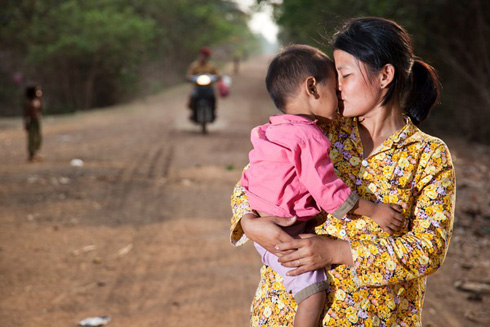
> “My house, possessions, clothes, all went up in smoke. Nothing was left”
>
> Cambodian women are increasingly at the forefront of the battle against a
> wave of forced evictions sweeping the country, Amnesty International said
> today in a new report that urges the government to halt the practice.
>
> Eviction and resistance in Cambodia: Five women tell their
> stories<http://www.amnesty.org/sites/impact.amnesty.org/files/PUBLIC/Eviction%20and%20Resistance%20in%20Cambodia%20-%20Five%20women%20tell%20their%20stories%20FULL%20REPORT.pdf>details
>  through first-hand testimony the stories of Hong, Mai, Sophal, Heap
> and Vanny, women who have faced or continue to resist forced eviction from
> their homes and land. The stories illustrate the extent of the problem and
> show the trials faced at every stage of the brutal process. Some women have
> been able to resist eviction, others are virtually just clinging on, still
> more are left destitute.
>
>
> Donna Guest, Amnesty International’s Asia-Pacific Deputy Director, said:
>
> “In Cambodia, women are at the forefront of the fight against forced
> evictions. Many have taken the lead in their communities’ struggle for
> justice, putting themselves at risk to defend their communities.
>
> “The Cambodian authorities must bring about an end to the practice of
> forced evictions, which contravene international human rights treaties and
> tear families apart.
>
> “They must ensure that genuine consultations are held with the people
> affected, and that residents receive sufficient notice and compensation or
> adequate housing where there is no alternative to eviction. The government
> should listen to the women who are trying to protect their homes and
> families.”
>
> Mai, 48, a mother from the province of Oddar Meanchey, in north-west
> Cambodia, was pregnant in 2009 when she watched her home go up in flames.
> “My house, possessions, clothes, all went up in smoke. Nothing was left,”
> she said.
>
> Her house and 118 others in her village, Bos, were bulldozed and burned to
> the ground by 150 police, military, and others believed to be workers
> employed by a company that was granted a concession over a large swathe of
> land, including Bos village, for a sugar plantation.
>
> In October 2009, Mai was imprisoned for eight months for violating
> forestry laws when she travelled to the capital Phnom Penh to complain to
> the prime minister about the eviction. She was released in June 2010, but
> only after signing an agreement to relinquish the rights to her land. She
> now has little to provide for herself and her eight children.
>
> Donna Guest, said:
>
> “Women not only face impoverishment from forced eviction but threats and
> imprisonment when they try to resist, with no protection from the law.”
>
> In the Boeung Kak Lake area of central Phnom Penh, nearly 20,000 people
> have either been evicted from their homes, or are at risk of losing them
> since a commercial development company was granted a 99-year lease in the
> area in 2007.
>
> Thirty-one year old Vanny helps lead community resistance to the Boeung
> Kak Lake eviction.
>
> On 11 August 2011, the community achieved a partial victory when the prime
> minister ordered a portion of land to be handed over to the remaining 800
> families for onsite housing in plots with legal ownership.
>
> Vanny said: “A lot of people think that this is the first success of
> people’s demonstration… it’s a great example for other communities all over
> the country.”
>
> Yet Vanny still feels insecure. “When I leave my house, I don't know
> whether I can expect to come home or not.”
>
> Vanny has good reason to be concerned, as she now faces a defamation
> charge brought by the Municipality of Phnom Penh. In addition, eight more
> homes on the edge of Boeung Kak Lake were destroyed by bulldozers on 16
> September and the families left homeless.
>
> Rapid economic development within a newly privatised land market has seen
> an increase in forced eviction across Cambodia.
>
> Forced eviction often leads to loss of possessions and livelihood, the
> breakup of communities, and a deterioration of a family’s mental and
> physical wellbeing.
>
> Access to education and health services can be disrupted. Many victims of
> forced eviction receive inadequate compensation and are resettled in remote
> areas. Husbands may need to spend long periods of time away from home
> seeking work, leaving their wives to cope alone.
>
> Donna Guest, said:
>
> “Tens of thousands of people across Cambodia are unlawfully losing their
> homes because of the demands of big business.
>
> “The Cambodian government must not sacrifice human rights in the name of
> economic development.
>
> “The loss of one’s home and community is a traumatic experience for
> anyone, but women in their role as primary caregivers for their family face
> a particular burden. Forced evictions also threaten the gains made in
> reducing poverty in Cambodia over the last 20 years.”
>
>
>
>
>    - Download report: Eviction and resistance in Cambodia: Five women
>    tell their
> stories<http://www.amnesty.org/sites/impact.amnesty.org/files/PUBLIC/Eviction%20and%20Resistance%20in%20Cambodia%20-%20Five%20women%20tell%20their%20stories%20FULL%20REPORT.pdf>
>    - Amnesty International exposed the Cambodian authorities’ systematic
>    failure to protect people from forced evictions in a 2008
> report<http://www.amnesty.org/en/library/asset/ASA23/002/2008/en/b1328237-07c2-11dd-badf-1352a91852c5/asa230022008eng.pdf>.
>
>    - Forced
> evictions<http://www.amnesty.org.uk/content.asp?CategoryID=11180>violate a
> person’s right to adequate housing, and are banned under
>    international human rights treaties to which Cambodia is a state party.
>
> --
> You received this message because you are subscribed to the Google Groups
> "Cambodia Discussion (CAMDISC) - www.cambodia.org" group.
> This is an unmoderated forum. Please refrain from using foul language.
> Thank you for your understanding. Peace among us and in Cambodia.
>
> To post to this group, send email to [email protected]
> To unsubscribe from this group, send email to
> [email protected]
> For more options, visit this group at
> http://groups.google.com/group/camdisc
> Learn more - http://www.cambodia.org

--
You received this message because you are subscribed to the Google Groups
"Cambodia Discussion (CAMDISC) - www.cambodia.org" group.
This is an unmoderated forum. Please refrain from using foul language.
Thank you for your understanding. Peace among us and in Cambodia.

To post to this group, send email to [email protected]
To unsubscribe from this group, send email to
[email protected]
For more options, visit this group at http://groups.google.com/group/camdisc
Learn more - http://www.cambodia.org