EV Digest 2513

Topics covered in this issue include:
  1) Re: YT Charging with regulators
        by Rich Rudman <[EMAIL PROTECTED]>
  2) Re: Successful Hybrid Conversion
        by David Dymaxion <[EMAIL PROTECTED]>
  3) RE: GhiaMonster Battery Box Placement...
        by "Steve" <[EMAIL PROTECTED]>
  4) Re: News from Evercel
        by Gordon Niessen <[EMAIL PROTECTED]>
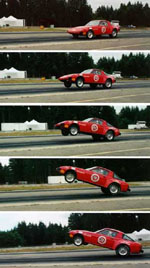
  5) CG placement for a drag car ( LONG reply to Bills last Post)
        by "Rick" <[EMAIL PROTECTED]>
  6) Re: Storing batteries
        by "David Roden (Akron OH USA)" <[EMAIL PROTECTED]>
  7) Segway interest
        by gail <[EMAIL PROTECTED]>
  8) Re: YT Charging with regulators
        by "Rick" <[EMAIL PROTECTED]>
  9) Re: YT Charging with regulators
        by "John G. Lussmyer" <[EMAIL PROTECTED]>
 10) Evercel MB80's won't fit!
        by "John G. Lussmyer" <[EMAIL PROTECTED]>
 11) Re: News from Evercel
        by "Jon \"Sheer\" Pullen" <[EMAIL PROTECTED]>
 12) Re: Segway interest
        by "Jon \"Sheer\" Pullen" <[EMAIL PROTECTED]>
 13) Optima YT modifications?
        by "John G. Lussmyer" <[EMAIL PROTECTED]>
 14) RE: News from Evercel
        by Roger Stockton <[EMAIL PROTECTED]>
 15) Re: YT Charging with regulators
        by Lee Hart <[EMAIL PROTECTED]>
 16) Re: Successful Hybrid Conversion
        by Lee Hart <[EMAIL PROTECTED]>
 17) Re: Segway interest
        by Lee Hart <[EMAIL PROTECTED]>
 18) Re: Pete's thoughts on extending battery life
        by Lee Hart <[EMAIL PROTECTED]>
 19) Re: Successful Hybrid Conversion
        by Lee Hart <[EMAIL PROTECTED]>
 20) Re: YT Charging with regulators
        by Lee Hart <[EMAIL PROTECTED]>
 21) Re: GhiaMonster Battery Box Placement...
        by "Joe Smalley" <[EMAIL PROTECTED]>
 22) RE: Pete's thoughts on extending battery life
        by "EV'r up LATE" <[EMAIL PROTECTED]>
 23) RE: GhiaMonster Battery Box Placement...
        by "[EMAIL PROTECTED]" <[EMAIL PROTECTED]>
--- Begin Message ---
[EMAIL PROTECTED] wrote:
>
>
>          With regs, you run the charger until all the regs are blinking and
> the current has gone down to 1 amp or less. Then disconnect the regs and
> pump 2 amps through the pack for an hour. If you like, pump 2 amps at 50%
> duty cycle and a period of one minute (30 seconds on and then 30 seconds
> off) for 2 hours.
>
>

Umm Bill... we dissagree here.

There still has to be a upper limit on each battery. Even if it is at
16.5VDC. If they get any higher. they will start to vent. EVEN at 2
amps.

As you all can see this is still a "Religion" area.
Gental with limits.... is the safe and sane path.


--
Rich Rudman
Manzanita Micro
www.manzanitamicro.com
1-360-297-7383,Cell 1-360-620-6266
--- End Message ---
--- Begin Message ---
VW had a diesel for a while that would shut off, and restart when you
hit the accelerator.

Another variant on the idea: 1st gear is pure electric, ICE motor
starts when you shift to 2nd.

I originally was going to build a hybrid, but after doing the math I
realized I would be hard pressed to do as well as a VW turbo diesel,
I then decided to do pure EV instead. It was like 10% improvement vs.
infinite improvement. Still intrigued by the idea of a pusher
motorcycle eventually, though.

--- Lee Hart <[EMAIL PROTECTED]> wrote:
> ...
> Put a switch on the accellerator pedal so the engine shuts off when
> you
> take your foot off the accellerator, and automatically restarts
> when you
> touch it again. Now the driver can choose whether to let the engine
> turn
> off, or keep his/her foot lightly on the pedal so it keeps idling
> (so
> the heater or air conditioner keep working, for example). Now
> you've got
> idle-stop, which saves a lot of gasoline and pollution when the car
> is
> used in stop-and-go traffic.
>
> The next improvement is to use the electric motor for load
> levelling.
> Don't throttle the engine up to accellerate or climb hills; use the
> electric motor to provide the extra power. Recharge the batteries
> using
> regen (easy with these old shunt-wound machines). The goal is to
> run the
> gasoline engine as close as possible to its "sweet spot" where it
> gets
> the best efficiency and lowest emissions. This will have
> essentially no
> effect on freeway gas mileage, but can significantly improve
> around-town
> driving.
> ...


=====


__________________________________________________
Do you Yahoo!?
Yahoo! Mail Plus - Powerful. Affordable. Sign up now.
http://mailplus.yahoo.com
--- End Message ---
--- Begin Message ---
> Behalf Of George Tylinski
>
> That's a cool VRML, where did you get the Ghia 3D model?

Thanks!  I picked it up from http://3dworldclub.com .  I looked all over and
this was the *only* Ghia model I could find.  They only had one and it was a
'68 whereas the GhiaMonster is a '69 but I think it's going to be close
enough.

> I would add the Strange axle to the model ASAP,
> along with the coil-overs you appear to be
> designing for, located in the fully compressed
> position. You will probably find the need to
> move or alter the battery racks that are over the
> axle.

The car will be in my hands in a few weeks while the builder works on other
tasks for a few months.  During that time, I'll take measurements and update
the drawing with the actual components and tube frame.  As far as coil-overs
go, I will leave that decision to the pros who are building it.  I'm going
to try to leave enough space in the design to allow for whatever suspension
decision is finally made, though.

> It's hard to tell with the perspective view, is
> there a way to turn that off?

VRML97 doesn't support orthographic views so I backed the camera way out and
narrowed the FOV.  The result is *mostly* orthographic and has been
re-posted to the website along with updated battery box placements.

> To really evaluate the weight distribution, you
> have to estimate the weight and CG quantitatively.
> I know, it's a pain. Remember that weight behind
> the rear axle c/l lifts the front of the car up
> (and vice-versa).
>
> Your info suggests only 12 batteries (144 lb) in
> the front, leaving 720 lb more weight on the rear
> axle, that's about 30% of a 2400 lb car, so 35/65%
> front/rear distribution. In my opinion, that is too
> much weight in the back for a STREET vehicle. But
> I've never driven anything with that imbalance. It
> would take a lot of tire and suspension tuning to
> have "average" cornering power. I am assuming roughly
> 50/50 balance without batteries, like your 3 motors
> are tip-to-tail starting 18" in front of the rear
> axle.

In Bill Dube's post, he provided a technique for calculating the appropriate
weight distribution for drag racing.  I updated the drawing with a virtual
representation of the yard sticks he mentioned in his post.  I also added
representations of the three motors (the green cylinders) and the
transmission (the red cylinder).

Next, using the CAD program's ability to calculate center of mass, I
rearanged the batteries into the configuration shown in the drawing.  Now,
54 of the batteries are where the back seat used to be - in front of the
rear axle - and 30 more are on top of the front axle.  Assuming a relatively
uniform density across the batteries, transmission and motors, the CAD
program reports that the CG of these components taken as a whole is slightly
forward of half way between the front and rear axle and slightly below
Bill's drag racing CG line.

If after adding all the other components (including myself), I remain near
this point, I'm assuming I will have good weight transfer on the strip and
good cornering on the street.

Bill, you mentioned that I should stay on the line as close to the point of
contact as possible.  Can you explain the effects of being on the line half
way between the front and rear axles?  It seems that optimizing cornering
and minimizing this effect might be at odds and that I'll just have to
compromise between them.

> Maybe you could look up the Maniac Mazda wt
> dist and ask about driving that on the street for
> comparison.

I'll ask him but I'm not so sure Rod's car is very CG optimized seeing as
how it tends to pull monster wheel stands: http://www.nedra.com/leapin.jpg
8o)

> Perhaps you could consider a partial "drag pack"
> which could be mounted in front for street use and
> in the rear (or rear seat) for drag use.

I'm hoping I can have the best of both worlds with the current
configuration.  Please let me know what you all think.

Thanks again for everyone's help!

Steve
http://www.ghiamonster.com
--- End Message ---
--- Begin Message ---
Does this mean they like to be deep cycled? Do they handle being drawn
down 80-90% and still have a long life?
At 03:39 PM 1/4/2003, you wrote:
Jon "Sheer" Pullen wrote:
>

>
> No, they were 'stored' for a month fully charged.
>
> S.

This is the error of your ways Sheer.

It's getting clearer that we need to cycle them.
Full only when ready for use.
Flatten then store.
REawaken, equalize, Cycle into service.


--
Rich Rudman
Manzanita Micro
www.manzanitamicro.com
1-360-297-7383,Cell 1-360-620-6266
--- End Message ---
--- Begin Message ---
----- Original Message -----
From: Rick <[EMAIL PROTECTED]>
To: <[EMAIL PROTECTED]>
Sent: Sunday, January 05, 2003 10:07 AM
Subject: Re: CG placement for a drag car ( LONG reply to Bills last Post)


>
> ----- Original Message -----
> From: <[EMAIL PROTECTED]>
> To: <>
> Sent: Saturday, January 04, 2003 10:01 PM
> Subject: Re: CG placement for a drag car (was: GhiaMonster Battery Box
> Placement...)
>
>
> >          Actually, with a few suspension tricks, you can approach 5 G's
> off
> > the line. 8-) First, you make the car squat and thus pitch backwards.
You
> > then have the rear suspension push back and use the rotational inertia
of
> > the car about the pitch axis to plant the tires harder than the weight
of
> > the car would alone. Watch a race horse come out of the gate at the race
> > track and you will get the idea.
> >
>
> Bill is absolutely correct in his analysis of what should happen during an
> ideal launch. The technical advice on modifying a car for such maximum
> traction launches can be found in the really old Chrysler Performance
> catalogs. Anything from when they were MOPAR will do just fine. The later
> versions I have no knowledge pro or con.
>
> I had a 1969 Charger R/T that I used to drag race with. No major mods were
> needed, it was set up by the factory. For better than average launch
> performance on a street car, it was virtually unbeatable off the line.
>
> The things I personally observed about the car are as follows; the rear
> springs were offset towards the rear of the car by about 2.5 inches with
> larger than normal attachment point boxes bolted to the frame girders on
the
> unibody junctions inboard and fore of the wheel wells.
>
> The springs were several leaves thicker than a standard Charger had, and
> some of the leaves were extremely thick by comparison, AIR, 7 or 8 on the
> right rear and at least six on the left rear. That was done to minimize
body
> twist during acceleration, and during accelerating out of a LH corner on a
> circle track. They always put more weight on the left front corner of most
> of their cars, namely the battery.
>
> The leaf springs were a bit longer and the rear shackles were longer and
> tucked backwards to allow the needed swing of the axle with the inertial
> effects of the pitch axis, trying to find the easiest path of resistance,
> which is for the wheels to try to run ahead of the car.
>
> Many Chargers I've seen in recent years have R/T emblems on them, but one
> quick look on the right rear of the car usually results in the truth that
it
> at the very least has had the springs replaced. If the stack doesn't look
> like something off of a Chevy truck, it's not an R/T suspension. Look at
> some at a car show sometime and you'll see the difference.
>
> My car would raise about three inches in the front, the rear would drop
> about an inch or so, and then the entire car would raise up and additional
> three inches. I always said it looked like a frog leaping forward. I ran
> McCreary Track Star tires in a 01 compound variety and would only get
about
> 3/4 of a tire rotation worth of spin off the line. Just enough to keep
from
> hammering U-Joints into oblivion.
> Chrysler also advocated the use of a device called a pinion snubber. It is
> basically a suspension travel stop arm that hits the floor board. (bolts
to
> the top of the differential) These were about all some of the 65 and
earlier
> models had to improve the suspension. Those old 64 Fury's  would roast
tires
> until they popped!
>  My Charger had a snubber, but it never made contact with the floor the
> entire two years I drove it. The springs were much too stiff. My opinion
is
> that it isn't anything much more helpful than traction bars for peaking
> launch performance, and actually throws the car into an unstable condition
> and allows the tires to hop, thus insuring that you break something, while
> beating the floor pan silly.
>
> The front torsion bars were thicker and loaded in such a way to allow
easier
> upward travel, and special offset rate shocks were used. (Like the
> adjustables of 20 years ago,also know as trick shocks or 40/60's)
>
> I'm not advocating the conversion of B body Chrysler products to electric
> here, totally inappropriate vehicle for conversion. An old import compact
> with rear wheel drive and leaf springs would be my pick for ease of
> modifying.
> Hope this helps someone who may find themselves with traction problems.
>
>  Regards and neck breaking launches to All,
>
> Rick
>
--- End Message ---
--- Begin Message ---
On 4 Jan 2003 at 22:39, Seth wrote:

> (wet) NiCd-  any way you want, but they may need a commisioning charge.
> Stored shorted is common and they will definitely need a commissioning
> charge

Nicad CELLS may be (should be???) stored shorted.  Nicad ^batteries^ should not
be.  Just leave them in whatever state of charge they are, and perform a
commissioning charge when you want to "wake them up."

David Roden
Akron OH USA
--- End Message ---
--- Begin Message ---
Hello Everyone,

Now that the Segway is for sale on Amazon.com do you think it will become
a popular transportation option?  Have any on the EV list ordered one? I
know it is not a high speed racing EV so will not appeal to some, but for
those of us whose main objective is clean air, via any possible means,
this little unit is seen as an EV which might get some people out of their
automobiles, and it is becoming available.  I am trying to determine
whether there would be enough of them tooling about Las Vegas in the near
future that it might be time to start decision making on things like
where they will be allowed, if they can be taken on the bus (on the bike
racks, or on board like a wheelchair), whether charging should be made
available in shopping malls, if they can be included in the list of
alternative methods of getting to work for points on the RTC Club Ride
program which now counts bicycling, walking, riding the bus and car
pooling.

Thanks for any comments, or information on how sales are going, if such
data are available.

Gail
--- End Message ---
--- Begin Message ---
----- Original Message -----
From: <[EMAIL PROTECTED]>
To: <>
Sent: Saturday, January 04, 2003 9:50 PM
Subject: Re: YT Charging with regulators


>
>          You can run the latest version of Rudman regs with the Reg-Bus
> daughter boards along withe the latest PFC-20, and the whole thing is
> automatic. A few more dollars but it will pay for itself in extended
> battery life.
>
>          You can also run other battery management systems such as
> PowerChec and BatiCheq. These systems are also automatic.
>

Anyone have URL's for Web sites with prices and availability info?

Regards,

Rick
--- End Message ---
--- Begin Message ---
At 10:55 AM 1/5/2003 -0700, Rick wrote:
>          You can run the latest version of Rudman regs with the Reg-Bus
> daughter boards along withe the latest PFC-20, and the whole thing is
> automatic. A few more dollars but it will pay for itself in extended
> battery life.

Anyone have URL's for Web sites with prices and availability info?
For PFC chargers and Rudman Regs
http://www.manzanitamicro.com

--
John G. Lussmyer      mailto:[EMAIL PROTECTED]
Dragons soar and Tigers prowl while I dream....		http://www.CasaDelGato.com
--- End Message ---
--- Begin Message ---
Since the possibility of getting Evercel MB80's in a reasonable amount of
time has gone to near 0, I decided to figure out exactly WHAT will fit in a
Sparrows battery compartments.
I tried all the Evercel sizes, and one kind of NiCd.
Discovered that MB80's won't fit at all! Good thing I didn't get any.
The problem is that not only are the Sparrow compartments sized for Optima
YT's, they are SHAPED for Optima YT's. Curved corners, and tapered sides.
(sides slope out a little)
While MB80's are very close to YT's in size, they do NOT have the same
shape. YT's are 10" long at the top, but only 9 5/8" long at the
bottom. Combine this with the rounded corners, and you end up with a very
specialized battery box.
I took all the batteries out of the Sparrow and made paper patterns for the
battery box bottoms. I then made paper cutouts of the various batteries
and tried arranging them to fit. My first try with the Optima YT (done
just for pattern-verification purposes) discovered the problems with
shorter bottom length and rounded corners. sigh.
My results on fitting batteries so far are: (All Evercel's are the -12-8
version)
MB100: 7, possibly 8 - but I have to raise the seat 1/2" to make them fit.
MB80: didn't bother figuring this out (too annoyed at not noticing the
problem earlier)
MB50: 14, possibly 15
MB40: 18, possibly 19
MB15: 65
24AH NiCd cell: Pretty sure I can fit 260 of these, but does require a LOT
of work building "cases" for groups of cells. (and a watering system, urgh)
Can you say depressed boys and girls? I knew you could....
--
John G. Lussmyer mailto:[EMAIL PROTECTED]
Dragons soar and Tigers prowl while I dream.... http://www.CasaDelGato.com
--- End Message ---
--- Begin Message ---
> > No, they were 'stored' for a month fully charged.
> >
> > S.
>
> This is the error of your ways Sheer.
>
> It's getting clearer that we need to cycle them.
> Full only when ready for use.
> Flatten then store.
> REawaken, equalize, Cycle into service.

I don't think flattening a full battery (see later posts by others) is a
good idea. Flattening individual cells would be just about ideal, but I
can't get at the cells in these things.

My point here is that I didn't plan to store them - it just happened that
with one thing and the other, I only drove the car a few times that month,
and they were all short trips. We can not have a battery that can't be
stored full unless the BMS discharges it automagically - and even then it's
bloody inconvenient.

I have cc:ed Elio, hopefully he will clear up the mystery here - is it safe
to store NiZn fully charged? Is my dendrite formation (we assume that's what
it is) on two of my batteries the result of storing those batteries fully
charged for a month? Or is this just the poor quality control of the
batteries made in Virginia coming home to roost?

S.
--- End Message ---
--- Begin Message ---
> Now that the Segway is for sale on Amazon.com do you think it will become
> a popular transportation option?  Have any on the EV list ordered one? I
> know it is not a high speed racing EV so will not appeal to some, but for
> those of us whose main objective is clean air, via any possible means,
> this little unit is seen as an EV which might get some people out of their
> automobiles, and it is becoming available.  I am trying to determine
> whether there would be enough of them tooling about Las Vegas in the near
> future that it might be time to start decision making on things like
> where they will be allowed, if they can be taken on the bus (on the bike
> racks, or on board like a wheelchair), whether charging should be made
> available in shopping malls, if they can be included in the list of
> alternative methods of getting to work for points on the RTC Club Ride
> program which now counts bicycling, walking, riding the bus and car
> pooling.
>
> Thanks for any comments, or information on how sales are going, if such
> data are available.


Personally, I still think they're silly. I'd rather drive a MoRad
(http://www.evparts.com/shopping/product_details.php?code=sk2150) (and do!)
any day. I will admit that the
gyro-balancing-auto-driving-doesn't-require-any-brains is neat, but I'd
rather have the 35mph capacity to keep up with traffic and the knowlege that
if the batteries, controller, motor, or anything else goes dead, I can buy
standard off-the-shelf parts to repair it.

I might buy one if they were $500. Maybe. But for transportation, I'm pretty
happy with my MoRad.. and for sidewalk scooting, I'd rather have a plank
scooter like the electric Razor.

S.
--- End Message ---
--- Begin Message ---
I received this message recently. Does anyone know anything more about this?
Is it possible? Does it increase capacity significantly? What are the
drawbacks?
I have also heard that it is possible to convert an Optima to a wet cell,
and that you get more capacity out of them if you do so. You may not even
have to take the top off, adding water by injection and leaving a hole to
vent.  This takes away the advantage of a sealed battery, but gives more
capacity.
--
John G. Lussmyer      mailto:[EMAIL PROTECTED]
Dragons soar and Tigers prowl while I dream....		http://www.CasaDelGato.com
--- End Message ---
--- Begin Message ---
On Sunday, January 05, 2003 12:14 PM, Jon "Sheer" Pullen
[SMTP:[EMAIL PROTECTED]] wrote:

> My point here is that I didn't plan to store them - it just
happened
> that with one thing and the other, I only drove the car a few times
> that month, and they were all short trips. We can not have a
battery
> that can't be stored full unless the BMS discharges it
automagically
> - and even then it's bloody inconvenient.

I would agree completely with this assessment, but would go one
further and state that we can't have a battery that self-destructs if
only used a couple of times a month; i.e. what you did would not be
considered 'storage' by any reasonable person.

> I have cc:ed Elio, hopefully he will clear up the mystery here - is
> it safe to store NiZn fully charged? Is my dendrite formation (we
> assume that's what it is) on two of my batteries the result of
> storing those batteries fully charged for a month? Or is this just
> the poor quality control of the batteries made in Virginia coming
> home to roost?

I would desperately hope for none of the above, and pray that it is
due to some incident or other that has occured during your learning
curve with this pack.  Quite frankly, if the quality control of the
made-in-the-USA batteries is that poor, then I would not hold out any
hope for usable product from China.

Cheers,

Roger.
--- End Message ---
--- Begin Message ---
[EMAIL PROTECTED] wrote:
>> With regs, you run the charger until all the regs are blinking
>> and the current has gone down to 1 amp or less. Then disconnect
>> the regs and pump 2 amps through the pack for an hour. If you
>> like, pump 2 amps at 50% duty cycle and a period of one minute
>> (30 seconds on and then 30 seconds off) for 2 hours.

Rich Rudman replied:
> Umm Bill... we disagree here.

I agree with Rich. Bill just quoted the standard Optima algorithm. It
works OK with a single battery, but not so well with a series string.
Also, as the battery ages, it will never fall under 1 amp at 14.7v.

> There still has to be a upper limit on each battery. Even if it
> is at 16.5VDC. If they get any higher. they will start to vent.
> EVEN at 2 amps.

The upper limit is necessary in a series string (i.e. regulators are
needed). Without it, when batteries are out of balance, one will reach
full charge first, while all the rest are still at lower voltages. The
charger is only looking at total voltage, so it stays at high current.
The high current into the fully charged battery forces it up to very
high voltages, and it vents.

> As you all can see this is still a "Religion" area.
> Gentle with limits.... is the safe and sane path.

That's for sure!
--
Lee A. Hart                Ring the bells that still can ring
814 8th Ave. N.            Forget your perfect offering
Sartell, MN 56377 USA      There is a crack in everything
leeahart_at_earthlink.net  That's how the light gets in - Leonard Cohen
--- End Message ---
--- Begin Message ---
David Dymaxion wrote:
> VW had a diesel for a while that would shut off, and restart when you
> hit the accelerator.

 There's nothing particularly difficult about it. Lots of vehicles have
had it; lawn maintenance equipment and golf carts come to mind. It just
means you need a starter and battery built to be used more often.

In cold climates, people sell black boxes that will automatically start
and stop your parked car engine to keep the engine and interior warm.
They can be installed in almost any car.

> Another variant on the idea: 1st gear is pure electric, ICE motor
> starts when you shift to 2nd.

That's a neat idea. It fits right in with how a normal person drives a
stick shift car. It could be a problem with an automatic, though,
because people don't shift it.

> I originally was going to build a hybrid, but after doing the math I
> realized I would be hard pressed to do as well as a VW turbo diesel,
> I then decided to do pure EV instead. It was like 10% improvement vs.
> infinite improvement.

Note my signature lines. Perfection is the enemy of Good. If you wait
for a perfect solution, you will have nothing in the meantime (for
example, waiting for Detroit to build fuel cell cars). Do what you can
TODAY!

The problems of air pollution and burning oil are huge, and government
and industry are doing almost nothing about them. Whatever we can do, we
MUST do!
--
Lee A. Hart                Ring the bells that still can ring
814 8th Ave. N.            Forget your perfect offering
Sartell, MN 56377 USA      There is a crack in everything
leeahart_at_earthlink.net  That's how the light gets in - Leonard Cohen
--- End Message ---
--- Begin Message ---
gail wrote:
> Now that the Segway is for sale on Amazon.com do you think it will
> become a popular transportation option?

Not likely at $5000 each. So far, it looks more like a toy for rich
people.

> for those of us whose main objective is clean air, via any possible
> means, this little unit is seen as an EV which might get some people
> out of their automobiles, and it is becoming available.

I think electric bikes are a much better option. Or, electric scooter
for those who can't stand to pedal even occasionally.
--
Lee A. Hart                Ring the bells that still can ring
814 8th Ave. N.            Forget your perfect offering
Sartell, MN 56377 USA      There is a crack in everything
leeahart_at_earthlink.net  That's how the light gets in - Leonard Cohen
--- End Message ---
--- Begin Message ---
Peter VanDerWal wrote:
> 8V Trojans about 2 years old when I bought my truck... I drove it
> around for about 1.5 years and... the pack wasn't doing so good...
> the first thing I did was put the insulation back on. That helped
> but even keeping the batteries at 80-90 degrees didn't give me
> the range and performance I wanted. So I keep them at 110 to 120
> degrees.

That's fine. The higher temperatures increase capacity, which is what
you need. It also shortens life, but these batteries aren't going to
live much longer anyway.

> The method I used to get my pack hot? I fully charge the pack and
> then put an additional 3-4 amps through it for a several hours.

That's not too cruel for floodeds. ~3 amps for ~4 hours is just an extra
12 ah -- that's not even 10% more than their rated amphour capacity.
Just be sure you keep the water levels up!

> That was three months ago.  Those 1/2 dozen stinkers are starting to
> sag again. So what do I do now?

An old pack usually has considerable differences in capacity between
batteries. It's important to know which ones are your "stinkers". Often,
your range will *increase* by taking batteries out!

Here's why. A 120v pack has 15 8v batteries. Their new capacity was
around 100ah (1 hr rate). Suppose they now deliver 75ah except for one
"stinker" at 50ah. The weakest one determines your capacity, so with all
15 batteries, you have:

    15 x 8v x 75ah = 9,000 watthours

If you remove the weak one, you have less voltage but more amphours.
Your capacity has improved to:

    14 x 8v x 100ah = 11,200 watthours

So, you may want to eliminate the worst battery or two, or maybe replace
them with a used battery. That's much cheaper than a used pack. When my
ComutaVan batteries were 5 years old, I had one weak one like this that
was limiting my range. I replaced it with a Sam's Club battery for $40,
and got another 3 years out of the pack.

If you plan to change to 6v batteries anyway, you can replace the
stinkers with 6v batteries. Given the old low-capacity pack and the
higher capacity of 6v batteries in general, the 6v will only get a
rather shallow discharge, and so last longer. Note that it will tend to
get undercharged, and increase the overcharging of the rest of the 8v;
but that's probably OK in this case.

> I now ignore the pack voltage, my 120V pack frequently drops into the
> 80's on the return trip.

This will greatly hasten the death of whichever batteries are
responsible for such low voltages! Does the voltage bounce back over
120v when you let them rest 5-10 seconds? If so, you probably aren't
reversing any cells (yet).

Here's another trick in the "Don't Try Hhis at Home!" handbook: Find
your bad cells (bad specific gravity). If a battery has only one bad
cell, drain it and drive some big stainless steel screws into it to
solidly short it out. This can turn a bad 8v battery into a good 6v
battery.

Obviously, you have to adjust your charger to compensate for whatever
your new pack voltage is.
--
Lee A. Hart                Ring the bells that still can ring
814 8th Ave. N.            Forget your perfect offering
Sartell, MN 56377 USA      There is a crack in everything
leeahart_at_earthlink.net  That's how the light gets in - Leonard Cohen
--- End Message ---
--- Begin Message ---
Martin Jackson wrote:
> The efficiency could be improved only if you replace the ICE.

That's true for highway cruising, where the engine is essentially
running at constant load anyway. But around town, being able to drive at
a low speed and have the engine cycle on-off will improve efficiency.

In gas mileage competitions, drivers use a "pulse driving" technique.
They start the engine, accellerate from some low speed like 10-20 mph
to 40-50 mph, then shut the engine off and coast back down to 10-20 mph,
and repeat. The engine only runs maybe 20% of the time, and when it is
running, it operates at a moderately high horsepower where its
efficiency is higher. Skilled drivers can double or triple their gas
mileage this way.

Hybrids like the Prius can do this automatically. If you drive at a
constant low speed, the engine starts and stops as necessary to maintain
battery charge. The electric motors provide motive power while the
engine is off, and recharge the batteries when the engine is on.

Thus, it should be possible to build a hybrid with (for example) a big
DC motor-generator on the drive shaft, and a control system that starts
and stops the engine as needed to maintain speed and battery charge. The
vehicle would get about the same highway mileage, but much higher city
mileage.

I think the big problem with PGNV vehicles was that they were trying to
increase gas mileage under *all* operating condition -- even cruising on
the highway. This is much more difficult.

>   I believe (that means without calculations or doing it) that a mix of
>   modest cost (DC) components could be made into a successful HEV. But,
>   you start with a 'mission requirement' including car type, hill climb
>   capability, emission requirements and work out the configuration.
>
> The electronic content is increased, but the starter and generator
> (with its belt) of the original configuration are gone in the flywheel
> motor configuration. As well, you may reduce the no. of cylinders.

I can understand the engineer's infatuation with high tech solutions.
But, belts and brushes are not much of a problem. Belts are cheap and
easy to replace, and when was the last time anyone had to replace the
brushes in any of the many motors and alternators in normal cars?

Reducing the number of cylinders is possible in a conversion, simply by
picking a donor with the smallest engine option. Lots of cars have a
"gutless wonder" engine option.

>> "The Prius and Insight weren't built for America; they were built
>> for the rest of the world, for places that *do* care about fuel
>> economy and low emissions.

> Without the huge market here, the volume of sales would have been low.

Toyota wasn't thinking of the US market when they designed the Prius.
The US market is a very small part of Prius sales. Total US sales were
only about 20k last year; they sold over 100,000 in Japan alone, and the
Prius is sold in over a dozen other countries worldwide.

I suspect the Honda Insight is similar. Do any Insight owners know US
and worldwide sales figures for the Insight?

> Some vendors have designed belt drive, 48 (36) Volt add on motor
> generators hoping to sell them to early adapter OEMs. That approach
> might work, but is tacky.

Yes, it is low-tech. But so are most of the systems in cars. It works,
and is affordable.
--
Lee A. Hart                Ring the bells that still can ring
814 8th Ave. N.            Forget your perfect offering
Sartell, MN 56377 USA      There is a crack in everything
leeahart_at_earthlink.net  That's how the light gets in - Leonard Cohen
--- End Message ---
--- Begin Message ---
Michael Haseltine wrote:
> Right, we're going to disconnect our regs every time we equalize?

That's a problem with the simple regulators. You want the voltage
threshold low enough to not overcharge. But then it's too low to
equalize. If you try to over-ride them by applying a higher current and
voltage, the resistors on the regulators burned up.

Some people just used big enough external resistors so they didn't burn
up. The later Rudman regs addressed this with their bus to turn off the
resistors. The Batpro regs had a thermal cutout that turned them off if
they overheated.

> All right all you Optima users out there, raise your hands if you
> disconnect your regs to equalize your daily driver...

I have a sort-of equivalent to Rudman regulators on my LecHart with
Concorde AGMs. I added them when I pulled the Balancer out (the relay
boards went into Rick Woodbury's Tango).

These regulators only draw about 0.5 amps above 14.7v, but can carry
this current indefinitely. For normal charging, I set the charger for
0.5 amps max at 162v (14.7v per battery). To equalize, I turn up the
voltage and current so it overrides the regulators.

P.S. -- So far, this setup has not worked as well as the Balancer. The
batteries are slowly drifting out of balance.
--
Lee A. Hart                Ring the bells that still can ring
814 8th Ave. N.            Forget your perfect offering
Sartell, MN 56377 USA      There is a crack in everything
leeahart_at_earthlink.net  That's how the light gets in - Leonard Cohen
--- End Message ---
--- Begin Message ---
Rod's battery box was centered over the back axle.

We kept arguing about the height. I told him it needed to go down but he
argued that it had to go up.

He owned the car so he moved it up. The first test resulted in the wheelie
on the NEDRA page. Rather than put the box back down, he added wheelie bars
and puts on a spectacular show every time he launches.

I think you need to keep the box low to keep the front wheels near the
ground. The newest image with two boxes under the hood and two boxed on the
rear floorboards is probably close to ideal.

One thing came to mind that you might want to design into the car is making
the rear boxes movable up and down. By putting the boxes in cages with pins
or bolts to attach them to the chassis, you could raise and lower them by
with a jack (under the car through a hole in the floor) and reinsert the
bolts or pins to hold the box at the desired height. Of course the cage and
attachment hardware would have to pass tech, but this would allow you to
tune the chassis in a way that gassers could not.

Joe Smalley
Rural Kitsap County WA
Fiesta 48 volts
NEDRA 48 volt street conversion record holder
[EMAIL PROTECTED]


----- Original Message -----
From: "Steve" <[EMAIL PROTECTED]>
To: <[EMAIL PROTECTED]>
Sent: Sunday, January 05, 2003 5:42 AM
Subject: RE: GhiaMonster Battery Box Placement...


> > Maybe you could look up the Maniac Mazda wt
> > dist and ask about driving that on the street for
> > comparison.
>
> I'll ask him but I'm not so sure Rod's car is very CG optimized seeing as
> how it tends to pull monster wheel stands: http://www.nedra.com/leapin.jpg
> 8o)
--- End Message ---
--- Begin Message ---
Hi All,
Is -now- the time for Peter to try out all those super-duper Battery
boosting additives? ;)
Bryan in San Jose

-----Original Message-----
From: [EMAIL PROTECTED] [mailto:[EMAIL PROTECTED]]On
Behalf Of Lee Hart
Sent: Sunday, January 05, 2003 3:47 PM
To: [EMAIL PROTECTED]
Subject: Re: Pete's thoughts on extending battery life


Peter VanDerWal wrote:
> 8V Trojans about 2 years old when I bought my truck... I drove it
> around for about 1.5 years and... the pack wasn't doing so good...
> the first thing I did was put the insulation back on. That helped
> but even keeping the batteries at 80-90 degrees didn't give me
> the range and performance I wanted. So I keep them at 110 to 120
> degrees.

That's fine. The higher temperatures increase capacity, which is what
you need. It also shortens life, but these batteries aren't going to
live much longer anyway.

> The method I used to get my pack hot? I fully charge the pack and
> then put an additional 3-4 amps through it for a several hours.

That's not too cruel for floodeds. ~3 amps for ~4 hours is just an extra
12 ah -- that's not even 10% more than their rated amphour capacity.
Just be sure you keep the water levels up!

> That was three months ago.  Those 1/2 dozen stinkers are starting to
> sag again. So what do I do now?

An old pack usually has considerable differences in capacity between
batteries. It's important to know which ones are your "stinkers". Often,
your range will *increase* by taking batteries out!

Here's why. A 120v pack has 15 8v batteries. Their new capacity was
around 100ah (1 hr rate). Suppose they now deliver 75ah except for one
"stinker" at 50ah. The weakest one determines your capacity, so with all
15 batteries, you have:

    15 x 8v x 75ah = 9,000 watthours

If you remove the weak one, you have less voltage but more amphours.
Your capacity has improved to:

    14 x 8v x 100ah = 11,200 watthours

So, you may want to eliminate the worst battery or two, or maybe replace
them with a used battery. That's much cheaper than a used pack. When my
ComutaVan batteries were 5 years old, I had one weak one like this that
was limiting my range. I replaced it with a Sam's Club battery for $40,
and got another 3 years out of the pack.

If you plan to change to 6v batteries anyway, you can replace the
stinkers with 6v batteries. Given the old low-capacity pack and the
higher capacity of 6v batteries in general, the 6v will only get a
rather shallow discharge, and so last longer. Note that it will tend to
get undercharged, and increase the overcharging of the rest of the 8v;
but that's probably OK in this case.

> I now ignore the pack voltage, my 120V pack frequently drops into the
> 80's on the return trip.

This will greatly hasten the death of whichever batteries are
responsible for such low voltages! Does the voltage bounce back over
120v when you let them rest 5-10 seconds? If so, you probably aren't
reversing any cells (yet).

Here's another trick in the "Don't Try Hhis at Home!" handbook: Find
your bad cells (bad specific gravity). If a battery has only one bad
cell, drain it and drive some big stainless steel screws into it to
solidly short it out. This can turn a bad 8v battery into a good 6v
battery.

Obviously, you have to adjust your charger to compensate for whatever
your new pack voltage is.
--
Lee A. Hart                Ring the bells that still can ring
814 8th Ave. N.            Forget your perfect offering
Sartell, MN 56377 USA      There is a crack in everything
leeahart_at_earthlink.net  That's how the light gets in - Leonard Cohen
--- End Message ---
--- Begin Message ---
>
> Your info suggests only 12 batteries (144 lb) in
> the front, leaving 720 lb more weight on the rear
> axle, that's about 30% of a 2400 lb car, so 35/65%
> front/rear distribution. In my opinion, that is too
> much weight in the back for a STREET vehicle. But
> I've never driven anything with that imbalance. It
> would take a lot of tire and suspension tuning to
> have "average" cornering power. I am assuming roughly
> 50/50 balance without batteries, like your 3 motors
> are tip-to-tail starting 18" in front of the rear
> axle.
In drag racing, you don't care a bit about front-to-rear weight
distribution. The only thing you care about is the CG and the traction line
I wrote about earlier. Front-to-rear weight distribution is for handling
and cornering. You go straight at the drag strip. ;^)
In Bill Dube's post, he provided a technique for calculating the appropriate
weight distribution for drag racing.  I updated the drawing with a virtual
representation of the yard sticks he mentioned in his post.  I also added
representations of the three motors (the green cylinders) and the
transmission (the red cylinder).
kewl
Next, using the CAD program's ability to calculate center of mass, I
rearanged the batteries into the configuration shown in the drawing.  Now,
54 of the batteries are where the back seat used to be - in front of the
rear axle - and 30 more are on top of the front axle.  Assuming a relatively
uniform density across the batteries, transmission and motors, the CAD
program reports that the CG of these components taken as a whole is slightly
forward of half way between the front and rear axle and slightly below
Bill's drag racing CG line.

If after adding all the other components (including myself), I remain near
this point, I'm assuming I will have good weight transfer on the strip and
good cornering on the street. The front weight will do that

Bill, you mentioned that I should stay on the line as close to the point of
contact as possible.  Can you explain the effects of being on the line half
way between the front and rear axles?  It seems that optimizing cornering
and minimizing this effect might be at odds and that I'll just have to
compromise between them.
As with all engineering problems, it is all a compromise. you
can't have everything.
As the CG moves forward along the traction line, the car becomes
more sensitive to changes in the traction. This is especially true for "too
much" traction. The car will "blow over" more easily if the CG is farther
forward. The distance between the contact point and the CG is the '"lever
arm" that rotated the car about it's pitch axis.
There are two issues. If you are running a trick suspension, you
want to increase the rotational inertia (moment) about the pitch axis of
the car. You do this to maximize the effect of the pitch backward during
the launch. Basically, you want to put the weight at the ends of the car so
that you get the maximum push downward when the car rotates backward.
On the other hand, you can get better steady state traction, and
more consistent traction on variable tracks if the weight is very close to
the back tires (contact point.) You don't depend so much on the car
"climbing under" the CG. That is, you are not depending on the acceleration
of the car to transfer the weight to the back tires. It is there already.
You can get more consistent launches if the CG is farther back.
If you are cleaver about putting in dummy batteries, you can shift
the weight of the car with minimal hassle when you switch from strip to
street and back again. Pull some batteries out of the rear pack and swap
them with dummies in the front pack and you are ready for the drag strip or
for a road race. Reverse the procedure and you are ready for stoplight drag
racing.
I should note that the traction on the street is less than 1/2
that available on the strip. This means that the traction line is drawn by
going only 1.2 yards forward and one yard up. You can see that if you keep
the CG towards the rear, you end up closer to the street traction line even
though you set up the car for the strip. Thus, the car is not as sensitive
to the traction and still gets a half-way decent launch on the street.
I'll ask him but I'm not so sure Rod's car is very CG optimized seeing as
how it tends to pull monster wheel stands: http://www.nedra.com/leapin.jpg
8o)
You are beginning to get the picture of why the CG placement is
important.
Also, it is really a big help to be able to move the CG slightly
from side-to-side so the car launches straight.
--- End Message ---