EV Digest 6558

Topics covered in this issue include:
  1) RE: Transistor springs / clamps
        by "Roger Stockton" <[EMAIL PROTECTED]>
  2) Re: shunt motor controller?
        by David Dymaxion <[EMAIL PROTECTED]>
  3) RE: wall to road efficiency
        by "Roger Stockton" <[EMAIL PROTECTED]>
  4) Re: Question about optimal gear ratio and where to get gearboxes
        by Tony Hwang <[EMAIL PROTECTED]>
  5) Re: Transistor springs / clamps
        by Rod Hower <[EMAIL PROTECTED]>
  6) Re: clamping TO-220 or TO-247
        by "George Swartz" <[EMAIL PROTECTED]>
  7) Re: shunt motor controller?
        by "George Swartz" <[EMAIL PROTECTED]>
  8) RE: wall to road efficiency
        by "Randy Burleson" <[EMAIL PROTECTED]>
  9) RE: wall to road efficiency
        by "Fred Hartsell" <[EMAIL PROTECTED]>
 10) Re: Single RPM Sensor for Dual Motors
        by Jim Husted <[EMAIL PROTECTED]>
 11) Re: lectro electric forklift 30-24A
        by Jim Husted <[EMAIL PROTECTED]>
 12) Transistor springs / clamps
        by Jeff Shanab <[EMAIL PROTECTED]>
 13) Re: Transistor springs / clamps
        by Eric Poulsen <[EMAIL PROTECTED]>
 14) Re: Transistor springs / clamps
        by Eric Poulsen <[EMAIL PROTECTED]>
 15) Re: Transistor springs / clamps
        by Eric Poulsen <[EMAIL PROTECTED]>
 16) Re: wall to road efficiency
        by Jeff Shanab <[EMAIL PROTECTED]>
 17) Re: Bob Schneveis' Walking Electric Chariot
        by Jim Husted <[EMAIL PROTECTED]>
 18) Re: lectro electric forklift 30-24A
        by mike golub <[EMAIL PROTECTED]>
 19) Re: custome made
        by Lee Hart <[EMAIL PROTECTED]>
 20) Re: shunt motor controller?
        by Jim Husted <[EMAIL PROTECTED]>
--- Begin Message ---
Doug Weathers wrote:

> To avoid the weak middle effect, you might use the hose clamp to
> squeeze a piece of C-channel against the devices.  Or just use two
> pieces of C-channel, one on either side of the heatsink, held
> together at the ends with long bolts.

Or simply use a bit of C or U-channel the length of the heatsink and
wide enough to slip over top of it.  Drill and tap holes in the side of
the channel on the opposite side of the heatink from the devices and
tighten bolts in these holes to push against the heatsink tube and
squeeze the devices between the heatsink and the other side of the
channel.

Like so:

          +--------+  <-- channel/clamp
          |H +---+ |
          |H |   |-+-| <- bolts
           | +---+
           | <----------- devices (H = body)

Cheers,

Roger.
--- End Message ---
--- Begin Message ---
Curtis advertises some:

<http://www.curtisinstruments.com/index.cfm?fuseaction=cProducts.dspProductCategory&catID=9>

----- Original Message ----
From: mike golub <[EMAIL PROTECTED]>
To: [email protected]
Sent: Thursday, March 15, 2007 12:27:39 PM
Subject: shunt motor controller?

Hello

I'm working on my metro conversion project.
I got this g29 aircraft generator which is a shunt
motor.

I am in the process of building my own adapter plate
and shaft coupler.

I was thinking about direct drive, and shifting
without the clutch.

One big question is can I use one of those curtis
series controllers with this shunt motor? If not are
there any shunt motor controllers out there?

Another question. I took the nut of the rear of the
G29, and this long metal shaft came out, and now I
have a small 16 teeth spline sticking out. Is that
what people have been mounting the flywheel on?
It seems I could make a new shaft that would have a
better connecting piece?


____________________________________________________________________________________
Never miss an email again!
Yahoo! Toolbar alerts you the instant new Mail arrives.
http://tools.search.yahoo.com/toolbar/features/mail/
--- End Message ---
--- Begin Message ---
Mark Farver wrote:

> The maintenance advantages are becoming less and less.  Most
> people able to afford an EV conversion are buying fairly new
> cars that are covered by warranties.

I think that EVs require more maintenance than most like to admit; we
all believe they *should* be more reliable, but considering the number
of miles we actually put on our EVs, are they really less maintenance?

On the other hand, I don't think it fair to compare the reliability
and/maintenance costs of a hobbiest conversion to that of a new, covered
by factory warranty ICE vehicle.  I really don't believe that there are
that many instances where the decision has been between buying a new ICE
vehicle or building an EV for the same mission; more typically, the
decision is likely to have been between buying an older "beater" ICE for
the daily commute, or building an EV for it.

At the very least, few people building conversions base them on vehicles
new enough to still be under warranty, so the fairest comparison seems
to be between the likely reliability/maintenance costs of the donor as
an ICE vs as an EV.

EVs with regen braking (few and far between in the conversion/hobbiest
world) ought to offer better brake life than the ICE donor, but if
driven similar miles, the brakes, tires, bearings, tranny, and diff
reliability and maintenance costs should be nearly identical.  Likewise
for the chassis/bodywork related items.

EVs trade off the ICE maintenance/reliability for
battery/motor/controller/charger/DC-DC maintenance/reliability.
Probably the most truthful reason for lower EV maintenance costs is that
since you built the EV yourself and probably can't get a shop to touch
it, whatever repairs you do need will cost you less since you'll save
the shop labour rate by doing it yourself! ;^>

Roger.
--- End Message ---
--- Begin Message ---
Switching because it's cheaper, and I've found a buyer for the MES DEA system
at close to what I paid for it.

                          - Tony

----- Original Message ----
From: "[EMAIL PROTECTED]" <[EMAIL PROTECTED]>
To: [email protected]
Sent: Thursday, March 15, 2007 3:46:06 PM
Subject: Re: Question about optimal gear ratio and where to get gearboxes

Hi Tony,
I thought you were going with MES DEA, or are you switching to AC55?
JJ

> Thanks Roland! So, I calculated, assuming 7000RPM max, the following for
> my Scion xA, with AC55 delta motor:
>
> TIRE/WHEEL:
>  75 inches circumfrence
>  23.74 inches diameter
>
> STATS:
>  max motor rpm, 7000
>  15.2574 ratio in 1st
>  8.189 ratio in 2nd
>  5.6461 in 3rd
>
> TOP SPEEDS:
>  mph 1st=33mph
>  mph 2nd=60mph
>  mph 3rd=87mph
>
> The actual max motor rpm is 8000, so I'm being a little conservative
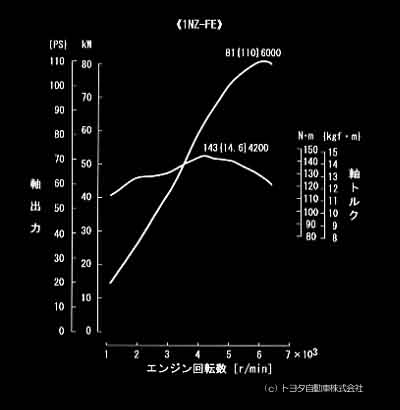
> here. The stock Scion xA's 5MT power/torque curve is here:
>
> http://www.remus.dti.ne.jp/~pochiinu/001Vitz-TechInfo/Taco/0411NZ-EGSC.jpg
>
> Left is power, right is torque, bottom is rpm.
>
> The power/torque curve for the AC55 is (blue and pink lines):
>
> http://thsoftware.com/linked/ac55-motor-stats.jpg
>
> So, a 60mph top speed is too slow, so I'm thinking of locking the
> gearbox in 3rd gear. Since the electric motor has twice the torque early
> on versus the ICE engine, would 3rd be ok? Or would the acceleration be
> too slow? I'm hoping for comparable, or slightly faster acceleration
> versus the ICE engine (0 to 60 in 10 seconds or so for the ICE engine).
>
>                  - Tony
>
> ----- Original Message ----
> From: Roland Wiench <[EMAIL PROTECTED]>
> To: [email protected]
> Sent: Wednesday, March 14, 2007 7:45:58 AM
> Subject: Re: Question about optimal gear ratio and where to get
> gearboxes
>
> Hello Tony,
>
> I first start out with this formula when designing any prime mover
> system:
>
>                   RPM  x  Tire Circumference
>         RPM  =    --------------------------
>                   Overall Gear Ratio x 1056
>
> To find the tire circumference, mark a reference point on the floor and
> tire  and rotate the tire until the tire mark is touching the floor and
> measure  between the marks.
>
> The overall gear ratio is the transmission gear in the selected gear you
> are  in times the differential gear ratio.
>
> For example, my 1st gear ratio is 3.5:1 and the differential ratio is
> 5.57:1, so the overall ratio in 1st gear is 3.5 x 5.57 = 19.495:1
>
> My wheel circumference is 90 inches and maximum motor rpm is 6000 rpm,
> so:
>
>
>                6000  x   90
>      mph =     ------------  =   26.23 mph in 1st gear
>                19.495 x 1056
>
> I can accelerated to 25 mph moving 7000 lbs of weight at a normal
> acceleration of any of vehicle in traffic and the maximum ampere will
> peak  to about 300 amps, then at cruse at 25 mph, the motor amperes
> comes back to  125 amps.
>
> In second gear which is a 13.5:1 overall ratio, the motor amps goes to
> about  500 amps if I start out in this gear.
>
> TCI Automotive makes up transmissions with any gear ratio you want,
> which I  am going to test out this year.
>
> Roland
>
>
>
> ----- Original Message -----
> From: "Tony Hwang" <[EMAIL PROTECTED]>
> To: <[email protected]>
> Sent: Wednesday, March 14, 2007 4:27 AM
> Subject: Question about optimal gear ratio and where to get gearboxes
>
>
>> I hear the number 10:1 thrown around, and it's also used in custom
>> gearboxes for the AC24,  and MES DEA motors.
>>
>> I'm wondering, given a motor torque/rpm curve, how would one calculate
>> the  optimal gear ratio? Efficiency, acceleration, top speed, etc,
>> would all  have to be balanced. I'm not sure where to begin. Also,
>> where does one get  a custom gearbox/diff made? I did some googling
>> and couldn't find anything  except custom racing transmissions which I
>> don't need. I need just a one  ratio gearbox. Would a torque limiter,
>> or something that allows slip, be  needed to protect the motor?
>>
>>               - Tony
>>
>>
--- End Message ---
--- Begin Message ---
Instead of clips, check this out,
http://www.aavidthermalloy.com/cgi-bin/mxclipsrch_all.pl?Package=screw&Search1=Search
Aavid spring clips, part number  MAX07G or MAX08G.
Drill holes in your 1" thick heatsink to hold these
clips, uneven clamp pressure won't be a problem if you
follow their app notes.  You mentioned 1/8" from the
board, make sure you don't fatigue the package by
being to close to the board.  You'll have to drill and
tap each clip, but if you only go about 1/2" to 3/4"
deep you won't compromise your watertight
configuration.
I think this is your best bet if you want uniform
force distribution on each semiconductor.  Good luck
and keep us up to date on what method you use.
Rod
--- Eric Poulsen <[EMAIL PROTECTED]> wrote:

> I presented this question to the EVTech list, and I
> got a few
> responses.  I thought I'd throw it at a wider
> audience and see what
> others might think.
>
> I'm presently toying around with building a motor
> controller.  I have
> the physical layout of the power stage pretty much
> done.  I need a good
> way of clamping TO220 and TO247 devices to the heat
> sink.  The sink
> itself is 1" wide by 1.25" high by 12" long.  The
> components will be
> located 1/8" from the bottom edge.  Because of the
> tight nature of the
> design, and the need to place the gate drivers close
> to the MOSFETs, I
> need a thin springy clamp.  A binder clip seems
> ideal, except that
> they're not big enough to span the 1.5" comprised of
> the sink and the
> thickness of the components.  Lee Hart mentioned
> that their clamping is
> uneven.
>
> I'm going to try cutting, annealing,
> drilling/bending, hardening and
> (finally) tempering some pieces of spring steel cut
> from large binder
> clips, with the aim of making separate one-sided
> (L-shaped rather than U
> shaped) clamps for each device.
>
> Alternatively, I was considering using the steel
> from putty knives in
> it's flat form, and deforming it with a screw to
> apply pressure.
>
> I'd rather there was a simple approach to this.
>
> Oh, and drilling holes in the heat sink itself is
> not an option, as it's
> watertight.
>
> Anyone?
>
>
--- End Message ---
--- Begin Message ---
Eric,

Drill and tap the heatsink and use studs by holding in place with lock
tite.  This will seal out water just fine.  Sparky
--- End Message ---
--- Begin Message ---
Mike,  I did a similar conversion on a Corvair, years ago.  I retained the
clutch and the transmission and built a shunt controller.  I will try to
look up my notes.  I still have the car, but it has not run for years.  I
used a ton of trojan batteries, and the car went 50 miles at 50mph as long
as there was a good tail wind and it was down hill.  Seriously, not bad
performance. Its important to keep the gear selection, no matter what else
you do.


On Thu, 15 Mar 2007 11:27:39 -0700 (PDT), mike golub wrote
> Hello
>
> I'm working on my metro conversion project.
> I got this g29 aircraft generator which is a shunt
> motor.
>
> I am in the process of building my own adapter plate
> and shaft coupler.
>
> I was thinking about direct drive, and shifting
> without the clutch.
>
> One big question is can I use one of those curtis
> series controllers with this shunt motor? If not are
> there any shunt motor controllers out there?
>
> Another question. I took the nut of the rear of the
> G29, and this long metal shaft came out, and now I
> have a small 16 teeth spline sticking out. Is that
> what people have been mounting the flywheel on?
> It seems I could make a new shaft that would have a
> better connecting piece?
>
> Again thanks in advance!
>
>
_____________________________________________________________________________
_______
> 8:00? 8:25? 8:40? Find a flick in no time
> with the Yahoo! Search movie showtime shortcut.
> http://tools.search.yahoo.com/shortcuts/#news
--- End Message ---
--- Begin Message ---
> The EV, I tell them, requires almost no routine
> maintenance, and almost all of it can be done in a
> few  minutes by the owner in their own garage, and
> without getting their hands dirty.
Aye, there's the RUB -- I *like* getting dirty. :D

I may have to go to one-shot lubrication on my EV just so I can still
have that grease-smeared sense of accomplishment! :D

Shari's right, that it seems like discussions don't go apples-to-apples
very often. IMHO, it weakens the discussion, and respect for the
presenter. John Wayland's rightfully took aim at the 640-hp Wheel-Motor
Mini for similar apples-to-melons comparisons.

Randii
--- End Message ---
--- Begin Message ---
I agree with you.  I have both ICE and EV now and I like all of my cars.  I
use the ICE to go to work since my work is a 90 mile round trip commute.  I
also use the ICE to go on long trips.  But I use the EV every chance that I
get because it is fun to drive and I love just passing by the gas stations
without stopping.  I guess that I just don't care if I am saving a lot of
money by driving the EV.  I have always wanted to build an electric vehicle
since I was knee high to a tad pole, :>).  I am now 58 years old.  So I have
finally completed one of my dream goals.  I have shown the truck to a lot of
local people and there seems to be a lot of interest.  I will be getting
interviewed by our local paper tomorrow; weather permitting and I have just
entered the truck in its first car show set for the end of this month.  I
really believe that the world is big enough for both ICE vehicles and EV
vehicles.  They both have their place for now.

Freddie

-----Original Message-----
From: Randy Burleson [mailto:[EMAIL PROTECTED]
Sent: Thursday, March 15, 2007 2:55 AM
To: [email protected]
Subject: RE: wall to road efficiency

> Don't forget to subtract the oil changes, tune-ups,
> muffler replacements, radiators, water pumps, etc.
> that a gas version would normally go through.
I'm entirely convinced that either the EV community is made up of people
wholly cursed with their ICEs... or that generous logic is being applied
to EVs, while pessimistic logic is applied to ICEs.

Parked on my property I have:
* 1993 3/4-ton Dodge turbo-diesel pickup - 168K
* 1999 Subaru Legacy - 180K
* 1990 Isuzu Amigo - 155K
* 1989 Isuzu Amigo - 185K
There have been an few significant failures to date, in well over 600K
miles of use and abuse:
 - Subaru needed new camshaft seals, which required a significant degree
of disassembly
 - 90 Amigo burst an oil line and dead-head driver failed (sadly: me) to
notice the red light
        (gave me a great excuse to stuff a Mustang EFI 302 into it!)

I live in CA -- cars seem to last forever (as do mufflers, radiators,
and sheet metal). I do change the oil regularly on these vehicles, but
that's pretty cheap except for the diesel. I have to smog the gassers
every other year -- there's a cost that an EV Evades.

I'm still planning an EV trike, but that's for fun -- I don't really
expect that it will ever save me money unless the price of fuel spikes
well beyond where it has been. Electricity has been increasing in cost,
as especially have batteries...

EVs are a valid choice. So are ICEs.
They don't compare very well -- why must we slam one to appreciate the
other?

Randii
--- End Message ---
--- Begin Message ---
Hey Mike

I see no ones hit this yet.  I'm pretty sure both
Wayland and Matt Graham do it this way.  Not sure how
you'd wire it so hopefully someone will chime in.
My question is what would happen if the coupler broke?

Getting back to your previus post:
It sounds like you're getting two more 9"'ers huh?
Damn man, how many 9"s does it take to keep your wife
happy!
You just be careful when you get those new 9's cause I
ain't posting no "Mikes wornout shaft pics" in my hall
of flames album, LMAO!!!

One of these days though, you single motor guys are
gonna understand that once you've had Siamese you
never go back, LMAO.  Hey Wayland, you're pretty happy
with my 8"er aren't you?

Anyway you seemed pretty puffy chested about those
9"ers but remember Mike it's not just the size but how
it's powered, hell I just got my 6.7" in Hot Rod
magazine 8^o  All I'm saying is you don't want
something so big it takes all your juice to launch but
then peters out resulting in poor over all runs!!

You crying yet! ROF

Had Fun

Cya
Jim Husted
Hi-Torque Electric


____________________________________________________________________________________
No need to miss a message. Get email on-the-go
with Yahoo! Mail for Mobile. Get started.
http://mobile.yahoo.com/mail
--- End Message ---
--- Begin Message ---
Hey Mike

Was wondering what you're gonna do with the lift (keep
whole or part it into an EV)?

Lectro lift used a lot of surplus motors so in my
experience there kinda like a box of choclates, you'll
never know what you'll find 8^)  They used mostly the
6.7" GE's but I've seen a few Prestolite 7" motors
that were from a Lectro lift.

Like Wayland said just be safe!  I'm pretty sure they
have laws against running moose over with forklifts up
there 8^P  Then again we wouldn't want you to dent the
forklift either, hehe.

Anyway if you want shoot me a pic of the motors that
unit has.  Don't worry about me ripping in to you K, I
Don't do that till you start to rebuild them 8^)

Cya
Jim Husted
Hi-Torque Electric

--- mike golub <[EMAIL PROTECTED]> wrote:

> Thanks
>
> it weighs 6200 lbs, trailer can handle it.
> it still has the battery inside
> sit down type.
>
> I will off load it onto a snow covered driveway.
>
>
> Thanks again
> Mike G.
> Fairbanks, AK
>
>
> --- John Wayland <[EMAIL PROTECTED]> wrote:
>
> > Hello Mike and All,
> >
> > mike golub wrote:
> >
> > >Hey
> > >
> > >I'm going to tow this lectro electric forklift
> > 30-24a
> > >home tomorrow, using a tilt bed trailer.
> > >
> > >
> >
> > Though I've worked on Lectro lift trucks, I don't
> > know that exact model.
> > Are you sure the trailer you're going to use can
> > handle the weight? Even
> > small lift trucks can weigh 7000+ lbs., most
> average
> > size ones are in
> > the 10,000 lb. range. Does it have its battery
> > installed still? If not,
> > it will be very unstable and could tip over on
> you!
> >
> > >Do they brakes work without power?
> > >
> > >
> >
> > Yes, they work quite well without power! In fact,
> > they stay nicely
> > locked 'on' without power, and need power to be
> > released.
> > Pretty much all stand-up type electric forklift
> > brake systems are
> > designed as 'deadman' pedals, meaning that if the
> > operator is off the
> > truck, the brakes stay in the applied mode...not
> > what you wanted to
> > hear, I know :-) Most electric trucks have spring
> > pressure applied,
> > electrically released brakes. Raymond lift trucks
> > are most often spring
> > pressure applied, hydraulically released
> > brakes..arghh!! If your truck
> > is a stand-up model and has the electrically
> > released type (90% of
> > stand-up electric trucks are like this), you
> should
> > be able to unplug
> > the brake coils and power them up with a couple of
> > small 12V batteries
> > wired in series for the truck's operating voltage,
> > but be aware that
> > lift trucks are extremely heavy and very
> dangerous.
> > You can be killed by
> > a runaway lift truck with its brakes disengaged!
> >
> > If the truck is a sit-down type 3 or 4 wheel
> design,
> > then it more than
> > likely has brakes that more resemble a car's
> > system...brakes only held
> > on by a park brake handle or pedal.
> >
> > In any case, please be safe and realize how heavy
> > this truck will be. If
> > it's a stand-up model, also know that even if the
> > brake is on, if the
> > truck hits uneven pavement, is can careen out of
> > control as its drive
> > tire breaks contact with the floor and it becomes
> a
> > coasting mass on its
> > outriggers and caster wheel. The brakes on a
> > stand-up are usually
> > attached to the drive motor's com. end shaft, so
> if
> > the drive tire
> > losses traction, you've got no brakes!
> >
> > >I was hoping I could just roll it down the ramp?
> > >
> > >
> > >
> > Again, please be VERY careful. Lift trucks can be
> > very dangerous.
> > Yesterday, I stood up a newly delivered 10,000 lb.
> > Crown electric reach
> > truck...a two man, two forklift job, that makes
> > parts of your anatomy
> > pucker! The week before, I helped unload a massive
> > 14 ft. tall, 19,000
> > lb. Crown electric turret truck off the back of a
> > semi with/beaver tail
> > trailer...that was an interesting ride, too!
> >
> > See Ya...John Wayland
> >
> >
>
>
>
>
>
____________________________________________________________________________________
> Sucker-punch spam with award-winning protection.
> Try the free Yahoo! Mail Beta.
>
http://advision.webevents.yahoo.com/mailbeta/features_spam.html
>
>


____________________________________________________________________________________
Need Mail bonding?
Go to the Yahoo! Mail Q&A for great tips from Yahoo! Answers users.
http://answers.yahoo.com/dir/?link=list&sid=396546091
--- End Message ---
--- Begin Message ---
I don't know enough about your project to guess, but I was impressed
with, of all things, GM's computer assembly. I don't know how this would
scale up either. The completely sealed case IS the heatsink.

the fuel injector drivers are soldered to the circuit board and layed
over onto a pent-roof shaped support that has springs underneath it. As
the screws are inserted to hold the board down, they go thru this
structure between the drivers and to the case. This pulls the case down
tight compressing the springs under the drivers.
--- End Message ---
--- Begin Message ---
Doug,
Thanks for the ideas, but (for various reasons), I don't think any of
these would work. The springs almost have to be thin spring steel
because of physical constraints.
-- Eric

Doug Weathers wrote:
A great big hose clamp? Run it across all of the devices and around
behind the heat sink and back to the front again. Put pieces of
rubber or springs between the hose clamp and the devices near the
middle, because the devices on the ends will get extra pressure.
Don't overtighten!
To avoid the weak middle effect, you might use the hose clamp to
squeeze a piece of C-channel against the devices. Or just use two
pieces of C-channel, one on either side of the heatsink, held together
at the ends with long bolts.
I know the heatsink is supposed to be watertight, but can you put a
stud through it and weld it closed again? Then you could hold the
devices down with nuts like God intended.
There exist watertight fasteners, like bolts with O-rings integrated
into the head. Sorry, can't find the reference again.
Is there some sort of enclosure going over this assembly? Can you put
a bunch of springs on the inside of the cover that press the devices
down to the heatsink when the cover is installed? Or, drill and tap
holes in the cover and put knurled screws through them. Tighten them
by hand to press the devices against the heatsink.
On Mar 15, 2007, at 5:00 PM, Eric Poulsen wrote:
I presented this question to the EVTech list, and I got a few
responses. I thought I'd throw it at a wider audience and see what
others might think.
I'm presently toying around with building a motor controller. I have
the physical layout of the power stage pretty much done. I need a
good way of clamping TO220 and TO247 devices to the heat sink. The
sink itself is 1" wide by 1.25" high by 12" long. The components
will be located 1/8" from the bottom edge. Because of the tight
nature of the design, and the need to place the gate drivers close to
the MOSFETs, I need a thin springy clamp. A binder clip seems ideal,
except that they're not big enough to span the 1.5" comprised of the
sink and the thickness of the components. Lee Hart mentioned that
their clamping is uneven.
I'm going to try cutting, annealing, drilling/bending, hardening and
(finally) tempering some pieces of spring steel cut from large binder
clips, with the aim of making separate one-sided (L-shaped rather
than U shaped) clamps for each device.
Alternatively, I was considering using the steel from putty knives in
it's flat form, and deforming it with a screw to apply pressure.
I'd rather there was a simple approach to this.
Oh, and drilling holes in the heat sink itself is not an option, as
it's watertight.
Anyone?
--- End Message ---
--- Begin Message ---
Rod Hower wrote:
Instead of clips, check this out,
http://www.aavidthermalloy.com/cgi-bin/mxclipsrch_all.pl?Package=screw&Search1=Search
Aavid spring clips, part number  MAX07G or MAX08G.
Drill holes in your 1" thick heatsink to hold these
The waterblock itself is 1" wide, but the walls are 1/8" thick, leaving
a 3/4" x 3/4" square channel through the center.
clips, uneven clamp pressure won't be a problem if you
follow their app notes.  You mentioned 1/8" from the
board, make sure you don't fatigue the package by
The bottom of the TO220 case is 1/8" from the bottom of the waterblock
itself. There's a 1/4" air gap below that, then three bus bars (B-, M-,
and B+). The actual leads are full length, with a 26/24 #0 stud ring
terminal crimped to the ends of the source and drain, while the gate is
bent out 90 degrees and attached to the gate driver board. The ring
terminals are attached to the bus bars with 2-56 x 1/4" long brass
screws and lock washers.
being to close to the board.  You'll have to drill and
tap each clip, but if you only go about 1/2" to 3/4"
deep you won't compromise your watertight
configuration.
I think this is your best bet if you want uniform
force distribution on each semiconductor.  Good luck
and keep us up to date on what method you use.
Rod
--- Eric Poulsen <[EMAIL PROTECTED]> wrote:
I presented this question to the EVTech list, and I
got a few
responses. I thought I'd throw it at a wider
audience and see what
others might think.
I'm presently toying around with building a motor
controller. I have
the physical layout of the power stage pretty much
done. I need a good
way of clamping TO220 and TO247 devices to the heat
sink. The sink
itself is 1" wide by 1.25" high by 12" long. The
components will be
located 1/8" from the bottom edge. Because of the
tight nature of the
design, and the need to place the gate drivers close
to the MOSFETs, I
need a thin springy clamp. A binder clip seems
ideal, except that
they're not big enough to span the 1.5" comprised of
the sink and the
thickness of the components. Lee Hart mentioned
that their clamping is
uneven.
I'm going to try cutting, annealing,
drilling/bending, hardening and
(finally) tempering some pieces of spring steel cut
from large binder
clips, with the aim of making separate one-sided
(L-shaped rather than U
shaped) clamps for each device.
Alternatively, I was considering using the steel
from putty knives in
it's flat form, and deforming it with a screw to
apply pressure.

I'd rather there was a simple approach to this.

Oh, and drilling holes in the heat sink itself is
not an option, as it's
watertight.
Anyone?
--- End Message ---
--- Begin Message ---
Not a bad idea. I guess I didn't mention that there are components on
both sides of the waterblock. I need to think on this more.
Roger Stockton wrote:
Doug Weathers wrote:
To avoid the weak middle effect, you might use the hose clamp to
squeeze a piece of C-channel against the devices. Or just use two
pieces of C-channel, one on either side of the heatsink, held
together at the ends with long bolts.
Or simply use a bit of C or U-channel the length of the heatsink and
wide enough to slip over top of it.  Drill and tap holes in the side of
the channel on the opposite side of the heatink from the devices and
tighten bolts in these holes to push against the heatsink tube and
squeeze the devices between the heatsink and the other side of the
channel.

Like so:

          +--------+  <-- channel/clamp
          |H +---+ |
          |H |   |-+-| <- bolts
           | +---+
           | <----------- devices (H = body)

Cheers,

Roger.
--- End Message ---
--- Begin Message ---
"A lot of cars today can go 100,000 miles with nothing but oil and air
filters"

And even more of them can't!.

I have found that a lot of cars also wear in such a way that at about
80,000 the transmission and engine are not rebuildable, They(the
automakers) have gotten better at planned obsolescence.

They create a line of upper end cars that are made to last and that
fuels their reputations, but then they do things like create a second
version of a transmission with bushings where the other model had
bearings, Use a coating on the piston skirt to counteract the side
forces from having a really really short piston , when it wears it slaps
around and tears upthe wall, that can't be honed because they have
really thin castings.

Admittedly this is more a practice of a few manufactures than others.

I think this is one of the driveing forces for me in wanting to drive an
EV. I don't think when you spend all that money on a vehicle that their
should be all that propritary info. The temptation to overcharge for
repairs when you are the one holding the secret code, is too high. I
have reverse engineered the 95 8192 GM protocol to solve a problem with
my grand am because the dealer here in town didn't have the special
reader and wanted "a lot" to do the diagnostic because they had to rent it.

I am hopeing that new car companies that supply EV's will really be "
NEW", Realizing that they don't have to strive to be like the car
companies of the last 100 years.
--- End Message ---
--- Begin Message ---
Hey Rod

Just like I said the first time I saw it, I want one!
I could have fun with that sucker on Halloween 8^)
It popped this video up for me after that one which
would even be better for scaring the kiddies, check
this one, it could be an EV.  How'd like to crunch
through traffic on this, LMAO

http://www.youtube.com/watch?v=UCsltP8TnOU&NR

Anyway thanks for the link, just shows ya how many
ways there is to skin that 'ol EV cat 8^)

Cya
Jim Husted
Hi-Torque Electric


____________________________________________________________________________________
Bored stiff? Loosen up...
Download and play hundreds of games for free on Yahoo! Games.
http://games.yahoo.com/games/front
--- End Message ---
--- Begin Message ---
well, well...
Forklift is in my yard, and the moose came by (Mama
and her two calves).

My bumper came off my van when I was giving the
trailer a little tug to come off the tilt-bed trailer.

Anyway you want a picture of the motor...now where do
the motors hang out?

Here's a picture of the guy:
http://www.flickr.com/photos/mikeak/422678654/

--- Jim Husted <[EMAIL PROTECTED]> wrote:

> Hey Mike
>
> Was wondering what you're gonna do with the lift
> (keep
> whole or part it into an EV)?
>
> Lectro lift used a lot of surplus motors so in my
> experience there kinda like a box of choclates,
> you'll
> never know what you'll find 8^)  They used mostly
> the
> 6.7" GE's but I've seen a few Prestolite 7" motors
> that were from a Lectro lift.
>
> Like Wayland said just be safe!  I'm pretty sure
> they
> have laws against running moose over with forklifts
> up
> there 8^P  Then again we wouldn't want you to dent
> the
> forklift either, hehe.
>
> Anyway if you want shoot me a pic of the motors that
> unit has.  Don't worry about me ripping in to you K,
> I
> Don't do that till you start to rebuild them 8^)
>
> Cya
> Jim Husted
> Hi-Torque Electric
>
> --- mike golub <[EMAIL PROTECTED]> wrote:
>
> > Thanks
> >
> > it weighs 6200 lbs, trailer can handle it.
> > it still has the battery inside
> > sit down type.
> >
> > I will off load it onto a snow covered driveway.
> >
> >
> > Thanks again
> > Mike G.
> > Fairbanks, AK
> >
> >
> > --- John Wayland <[EMAIL PROTECTED]> wrote:
> >
> > > Hello Mike and All,
> > >
> > > mike golub wrote:
> > >
> > > >Hey
> > > >
> > > >I'm going to tow this lectro electric forklift
> > > 30-24a
> > > >home tomorrow, using a tilt bed trailer.
> > > >
> > > >
> > >
> > > Though I've worked on Lectro lift trucks, I
> don't
> > > know that exact model.
> > > Are you sure the trailer you're going to use can
> > > handle the weight? Even
> > > small lift trucks can weigh 7000+ lbs., most
> > average
> > > size ones are in
> > > the 10,000 lb. range. Does it have its battery
> > > installed still? If not,
> > > it will be very unstable and could tip over on
> > you!
> > >
> > > >Do they brakes work without power?
> > > >
> > > >
> > >
> > > Yes, they work quite well without power! In
> fact,
> > > they stay nicely
> > > locked 'on' without power, and need power to be
> > > released.
> > > Pretty much all stand-up type electric forklift
> > > brake systems are
> > > designed as 'deadman' pedals, meaning that if
> the
> > > operator is off the
> > > truck, the brakes stay in the applied mode...not
> > > what you wanted to
> > > hear, I know :-) Most electric trucks have
> spring
> > > pressure applied,
> > > electrically released brakes. Raymond lift
> trucks
> > > are most often spring
> > > pressure applied, hydraulically released
> > > brakes..arghh!! If your truck
> > > is a stand-up model and has the electrically
> > > released type (90% of
> > > stand-up electric trucks are like this), you
> > should
> > > be able to unplug
> > > the brake coils and power them up with a couple
> of
> > > small 12V batteries
> > > wired in series for the truck's operating
> voltage,
> > > but be aware that
> > > lift trucks are extremely heavy and very
> > dangerous.
> > > You can be killed by
> > > a runaway lift truck with its brakes disengaged!
> > >
> > > If the truck is a sit-down type 3 or 4 wheel
> > design,
> > > then it more than
> > > likely has brakes that more resemble a car's
> > > system...brakes only held
> > > on by a park brake handle or pedal.
> > >
> > > In any case, please be safe and realize how
> heavy
> > > this truck will be. If
> > > it's a stand-up model, also know that even if
> the
> > > brake is on, if the
> > > truck hits uneven pavement, is can careen out of
> > > control as its drive
> > > tire breaks contact with the floor and it
> becomes
> > a
> > > coasting mass on its
> > > outriggers and caster wheel. The brakes on a
> > > stand-up are usually
> > > attached to the drive motor's com. end shaft, so
> > if
> > > the drive tire
> > > losses traction, you've got no brakes!
> > >
> > > >I was hoping I could just roll it down the
> ramp?
> > > >
> > > >
> > > >
> > > Again, please be VERY careful. Lift trucks can
> be
> > > very dangerous.
> > > Yesterday, I stood up a newly delivered 10,000
> lb.
> > > Crown electric reach
> > > truck...a two man, two forklift job, that makes
> > > parts of your anatomy
> > > pucker! The week before, I helped unload a
> massive
> > > 14 ft. tall, 19,000
> > > lb. Crown electric turret truck off the back of
> a
> > > semi with/beaver tail
> > > trailer...that was an interesting ride, too!
> > >
> > > See Ya...John Wayland
> > >
> > >
> >
> >
> >
> >
> >
>
____________________________________________________________________________________
> > Sucker-punch spam with award-winning protection.
> > Try the free Yahoo! Mail Beta.
> >
>
http://advision.webevents.yahoo.com/mailbeta/features_spam.html
> >
> >
>
>
>
>
>
>
____________________________________________________________________________________
> Need Mail bonding?
> Go to the Yahoo! Mail Q&A for great tips from Yahoo!
> Answers users.
>
http://answers.yahoo.com/dir/?link=list&sid=396546091
>
>


____________________________________________________________________________________
Sucker-punch spam with award-winning protection.
Try the free Yahoo! Mail Beta.
http://advision.webevents.yahoo.com/mailbeta/features_spam.html
--- End Message ---
--- Begin Message ---
From: Scott Stadler
> How hard would it be to retro fit a small motor to replace the
> axles of a front wheel drive car?

Hard. A small motor implies small torque, which means it won't have enough
torque to do much. A large motor either won't fit, or would add so much weight
that it would interfere with the handling (adds too much unsprung weight).

> Would it even be possible to machine something to fit the drive
> shaft of the motor to mimic the cogged end of the axles where
> it fits into the wheel hub?

Well, let's think about it... Some transaxles have a faily large external
constant velocity universal joint on each half shaft. You need a fairly large
diameter electric motor anyway to produce enough torque to be useful. So, it
would be possible to design a special motor with a large enough center hole so
the CV joint can fit inside it. The rotor (moving part of an electric motor)
would turn the part of the CV joint connected to the transaxle. The stator
(fixed part of an electric motor) would need to be attached to the transaxle
case. An expert machinist, or a car company willing to spend a lot on tooling
could do it.

> How critical are the axles to the stability of the front wheel/strut
> assembly?

It depends. Sometimes, the axles themselves are part of the suspension. More
often, on front wheel drive vehicles, they just connect the fixed transaxle to
the moving wheel with a pair of universal joints, so their only real
contribution to handling is their weight.

If you really wanted to do something like this, hydraulic motors would be
easier than electric motors. They are much smaller for a given amount of
torque. But you'd need a hydraulic pump to convert mechanical power into oil
pressure to run them.

> Also, how much harder/easier/safer would this be to attempt on
> a rear wheel drive vehicle?

The principle is the same, though the details differ. At least with a rear
axle, you can use a solid axle, and mount the motor to the drive shaft or
pinion, where it gains a torque advantage from the differential (a 3:1 rear end
means the motor only needs to produce 1/3rd the torque, and so can be 3x
smaller).
--
Lee Hart
--- End Message ---
--- Begin Message ---
Hey Mike, Jeff, all

I know Marko runs a 7" Prestilite shunted motor, I
believe the MGP in Fiamp.  I've heard they don't work
as well as a series wound but I know of others using
them as well.

Brian Hall sent me down a Lectric Leopard motor which
is a modified Prestolite shunt motor.  I happen to
have a compatable 7" series coil set so I offered to
throw them in rather than reinstall the set it came in
with.  Anyway it appears to be an MGP (it's been
modded) and I believe the series coils are from an MGS
as memory serves.

First I'm wondering what Jeff thinks about this, and
second that Brian might be able to shed light on how
this motor was being run and how it preformed, he did
tell me to swap the coils out so sounds like it wasn't
optimal with the shunt coils.

I don't know if they used standard motors for the
Lectric Leopard or if this is even an OEM one, but
that might be a lead to look into for what they did
being it seemed to have at least worked.  The motor
doesn't show any signs of heat for what it's worth.

Anyway just came across this bridge here myself.
Hope this helps

Jim Husted
Hi-Torque Electric


--- Jeff Major <[EMAIL PROTECTED]> wrote:

> Mike,
>
>   About the controller.  I have used a Curtis
> 48V,275A series controller on a compound motor
> leaving original motor field connections intact.
> Been working fine for over 10 yrs on a old Sears
> lawn tractor.  But I've never tried that controller
> on a shunt motor.  At least a compound motor has
> some field in series with the armature.  Guess I'd
> worry about the shunt motor without any series field
> having such a low inductance that the current will
> rise so fast that the controller won't handle it.
> Also, if you leave the shunt field across the
> armature connections, on start up, high current and
> low voltage from controller, the field will also be
> low, meaning low torque and low back emf, meaning
> higher currents for longer time.
>
>   Well, if you can follow that, it might work, then
> again?????
>
>   I don't think they actually make a shunt motor
> controller, but do make a separately excited motor
> controller (SepEx).  These are made to controller
> armatures with the low inducatnce and would work on
> a shunt motor.  The SepEx controller has separate
> terminals to connect the field.  Usually, the SepEx
> motor has a much lower resistance field than a shunt
> motor, so the SepEx controller can over excite the
> field at high armature currents.  I suspect you
> could program (or tune) a SepEx controller to run
> the shunt motor.  Possibly reconnect the fields
> (like from series to parallel) to lower field
> resistance.  Sevcon, as well as Curtis, makes SepEx
> controllers.  Sevcon is less $.  I've used both on
> SepEx motors.
>
>   Another way, if you connect the shunt field
> separately to the battery, then the motor (which
> would be just the armature) should resemble a PM
> motor.  They do make PM motor controllers.  But I am
> not sure they would be powerful enough for you.
>
>   Good luck.
>
>   Jeff
>
> mike golub <[EMAIL PROTECTED]> wrote:
>   Hello
>
> I'm working on my metro conversion project.
> I got this g29 aircraft generator which is a shunt
> motor.
>
> I am in the process of building my own adapter plate
> and shaft coupler.
>
> I was thinking about direct drive, and shifting
> without the clutch.
>
> One big question is can I use one of those curtis
> series controllers with this shunt motor? If not are
> there any shunt motor controllers out there?
>
> Another question. I took the nut of the rear of the
> G29, and this long metal shaft came out, and now I
> have a small 16 teeth spline sticking out. Is that
> what people have been mounting the flywheel on?
> It seems I could make a new shaft that would have a
> better connecting piece?
>
> Again thanks in advance!
>
>
>
>
>
>
____________________________________________________________________________________
> 8:00? 8:25? 8:40? Find a flick in no time
> with the Yahoo! Search movie showtime shortcut.
> http://tools.search.yahoo.com/shortcuts/#news
>
>
>
>
> ---------------------------------
> Expecting? Get great news right away with email
> Auto-Check.
> Try the Yahoo! Mail Beta.
>
>


____________________________________________________________________________________
Looking for earth-friendly autos?
Browse Top Cars by "Green Rating" at Yahoo! Autos' Green Center.
http://autos.yahoo.com/green_center/
--- End Message ---