https://www.thedrive.com/news/31349/forget-the-cybertruck-get-yourself-a-factory-1997-chevrolet-s-10-electric-pickup
Forget the Cybertruck: Get Yourself a Factory 1997 Chevrolet S-10 Electric
Pickup
DECEMBER 13, 2019  ROB STUMPF
[images
https://the-drive-2.imgix.net/https%3A%2F%2Fapi.thedrive.com%2Fwp-content%2Fuploads%2F2019%2F12%2F209306.jpg%3Fquality%3D85?w=1440&auto=compress%2Cformat&ixlib=js-1.4.1&s=133e127e31fa569c4ce41a2e58277c53
S-10 Electric Pickup 1GM

https://the-drive.imgix.net/https%3A%2F%2Fs3-us-west-2.amazonaws.com%2Fthe-drive-cms-content-staging%2Fmessage-editor%252F1576266055715-c7609-97csv-0017.jpg?auto=compress%2Cformat&ixlib=js-1.4.1&s=c173cc00ee44ae36d234ac05a59a0a69

https://the-drive-2.imgix.net/https%3A%2F%2Fs3-us-west-2.amazonaws.com%2Fthe-drive-cms-content-staging%2Fmessage-editor%252F1576265117969-gagues.jpg?auto=compress%2Cformat&ixlib=js-1.4.1&s=b3dd2e8d1ba6b6210508156138ca55eb
 VIA KEITH DILLMAN, FACEBOOK

https://the-drive.imgix.net/https%3A%2F%2Fs3-us-west-2.amazonaws.com%2Fthe-drive-cms-content-staging%2Fmessage-editor%252F1576242623868-2.jpg?auto=compress%2Cformat&ixlib=js-1.4.1&s=f7ef5ec5b2cd6d9d8a59efaf4e7196eb

https://the-drive-3.imgix.net/https%3A%2F%2Fs3-us-west-2.amazonaws.com%2Fthe-drive-cms-content-staging%2Fmessage-editor%252F1576265869520-s10-3.jpg?auto=compress%2Cformat&ixlib=js-1.4.1&s=7519a5ab6ea127269563d18d76c0c5ba

https://the-drive-3.imgix.net/https%3A%2F%2Fs3-us-west-2.amazonaws.com%2Fthe-drive-cms-content-staging%2Fmessage-editor%252F1576265896989-s10-2.jpg?auto=compress%2Cformat&ixlib=js-1.4.1&s=5aa6ddcfde795af0e823bca4cb5557ff
 nimh

https://the-drive-2.imgix.net/https%3A%2F%2Fs3-us-west-2.amazonaws.com%2Fthe-drive-cms-content-staging%2Fmessage-editor%252F1576265340186-78401415_2585857338136706_4727354654554324992_n.jpg?auto=compress%2Cformat&ixlib=js-1.4.1&s=c472cf0deac7d0fa1d589230fb0cd5ca

https://s3-us-west-2.amazonaws.com/the-drive-cms-content-staging/message-editor%2F1576265485119-batterypack.jpg

https://s3-us-west-2.amazonaws.com/the-drive-cms-content-staging/message-editor%2F1576265497387-78589383_2585857534803353_3000993503409864704_n.jpg

https://s3-us-west-2.amazonaws.com/the-drive-cms-content-staging/message-editor%2F1576265507157-78249561_2585857438136696_3589346358730948608_n.jpg

https://the-drive-3.imgix.net/https%3A%2F%2Fs3-us-west-2.amazonaws.com%2Fthe-drive-cms-content-staging%2Fmessage-editor%252F1576246356847-12.jpg?auto=compress%2Cformat&ixlib=js-1.4.1&s=5c32ab3984f5bbba326f9aabeb2b2f82


video
https://youtu.be/i3mR0S15AfY
Hughes Magne Charge Load Management System  7:29
Oct 26, 2018 - Uploaded by SteveS
Hughes Magne Charge Load Management System Demonstration ...
]

Think Tesla is making the first electric pickup? Think again.

Despite electric vehicles only recently beginning to grow in popularity,
automakers have been experimenting with battery-electric power as far back
as the late 19th century. In the 1990s, spurred by impending emissions
legislation in places like California, several major manufacturers attempted
low-volume EV releases. The most well-known example is the ... GM EV1
coupe—less known is the fact that GM adapted that powertrain to create the
world's first electric pickup truck in the 1997 Chevrolet S-10 Electric,
some of which are still on the road today.

In 1990, GM showed the world a concept for an electric car called the Impact
that would later go on sale as the well-documented EV1 [
https://www.thedrive.com/news/31345/theres-an-ultra-rare-1999-gm-ev1-abandoned-in-an-atlanta-parking-garage
]. When the EV1 launched in 1996, GM's engineers were inspired by its newly
developed modular electric powertrain and plopped a modified version into
the Chevrolet S-10 midsize pickup, beginning production of the so-called
S-10 Electric in 1997.

GM started with a base, regular cab S-10 with a six-foot bed and placed an
array of lead-acid batteries between the truck's frame rails, similar to the
method recently patented by Ford. From the outside, it was nearly
indistinguishable from any other S-10 from the era unless you noticed the
different front splitter, small "Electric" badging along the the rocker
panel, or took a peek at the undercarriage. (The positioning of the
batteries dropped ground clearance to five inches.) Inside, it was also
identical to the normal truck with the exception of a new (and still analog)
gauge cluster that featured a remaining charge display and a "power use"
ammeter that swung around during acceleration and regen braking.

In total, the 1,400-pound batteries supplied 16.2 kilowatt-hours of power,
meaning the finished truck weighed well over two tons—an equivalent
gas-powered 1997 Chevy S-10 weighed around 3,000 pounds. Just like the EV1,
later models offered a lighter (1,043 pounds), more energy-dense
nickel-metal hydride battery as an option.

To put the power to the road, GM placed a toned-down version of the EV1's AC
induction motor under the hood which resulted in 114 horsepower flowing to
the front wheels—another difference from the regular truck. Engineers
believed the less-powerful setup was more suited to handle the truck's
increased weight and drag compared to the slippery EV1 without stressing the
batteries. Remember, this was still 1997.

"It was pretty straightforward," S10 Electric program manager Gary Insana
told PickupTrucks.com in 2012. "We had to take out the gasoline engine, fuel
system and everything else on the gasoline side, modify the chassis and put
in the electric components—the motor, power electronics, heat pump, electric
power steering and the large battery pack. We set up a satellite facility
just outside the Shreveport S10 plant and did chassis assembly there, then
transported the chassis back to the main plant for final assembly."

The lead-acid S-10 EV could sprint from zero to 50 miles per hour (not 60
mph) in 13.5 seconds at first, though independent testing showed it was a
little quicker than that. It also posted better times with a full charge.
Top speed sat at 70 mph—less than the EV1, because drag—though it retained
an appropriate 951-pound payload rating. The later NiMH-equipped trucks
gained an additional 12 miles of range and dropped to a stated 10.5 seconds
from zero to 50 mph.

A charge port was located under the front license plate and made use of GM's
now-defunct Magne-Charge system built by Delco Electronics, a subsidiary of
GM that also supplied the powertrain. This used a paddle-shaped insert to
provide a 6.6 kW inductive charge—meaning that the electric contacts were
present on the charger itself. The lead-acid S-10 could fully recharge in
five hours and 15 minutes, while the denser nickel-metal array took a full
eight hours to reach 100 percent.

U.S. DEPARTMENT OF ENERGY
Where this nascent EV effort shows its age most is range. Lacking the slippy
aerodynamics of the EV1, the lead-acid version of the truck was not what
you'd call practical: U.S. Department of Energy (home to the early
independent EV America testing program) trials revealed a mixed-use range of
43.8 miles against a stated goal of 60 miles. Steady-state highway cruising
at 60 mph dropped it to just 39 miles. However, that nickel-metal pack
available in the 1998 model year more than doubled the range: 88 miles on
the highway and a DoE-tested 95-mile mixed-use range. Not that it was a ton
of fun to drive.

"I did a minimal amount of tuning and found the handling pretty gruesome,"
GM development engineer Clive Roberts said to PickupTrucks.com. "But I was
told by more experienced truckees that was how life was with a heavily laden
truck. We played with the rear-axle kinematics to get something bearable and
did a small amount of damper tuning, but then I was told to stop by the
chief engineer because it was 'good enough.'"

Another weird quirk for the time is GM's effort to regulate cabin and
battery temperature while maintaining as much of that mediocre range as
possible. In addition to an ultra-efficient heat pump, trucks sold in colder
climates were equipped with a diesel heater and a 1.7-gallon fuel tank to
warm the battery and keep it at peak efficiency.

A total of 492 S-10 Electric trucks were built during the entire length of
the project, which was shut down in 1999 for the same reasons that doomed
the EV1—cost, complexity, and cheap gas. Like the EV1, the S10 EV was
affordably leased to interested consumers as a public beta test of sorts,
while the $33,305 (over $52,000 today) sticker price reflected GM's much
higher cost of making them. Unlike the EV1, though, GM actually sold around
60 S-10 Electrics to fleet customers. It was able to do so because the
Department of Transportation could certify its crashworthiness based on
testing the normal truck.

So while all the lease vehicles ended up in the crusher, GM couldn't do
anything about the electric pickups it had sold free and clear to utility
companies and government agencies. That's how an occasional survivor ends up
in private hands these days, like one example that was recently saved from a
government fleet auction and now resides with a positively ecstatic new
owner who shared their joy on Facebook along with a plethora of reference
materials that came with it.

"The truck has been a government truck it’s whole life. I believe it started
life at Robins Air Force Base in Georgia due to some paperwork I found in
the truck. After that, it was handed down to the University of Georgia in
Tifton, GA. The batteries were no good at that point and they wouldn’t give
them a budget to retrofit it so it sat." Keith Dillman wrote in the S10
Connection group. "We are a semi-truck dealer and was scouting GSA [General
Services Administration] for trucks when I ran across it. At first, I
assumed it was some homemade job done by the school but the front spoiler
looked way too factory. They had a few bad pictures and not much of a write
up to verify anything. Then, I ran the VIN and was amazed when it came back
Chevy S10 Electric! So with the very limited pics and info I decided if it
goes cheap I’ll buy it."

Dillman paid just $1,800 for the truck and spent another $750 to ship it. A
small price for a pretty significant part of our modern EV history. He
doesn't plan on modifying it to run off a modern lithium-ion battery,
either, writing:

"After looking into lithium-ion, far too much modifying would need to be
done to the truck. Due to the rarity of the truck, I will be sticking to the
lead-acid [battery] in order to keep it original and use the also obsolete
Magne Charger. I will accept poor range before chopping things up. It’s far
too unique to customize."

The Chevrolet S-10 Electric and GM EV1 weren't the only options for a
battery-electric vehicle in the 1990s. Buyers or lessees interested in other
environmental offerings could seek out an electrified version of the Ford
Ranger, which came out in 1998, and the Toyota RAV4. Chrysler even pushed an
all-electric Grand Caravan dubbed the "TEVan" for a cool $120,000 a pop.
Compared to the electric cars of today, that's like buying a brand new Tesla
Model X P100D or the Porsche Taycan Turbo, except, you know, it was a Grand
Caravan.

Tesla's upcoming dual-motor Cybertruck is said to be priced at $49,900 and
is estimated to achieve more than four times the range of the S-10 with
significantly more power whenever it goes into production. And Rivian, Ford,
and Chevrolet are all working on similar EV pickup truck offerings as
well—GM says it will have a full-size electric pickup on sale in 2021.

We're still a few years until the next generation of electric vehicles are
ready for public consumption, but weird gems like Chevrolet's S-10 Electric
are still out there to be rediscovered. Maybe our electric future will see
these soon-to-be-historic machines rise in prominence and value? Only time
will tell.
[© thedrive.com]
...
https://www.google.com/search?q=Chevrolet+S-10+Electric


+
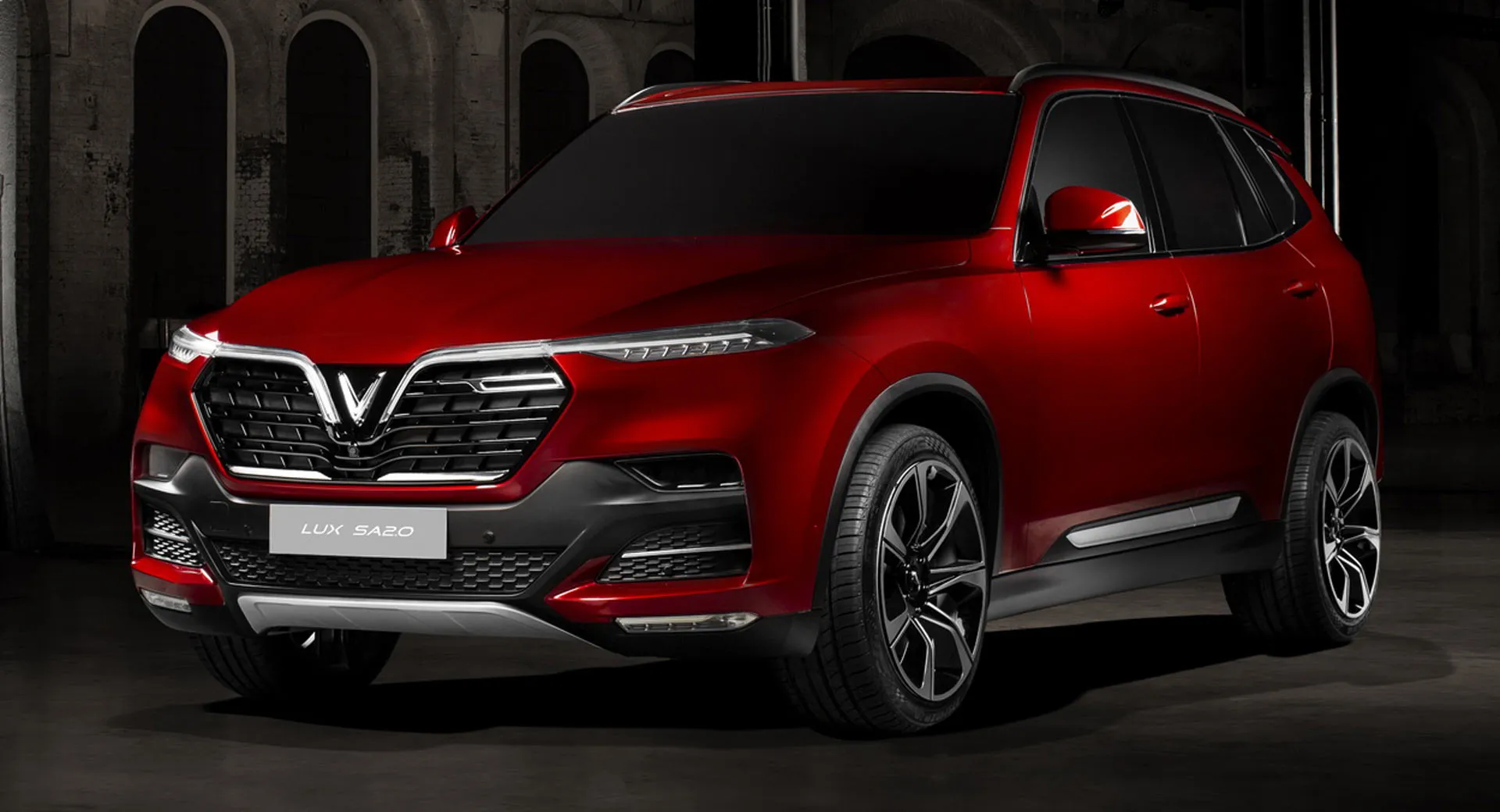
https://www.carscoops.com/2019/12/vietnams-vinfast-wants-to-be-selling-its-cars-stateside-in-2021/
Vietnam’s VinFast Wants To Be Selling Its Cars Stateside In 2021
DECEMBER 14, 2019 ... The VinFast brand has been steadily growing ... and
recently started production of its first three vehicles, a hatchback, a
sedan, and an SUV, while it’s also working on its very first all-electric
vehicle ... billionaire  Vuong’s most ambitious goal ... he wants to have
entered the American market by 2021 ...
https://www.carscoops.com/wp-content/uploads/webp/2019/12/VinFast-.webp


For EVLN EV-newswire posts use:
 http://www.evdl.org/archive/


{brucedp.neocities.org}

--
Sent from: http://electric-vehicle-discussion-list.413529.n4.nabble.com/
_______________________________________________
UNSUBSCRIBE: http://www.evdl.org/help/index.html#usub
ARCHIVE: http://www.evdl.org/archive/index.html
INFO: http://lists.evdl.org/listinfo.cgi/ev-evdl.org
Please discuss EV drag racing at NEDRA (http://groups.yahoo.com/group/NEDRA)