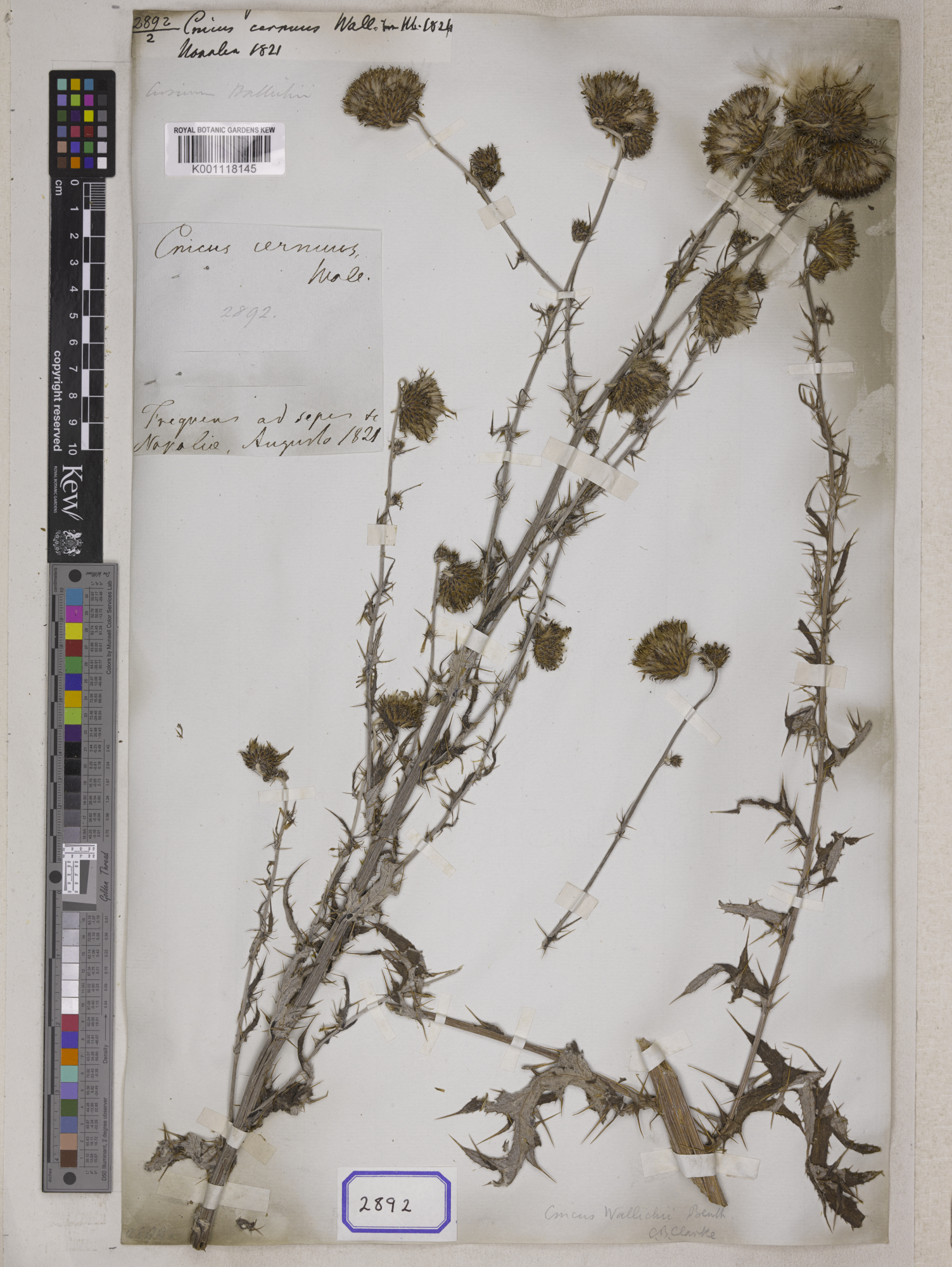
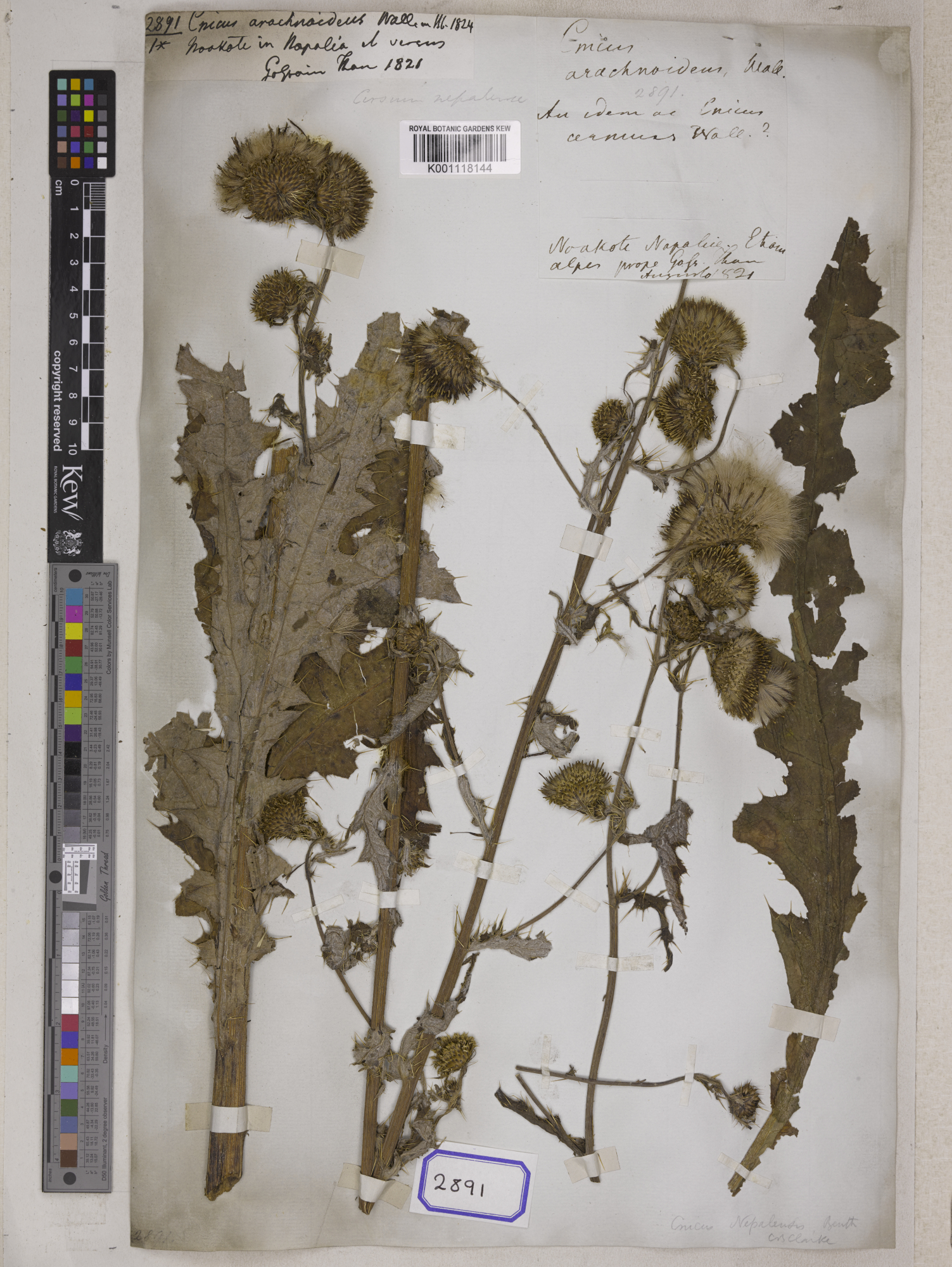
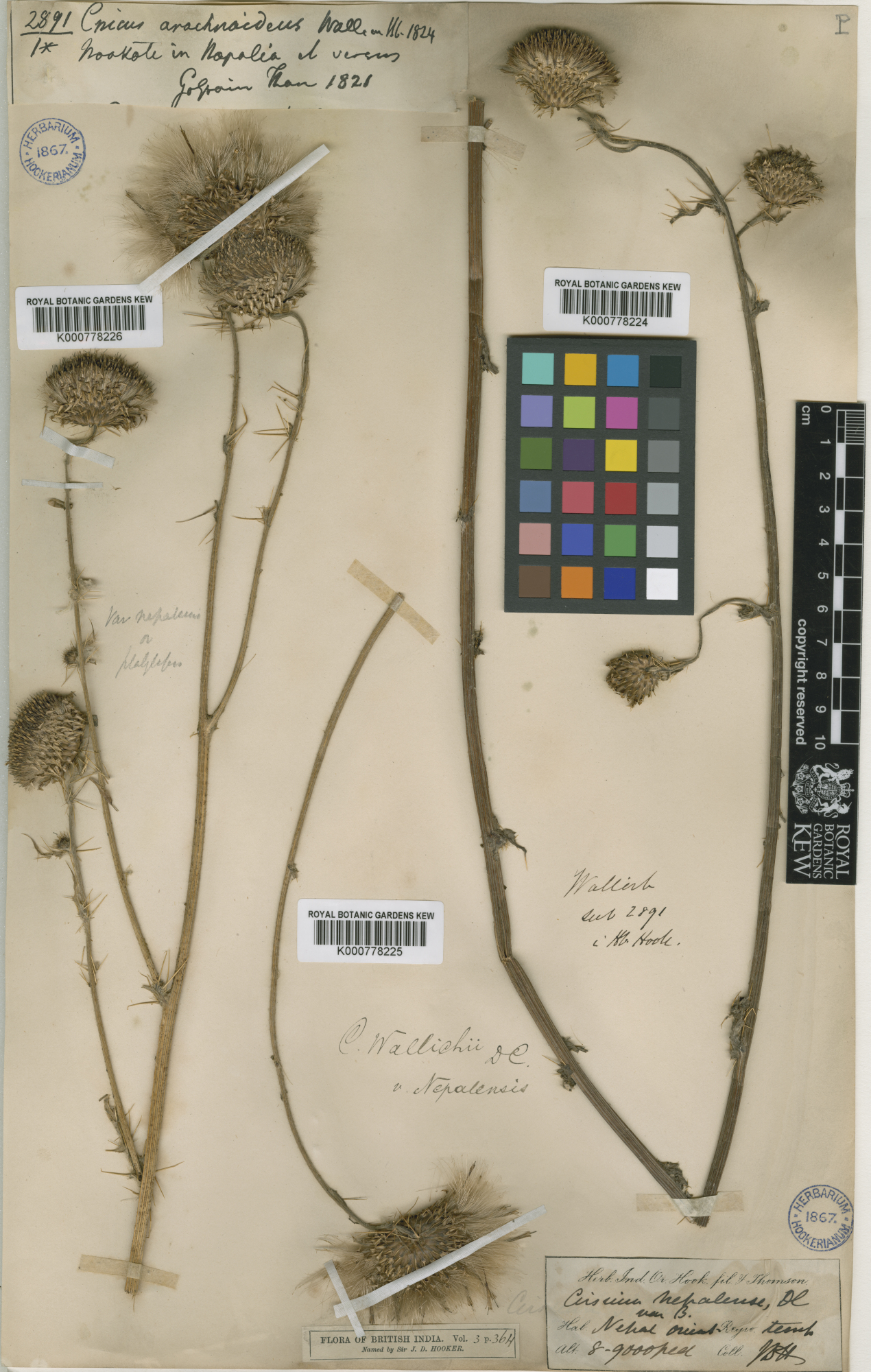
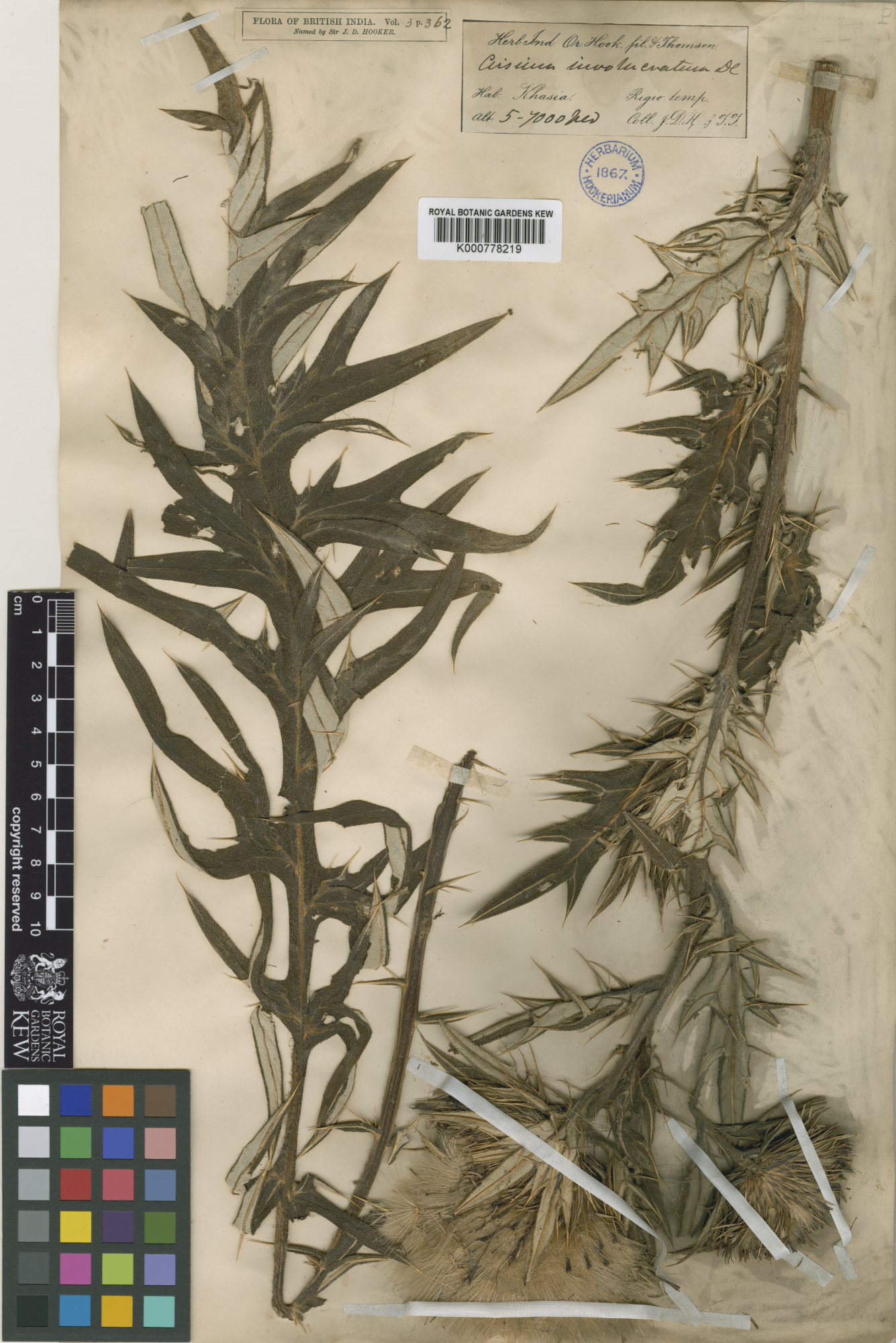
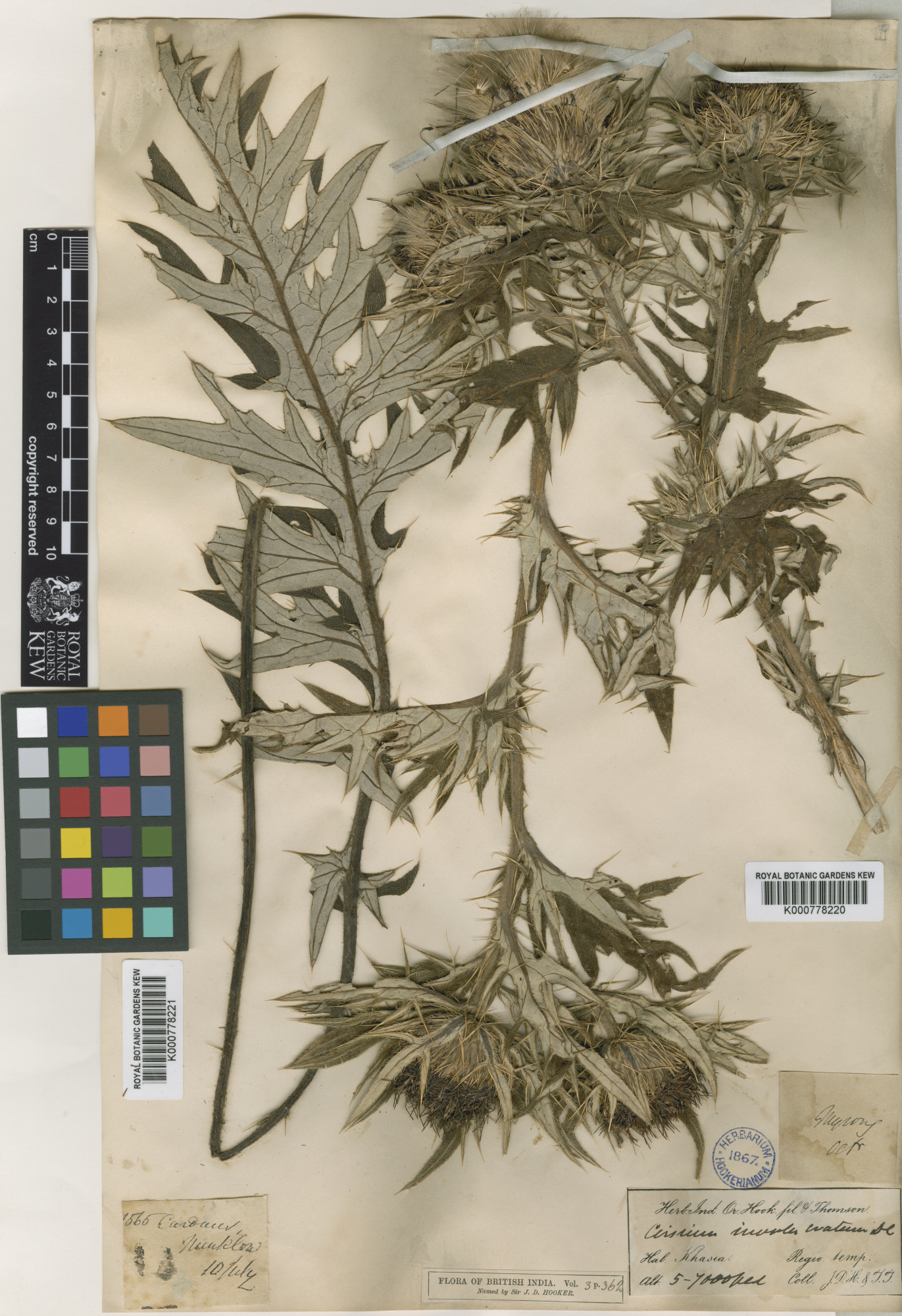
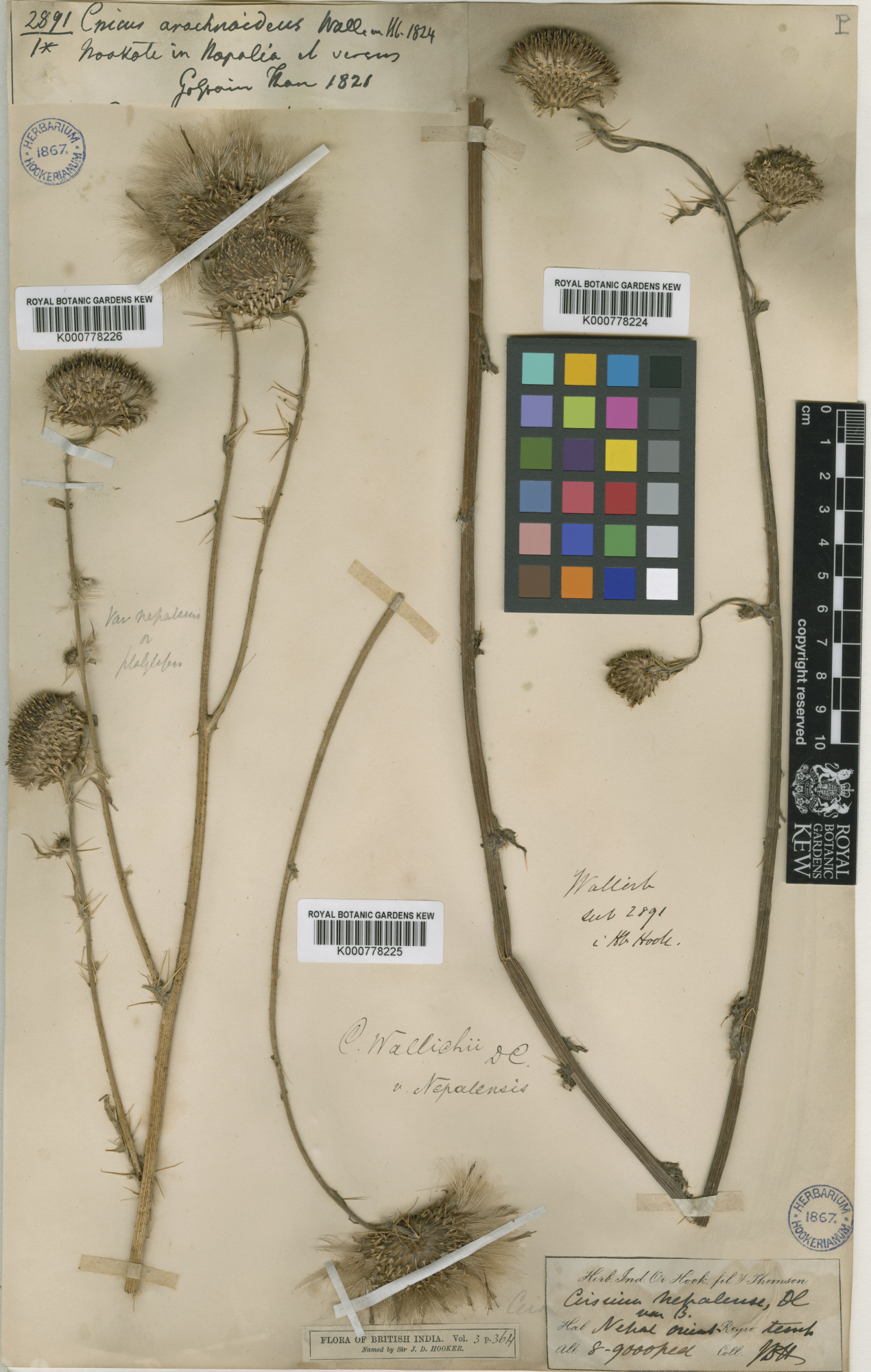
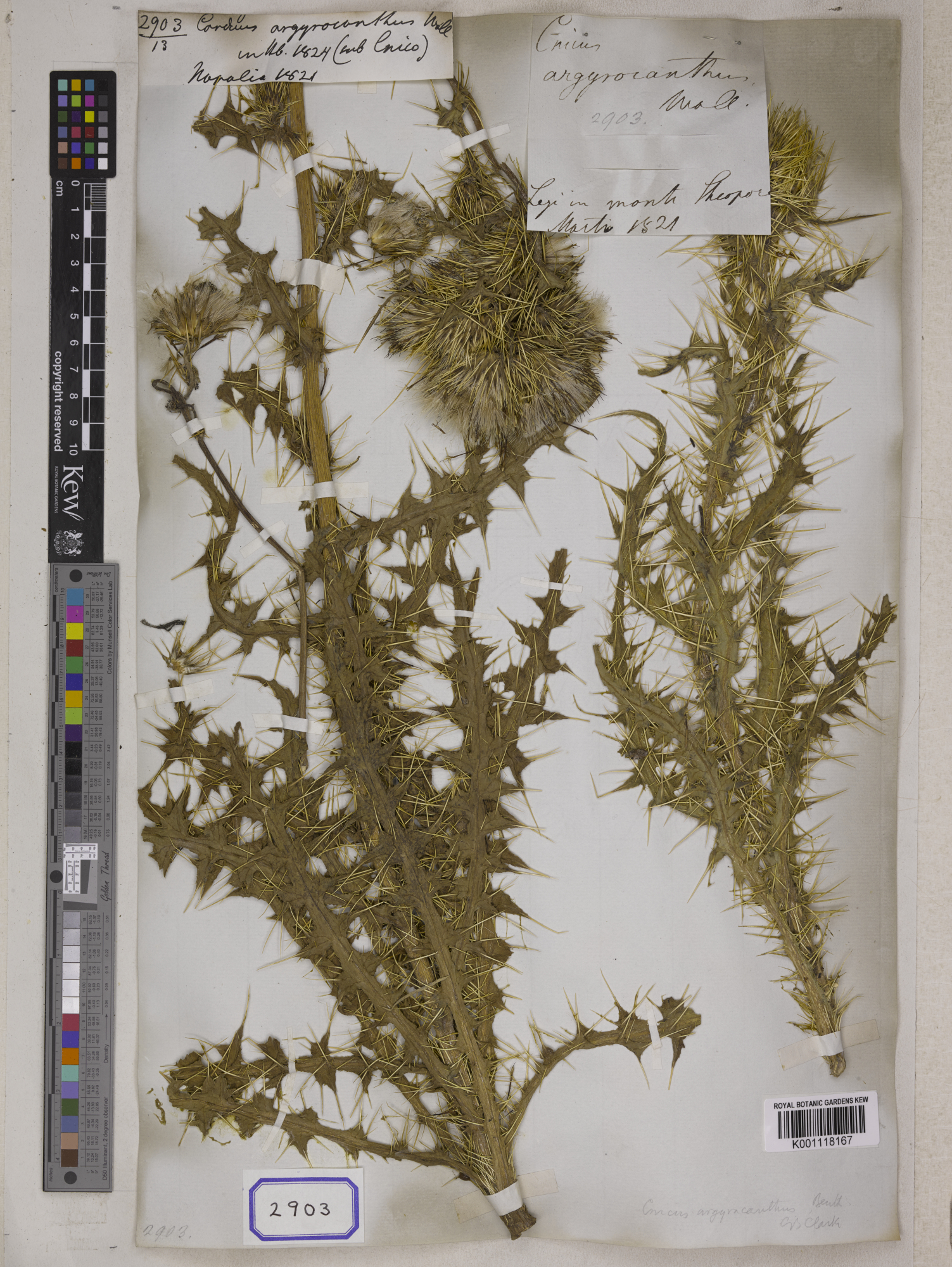
Maybe a lot of threads (looking similar to your this post) also needs to be
moved from our page at Cirsium wallichii
<https://efloraofindia.com/2013/06/14/cirsium-wallichii/> as these look
different from POWO
<https://powo.science.kew.org/taxon/urn:lsid:ipni.org:names:196195-1>
specimens- one <http://www.kew.org/herbcatimg/684784.jpg>, two
<http://www.kew.org/herbcatimg/684782.jpg>, three
<http://www.kew.org/herbcatimg/359204.jpg> to *C. argyracanthum* (POWO
<https://powo.science.kew.org/taxon/urn:lsid:ipni.org:names:195029-1>)-
specimen one
<http://apps.kew.org/herbcat/detailsQuery.do?barcode=K001118167>, two
<http://apps.kew.org/herbcat/detailsQuery.do?barcode=K000250088>
It is sometimes difficult to judge the size of heads in close up images. A
habit image gives a better perspective.
On Sun, 2 Jan 2022 at 13:35, J.M. Garg <[email protected]> wrote:

> Thanks, Singh ji.
> It seems *C. argyracanthum* (POWO
> <https://powo.science.kew.org/taxon/urn:lsid:ipni.org:names:195029-1>)
> and *C. verutum* (POWO
> <https://powo.science.kew.org/taxon/urn:lsid:ipni.org:names:196173-1>)
> are a confusing lot in efi postings.
>
> Going by specimens of *C. verutum* (POWO
> <https://powo.science.kew.org/taxon/urn:lsid:ipni.org:names:196173-1>)-
> one <http://www.kew.org/herbcatimg/358304.jpg> (C. involucratus of FBI)
> and two <http://www.kew.org/herbcatimg/358305.jpg> (C. involucratus of
> FBI), I feel all our posts in efi at Cirsium verutum
> <https://efloraofindia.com/2011/02/15/cirsium-verutum/> look different
> and matches with specimens of *C. argyracanthum* (POWO
> <https://powo.science.kew.org/taxon/urn:lsid:ipni.org:names:195029-1>)-
> one <http://apps.kew.org/herbcat/detailsQuery.do?barcode=K001118167>, two
> <http://apps.kew.org/herbcat/detailsQuery.do?barcode=K000250088>.
> The post at Cirsium sp?? — enroute Dhel at GHNP – PKA30
> <https://groups.google.com/forum/#!topic/indiantreepix/D3CMasVd7g8> may
> be of *C. verutum* (POWO
> <https://powo.science.kew.org/taxon/urn:lsid:ipni.org:names:196173-1>)-
> three <http://www.kew.org/herbcatimg/684828.jpg> (C. involucratus of FBI)
>
> What do you say?
>
>
> On Sun, 2 Jan 2022 at 12:14, Gurcharan Singh <[email protected]> wrote:
>
>> Garg ji, if you read BSI Flora of India, C. tibeticum is excluded species
>> as no specimens from India are available
>> Please also note POWO regards C. argyracanthum DC as accepted name and C.
>> tibeticum Kit. as its synonym
>> Both FBI and BSI Flora of India record Heads 3.5 to 6 cm in C. verutum
>> (C. involucratus of FBI), less than 2,5 cm in C. argyracanthum. BSI Flora
>> mentions heads pale yellow to white in C. argyracanthum, whereas in all
>> Bhutan images, images on Flowers of India and elsewhere heads are are
>> purple in C. verutum.
>>
>> On Friday, December 31, 2021 at 10:11:41 PM UTC+5:30 Gurcharan Singh
>> wrote:
>>
>>> C. verutum I will upload separately
>>>
>>> On Friday, December 31, 2021 at 8:44:35 PM UTC+5:30 JM Garg wrote:
>>>
>>>> Pl. consider Cirsium verutum
>>>> <https://efloraofindia.com/2011/02/15/cirsium-verutum/> as per images
>>>> and details herein.
>>>> Flora of Bhutan gives the following keys
>>>> <https://groups.google.com/g/indiantreepix/c/4HvHdjTQILI>:
>>>> 8. Wide or narrow, pale, scarious, lacerate appendage on margins of
>>>> outer and middle phyllaries near base of spine . …  *C. wallichii
>>>> *(specimen
>>>> at POWO <http://www.kew.org/herbcatimg/359206.jpg>)- 2300-2400 mtr.
>>>> + Phyllaries uniformly tapered, margin sometimes denticulate but not
>>>> scarious- dilated near the base of the spine . . . .. 9
>>>> 9. Leaves moderately spiny (spines 5mm); phyllaries purplish, outer
>>>> usually ending in spine 2–4mm . .. ..  *C. tibeticum* (syn. of *Cirsium
>>>> argyracanthum* DC. as per POWO
>>>> <https://powo.science.kew.org/taxon/urn:lsid:ipni.org:names:195029-1>)
>>>> (specimen at POWO <http://www.kew.org/herbcatimg/684831.jpg>)- 1450 to
>>>> 2750 mtr.
>>>> + Leaves very spiny (spines 5-12mm); phyllaries greenish, outer with
>>>> spines 4-8mm . . . .. *C. verutum *(specimen at GBIF (one
>>>> <https://www.gbif.org/tools/zoom/simple.html?src=//api.gbif.org/v1/image/unsafe/https%3A%2F%2Fwww.nhm.ac.uk%2Fservices%2Fmedia-store%2Fasset%2Fa427e2f6aae50e9a78509e46298f36e031289138%2Fcontents%2Fpreview>
>>>> , two
>>>> <https://www.gbif.org/tools/zoom/simple.html?src=//api.gbif.org/v1/image/unsafe/https%3A%2F%2Fwww.nhm.ac.uk%2Fservices%2Fmedia-store%2Fasset%2Fdf66eec6a84b7d1dcb6c41f52f988e17450efd90%2Fcontents%2Fpreview>))-
>>>> 1500 t0 2100 mtr.
>>>>
>>>> On Fri, 31 Dec 2021 at 18:56, Gurcharan Singh <[email protected]>
>>>> wrote:
>>>>
>>>>> *Cirsium argyracanthum* DC.
>>>>> incl. C. wallichii var. wightii Kook.f.
>>>>> The heads like C. wallichii are mostly less than 2.5 cm across, but
>>>>> heads are crowded in clusters and pale yellow to white, involucre bracts
>>>>> not dilated, outer ending in long rigid spine, innermost linear long
>>>>> pointed, leaves glabrous on both surfaces.
>>>>> Photographed from along road between Maa Bhangayani Temple Sirmour
>>>>> towards Nohradhar, alt. 2200 m, Himachal Pradesh, 25-5-2015.
>>>>>
>>>>>
>>>>>
>>>>>
>>>>> Dr. Gurcharan Singh
>>>>> Retired  Associate Professor
>>>>> SGTB Khalsa College, University of Delhi, Delhi-110007
>>>>> Res: 932 Anand Kunj, Vikas Puri, New Delhi-110018.
>>>>> https://www.gurcharanfamily.com/
>>>>>
>>>>> --
>>>>> You received this message because you are subscribed to the Google
>>>>> Groups "efloraofindia" group.
>>>>> To unsubscribe from this group and stop receiving emails from it, send
>>>>> an email to [email protected].
>>>>> To view this discussion on the web, visit
>>>>> https://groups.google.com/d/msgid/indiantreepix/CAHiXKpX%3DnjP9%2BkB6BgVK0bPLwkTNH5rGjjin9H4J0c1y%3D5p0-w%40mail.gmail.com
>>>>> <https://groups.google.com/d/msgid/indiantreepix/CAHiXKpX%3DnjP9%2BkB6BgVK0bPLwkTNH5rGjjin9H4J0c1y%3D5p0-w%40mail.gmail.com?utm_medium=email&utm_source=footer>
>>>>> .
>>>>>
>>>>
>>>>
>>>> --
>>>> With regards,
>>>> J.M.Garg
>>>>
>>> --
>> You received this message because you are subscribed to the Google Groups
>> "efloraofindia" group.
>> To unsubscribe from this group and stop receiving emails from it, send an
>> email to [email protected].
>> To view this discussion on the web, visit
>> https://groups.google.com/d/msgid/indiantreepix/98b18036-c1b4-4a76-878f-57ba3ac828d1n%40googlegroups.com
>> <https://groups.google.com/d/msgid/indiantreepix/98b18036-c1b4-4a76-878f-57ba3ac828d1n%40googlegroups.com?utm_medium=email&utm_source=footer>
>> .
>>
>
>
> --
> With regards,
> J.M.Garg
>


--
With regards,
J.M.Garg

--
You received this message because you are subscribed to the Google Groups
"efloraofindia" group.
To unsubscribe from this group and stop receiving emails from it, send an email
to [email protected].
To view this discussion on the web, visit
https://groups.google.com/d/msgid/indiantreepix/CA%2BiuSFA_j8e4ekSj7QuVyKjU%3DpvszMSuhOwHzCV2zSihEM-8AQ%40mail.gmail.com.