On 2021/07/6 12:48 pm, David wrote:
On 2021-07-05 12:35, Jan Whitaker wrote:
Interesting! Someone who I think was a nurse, can't remember who, was appalled
that the injections were NOT being pulled back to be sure there was no blood.
They were watching the endless TV videos of injections being given. From this
article, it seems they were on to something.
As was my Partner, a highly qualified (but now retired) Paediatric Nurse.  She observed months ago
that people videoed while doing vaccinations rarely pulled back but she was trained to _always_ do
so.  It seems the practice now is to inject into shoulder muscle where the chance of hittinga blood
vessel is "very low" rather than further down (i.e. closer to  the elbow), and it's
"difficult" to pull back with fine needles now used.
My first AZ shot was not a particularly small needle and it bled a lot ofbright red blood after. I trained in IMIs a very long time
ago and wondered why they didn't aspirate.
And many thanks, Kim, for that reference.
I listened to that coronacast and wanted to read the paper. It took me some time and was quite difficult to find. I even had to
resort to google scholar at one point. I wonder why they didn't just supply a link. Maybe they didn't do that because it was just
a preprint.
I've been doing a little amateur research on the AZ clotting problem, partly because I have an ongoing interest in medical matters
but mainly because of a possible susceptibility to HIT-like reactions. Ihaven't read your reference yet, but have wondered for some
time whether the mechanisms involved in HIT are similar, especially regarding the formation of haptens and subsequent development of
of an auto-immune condition where the immune system cleansup its' own platelets. I presume this may or may not result in a
noticeable thrombosis, but it's likely to place extra load onthe kidneys.
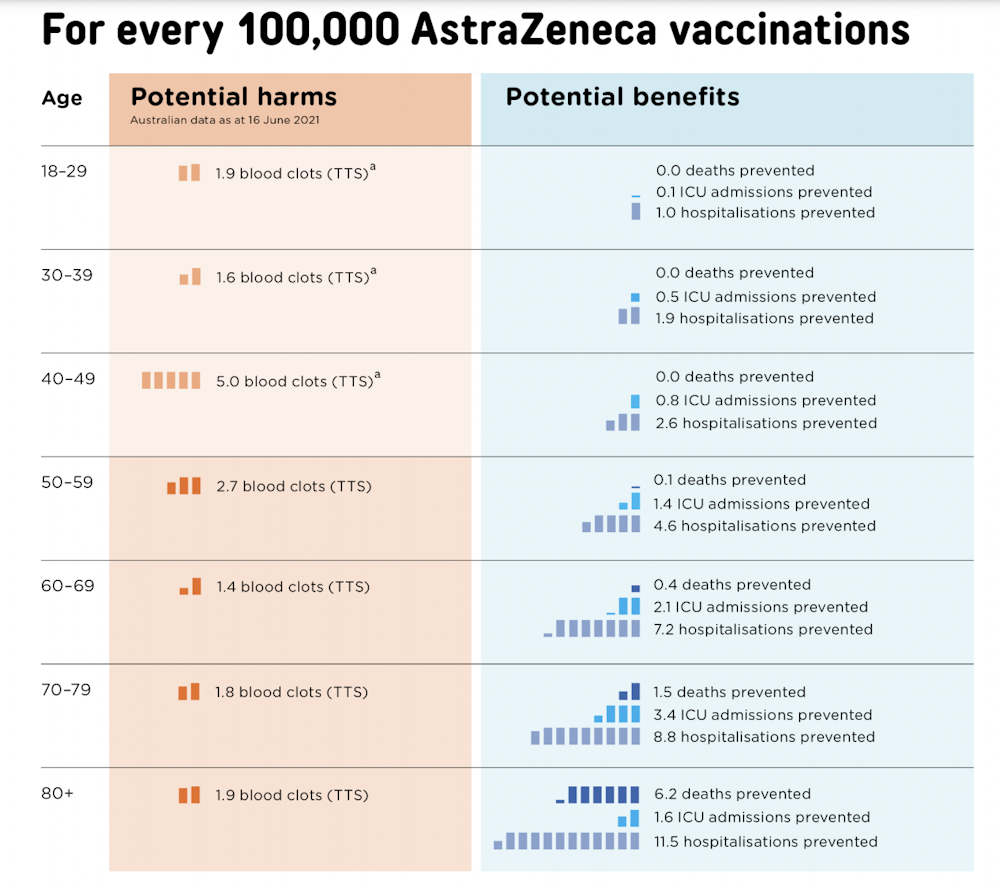
The problem is that difference in TTS reactions in different age groups.

https://images.theconversation.com/files/409391/original/file-20210701-15-t6v8c0.png?ixlib=rb-1.1.0&q=45&auto=format&w=1000&fit=clip
The highest number by far are the 40-50 age group, then the 50-60s. All the other age groups are quite similar. I'm not sure how
that squares with this paper.
Kim
--
Kim Holburn
IT Network & Security Consultant
+61 404072753
mailto:[email protected]  aim://kimholburn
skype://kholburn - PGP Public Key on request

_______________________________________________
Link mailing list
[email protected]
https://mailman.anu.edu.au/mailman/listinfo/link