I cut off some of Oliver Webber's response to David Tayler.  Here's the rest of
it:
> On the cello, you start to see silvered fouth strings in the 18th
> century in paintings, and there are a small number even earlier.

Yes, although interestingly the 3rd string seems to remain gut until the
classical period - a fact neglected by many baroque cellists today,
unfortunately!

> Although the strings are perhaps the most most important, the other
> things that affect the sound are the bridge--which as thicker--the
> bass bar (smaller) and one of the most overlooked of all--the bow.
> Original bows were lighter and had far less strands of hair than the
> ones that are used now in baroque performance.

Agreed - and it's a pity that so many makers of "baroque" bows seem to use so
much more hair, generally, than we know to have been used at the time. Most
"baroque" bridges are indeed far too thin, too.


> Just as an experiment, you can take a typical heavy baroque violin
> bow and try it yourself or have the player try it on a cello or bass
> viol. You will then immediately hear what a huge difference just
> using a lighter, thinner bow makes.
>
> Put it all together, the bow, the bridge, the strings, the bass bar,
> and on and on, and you get a sound that is radically different, much
> more vocal, and, most importantly, does not drown out the lute!


Especially if the lute is strung properly... ;-)

> Can't say I agree with the Bonta bits about the cello sizes, they
> obviously had dozens of different kinds of cellos and violones back
> then, and the sizes persisted well into the Classical period.
> Trying to "match" terms to instruments only works if the terms were
> used consistently in the historical period in question, which, as far
> as I can tell, they were not.
> The result is that certain historical instruments perform a scholarly
> disappearing act because the terminology has been regularized.


Do you mean Bonta's thesis about the wound string being the sine qua non of
the "violoncello"? I agree that it may well be too "neat and tidy" to represent
the full picture - but I do think there is a lot of sense in the general idea
that wound strings made smaller instruments more viable.

> Exactly when that metal string started appearing on the lowest note
> of the cello is an interesting topic all by itself.
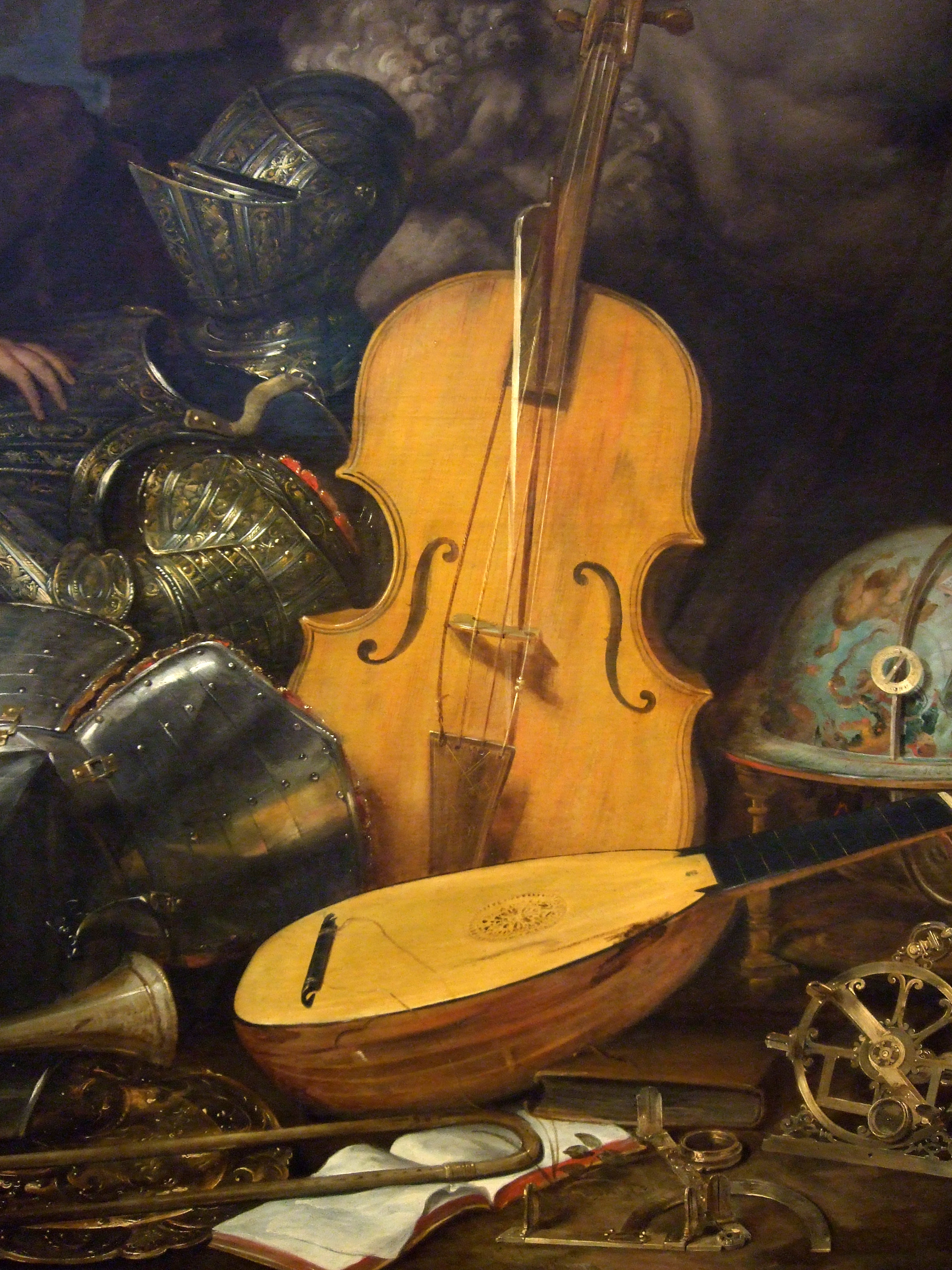
> If you look at this amazing painting
> http://voicesofmusic.org/baroque_cello.jpg
> You can see the strings clearly, as well as how thin the bow is


This is indeed a fascinating picture - can you give us more information? Date,
artist, location?

--

To get on or off this list see list information at
http://www.cs.dartmouth.edu/~wbc/lute-admin/index.html