> Are there better estimates of the ET second nowadays (relative to the
> SI second)?  It would be interesting to know what the cesium frequency
> "should have been" if much better estimates of the ephemeris-time
> second were available at the time.
Hi Peter,

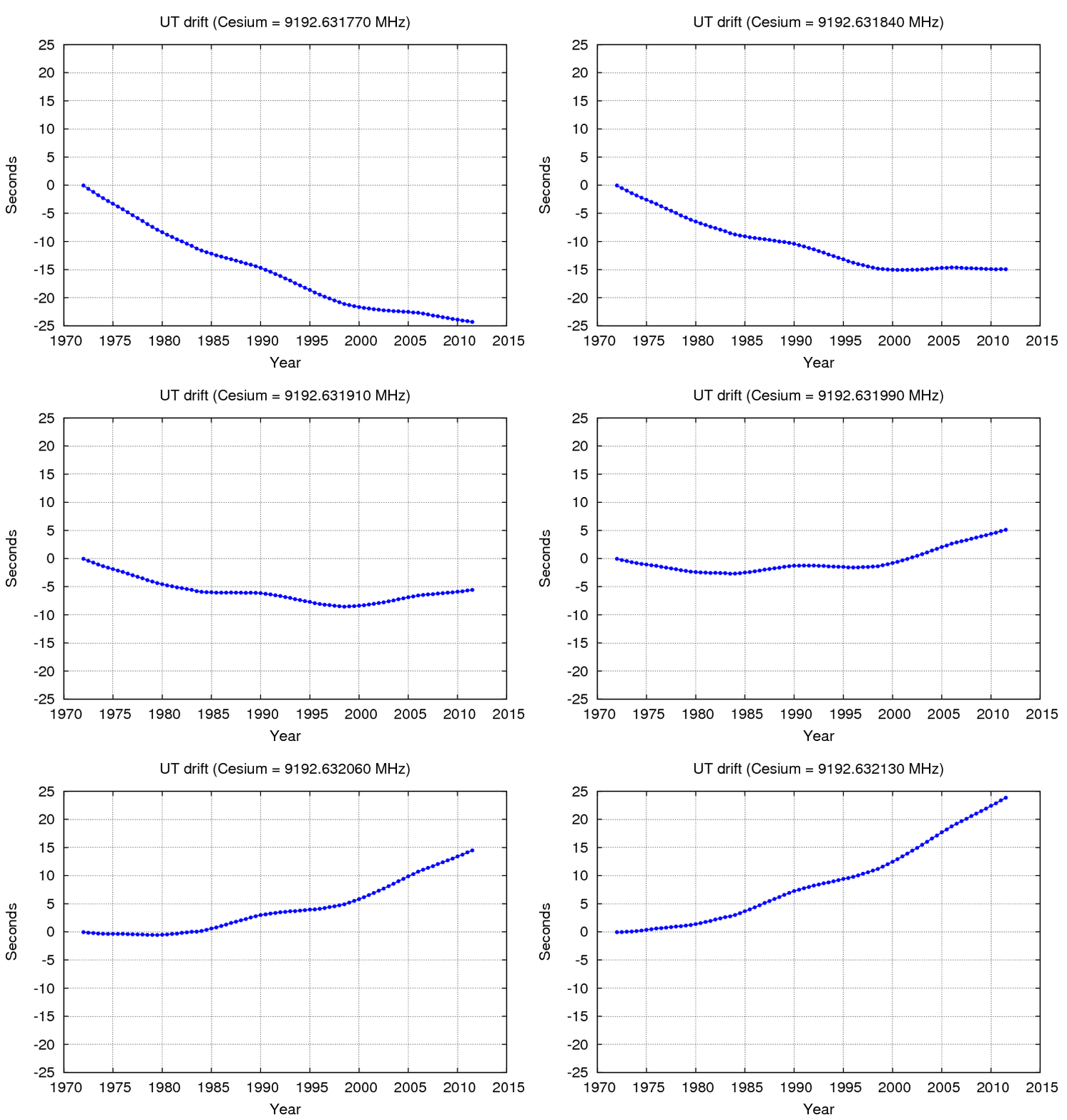
Everyone should take ten seconds and look at this animated GIF:
http://leapsecond.com/pages/ut/ut-ani-v2.gif

It shows what would have happened to "earth time" vs. "atomic time" if the
cesium frequency had been defined to be other than 9192.631770 MHz. As you can
see a slightly higher number would have meant less deviation between the two
timescales.

However it should also be clear, even with this short 40-year plot, that no
number is the best or correct or right choice. It all depends on which year(s)
you choose to base your earth rotation rate calibration on (the astronomers
doing the calibration in the 1950's selected the year 1900 as their baseline).

To see each page at your own pace here is it as a multi-page PDF file:
http://leapsecond.com/pages/ut/ut-ani-v2.pdf

If you wanted a near perfect match between atomic time and the rotation of the
earth during the 1970's hindsight tells you the frequency should have been
9192.632080 MHz. Similarly if your crystal ball said to use 9192.632010 you
would have been very close for three decades. If you wanted the best time
accuracy from the year 1972 to present you should have picked 9192.631950.

/tvb


_______________________________________________
time-nuts mailing list -- [email protected]
To unsubscribe, go to https://www.febo.com/cgi-bin/mailman/listinfo/time-nuts
and follow the instructions there.