On 1/21/17 10:31 PM, Ruslan Nabioullin wrote:
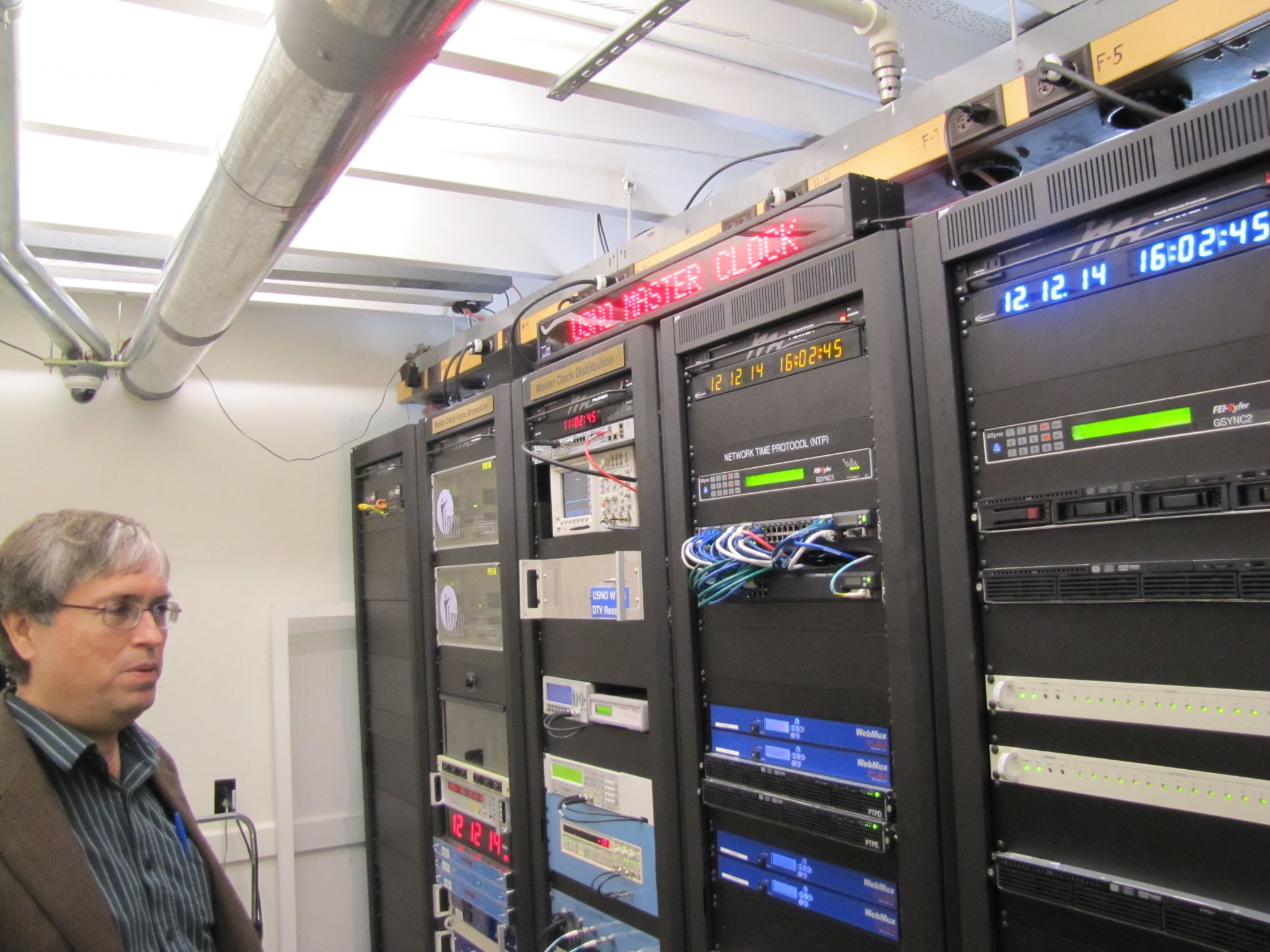
Hi, looking at pictures of various time metrology equipment setups for
best practices and inspiration, I have commonly seen time of day display
unit(s) installed in racks containing processing or time transfer
equipment, e.g.,
http://www.xyht.com/wp-content/uploads/2015/05/Powers_Master_Clock.jpg.
All that these units do is merely display the time of day and sometimes
the date, typically by means of seven segment LED displays, of the time
code inputted to them (typically IRIG-B, I'm guessing).
There's a few reasons I can think of:
1) the display is also a distribution amplifier of some sort - one time
source going into rack, distributed to things in the rack (or the next rack)
2) as phk commented, it lets you know that your time code isn't broken
(i.e. someone got in behind the rack and disconnected the wrong cable)
3) It's a crude visual check - your eye/brain is pretty good at catching
a change in the pattern of blinky lights. IN this situation, you'd
expect all the displays to change simultaneously.
4) the equipment configuration "just growed" from a collection of
smaller ones, each with its own display.
We put displays like this in all of our ground support equipment (GSE)
racks when doing spacecraft or subsystem tests, mostly for reason #2 and #4.
You might have a GSE rack or two in the lab when you're building up the
subsystem. Someone else's subsystem has their rack, also with a
timecode display. When you bring the two subsystems together for
integration, you bring the racks with them, and it's not worth it to
reconfigure.
_______________________________________________
time-nuts mailing list -- [email protected]
To unsubscribe, go to https://www.febo.com/cgi-bin/mailman/listinfo/time-nuts
and follow the instructions there.