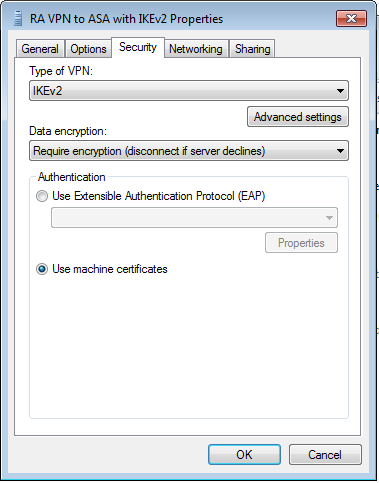
Well, there are a couple of resources:

1. generating certificates from Strongswan:
https://wiki.strongswan.org/projects/strongswan/wiki/SimpleCA

2. import certificates on Windows machine

https://wiki.strongswan.org/projects/strongswan/wiki/Win7Certs

3. a nice enough how-to for Windows machines

https://console.kim.sg/strongswan-ipsec-vpn-with-pre-shared-key-and-certificates

P.S. generating #PKCS12 sets is a command of openssl, so You can look for its
man, but all those thing above are enough, I suppose.
  ----- Исходное сообщение -----
  От: MOSES KARIUKI
  Кому: Kostya Vasilyev ; Tobias Brunner ; IL Ka
  Копия: [email protected]
  Отправлено: 20 февраля 2019 г. 20:41
  Тема: Re: [strongSwan] Strongswan on Ubuntu - Failure to connect from Windows
10 client -error: deleting half open IKE_SA with 154.**.***.** after timeout


  Dear Team,


  Thanks for your very valuable reply. I have set up a Linux Client and I am
able to connect. :)


  On the client side :
  ipsec statusall
  Status of IKE charon daemon (strongSwan 5.6.2, Linux 4.15.0, x86_64):
    uptime: 29 minutes, since Feb 20 17:55:09 2019
    malloc: sbrk 3256320, mmap 532480, used 1349136, free 1907184
    worker threads: 11 of 16 idle, 5/0/0/0 working, job queue: 0/0/0/0,
scheduled: 2
    loaded plugins: charon test-vectors unbound ldap pkcs11 tpm aesni aes rc2
sha2 sha1 md4 md5 mgf1 rdrand random nonce x509 revocation constraints acert
pubkey pkcs1 pkcs7 pkcs8 pkcs12 pgp dnskey sshkey dnscert ipseckey pem openssl
gcrypt fips-prf gmp curve25519 agent chapoly xcbc cmac hmac ctr ccm gcm ntru
bliss curl soup mysql sqlite attr kernel-netlink resolve socket-default
connmark farp stroke updown eap-identity eap-sim eap-sim-pcsc eap-aka
eap-aka-3gpp2 eap-simaka-pseudonym eap-simaka-reauth eap-md5 eap-gtc
eap-mschapv2 eap-dynamic eap-radius eap-tls eap-ttls eap-peap eap-tnc
xauth-generic xauth-eap xauth-pam xauth-noauth tnc-tnccs tnccs-20 tnccs-11
tnccs-dynamic dhcp whitelist lookip error-notify certexpire led radattr
addrblock unity counters
  Listening IP addresses:
    185.135.*.**
    2a03:a960:5:42a:8000::
    ::2
  Connections:
  ipsec-ikev2-vpn-client:  %any...102.1*9.2**.***  IKEv1/2
  ipsec-ikev2-vpn-client:   local:  [remoteprivate] uses EAP_MSCHAPV2
authentication with EAP identity '%any'
  ipsec-ikev2-vpn-client:   remote: [102.1*9.2**.***] uses public key
authentication
  ipsec-ikev2-vpn-client:   child:  dynamic === 0.0.0.0/0 TUNNEL
  Security Associations (1 up, 0 connecting):
  ipsec-ikev2-vpn-client[1]: ESTABLISHED 29 minutes ago,
185.135.9.62[remoteprivate]...102.1*9.2**.***[102.1*9.2**.***]
  ipsec-ikev2-vpn-client[1]: IKEv2 SPIs: 0338f500edc84652_i*
1ae30618408f64a4_r, EAP reauthentication in 2 hours
  ipsec-ikev2-vpn-client[1]: IKE proposal:
AES_CBC_256/HMAC_SHA2_256_128/PRF_HMAC_SHA2_256/MODP_2048


  hostname -I
  127.0.0.1 185.135.*.** 10.10.10.1 2a03:a960:5:42a:8000:: ::2


  On the server :
  ipsec statusall
  Status of IKE charon daemon (strongSwan 5.6.2, Linux 4.15.0-45-generic,
x86_64):
    uptime: 21 hours, since Feb 19 23:58:30 2019
    malloc: sbrk 3256320, mmap 532480, used 1645568, free 1610752
    worker threads: 11 of 16 idle, 5/0/0/0 working, job queue: 0/0/0/0,
scheduled: 1
    loaded plugins: charon test-vectors unbound ldap pkcs11 tpm aesni aes rc2
sha2 sha1 md4 md5 mgf1 rdrand random nonce x509 revocation constraints acert
pubkey pkcs1 pkcs7 pkcs8 pkcs12 pgp dnskey sshkey dnscert ipseckey pem openssl
gcrypt af-alg fips-prf gmp curve25519 agent chapoly xcbc cmac hmac ctr ccm gcm
ntru bliss curl soup mysql sqlite attr kernel-netlink resolve socket-default
connmark farp stroke updown eap-identity eap-sim eap-sim-pcsc eap-aka
eap-aka-3gpp2 eap-simaka-pseudonym eap-simaka-reauth eap-md5 eap-gtc
eap-mschapv2 eap-dynamic eap-radius eap-tls eap-ttls eap-peap eap-tnc
xauth-generic xauth-eap xauth-pam xauth-noauth tnc-tnccs tnccs-20 tnccs-11
tnccs-dynamic dhcp whitelist lookip error-notify certexpire led radattr
addrblock unity counters
  Virtual IP pools (size/online/offline):
    10.10.10.0/24: 254/1/0
  Listening IP addresses:
    102.1*9.2**.***
  Connections:
     ikev2-vpn:  %any...%any  IKEv2, dpddelay=300s
     ikev2-vpn:   local:  [ 102.1*9.2**.*** ] uses public key authentication
     ikev2-vpn:    cert:  "CN= 102.1*9.2**.***"
     ikev2-vpn:   remote: uses EAP_MSCHAPV2 authentication with EAP identity
'%any'
     ikev2-vpn:   child:  0.0.0.0/0 === dynamic TUNNEL, dpdaction=clear
  Security Associations (1 up, 0 connecting):
     ikev2-vpn[21]: ESTABLISHED 41 minutes ago,  102.1*9.2**.***[
102.1*9.2**.***]... 185.135.*.** [remoteprivate]
     ikev2-vpn[21]: IKEv2 SPIs: 0338f500edc84652_i 1ae30618408f64a4_r*,
rekeying disabled
     ikev2-vpn[21]: IKE proposal:
AES_CBC_256/HMAC_SHA2_256_128/PRF_HMAC_SHA2_256/MODP_2048


  That said, how can I verify that the connection to the VPN client from the
server works?


  Only issue now is to connect from Windows.


  Thanks,
  Moses K


  On Wed, Feb 20, 2019 at 4:24 AM Kostya Vasilyev <[email protected]> wrote:

    Ok looks to me like an auth error on the client (windows) I mean the error
code


https://social.technet.microsoft.com/Forums/ie/en-US/771bf5ec-7017-4fd3-9496-52137dfa616a/error-description-13801-ike-authentication-credentials-are-unacceptable


    Also in your windows client settings screenshot you have EAP auth selected
- did you mean to use machine certificate rather?


    The connection type there looks good as IKEv2. Did you just fix this?


    The CA doesn't have a CRL link as I can see, so my theory about "ufw blocks
port 443" looks wrong (and Il Ka's looks more likely).


    On the windows error code some possible causes have to do with the server
certificate's subjectAltName - so you will want to dump the server cert the
same way and examine that.


    But personally I'd still do PSK as a test, an easy way to be sure that
everything else (except cert or eap auth) is working.


    Oh and you're still not allowing all traffic from client.


    ufw allow in from 154.77.***.**


    I'd do this as a test (and then either revert or tighten based on the
results).


    -- K


    20 февр. 2019 г. 1:26 пользователь MOSES KARIUKI <[email protected]>
написал:

      Dear Users,


      Below were the suggestions :
      - Installing EAP-Identity support - Done
      - Setting UFW to allow all traffic from client
           ufw allow 500,4500/udp
           ufw allow in from 154.77.***.** proto gre
           ufw allow in from 154.77.***.** proto ah
           ufw allow in from 154.77.***.** proto esp


      - Checking if your server certificates have https:// CRL's
         openssl x509 -noout -text -in ca-cert.pem
      Certificate:
          Data:
              Version: 3 (0x2)
              Serial Number: 5360843625440499832 (0x4a658adfd6cc5878)
          Signature Algorithm: sha384WithRSAEncryption
              Issuer: CN = VPN root CA
              Validity
                  Not Before: Feb 12 21:01:05 2019 GMT
                  Not After : Feb  9 21:01:05 2029 GMT
              Subject: CN = VPN root CA
              Subject Public Key Info:
                  Public Key Algorithm: rsaEncryption
                      Public-Key: (4096 bit)
                      Modulus:
                          00:c5:bb:cc:c2:90:92:b4:40:fa:12:7b:39:30:cb:
                          e8:54:8f:09:59:38:f1:9e:52:6d:eb:a3:fc:e2:dd:
                          a3:64:30:d4:20:0b:85:f7:09:fc:5b:8f:7f:eb:c6:
                          25:12:20:45:fb:1a:2c:2d:80:f7:d3:a9:3f:81:04:
                          27:80:e5:2c:87:ef:08:81:c7:b0:cf:fc:f2:e4:cb:
                          18:09:3a:a2:fe:2e:27:44:fd:9f:7f:3d:a7:ed:1c:
                          d6:71:f6:e4:c2:c2:e3:fd:54:bd:31:fe:de:c7:1d:
                          52:ea:49:aa:48:0c:2d:46:b0:dc:fe:15:6d:8c:0f:
                          49:f0:af:b7:7c:62:d7:36:e9:34:20:3a:0e:04:4e:
                          73:ab:78:fe:bb:44:b5:22:ff:33:f4:60:3e:ab:36:
                          26:c3:bd:f0:9f:e4:04:eb:c2:2b:8f:cf:61:53:9c:
                          38:0e:ce:db:a0:5b:48:73:9f:fe:63:d1:02:05:59:
                          8b:64:7d:ab:2f:6f:b5:c6:55:78:24:ba:a3:0a:6b:
                          cb:88:96:0d:56:c0:ea:17:58:1e:55:09:e2:17:61:
                          37:24:02:2a:96:39:5c:6d:b7:2a:6f:63:0d:d1:b0:
                          44:65:d8:28:97:c6:74:5c:af:b9:10:b7:ec:4c:0e:
                          2b:b2:6b:f5:39:89:53:d9:81:bd:2d:18:e8:1e:e5:
                          a0:3b:76:d2:04:ee:92:00:a1:a7:e8:21:27:74:b6:
                          e1:b5:77:7c:73:49:2f:cc:eb:54:04:29:c9:9a:3a:
                          75:34:5c:d0:f9:dd:5e:e9:76:69:25:c3:b0:d3:d6:
                          74:bc:a3:1d:07:18:67:7b:24:60:a1:88:9d:c6:f0:
                          7d:6a:e8:b1:e2:3e:a6:df:c7:1e:54:e9:8d:16:a2:
                          be:60:91:e1:42:6e:50:18:0a:6f:4d:32:b3:df:17:
                          0d:e1:fa:3f:bf:d2:a6:3e:17:40:69:e9:d7:a0:da:
                          7f:2e:1f:dd:c2:88:e4:72:09:bd:c4:35:76:9d:3a:
                          1c:38:53:5f:13:12:28:10:0a:27:a3:69:5e:66:7a:
                          1d:4d:82:13:91:49:4c:99:a8:4c:5d:30:e5:ab:9f:
                          5f:c6:63:d4:e0:45:e7:c5:6e:b9:45:3f:a8:73:92:
                          ea:88:fc:ae:2b:16:d9:92:53:2e:f8:95:57:06:7e:
                          6b:cc:4c:53:ae:76:31:b1:f0:14:47:00:33:19:03:
                          24:34:90:df:f0:ca:93:c5:4c:4f:96:34:16:f3:c7:
                          eb:b4:82:d9:67:10:f1:70:b2:b6:64:55:81:5e:b3:
                          70:4e:c1:05:b1:bc:65:2e:49:10:1d:30:1e:79:9e:
                          a3:62:c5:c3:9f:06:5a:c9:34:36:af:14:2e:6a:23:
                          f2:39:4f
                      Exponent: 65537 (0x10001)
              X509v3 extensions:
                  X509v3 Basic Constraints: critical
                      CA:TRUE
                  X509v3 Key Usage: critical
                      Certificate Sign, CRL Sign
                  X509v3 Subject Key Identifier:

92:3F:B1:C0:05:82:F8:11:B1:69:7E:9E:4F:B4:71:31:F0:AD:18:B7
          Signature Algorithm: sha384WithRSAEncryption
               88:53:04:b1:a3:d7:7d:00:d6:f7:06:80:c5:c4:cb:f3:86:30:
               43:54:11:f6:e8:4d:42:70:12:b9:5f:26:07:ab:7c:d1:48:b1:
               f7:d4:28:c8:f0:53:49:bc:c1:5b:71:45:bd:f1:3a:a2:06:c2:
               38:08:c5:e7:d4:d4:51:19:9d:27:d2:f0:fa:71:8b:50:aa:cd:
               e3:00:96:a8:9c:f8:db:16:00:eb:6f:1f:3c:39:ee:1c:02:ac: ....


      On the client side


      - Checking actual error message from the client


      Client error log :


      Information 2/20/2019 12:51:31 AM RasClient 20221 None
      CoId={E5273640-B6B0-4B4B-A0FF-8B5FC33EEDFB}: The user
DESKTOP-ICV578Q\User has started dialing a VPN connection using a per-user
connection profile named VPN Connection. The connection settings are:
      Dial-in User = remoteprivate
      VpnStrategy = IKEv2
      DataEncryption = Requested
      PrerequisiteEntry =
      AutoLogon = No
      UseRasCredentials = Yes
      Authentication Type = EAP
      Ipv4DefaultGateway = Yes
      Ipv4AddressAssignment = By Server
      Ipv4DNSServerAssignment = By Server
      Ipv6DefaultGateway = Yes
      Ipv6AddressAssignment = By Server
      Ipv6DNSServerAssignment = By Server
      IpDnsFlags =
      IpNBTEnabled = Yes
      UseFlags = Private Connection
      ConnectOnWinlogon = No
      Mobility enabled for IKEv2 = Yes.


      Information 2/20/2019 12:51:31 AM RasClient 20222 None
      CoId={E5273640-B6B0-4B4B-A0FF-8B5FC33EEDFB}: The user
DESKTOP-ICV578Q\User is trying to establish a link to the Remote Access Server
for the connection named VPN Connection using the following device:
      Server address/Phone Number = 102.129.249.173
      Device = WAN Miniport (IKEv2)
      Port = VPN2-1
      MediaType = VPN.


      Information 2/20/2019 12:51:31 AM RasClient 20223 None
      CoId={E5273640-B6B0-4B4B-A0FF-8B5FC33EEDFB}: The user
DESKTOP-ICV578Q\User has successfully established a link to the Remote Access
Server using the following device:
      Server address/Phone Number = 102.129.249.173
      Device = WAN Miniport (IKEv2)
      Port = VPN2-1
      MediaType = VPN.


      Information 2/20/2019 12:51:31 AM RasClient 20224 None
      CoId={E5273640-B6B0-4B4B-A0FF-8B5FC33EEDFB}: The link to the Remote
Access Server has been established by user DESKTOP-ICV578Q\User.


      Error 2/20/2019 12:51:32 AM RasClient 20227 None
      CoId={E5273640-B6B0-4B4B-A0FF-8B5FC33EEDFB}: The user
DESKTOP-ICV578Q\User dialed a connection named VPN Connection which has failed.
The error code returned on failure is 13801.


      Feb 20 01:13:59 VM-e2b7eaee-4c52-4455-8364-c1977c8afa6a ipsec[1126]:
06[CFG] selected proposal:
IKE:AES_CBC_256/HMAC_SHA2_256_128/PRF_HMAC_SHA2_256/MODP_2048
      Feb 20 01:13:59 VM-e2b7eaee-4c52-4455-8364-c1977c8afa6a ipsec[1126]:
06[IKE] remote host is behind NAT
      Feb 20 01:13:59 VM-e2b7eaee-4c52-4455-8364-c1977c8afa6a ipsec[1126]:
06[ENC] generating IKE_SA_INIT response 0 [ SA KE No N(NATD_S_IP) N(NATD_D_IP)
N(FRAG_SUP) N(MULT_AUTH) ]
      Feb 20 01:13:59 VM-e2b7eaee-4c52-4455-8364-c1977c8afa6a ipsec[1126]:
06[NET] sending packet: from 102.1*9.2**.***[500] to 154.77.***.**[500] (448
bytes)
      Feb 20 01:13:59 VM-e2b7eaee-4c52-4455-8364-c1977c8afa6a charon: 05[NET]
received packet: from 154.77.***.**[4500] to 102.1*9.2**.***[4500] (500 bytes)
      Feb 20 01:13:59 VM-e2b7eaee-4c52-4455-8364-c1977c8afa6a ipsec[1126]:
07[NET] received packet: from 154.77.***.**[4500] to 102.1*9.2**.***[4500] (580
bytes)
      Feb 20 01:13:59 VM-e2b7eaee-4c52-4455-8364-c1977c8afa6a ipsec[1126]:
07[ENC] parsed IKE_AUTH request 1 [ EF(1/3) ]
      Feb 20 01:13:59 VM-e2b7eaee-4c52-4455-8364-c1977c8afa6a ipsec[1126]:
07[ENC] received fragment #1 of 3, waiting for complete IKE message
      Feb 20 01:13:59 VM-e2b7eaee-4c52-4455-8364-c1977c8afa6a charon: 05[ENC]
parsed IKE_AUTH request 1 [ EF(3/3) ]
      Feb 20 01:13:59 VM-e2b7eaee-4c52-4455-8364-c1977c8afa6a charon: 05[ENC]
received fragment #3 of 3, waiting for complete IKE message
      Feb 20 01:13:59 VM-e2b7eaee-4c52-4455-8364-c1977c8afa6a charon: 08[NET]
received packet: from 154.77.***.**[4500] to 102.1*9.2**.***[4500] (580 bytes)
      Feb 20 01:13:59 VM-e2b7eaee-4c52-4455-8364-c1977c8afa6a charon: 08[ENC]
parsed IKE_AUTH request 1 [ EF(2/3) ]
      Feb 20 01:13:59 VM-e2b7eaee-4c52-4455-8364-c1977c8afa6a charon: 08[ENC]
received fragment #2 of 3, reassembling fragmented IKE message
      Feb 20 01:13:59 VM-e2b7eaee-4c52-4455-8364-c1977c8afa6a charon: 08[ENC]
parsed IKE_AUTH request 1 [ IDi CERTREQ N(MOBIKE_SUP) CPRQ(ADDR DNS NBNS SRV
ADDR6 DNS6 SRV6) SA TSi TSr ]
      Feb 20 01:13:59 VM-e2b7eaee-4c52-4455-8364-c1977c8afa6a charon: 08[IKE]
received 52 cert requests for an unknown ca
      Feb 20 01:13:59 VM-e2b7eaee-4c52-4455-8364-c1977c8afa6a charon: 08[CFG]
looking for peer configs matching
102.1*9.2**.***[%any]...154.77.***.**[192.168.43.156]
      Feb 20 01:13:59 VM-e2b7eaee-4c52-4455-8364-c1977c8afa6a charon: 08[CFG]
candidate "ikev2-vpn", match: 1/1/28 (me/other/ike)
      Feb 20 01:13:59 VM-e2b7eaee-4c52-4455-8364-c1977c8afa6a charon: 08[CFG]
selected peer config 'ikev2-vpn'
      Feb 20 01:13:59 VM-e2b7eaee-4c52-4455-8364-c1977c8afa6a charon: 08[IKE]
initiating EAP_IDENTITY method (id 0x00)
      Feb 20 01:13:59 VM-e2b7eaee-4c52-4455-8364-c1977c8afa6a charon: 08[IKE]
peer supports MOBIKE
      Feb 20 01:13:59 VM-e2b7eaee-4c52-4455-8364-c1977c8afa6a charon: 08[IKE]
authentication of '102.1*9.2**.***' (myself) with RSA signature successful
      Feb 20 01:13:59 VM-e2b7eaee-4c52-4455-8364-c1977c8afa6a charon: 08[IKE]
sending end entity cert "CN=102.1*9.2**.***"
      Feb 20 01:13:59 VM-e2b7eaee-4c52-4455-8364-c1977c8afa6a charon: 08[ENC]
generating IKE_AUTH response 1 [ IDr CERT AUTH EAP/REQ/ID ]
      Feb 20 01:13:59 VM-e2b7eaee-4c52-4455-8364-c1977c8afa6a charon: 08[ENC]
splitting IKE message with length of 1904 bytes into 2 fragments
      Feb 20 01:13:59 VM-e2b7eaee-4c52-4455-8364-c1977c8afa6a charon: 08[ENC]
generating IKE_AUTH response 1 [ EF(1/2) ]
      Feb 20 01:13:59 VM-e2b7eaee-4c52-4455-8364-c1977c8afa6a charon: 08[ENC]
generating IKE_AUTH response 1 [ EF(2/2) ]
      Feb 20 01:13:59 VM-e2b7eaee-4c52-4455-8364-c1977c8afa6a charon: 08[NET]
sending packet: from 102.1*9.2**.***[4500] to 154.77.***.**[4500] (1236 bytes)
      Feb 20 01:13:59 VM-e2b7eaee-4c52-4455-8364-c1977c8afa6a charon: 08[NET]
sending packet: from 102.1*9.2**.***[4500] to 154.77.***.**[4500] (740 bytes)
      Feb 20 01:14:28 VM-e2b7eaee-4c52-4455-8364-c1977c8afa6a charon: 10[JOB]
deleting half open IKE_SA with 154.77.***.** after timeout


       - Simplifying your setup to use PSK (pre-shared-keys) for authentication
*for now*
        Will do that today.


      On Tue, Feb 19, 2019 at 7:51 PM Kostya Vasilyev <[email protected]> wrote:

        It would also help to know your actual Windows VPN settings including
VPN Type.


        I'm not much of a Windows person, but ....


        This Cisco tutorial has nice screenshots under "Configure Windows 7
built-in client":


https://www.cisco.com/c/en/us/support/docs/security/adaptive-security-appliance-asa-software/213246-asa-ikev2-ra-vpn-with-windows-7-or-andro.html


        In particular please see "step 10" near the end:


https://www.cisco.com/c/dam/en/us/support/docs/security/adaptive-security-appliance-asa-software/213246-asa-ikev2-ra-vpn-with-windows-7-or-andro-50.png


        If you have "automatic" as VPN type - it would explain the client
trying to use ports OpenVPN / PPTP / L2TP ports which we're seeing ("UFW
blocked" messages).


        I believe you want IKEv2 as VPN type here.


        If I'm wrong, hopefully someone more knowledgeable in Windows can
correct me.


        And here is a different tutorial about strongSwan and Windows - it has
nice screenshots of how to properly configure Windows side (same screen as I
linked above, basically, just a different presentation).


https://docplayer.net/1323154-Vpn-with-windows-7-and-linux-strongswan-using-ikev2.html


        --

        Kostya Vasilyev

        [email protected]


        On Tue, Feb 19, 2019, at 4:02 PM, MOSES KARIUKI wrote:

          Thanks a lot. Let me load the WIndows logs.


          On Tue, Feb 19, 2019 at 4:00 PM Kostya Vasilyev <[email protected]>
wrote:


            On Tue, Feb 19, 2019, at 3:56 PM, MOSES KARIUKI wrote:

              Hello Vasilyev,


              I can't get this to work.  openssl -noout -text -in ca-key.pem. I
have tried Googling but this also gives nothing.

                      openssl x509 -noout -text -in ca-key.pem


              Any ideas. Sorry I am a newbie on this one.


            You want to do this with the certificate - not its key.


            But like I said it could be a red herring too - as Il Ka just
wrote, it could be that Windows client tries several protos including PPTP/GRE,
L2TP and so on ...


            ... which is a reason to make sure that Windows it's not trying to
use some other protocol like PPTP or L2TP, and that you're not trying to use
OpenVPN or some such.


            Tom Rymes just suggested you check your Windows connection
properties. I second this.


            -- K


              On Tue, Feb 19, 2019 at 12:40 PM Kostya Vasilyev
<[email protected]> wrote:


                On Tue, Feb 19, 2019, at 12:34 PM, IL Ka wrote:

                >

                > On Tue, Feb 19, 2019 at 8:48 AM Kostya Vasilyev
<[email protected]> wrote:

                >> Looks like the connection is "almost there" but gets blocked
by your firewall (UFW)

                >>

                >>  Very end of your log:

                >>

                >>  Feb 19 02:10:01 VM-e2b7 charon: 11[NET] sending packet:
from 102.1*9.2**.***[4500] to 154.77.***.**[4500] (772 bytes)

                >>  Feb 19 02:10:01 VM-e2b7 kernel: [ 2543.189073] [UFW BLOCK]
IN=ens3 OUT= MAC=06:97:9c:00:00:8f:00:1d:b5:c0:a7:c0:08:00 SRC=154.77.***.**
DST=102.1*9.2**.*** LEN=52 TOS=0x10 PREC=0x20 TTL=116 ID=27223 DF PROTO=TCP
SPT=54229 DPT=443 WINDOW=17520 RES=0x00 SYN URGP=0

                >>  Feb 19 02:10:30 VM-e2b7 charon: 14[JOB] deleting half open
IKE_SA with 154.77.***.** after timeout

                >

                >

                > DPT=443 looks like OpenVPN or HTTPS.

                > IKE uses UDP/500 (or UDP/4500 in case of NAT).

                >

                > I am not sure this message is somehow connected to problem.

                >


                Could be unrelated - good find on the EAP-Identity


                But it could also be the client trying to fetch the CA
certificate's CRL.


                Moses can you check if your CA cert has a CRL?


                openssl -text -noout -in your_CA_cert


                Is there a CRL? Is it an https:// link?


                    X509v3 CRL Distribution Points:


                        Full Name:

                          URI:https://......


                -- K