To share your private power, use
http://plugshare.com
to list any personal charging you want to make available. plugshare
membership is free and required to see the private EVSE locations.
Note: recargo acquired plugshare, but they have not melded the two
databases, and recargo's website interface has nt been fixed (I assume
they are more app interested). But plugshare works fine for either
website or app access. The Fed Gov website has more GA charging
http://www.afdc.energy.gov/locator/stations/results?utf8=%E2%9C%93&location=georgia&filtered=true&fuel=ELEC&private=true&owner=all&payment=all&ev_level1=true&ev_level2=true&ev_dc_fast=true&radius=true&radius_miles=50

I recommend that you read how other private charging listing are
written. Some wisely state 'must be prearrange to turned on outlet'.
Also, stating the contact method and hours of operation, to minimize
disruption to your personal life.

An "RV" outlet (TT-30) does not offer 220VAC
http://www.myrv.us/electric/Pg/30amp_Service.htm
It offers 120VAC 30A

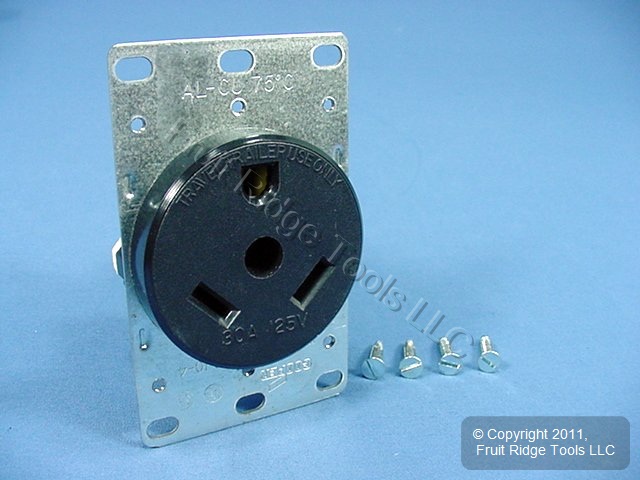
Typically, an RV park would have a TT-30 (120VAAC 30Amp) outlet
http://images.fruitridgetools.com/Images/CW1263-BOX-EA-2.JPG
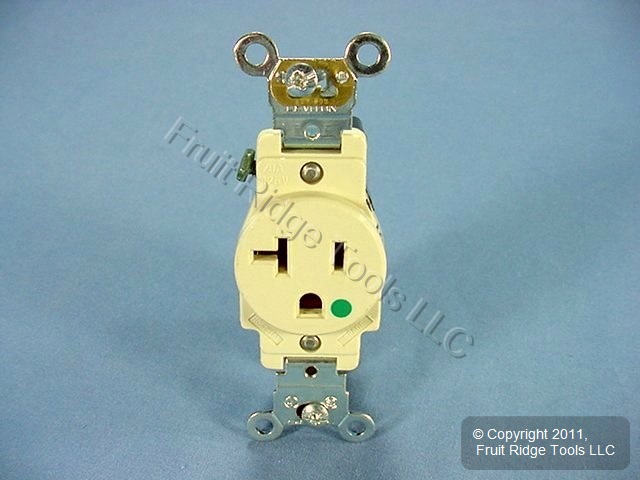
and a 5-20 (120VAC 20A) outlet
http://images.fruitridgetools.com/Images/L8310-I-EA-NOBOX-2.JPG

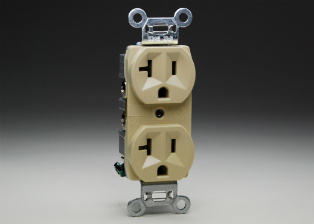
If your RV stanchion has a dual/duplex 5-20 outlet
http://internationalconfig.com/prod_shot/5342-i.jpg
I recommend that you break the tab that interconnects the two outlets,
and wire each of  them to have their own 120VAC 20A breaker.

Not all but the better RV parks have a 14-50 (120/240VAC 50A) outlet
http://www.stayonline.com/images/products_240x240/8694.jpg

Unless you have an RV that you use the RV TT-30 outlet for, it would be
wiser to remove the RV TT-30 outlet, and replace it with an outlet that
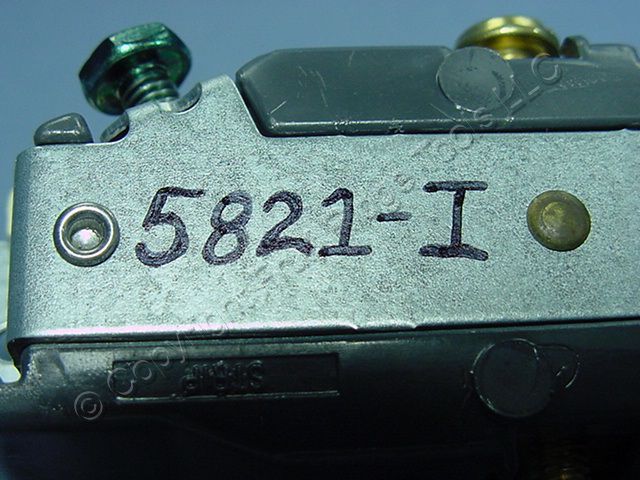
would more useful to plugins, like a 6-20
http://images.fruitridgetools.com/Images/L5821-I-EA-NOBOX-1.JPG
and not useful to moochers that can come and squat in the plugin parking
space, blocking charging access.
Where I live, that is a problem: people who live in RVs that push the
legality/trespassing/theft laws and plug in where ever an
unguarded/unprotected outlet can be found.


There is a need for plugins to access level-1 (120VAC 1.3kW) and level-2
(140VAC 20A 3kW) power.
Examples, there is no charging at the driver's work and or no charging
at their home (i.e.: rented room, apt, condo, etc.).
What better time to do a long slow charge than while at work, or when
sleeping?

Plug-in-hybrids (phev/pih) have smallish ~30 mile packs, so charging at
level-1 is fine. And for EVs and nEVs that do not need to go far,
level-1 charging will regain the miles needed to return home.

level-2 (240VAC 20A 3kW) power is much more desirable as it will
recharge a ~75 mile (~24kWh) EV pack while at work or overnight. It also
matches the kW charging capability of most lower cost EV trim models.
This charging is for driver's that will need close to a full charge to
return home.


{brucedp.150m.com}


-
On Sat, Dec 7, 2013, at 06:48 PM, fred wrote:
> Many moons ago, back in the early days of the Zap Xebra, I discovered a
> web site (URL now forgotten, but still active) in which fellow EVers
> could list their availability for charging. As a show of support, I
> installed an RV outlet for 220v and a couple of 110v outlets. RV outlets
> are permitted easily, but NEMA 15-40 outlets are a bit more difficult for
> EV charging purposes! In the five years since, not a single soul has
> requested use of my power source.
>
> If more EVers were aware of this utility and made use of it, perhaps this
> nickel "theft" would no longer be an issue.
-

--
http://www.fastmail.fm - Or how I learned to stop worrying and
                          love email again

_______________________________________________
UNSUBSCRIBE: http://www.evdl.org/help/index.html#usub
http://lists.evdl.org/listinfo.cgi/ev-evdl.org
For EV drag racing discussion, please use NEDRA
(http://groups.yahoo.com/group/NEDRA)