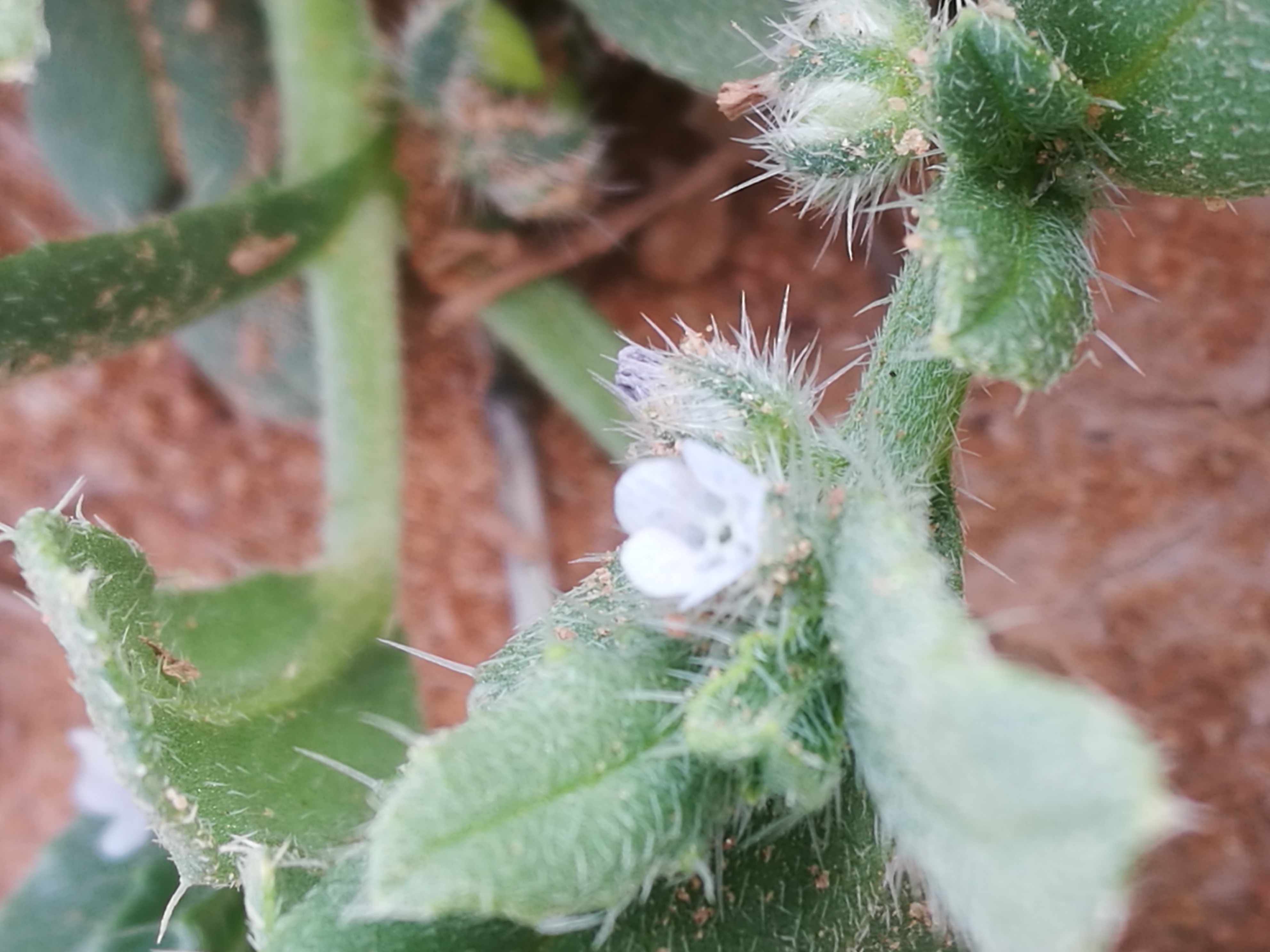
Am attaching photo of A ovata with white flowers. Photo by Yahya al  Yahya
posted under CC licence in Flora of Kingdom of Saudi Arabia Web site in
https://floraofksa.myspecies.info/sites/floraofksa.myspecies.info/files/Anchusa%20ovata%20Lehm.%20%20%28Yahya%2CQassim%29_0.jpg

<https://floraofksa.myspecies.info/sites/floraofksa.myspecies.info/files/Anchusa%20ovata%20Lehm.%20%20(Yahya%2CQassim)_0.jpg>
On Wednesday, May 28, 2025 at 5:43:30 PM UTC+5:30 [email protected] wrote:
> Dear Garg ji,
> Thanks for the guidance
> Accordng to Kazmi (Jr.Arnld Arboretum Vol 52 page670) *A .*ovata has been
> reported from Nishat Bagh srinagar by Stewart and color of corolla is from
> white to blue. I found another plant growing in a graveyard (photos
> attached) but the morphology of the leaves is very variable. It is possible
> it could be a sub species which needs the confirmation by some expert in
> the genus.
> With regards
> Taffazull
>
> On Wednesday, May 28, 2025 at 12:17:02 PM UTC+5:30 J.M. Garg wrote:
>
>> May be, Taffazul ji, as per
>> http://www.efloras.org/object_page.aspx?object_id=86154&flora_id=2
>> http://www.efloras.org/florataxon.aspx?flora_id=2&taxon_id=210000047
>> https://www.gbif.org/occurrence/gallery?taxon_key=5662067
>> https://powo.science.kew.org/taxon/urn:lsid:ipni.org:names:113319-1
>>
>> But what about the colour of the flower?
>>
>> Also check with the keys at
>> http://www.efloras.org/florataxon.aspx?flora_id=5&taxon_id=10115
>>
>>
>> On Mon, 26 May 2025 at 15:06, [email protected] <[email protected]>
>> wrote:
>>
>>> Please read nutlets in place of seeds
>>>
>>> On Monday, May 26, 2025 at 1:52:57 PM UTC+5:30 [email protected] wrote:
>>>
>>>> Dear members,
>>>> Could it be Anchusa ovata with white instead of blue flowers
>>>> The fruit and seeds show a striking resemblance
>>>> Would request opinion of some expert on this family
>>>> Am posting photo of Anchusa ovata seeds from Crop Protection Online (Crop
>>>> Protection Online > Pests - Weed biology<br> <sub>Agro-region:
>>>> Denmark</sub> - Anchusa arvensis
>>>> <https://plantevaernonline.dlbr.dk/cp/graphics/Name.asp?Language=en-la&TaskID=1&NameID=27>)reproduction
>>>>
>>>> allowed with reference to source
>>>> Regards
>>>> Taffazull
>>>>
>>>> On Tuesday, July 9, 2024 at 4:26:11 PM UTC+5:30 [email protected]
>>>> wrote:
>>>>
>>>>> Update on *Apononea baghatensis  *Syed:
>>>>> The seedlings which had sprouted from self sown seeds thrived till May
>>>>> but as the temperature rose above 20-25 degrees Celsius the plants
>>>>> started
>>>>> to die and now all the leaves have withered though the stems are still
>>>>> somewhat green (see photo). I think this explains why there are no other
>>>>> wild plants of this species here. This is a plant of cold climate( could
>>>>> be
>>>>> alpine) and the plant I reported in DEC 2022 could have survived
>>>>> fortuitously because of the seed falling in a shady corner and a cooler
>>>>> summer. This is perhaps why it has never before been reported from
>>>>> Srinagar.
>>>>> Regards
>>>>> Taffazull
>>>>>
>>>>> On Thursday, June 20, 2024 at 4:26:46 PM UTC+5:30 [email protected]
>>>>> wrote:
>>>>>
>>>>>> A correction
>>>>>> The description should read* "horizontal transversally oval"* rather
>>>>>> than "horizontal transversally oblong"
>>>>>>
>>>>>> On Thursday, June 20, 2024 at 12:43:35 PM UTC+5:30 [email protected]
>>>>>> wrote:
>>>>>>
>>>>>>> Close up photo (Mag X15) of nutlets of *Apononea baghatensis*.
>>>>>>> Syed. Photo taken on 19 June 2024. Nutlets are glabrous, horizontal,
>>>>>>> transversally oblong with lateral beak . Thick basal ring  .Basal ring
>>>>>>> is
>>>>>>> not dentate (teeth are absent). Small squares of graph paper are 1
>>>>>>> square
>>>>>>> millimeter.
>>>>>>> For comparison I used pictures of nutlets of different *Nonea*
>>>>>>> species of Iran given in the publication:
>>>>>>>  Pakravan, M., Nejhad Falatoury, A. & Tavassoli, A. 2009 06 30:
>>>>>>> *Morphological
>>>>>>> and micromorphological studies of Nonea (Boraginaceae: tribe
>>>>>>> Boragineae) in
>>>>>>> Iran*. -  Iran. J. Bot. *15 *(1): 129-139. Tehran.
>>>>>>> The shape of nutlets resembles that of many *Nonea* species whose
>>>>>>> photos are given in the above mentioned publication.
>>>>>>>
>>>>>>> On Thursday, May 30, 2024 at 7:38:16 PM UTC+5:30 [email protected]
>>>>>>> wrote:
>>>>>>>
>>>>>>>> Photo of new plants of *Apononea baghatensis* Syed growing from
>>>>>>>> seeds self sown  in the planter in which I had transferred the plant I
>>>>>>>> found growing in a field in Rawathpora Baghat in 2021. I have named
>>>>>>>> the
>>>>>>>> genus *Apononea *because it closely resembles the genus *Nonea *in
>>>>>>>> seed morphology and habit but differs in having the calyx divided to
>>>>>>>> the
>>>>>>>> base while in the genus *Nonea *it is never divided to the base. I
>>>>>>>> have named the species *baghatensis *because it was found growing
>>>>>>>> in a field in Baghat. Since then I have confirmed that it is a
>>>>>>>> biennial.
>>>>>>>> The seedlings in the photo will come into full bloom in March/April
>>>>>>>> next
>>>>>>>> year and then die.
>>>>>>>> I found a single plant growing in the field and since then I have
>>>>>>>> not come across another plant so it a rather uncommon weed. However
>>>>>>>> luckily
>>>>>>>> due to its tendency to self sow  the plants still thrive in my planter.
>>>>>>>> Regards
>>>>>>>> Taffazull
>>>>>>>>
>>>>>>>>
>>>>>>>> On Tuesday, July 18, 2023 at 6:49:52 PM UTC+5:30 [email protected]
>>>>>>>> wrote:
>>>>>>>>
>>>>>>>>> Update:
>>>>>>>>> Photo of germinating seed taken today 18th July 2023. Radicle
>>>>>>>>> comes out  from the pointed end of the nutlet away from the areola.
>>>>>>>>> Regards
>>>>>>>>> Taffazull
>>>>>>>>>
>>>>>>>>> On Wednesday, July 12, 2023 at 3:39:53 PM UTC+5:30
>>>>>>>>> [email protected] wrote:
>>>>>>>>>
>>>>>>>>>> Update on *Apononea baghatensis  **(**Apononea baghatensis  *Syed is
>>>>>>>>>> the name that I propose for this plant as till date none of the
>>>>>>>>>> members
>>>>>>>>>> have suggested an appropriate ID for the plant. Would request
>>>>>>>>>> members to
>>>>>>>>>> suggest a correction if needed.*)*
>>>>>>>>>> Photo of new seedlings from seeds that had fallen in the planter
>>>>>>>>>> in April  is attached . The plant is a biennial. These seedlings
>>>>>>>>>> will grow
>>>>>>>>>> into new plants and these will flower in March-April next year and
>>>>>>>>>> then die.
>>>>>>>>>>
>>>>>>>>>> Regards
>>>>>>>>>>
>>>>>>>>>> Taffazull
>>>>>>>>>>
>>>>>>>>>> On Monday, June 12, 2023 at 12:33:16 PM UTC+5:30
>>>>>>>>>> [email protected] wrote:
>>>>>>>>>>
>>>>>>>>>>> An update  :
>>>>>>>>>>> The plant which was in full bloom in March has finally died in
>>>>>>>>>>> May.
>>>>>>>>>>> This shows that it is a biennial.
>>>>>>>>>>> Photo taken on 18th May is attached
>>>>>>>>>>> Regards
>>>>>>>>>>> Taffazull
>>>>>>>>>>>
>>>>>>>>>>> On Monday, March 27, 2023 at 3:57:54 PM UTC+5:30 J.M. Garg wrote:
>>>>>>>>>>>
>>>>>>>>>>>> Thanks, Taffazull ji
>>>>>>>>>>>>
>>>>>>>>>>>> On Mon, 27 Mar 2023 at 11:46, [email protected] <
>>>>>>>>>>>> [email protected]> wrote:
>>>>>>>>>>>>
>>>>>>>>>>>>> Two updates:
>>>>>>>>>>>>> 1.Photo of Plant in planter in full bloom. Photo dated 20th of
>>>>>>>>>>>>> March
>>>>>>>>>>>>> 2,Photo showing inflorescence racemose in fruit.
>>>>>>>>>>>>>
>>>>>>>>>>>>> On Friday, March 10, 2023 at 11:37:19 AM UTC+5:30 J.M. Garg
>>>>>>>>>>>>> wrote:
>>>>>>>>>>>>>
>>>>>>>>>>>>>> Thanks, Taffazull ji
>>>>>>>>>>>>>>
>>>>>>>>>>>>>> On Sat, 4 Mar 2023 at 19:21, [email protected] <
>>>>>>>>>>>>>> [email protected]> wrote:
>>>>>>>>>>>>>>
>>>>>>>>>>>>>>> Updates on *Apononea baghatii  *:
>>>>>>>>>>>>>>>
>>>>>>>>>>>>>>> Photo1: Plant transferred to planter is doing well showing
>>>>>>>>>>>>>>> it is a perennial. Note flowers in terminal inflorescences at
>>>>>>>>>>>>>>> the ends of
>>>>>>>>>>>>>>> short lateral branches. These were probably present when it was
>>>>>>>>>>>>>>> transferred
>>>>>>>>>>>>>>> to planter last year and have now developed  with the advent of
>>>>>>>>>>>>>>> Spring.
>>>>>>>>>>>>>>> Photo 2: A single flower
>>>>>>>>>>>>>>> Photo 3 :Faucal appendages above the throat and neither
>>>>>>>>>>>>>>> fimbriated nor velvety. This is another difference from
>>>>>>>>>>>>>>> *Nonea*
>>>>>>>>>>>>>>> Photo 4:Corolla tube cut to show lower very hairy part of
>>>>>>>>>>>>>>> the faucal appendages
>>>>>>>>>>>>>>> Photo 5: Calyx removed to show geniculated corolla tube.
>>>>>>>>>>>>>>> The  brownish yellow anthers can be seen just above the bend in
>>>>>>>>>>>>>>> the corolla
>>>>>>>>>>>>>>> tube.
>>>>>>>>>>>>>>> Photo 7: Anthers inserted in the Corolla tube just above the
>>>>>>>>>>>>>>> bend in the tube
>>>>>>>>>>>>>>> Photo 8:Anthers.Filaments are very short and attachment is
>>>>>>>>>>>>>>> sub basal.
>>>>>>>>>>>>>>> Photo9: Ovary with gynobasic style and bifid stigma.
>>>>>>>>>>>>>>> Outlines of four ovules are distinctly visible
>>>>>>>>>>>>>>> Regards
>>>>>>>>>>>>>>> Taffazull
>>>>>>>>>>>>>>>
>>>>>>>>>>>>>>> On Tuesday, January 24, 2023 at 1:25:03 PM UTC+5:30 J.M.
>>>>>>>>>>>>>>> Garg wrote:
>>>>>>>>>>>>>>>
>>>>>>>>>>>>>>>> Thanks, Taffazull ji
>>>>>>>>>>>>>>>> --
>>>>>>>>>>>>>>>> With regards,
>>>>>>>>>>>>>>>> J. M. Garg
>>>>>>>>>>>>>>>>
>>>>>>>>>>>>>>>> On Sun, 22 Jan, 2023, 1:01 pm [email protected], <
>>>>>>>>>>>>>>>> [email protected]> wrote:
>>>>>>>>>>>>>>>>
>>>>>>>>>>>>>>>>> Three more photos:
>>>>>>>>>>>>>>>>> Photo 1 shows leaf with small(1mm or less) adpressed hairs
>>>>>>>>>>>>>>>>> and Large(>1mm) erect hairs. These hairs are present on both
>>>>>>>>>>>>>>>>> stems and
>>>>>>>>>>>>>>>>> leaves.
>>>>>>>>>>>>>>>>> Photo2 shows the swollen base of a small adpressed hair at
>>>>>>>>>>>>>>>>> X150 magnification
>>>>>>>>>>>>>>>>> Photo3 shows the swollen base of a large erect hair at
>>>>>>>>>>>>>>>>> X150 magnification
>>>>>>>>>>>>>>>>> This shows that both adpressed and erect hairs have
>>>>>>>>>>>>>>>>> swollen bases when seen  under a microscope. However to the
>>>>>>>>>>>>>>>>> unaided eye it
>>>>>>>>>>>>>>>>> appears that only the larger hairs have swollen bases as
>>>>>>>>>>>>>>>>> mentioned by some
>>>>>>>>>>>>>>>>> authors while describing the genus *Nonea.*
>>>>>>>>>>>>>>>>>
>>>>>>>>>>>>>>>>> On Saturday, January 21, 2023 at 3:01:49 PM UTC+5:30
>>>>>>>>>>>>>>>>> [email protected] wrote:
>>>>>>>>>>>>>>>>>
>>>>>>>>>>>>>>>>>> A correction:
>>>>>>>>>>>>>>>>>> Length of nutlet is 3 mm and not 4 mm as is clear from
>>>>>>>>>>>>>>>>>> the photo. So nutlet is 3 mm long and 2mm high
>>>>>>>>>>>>>>>>>> Regards
>>>>>>>>>>>>>>>>>> Taffazull
>>>>>>>>>>>>>>>>>>
>>>>>>>>>>>>>>>>>> On Saturday, January 21, 2023 at 1:42:40 PM UTC+5:30
>>>>>>>>>>>>>>>>>> [email protected] wrote:
>>>>>>>>>>>>>>>>>>
>>>>>>>>>>>>>>>>>>>
>>>>>>>>>>>>>>>>>>> *Details of nutlets.*Nutlets 4, yellowish brown, 4mm
>>>>>>>>>>>>>>>>>>> long and 2mm high,  beaked, rugose, convex above, ridges
>>>>>>>>>>>>>>>>>>> prominent with
>>>>>>>>>>>>>>>>>>> tubercles between the ridges, attachment subventral ,areola
>>>>>>>>>>>>>>>>>>> of thick
>>>>>>>>>>>>>>>>>>> prominent collar 0.4-0.5mm high, margin entire without
>>>>>>>>>>>>>>>>>>> denticulations
>>>>>>>>>>>>>>>>>>> Notes:
>>>>>>>>>>>>>>>>>>> PHOTO 1 Nutlets
>>>>>>>>>>>>>>>>>>> PHOTO2  Nutlet side view
>>>>>>>>>>>>>>>>>>> PHOTO 3 Nutlet from above
>>>>>>>>>>>>>>>>>>> PHOTO 4 Nutlet from below
>>>>>>>>>>>>>>>>>>> PHOTO 5 Sketch of a nutlet
>>>>>>>>>>>>>>>>>>> PHOTO 6 Attachment of nutlet to ovary wall
>>>>>>>>>>>>>>>>>>> PHOTO 7 Attachment of nutlet to ovary wall
>>>>>>>>>>>>>>>>>>> PHOTO 8 Nutlets in fruit
>>>>>>>>>>>>>>>>>>> On Saturday, January 21, 2023 at 1:42:59 AM UTC+5:30 JM
>>>>>>>>>>>>>>>>>>> Garg wrote:
>>>>>>>>>>>>>>>>>>>
>>>>>>>>>>>>>>>>>>>> Thanks, Taffazull ji.
>>>>>>>>>>>>>>>>>>>> That would be great.
>>>>>>>>>>>>>>>>>>>>
>>>>>>>>>>>>>>>>>>>> On Fri, 20 Jan 2023 at 20:38, [email protected] <
>>>>>>>>>>>>>>>>>>>> [email protected]> wrote:
>>>>>>>>>>>>>>>>>>>>
>>>>>>>>>>>>>>>>>>>>> Dear Garg ji,
>>>>>>>>>>>>>>>>>>>>> Thanks  for appreciation
>>>>>>>>>>>>>>>>>>>>> Would like to put on record that in near future I
>>>>>>>>>>>>>>>>>>>>> would be submitting a paper to Kew Bulletin " *Apononea
>>>>>>>>>>>>>>>>>>>>> bagathii  *a new genus of Boraginaceae from Kashmir
>>>>>>>>>>>>>>>>>>>>> Valley" regarding which I have already placed some
>>>>>>>>>>>>>>>>>>>>> information for
>>>>>>>>>>>>>>>>>>>>> discussion among  our group members as I am  convinced
>>>>>>>>>>>>>>>>>>>>> that it is a new, so
>>>>>>>>>>>>>>>>>>>>> far unreported genus of the family. Would be grateful for
>>>>>>>>>>>>>>>>>>>>> a plausible,
>>>>>>>>>>>>>>>>>>>>> evidence based contrary opinion
>>>>>>>>>>>>>>>>>>>>> With regards
>>>>>>>>>>>>>>>>>>>>> Taffazull
>>>>>>>>>>>>>>>>>>>>>
>>>>>>>>>>>>>>>>>>>>> On Friday, January 20, 2023 at 3:37:02 PM UTC+5:30 JM
>>>>>>>>>>>>>>>>>>>>> Garg wrote:
>>>>>>>>>>>>>>>>>>>>>
>>>>>>>>>>>>>>>>>>>>>> Thanks, Taffazull ji, for so many details.
>>>>>>>>>>>>>>>>>>>>>>
>>>>>>>>>>>>>>>>>>>>>> On Wed, 18 Jan 2023 at 20:14, [email protected] <
>>>>>>>>>>>>>>>>>>>>>> [email protected]> wrote:
>>>>>>>>>>>>>>>>>>>>>>
>>>>>>>>>>>>>>>>>>>>>>> *Details of corolla:*
>>>>>>>>>>>>>>>>>>>>>>> Corolla  4.5mm  ,.white, infundibuliform. lobes 5,
>>>>>>>>>>>>>>>>>>>>>>> about 1-1.5mm long , broad , obtuse and crenulate.
>>>>>>>>>>>>>>>>>>>>>>> corolla tube 3mm long
>>>>>>>>>>>>>>>>>>>>>>> with a sinuous bend  at bottom, Very delicately
>>>>>>>>>>>>>>>>>>>>>>> attached and tends to fall
>>>>>>>>>>>>>>>>>>>>>>> off easily {See photo)
>>>>>>>>>>>>>>>>>>>>>>>
>>>>>>>>>>>>>>>>>>>>>>> *Details of androecium:*
>>>>>>>>>>>>>>>>>>>>>>> Stamens 5 ,epipetalous , filaments very short,
>>>>>>>>>>>>>>>>>>>>>>> Stamens  inserted below the throat in the middle of the
>>>>>>>>>>>>>>>>>>>>>>> tube (see photo),
>>>>>>>>>>>>>>>>>>>>>>> ,anthers  about1mm long, included.
>>>>>>>>>>>>>>>>>>>>>>>
>>>>>>>>>>>>>>>>>>>>>>> *Pollen grains*
>>>>>>>>>>>>>>>>>>>>>>> cigar shaped (perprolate), monosulcate
>>>>>>>>>>>>>>>>>>>>>>>
>>>>>>>>>>>>>>>>>>>>>>> --
>>>>>>>>>>>>>>>>>>>>>>>
>>>>>>>>>>>>>>>>>>>>>> You received this message because you are subscribed
>>>>>>>>>>>>>>>>>>>>>>> to the Google Groups "eFloraofIndia" group.
>>>>>>>>>>>>>>>>>>>>>>> To unsubscribe from this group and stop receiving
>>>>>>>>>>>>>>>>>>>>>>> emails from it, send an email to
>>>>>>>>>>>>>>>>>>>>>>> [email protected].
>>>>>>>>>>>>>>>>>>>>>>>
>>>>>>>>>>>>>>>>>>>>>> To view this discussion on the web, visit
>>>>>>>>>>>>>>>>>>>>>>> https://groups.google.com/d/msgid/indiantreepix/3d16b20f-0f38-4253-b7cb-2853677059c8n%40googlegroups.com
>>>>>>>>>>>>>>>>>>>>>>>
>>>>>>>>>>>>>>>>>>>>>>> <https://groups.google.com/d/msgid/indiantreepix/3d16b20f-0f38-4253-b7cb-2853677059c8n%40googlegroups.com?utm_medium=email&utm_source=footer>
>>>>>>>>>>>>>>>>>>>>>>> .
>>>>>>>>>>>>>>>>>>>>>>>
>>>>>>>>>>>>>>>>>>>>>>
>>>>>>>>>>>>>>>>>>>>>>
>>>>>>>>>>>>>>>>>>>>>> --
>>>>>>>>>>>>>>>>>>>>>> With regards,
>>>>>>>>>>>>>>>>>>>>>> J.M.Garg
>>>>>>>>>>>>>>>>>>>>>>
>>>>>>>>>>>>>>>>>>>>> --
>>>>>>>>>>>>>>>>>>>>> You received this message because you are subscribed
>>>>>>>>>>>>>>>>>>>>> to the Google Groups "eFloraofIndia" group.
>>>>>>>>>>>>>>>>>>>>> To unsubscribe from this group and stop receiving
>>>>>>>>>>>>>>>>>>>>> emails from it, send an email to
>>>>>>>>>>>>>>>>>>>>> [email protected].
>>>>>>>>>>>>>>>>>>>>>
>>>>>>>>>>>>>>>>>>>> To view this discussion on the web, visit
>>>>>>>>>>>>>>>>>>>>> https://groups.google.com/d/msgid/indiantreepix/2293a4d2-a7cc-447c-a72c-4cfbde9e10acn%40googlegroups.com
>>>>>>>>>>>>>>>>>>>>>
>>>>>>>>>>>>>>>>>>>>> <https://groups.google.com/d/msgid/indiantreepix/2293a4d2-a7cc-447c-a72c-4cfbde9e10acn%40googlegroups.com?utm_medium=email&utm_source=footer>
>>>>>>>>>>>>>>>>>>>>> .
>>>>>>>>>>>>>>>>>>>>>
>>>>>>>>>>>>>>>>>>>>
>>>>>>>>>>>>>>>>>>>>
>>>>>>>>>>>>>>>>>>>> --
>>>>>>>>>>>>>>>>>>>> With regards,
>>>>>>>>>>>>>>>>>>>> J.M.Garg
>>>>>>>>>>>>>>>>>>>>
>>>>>>>>>>>>>>>>>>> --
>>>>>>>>>>>>>>>>> You received this message because you are subscribed to
>>>>>>>>>>>>>>>>> the Google Groups "eFloraofIndia" group.
>>>>>>>>>>>>>>>>> To unsubscribe from this group and stop receiving emails
>>>>>>>>>>>>>>>>> from it, send an email to [email protected]
>>>>>>>>>>>>>>>>> .
>>>>>>>>>>>>>>>>>
>>>>>>>>>>>>>>>> To view this discussion on the web, visit
>>>>>>>>>>>>>>>>> https://groups.google.com/d/msgid/indiantreepix/55d0dbe1-eb35-40e0-8f88-c7073aeafaf9n%40googlegroups.com
>>>>>>>>>>>>>>>>>
>>>>>>>>>>>>>>>>> <https://groups.google.com/d/msgid/indiantreepix/55d0dbe1-eb35-40e0-8f88-c7073aeafaf9n%40googlegroups.com?utm_medium=email&utm_source=footer>
>>>>>>>>>>>>>>>>> .
>>>>>>>>>>>>>>>>>
>>>>>>>>>>>>>>>> --
>>>>>>>>>>>>>>> You received this message because you are subscribed to the
>>>>>>>>>>>>>>> Google Groups "eFloraofIndia" group.
>>>>>>>>>>>>>>> To unsubscribe from this group and stop receiving emails
>>>>>>>>>>>>>>> from it, send an email to [email protected].
>>>>>>>>>>>>>>>
>>>>>>>>>>>>>> To view this discussion on the web, visit
>>>>>>>>>>>>>>> https://groups.google.com/d/msgid/indiantreepix/2d263a25-c165-4ec2-8432-64bb865d5113n%40googlegroups.com
>>>>>>>>>>>>>>>
>>>>>>>>>>>>>>> <https://groups.google.com/d/msgid/indiantreepix/2d263a25-c165-4ec2-8432-64bb865d5113n%40googlegroups.com?utm_medium=email&utm_source=footer>
>>>>>>>>>>>>>>> .
>>>>>>>>>>>>>>>
>>>>>>>>>>>>>>
>>>>>>>>>>>>>>
>>>>>>>>>>>>>> --
>>>>>>>>>>>>>> With regards,
>>>>>>>>>>>>>> J.M.Garg
>>>>>>>>>>>>>>
>>>>>>>>>>>>> --
>>>>>>>>>>>>> You received this message because you are subscribed to the
>>>>>>>>>>>>> Google Groups "eFloraofIndia" group.
>>>>>>>>>>>>> To unsubscribe from this group and stop receiving emails from
>>>>>>>>>>>>> it, send an email to [email protected].
>>>>>>>>>>>>>
>>>>>>>>>>>> To view this discussion on the web, visit
>>>>>>>>>>>>> https://groups.google.com/d/msgid/indiantreepix/3969a206-0c92-475a-b480-31493b7d341en%40googlegroups.com
>>>>>>>>>>>>>
>>>>>>>>>>>>> <https://groups.google.com/d/msgid/indiantreepix/3969a206-0c92-475a-b480-31493b7d341en%40googlegroups.com?utm_medium=email&utm_source=footer>
>>>>>>>>>>>>> .
>>>>>>>>>>>>>
>>>>>>>>>>>>
>>>>>>>>>>>>
>>>>>>>>>>>> --
>>>>>>>>>>>> With regards,
>>>>>>>>>>>> J.M.Garg
>>>>>>>>>>>>
>>>>>>>>>>> --
>>> You received this message because you are subscribed to the Google
>>> Groups "eFloraofIndia" group.
>>> To unsubscribe from this group and stop receiving emails from it, send
>>> an email to [email protected].
>>>
>> To view this discussion, visit
>>> https://groups.google.com/d/msgid/indiantreepix/50fa55e3-e336-4a58-8467-df07e8b4dad1n%40googlegroups.com
>>>
>>> <https://groups.google.com/d/msgid/indiantreepix/50fa55e3-e336-4a58-8467-df07e8b4dad1n%40googlegroups.com?utm_medium=email&utm_source=footer>
>>> .
>>>
>>
>>
>> --
>> With regards,
>> J.M.Garg,
>> https://efloraofindia.com/
>>
>

--
You received this message because you are subscribed to the Google Groups
"eFloraofIndia" group.
To unsubscribe from this group and stop receiving emails from it, send an email
to [email protected].
To view this discussion, visit
https://groups.google.com/d/msgid/indiantreepix/76259d7c-6e8b-4638-916d-09ba47953169n%40googlegroups.com.