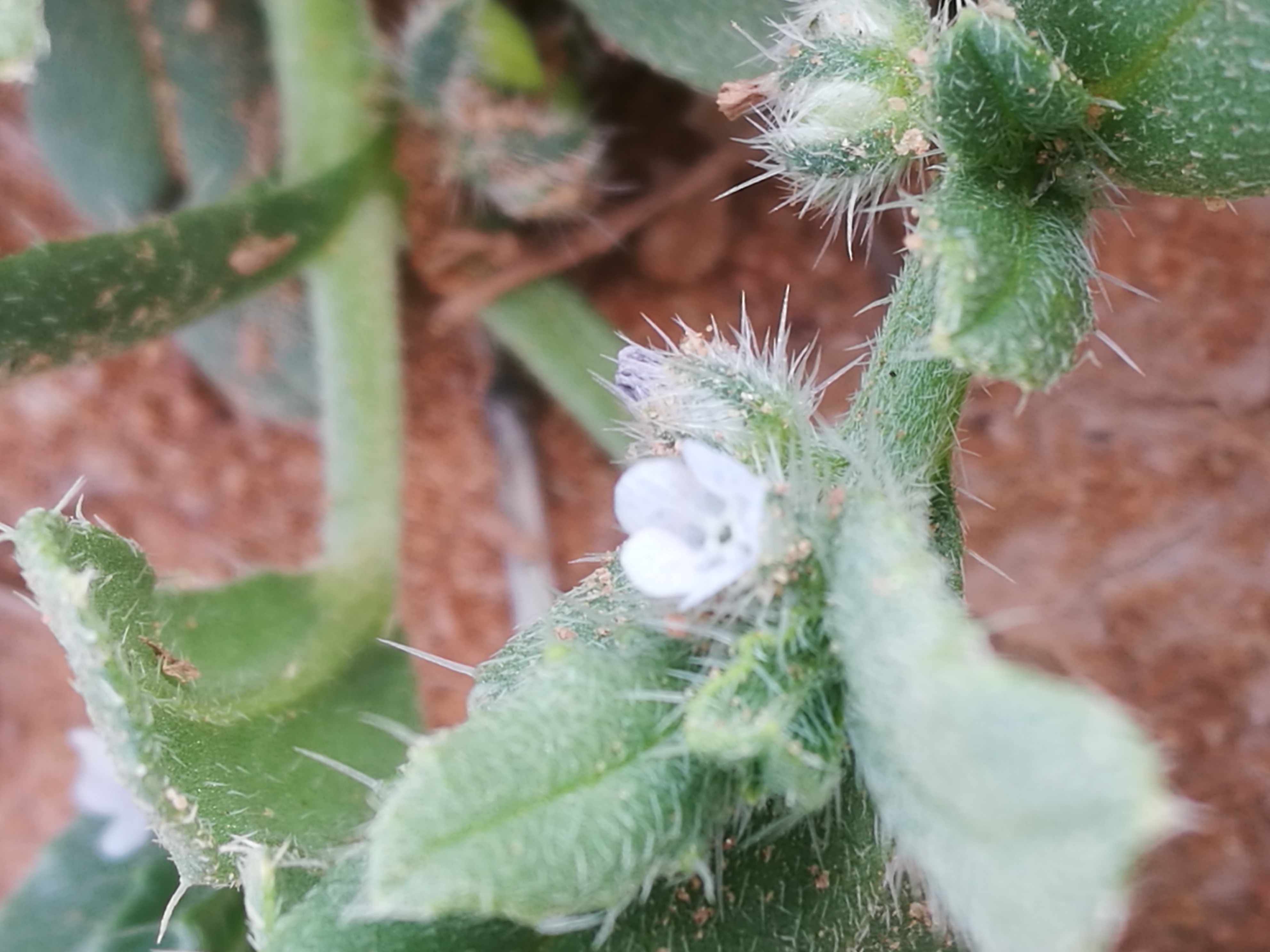
Flora of China mentions that an edible oil is obtained from its nutlets. It
has been demonstrated that the oil is rich in PUFA and MUFA which are good
for health(Tamaer Özcan: Fatty Acid Profiles of the seed oils in two groups
of Anchusa officinalis L. IUFS J Biol 2008 67 (1) 65-71.) Since it can grow
in harsh environments ranging from the Desert of Saudi Arabia to mountains
of Ladakh it would be worthwhile if Botany departments collaborate with
Agricultural Institutes to explore the possibility of cultivating it as an
oil seed in places with inhospitable terrains. Selective breeding can
improve the yield of oil.
Regards
Taffazull
On Sunday, June 8, 2025 at 10:11:36 AM UTC+5:30 J.M. Garg wrote:

> Thanks a lot, Taffazull ji
>
> On Sat, 7 Jun 2025 at 18:16, [email protected] <[email protected]>
> wrote:
>
>> Am attaching description of A.ovata  from the book ''Flora of Kashmir
>> Himalayas'' By U.Dhar  and P Kachroo mentioning color of corolla as
>> white.They have collected plants from high elevations i.e Bodkharbu(3305m)
>> and Sonamarg (3000m) I find it interesting that  A.ovata grows in deserts
>> of Saudi Arabia , Alpine regions of Kashmir and Ladakh as well as the
>> Subtemperate region of Kashmir Valley(1500m).Plants growing in Arabian
>> desert and alpine regions are densely clothed with trichomes but those
>> whose photos  I have posted at this site are not so hairy. This could be
>> because of Enviornmental conditions or they could be different varieties.
>> Regards
>> On Sunday, June 1, 2025 at 2:08:15 PM UTC+5:30 [email protected] wrote:
>>
>>> *Anchusa ovata *Lehm. Asperif. *1:222.*1818
>>>
>>> On Sunday, June 1, 2025 at 2:02:57 PM UTC+5:30 [email protected] wrote:
>>>
>>>> Having carefully examined the flowers (tube geniculate , filaments of
>>>> stamens very short inserted above corolla base) and nutlets(transversly
>>>> ovate, reticulate-rugose,minutely tuberculate between the wrinkles )  I am
>>>> now certain that it is *Anchusa ovata.*
>>>> Would request confirmation from experts.
>>>> Regards
>>>> Taffazull
>>>>
>>>>
>>>> On Wednesday, May 28, 2025 at 6:20:50 PM UTC+5:30 [email protected]
>>>> wrote:
>>>>
>>>>> Am attaching photo of A ovata with white flowers. Photo by Yahya al
>>>>> Yahya posted under CC licence in Flora of Kingdom of Saudi Arabia Web
>>>>> site
>>>>> in
>>>>> https://floraofksa.myspecies.info/sites/floraofksa.myspecies.info/files/Anchusa%20ovata%20Lehm.%20%20%28Yahya%2CQassim%29_0.jpg
>>>>>
>>>>> <https://floraofksa.myspecies.info/sites/floraofksa.myspecies.info/files/Anchusa%20ovata%20Lehm.%20%20(Yahya%2CQassim)_0.jpg>
>>>>> On Wednesday, May 28, 2025 at 5:43:30 PM UTC+5:30 [email protected]
>>>>> wrote:
>>>>>
>>>>>> Dear Garg ji,
>>>>>> Thanks for the guidance
>>>>>> Accordng to Kazmi (Jr.Arnld Arboretum Vol 52 page670) *A .*ovata has
>>>>>> been reported from Nishat Bagh srinagar by Stewart and color of corolla
>>>>>> is
>>>>>> from white to blue. I found another plant growing in a graveyard (photos
>>>>>> attached) but the morphology of the leaves is very variable. It is
>>>>>> possible
>>>>>> it could be a sub species which needs the confirmation by some expert in
>>>>>> the genus.
>>>>>> With regards
>>>>>> Taffazull
>>>>>>
>>>>>> On Wednesday, May 28, 2025 at 12:17:02 PM UTC+5:30 J.M. Garg wrote:
>>>>>>
>>>>>>> May be, Taffazul ji, as per
>>>>>>> http://www.efloras.org/object_page.aspx?object_id=86154&flora_id=2
>>>>>>> http://www.efloras.org/florataxon.aspx?flora_id=2&taxon_id=210000047
>>>>>>> https://www.gbif.org/occurrence/gallery?taxon_key=5662067
>>>>>>> https://powo.science.kew.org/taxon/urn:lsid:ipni.org:names:113319-1
>>>>>>>
>>>>>>> But what about the colour of the flower?
>>>>>>>
>>>>>>> Also check with the keys at
>>>>>>> http://www.efloras.org/florataxon.aspx?flora_id=5&taxon_id=10115
>>>>>>>
>>>>>>>
>>>>>>> On Mon, 26 May 2025 at 15:06, [email protected] <[email protected]>
>>>>>>> wrote:
>>>>>>>
>>>>>>>> Please read nutlets in place of seeds
>>>>>>>>
>>>>>>>> On Monday, May 26, 2025 at 1:52:57 PM UTC+5:30 [email protected]
>>>>>>>> wrote:
>>>>>>>>
>>>>>>>>> Dear members,
>>>>>>>>> Could it be Anchusa ovata with white instead of blue flowers
>>>>>>>>> The fruit and seeds show a striking resemblance
>>>>>>>>> Would request opinion of some expert on this family
>>>>>>>>> Am posting photo of Anchusa ovata seeds from Crop Protection
>>>>>>>>> Online (Crop Protection Online > Pests - Weed biology<br>
>>>>>>>>> <sub>Agro-region: Denmark</sub> - Anchusa arvensis
>>>>>>>>> <https://plantevaernonline.dlbr.dk/cp/graphics/Name.asp?Language=en-la&TaskID=1&NameID=27>)reproduction
>>>>>>>>>
>>>>>>>>> allowed with reference to source
>>>>>>>>> Regards
>>>>>>>>> Taffazull
>>>>>>>>>
>>>>>>>>> On Tuesday, July 9, 2024 at 4:26:11 PM UTC+5:30 [email protected]
>>>>>>>>> wrote:
>>>>>>>>>
>>>>>>>>>> Update on *Apononea baghatensis  *Syed:
>>>>>>>>>> The seedlings which had sprouted from self sown seeds thrived
>>>>>>>>>> till May but as the temperature rose above 20-25 degrees Celsius the
>>>>>>>>>> plants
>>>>>>>>>> started to die and now all the leaves have withered though the stems
>>>>>>>>>> are
>>>>>>>>>> still somewhat green (see photo). I think this explains why there
>>>>>>>>>> are no
>>>>>>>>>> other wild plants of this species here. This is a plant of cold
>>>>>>>>>> climate(
>>>>>>>>>> could be alpine) and the plant I reported in DEC 2022 could have
>>>>>>>>>> survived
>>>>>>>>>> fortuitously because of the seed falling in a shady corner and a
>>>>>>>>>> cooler
>>>>>>>>>> summer. This is perhaps why it has never before been reported from
>>>>>>>>>> Srinagar.
>>>>>>>>>> Regards
>>>>>>>>>> Taffazull
>>>>>>>>>>
>>>>>>>>>> On Thursday, June 20, 2024 at 4:26:46 PM UTC+5:30
>>>>>>>>>> [email protected] wrote:
>>>>>>>>>>
>>>>>>>>>>> A correction
>>>>>>>>>>> The description should read* "horizontal transversally oval"*
>>>>>>>>>>> rather than "horizontal transversally oblong"
>>>>>>>>>>>
>>>>>>>>>>> On Thursday, June 20, 2024 at 12:43:35 PM UTC+5:30
>>>>>>>>>>> [email protected] wrote:
>>>>>>>>>>>
>>>>>>>>>>>> Close up photo (Mag X15) of nutlets of *Apononea baghatensis*.
>>>>>>>>>>>> Syed. Photo taken on 19 June 2024. Nutlets are glabrous,
>>>>>>>>>>>> horizontal,
>>>>>>>>>>>> transversally oblong with lateral beak . Thick basal ring  .Basal
>>>>>>>>>>>> ring is
>>>>>>>>>>>> not dentate (teeth are absent). Small squares of graph paper are 1
>>>>>>>>>>>> square
>>>>>>>>>>>> millimeter.
>>>>>>>>>>>> For comparison I used pictures of nutlets of different *Nonea*
>>>>>>>>>>>> species of Iran given in the publication:
>>>>>>>>>>>>  Pakravan, M., Nejhad Falatoury, A. & Tavassoli, A. 2009 06
>>>>>>>>>>>> 30: *Morphological and micromorphological studies of Nonea
>>>>>>>>>>>> (Boraginaceae: tribe Boragineae) in Iran*. -  Iran. J. Bot. *15
>>>>>>>>>>>> *(1): 129-139. Tehran.
>>>>>>>>>>>> The shape of nutlets resembles that of many *Nonea* species
>>>>>>>>>>>> whose photos are given in the above mentioned publication.
>>>>>>>>>>>>
>>>>>>>>>>>> On Thursday, May 30, 2024 at 7:38:16 PM UTC+5:30
>>>>>>>>>>>> [email protected] wrote:
>>>>>>>>>>>>
>>>>>>>>>>>>> Photo of new plants of *Apononea baghatensis* Syed growing
>>>>>>>>>>>>> from seeds self sown  in the planter in which I had transferred
>>>>>>>>>>>>> the plant I
>>>>>>>>>>>>> found growing in a field in Rawathpora Baghat in 2021. I have
>>>>>>>>>>>>> named the
>>>>>>>>>>>>> genus *Apononea *because it closely resembles the genus *Nonea
>>>>>>>>>>>>> *in seed morphology and habit but differs in having the calyx
>>>>>>>>>>>>> divided to the base while in the genus *Nonea *it is never
>>>>>>>>>>>>> divided to the base. I have named the species *baghatensis
>>>>>>>>>>>>> *because
>>>>>>>>>>>>> it was found growing in a field in Baghat. Since then I have
>>>>>>>>>>>>> confirmed that
>>>>>>>>>>>>> it is a biennial. The seedlings in the photo will come into full
>>>>>>>>>>>>> bloom in
>>>>>>>>>>>>> March/April next year and then die.
>>>>>>>>>>>>> I found a single plant growing in the field and since then I
>>>>>>>>>>>>> have not come across another plant so it a rather uncommon weed.
>>>>>>>>>>>>> However
>>>>>>>>>>>>> luckily due to its tendency to self sow  the plants still thrive
>>>>>>>>>>>>> in my
>>>>>>>>>>>>> planter.
>>>>>>>>>>>>> Regards
>>>>>>>>>>>>> Taffazull
>>>>>>>>>>>>>
>>>>>>>>>>>>>
>>>>>>>>>>>>> On Tuesday, July 18, 2023 at 6:49:52 PM UTC+5:30
>>>>>>>>>>>>> [email protected] wrote:
>>>>>>>>>>>>>
>>>>>>>>>>>>>> Update:
>>>>>>>>>>>>>> Photo of germinating seed taken today 18th July 2023. Radicle
>>>>>>>>>>>>>> comes out  from the pointed end of the nutlet away from the
>>>>>>>>>>>>>> areola.
>>>>>>>>>>>>>> Regards
>>>>>>>>>>>>>> Taffazull
>>>>>>>>>>>>>>
>>>>>>>>>>>>>> On Wednesday, July 12, 2023 at 3:39:53 PM UTC+5:30
>>>>>>>>>>>>>> [email protected] wrote:
>>>>>>>>>>>>>>
>>>>>>>>>>>>>>> Update on *Apononea baghatensis  **(**Apononea baghatensis
>>>>>>>>>>>>>>> *Syed is the name that I propose for this plant as till
>>>>>>>>>>>>>>> date none of the members have suggested an appropriate ID for
>>>>>>>>>>>>>>> the plant.
>>>>>>>>>>>>>>> Would request members to suggest a correction if needed.*)*
>>>>>>>>>>>>>>> Photo of new seedlings from seeds that had fallen in the
>>>>>>>>>>>>>>> planter in April  is attached . The plant is a biennial. These
>>>>>>>>>>>>>>> seedlings
>>>>>>>>>>>>>>> will grow into new plants and these will flower in March-April
>>>>>>>>>>>>>>> next year
>>>>>>>>>>>>>>> and then die.
>>>>>>>>>>>>>>>
>>>>>>>>>>>>>>> Regards
>>>>>>>>>>>>>>>
>>>>>>>>>>>>>>> Taffazull
>>>>>>>>>>>>>>>
>>>>>>>>>>>>>>> On Monday, June 12, 2023 at 12:33:16 PM UTC+5:30
>>>>>>>>>>>>>>> [email protected] wrote:
>>>>>>>>>>>>>>>
>>>>>>>>>>>>>>>> An update  :
>>>>>>>>>>>>>>>> The plant which was in full bloom in March has finally died
>>>>>>>>>>>>>>>> in May.
>>>>>>>>>>>>>>>> This shows that it is a biennial.
>>>>>>>>>>>>>>>> Photo taken on 18th May is attached
>>>>>>>>>>>>>>>> Regards
>>>>>>>>>>>>>>>> Taffazull
>>>>>>>>>>>>>>>>
>>>>>>>>>>>>>>>> On Monday, March 27, 2023 at 3:57:54 PM UTC+5:30 J.M. Garg
>>>>>>>>>>>>>>>> wrote:
>>>>>>>>>>>>>>>>
>>>>>>>>>>>>>>>>> Thanks, Taffazull ji
>>>>>>>>>>>>>>>>>
>>>>>>>>>>>>>>>>> On Mon, 27 Mar 2023 at 11:46, [email protected] <
>>>>>>>>>>>>>>>>> [email protected]> wrote:
>>>>>>>>>>>>>>>>>
>>>>>>>>>>>>>>>>>> Two updates:
>>>>>>>>>>>>>>>>>> 1.Photo of Plant in planter in full bloom. Photo dated
>>>>>>>>>>>>>>>>>> 20th of March
>>>>>>>>>>>>>>>>>> 2,Photo showing inflorescence racemose in fruit.
>>>>>>>>>>>>>>>>>>
>>>>>>>>>>>>>>>>>> On Friday, March 10, 2023 at 11:37:19 AM UTC+5:30 J.M.
>>>>>>>>>>>>>>>>>> Garg wrote:
>>>>>>>>>>>>>>>>>>
>>>>>>>>>>>>>>>>>>> Thanks, Taffazull ji
>>>>>>>>>>>>>>>>>>>
>>>>>>>>>>>>>>>>>>> On Sat, 4 Mar 2023 at 19:21, [email protected] <
>>>>>>>>>>>>>>>>>>> [email protected]> wrote:
>>>>>>>>>>>>>>>>>>>
>>>>>>>>>>>>>>>>>>>> Updates on *Apononea baghatii  *:
>>>>>>>>>>>>>>>>>>>>
>>>>>>>>>>>>>>>>>>>> Photo1: Plant transferred to planter is doing well
>>>>>>>>>>>>>>>>>>>> showing it is a perennial. Note flowers in terminal
>>>>>>>>>>>>>>>>>>>> inflorescences at the
>>>>>>>>>>>>>>>>>>>> ends of short lateral branches. These were probably
>>>>>>>>>>>>>>>>>>>> present when it was
>>>>>>>>>>>>>>>>>>>> transferred to planter last year and have now developed
>>>>>>>>>>>>>>>>>>>> with the advent of
>>>>>>>>>>>>>>>>>>>> Spring.
>>>>>>>>>>>>>>>>>>>> Photo 2: A single flower
>>>>>>>>>>>>>>>>>>>> Photo 3 :Faucal appendages above the throat and neither
>>>>>>>>>>>>>>>>>>>> fimbriated nor velvety. This is another difference from
>>>>>>>>>>>>>>>>>>>> *Nonea*
>>>>>>>>>>>>>>>>>>>> Photo 4:Corolla tube cut to show lower very hairy part
>>>>>>>>>>>>>>>>>>>> of the faucal appendages
>>>>>>>>>>>>>>>>>>>> Photo 5: Calyx removed to show geniculated corolla
>>>>>>>>>>>>>>>>>>>> tube. The  brownish yellow anthers can be seen just above
>>>>>>>>>>>>>>>>>>>> the bend in the
>>>>>>>>>>>>>>>>>>>> corolla tube.
>>>>>>>>>>>>>>>>>>>> Photo 7: Anthers inserted in the Corolla tube just
>>>>>>>>>>>>>>>>>>>> above the bend in the tube
>>>>>>>>>>>>>>>>>>>> Photo 8:Anthers.Filaments are very short and attachment
>>>>>>>>>>>>>>>>>>>> is sub basal.
>>>>>>>>>>>>>>>>>>>> Photo9: Ovary with gynobasic style and bifid stigma.
>>>>>>>>>>>>>>>>>>>> Outlines of four ovules are distinctly visible
>>>>>>>>>>>>>>>>>>>> Regards
>>>>>>>>>>>>>>>>>>>> Taffazull
>>>>>>>>>>>>>>>>>>>>
>>>>>>>>>>>>>>>>>>>> On Tuesday, January 24, 2023 at 1:25:03 PM UTC+5:30
>>>>>>>>>>>>>>>>>>>> J.M. Garg wrote:
>>>>>>>>>>>>>>>>>>>>
>>>>>>>>>>>>>>>>>>>>> Thanks, Taffazull ji
>>>>>>>>>>>>>>>>>>>>> --
>>>>>>>>>>>>>>>>>>>>> With regards,
>>>>>>>>>>>>>>>>>>>>> J. M. Garg
>>>>>>>>>>>>>>>>>>>>>
>>>>>>>>>>>>>>>>>>>>> On Sun, 22 Jan, 2023, 1:01 pm [email protected], <
>>>>>>>>>>>>>>>>>>>>> [email protected]> wrote:
>>>>>>>>>>>>>>>>>>>>>
>>>>>>>>>>>>>>>>>>>>>> Three more photos:
>>>>>>>>>>>>>>>>>>>>>> Photo 1 shows leaf with small(1mm or less) adpressed
>>>>>>>>>>>>>>>>>>>>>> hairs and Large(>1mm) erect hairs. These hairs are
>>>>>>>>>>>>>>>>>>>>>> present on both stems
>>>>>>>>>>>>>>>>>>>>>> and leaves.
>>>>>>>>>>>>>>>>>>>>>> Photo2 shows the swollen base of a small adpressed
>>>>>>>>>>>>>>>>>>>>>> hair at X150 magnification
>>>>>>>>>>>>>>>>>>>>>> Photo3 shows the swollen base of a large erect hair
>>>>>>>>>>>>>>>>>>>>>> at X150 magnification
>>>>>>>>>>>>>>>>>>>>>> This shows that both adpressed and erect hairs have
>>>>>>>>>>>>>>>>>>>>>> swollen bases when seen  under a microscope. However to
>>>>>>>>>>>>>>>>>>>>>> the unaided eye it
>>>>>>>>>>>>>>>>>>>>>> appears that only the larger hairs have swollen bases as
>>>>>>>>>>>>>>>>>>>>>> mentioned by some
>>>>>>>>>>>>>>>>>>>>>> authors while describing the genus *Nonea.*
>>>>>>>>>>>>>>>>>>>>>>
>>>>>>>>>>>>>>>>>>>>>> On Saturday, January 21, 2023 at 3:01:49 PM UTC+5:30
>>>>>>>>>>>>>>>>>>>>>> [email protected] wrote:
>>>>>>>>>>>>>>>>>>>>>>
>>>>>>>>>>>>>>>>>>>>>>> A correction:
>>>>>>>>>>>>>>>>>>>>>>> Length of nutlet is 3 mm and not 4 mm as is clear
>>>>>>>>>>>>>>>>>>>>>>> from the photo. So nutlet is 3 mm long and 2mm high
>>>>>>>>>>>>>>>>>>>>>>> Regards
>>>>>>>>>>>>>>>>>>>>>>> Taffazull
>>>>>>>>>>>>>>>>>>>>>>>
>>>>>>>>>>>>>>>>>>>>>>> On Saturday, January 21, 2023 at 1:42:40 PM UTC+5:30
>>>>>>>>>>>>>>>>>>>>>>> [email protected] wrote:
>>>>>>>>>>>>>>>>>>>>>>>
>>>>>>>>>>>>>>>>>>>>>>>>
>>>>>>>>>>>>>>>>>>>>>>>> *Details of nutlets.*Nutlets 4, yellowish brown,
>>>>>>>>>>>>>>>>>>>>>>>> 4mm long and 2mm high,  beaked, rugose, convex above,
>>>>>>>>>>>>>>>>>>>>>>>> ridges prominent with
>>>>>>>>>>>>>>>>>>>>>>>> tubercles between the ridges, attachment subventral
>>>>>>>>>>>>>>>>>>>>>>>> ,areola of thick
>>>>>>>>>>>>>>>>>>>>>>>> prominent collar 0.4-0.5mm high, margin entire without
>>>>>>>>>>>>>>>>>>>>>>>> denticulations
>>>>>>>>>>>>>>>>>>>>>>>> Notes:
>>>>>>>>>>>>>>>>>>>>>>>> PHOTO 1 Nutlets
>>>>>>>>>>>>>>>>>>>>>>>> PHOTO2  Nutlet side view
>>>>>>>>>>>>>>>>>>>>>>>> PHOTO 3 Nutlet from above
>>>>>>>>>>>>>>>>>>>>>>>> PHOTO 4 Nutlet from below
>>>>>>>>>>>>>>>>>>>>>>>> PHOTO 5 Sketch of a nutlet
>>>>>>>>>>>>>>>>>>>>>>>> PHOTO 6 Attachment of nutlet to ovary wall
>>>>>>>>>>>>>>>>>>>>>>>> PHOTO 7 Attachment of nutlet to ovary wall
>>>>>>>>>>>>>>>>>>>>>>>> PHOTO 8 Nutlets in fruit
>>>>>>>>>>>>>>>>>>>>>>>> On Saturday, January 21, 2023 at 1:42:59 AM
>>>>>>>>>>>>>>>>>>>>>>>> UTC+5:30 JM Garg wrote:
>>>>>>>>>>>>>>>>>>>>>>>>
>>>>>>>>>>>>>>>>>>>>>>>>> Thanks, Taffazull ji.
>>>>>>>>>>>>>>>>>>>>>>>>> That would be great.
>>>>>>>>>>>>>>>>>>>>>>>>>
>>>>>>>>>>>>>>>>>>>>>>>>> On Fri, 20 Jan 2023 at 20:38, [email protected] <
>>>>>>>>>>>>>>>>>>>>>>>>> [email protected]> wrote:
>>>>>>>>>>>>>>>>>>>>>>>>>
>>>>>>>>>>>>>>>>>>>>>>>>>> Dear Garg ji,
>>>>>>>>>>>>>>>>>>>>>>>>>> Thanks  for appreciation
>>>>>>>>>>>>>>>>>>>>>>>>>> Would like to put on record that in near future I
>>>>>>>>>>>>>>>>>>>>>>>>>> would be submitting a paper to Kew Bulletin "
>>>>>>>>>>>>>>>>>>>>>>>>>> *Apononea
>>>>>>>>>>>>>>>>>>>>>>>>>> bagathii  *a new genus of Boraginaceae from
>>>>>>>>>>>>>>>>>>>>>>>>>> Kashmir Valley" regarding which I have already
>>>>>>>>>>>>>>>>>>>>>>>>>> placed some information for
>>>>>>>>>>>>>>>>>>>>>>>>>> discussion among  our group members as I am
>>>>>>>>>>>>>>>>>>>>>>>>>> convinced that it is a new, so
>>>>>>>>>>>>>>>>>>>>>>>>>> far unreported genus of the family. Would be
>>>>>>>>>>>>>>>>>>>>>>>>>> grateful for a plausible,
>>>>>>>>>>>>>>>>>>>>>>>>>> evidence based contrary opinion
>>>>>>>>>>>>>>>>>>>>>>>>>> With regards
>>>>>>>>>>>>>>>>>>>>>>>>>> Taffazull
>>>>>>>>>>>>>>>>>>>>>>>>>>
>>>>>>>>>>>>>>>>>>>>>>>>>> On Friday, January 20, 2023 at 3:37:02 PM
>>>>>>>>>>>>>>>>>>>>>>>>>> UTC+5:30 JM Garg wrote:
>>>>>>>>>>>>>>>>>>>>>>>>>>
>>>>>>>>>>>>>>>>>>>>>>>>>>> Thanks, Taffazull ji, for so many details.
>>>>>>>>>>>>>>>>>>>>>>>>>>>
>>>>>>>>>>>>>>>>>>>>>>>>>>> On Wed, 18 Jan 2023 at 20:14, [email protected]
>>>>>>>>>>>>>>>>>>>>>>>>>>> <[email protected]> wrote:
>>>>>>>>>>>>>>>>>>>>>>>>>>>
>>>>>>>>>>>>>>>>>>>>>>>>>>>> *Details of corolla:*
>>>>>>>>>>>>>>>>>>>>>>>>>>>> Corolla  4.5mm  ,.white, infundibuliform. lobes
>>>>>>>>>>>>>>>>>>>>>>>>>>>> 5, about 1-1.5mm long , broad , obtuse and
>>>>>>>>>>>>>>>>>>>>>>>>>>>> crenulate.  corolla tube 3mm
>>>>>>>>>>>>>>>>>>>>>>>>>>>> long with a sinuous bend  at bottom, Very
>>>>>>>>>>>>>>>>>>>>>>>>>>>> delicately attached and tends to
>>>>>>>>>>>>>>>>>>>>>>>>>>>> fall off easily {See photo)
>>>>>>>>>>>>>>>>>>>>>>>>>>>>
>>>>>>>>>>>>>>>>>>>>>>>>>>>> *Details of androecium:*
>>>>>>>>>>>>>>>>>>>>>>>>>>>> Stamens 5 ,epipetalous , filaments very short,
>>>>>>>>>>>>>>>>>>>>>>>>>>>> Stamens  inserted below the throat in the middle
>>>>>>>>>>>>>>>>>>>>>>>>>>>> of the tube (see photo),
>>>>>>>>>>>>>>>>>>>>>>>>>>>> ,anthers  about1mm long, included.
>>>>>>>>>>>>>>>>>>>>>>>>>>>>
>>>>>>>>>>>>>>>>>>>>>>>>>>>> *Pollen grains*
>>>>>>>>>>>>>>>>>>>>>>>>>>>> cigar shaped (perprolate), monosulcate
>>>>>>>>>>>>>>>>>>>>>>>>>>>>
>>>>>>>>>>>>>>>>>>>>>>>>>>>> --
>>>>>>>>>>>>>>>>>>>>>>>>>>>>
>>>>>>>>>>>>>>>>>>>>>>>>>>> You received this message because you are
>>>>>>>>>>>>>>>>>>>>>>>>>>>> subscribed to the Google Groups "eFloraofIndia"
>>>>>>>>>>>>>>>>>>>>>>>>>>>> group.
>>>>>>>>>>>>>>>>>>>>>>>>>>>> To unsubscribe from this group and stop
>>>>>>>>>>>>>>>>>>>>>>>>>>>> receiving emails from it, send an email to
>>>>>>>>>>>>>>>>>>>>>>>>>>>> [email protected].
>>>>>>>>>>>>>>>>>>>>>>>>>>>>
>>>>>>>>>>>>>>>>>>>>>>>>>>> To view this discussion on the web, visit
>>>>>>>>>>>>>>>>>>>>>>>>>>>> https://groups.google.com/d/msgid/indiantreepix/3d16b20f-0f38-4253-b7cb-2853677059c8n%40googlegroups.com
>>>>>>>>>>>>>>>>>>>>>>>>>>>>
>>>>>>>>>>>>>>>>>>>>>>>>>>>> <https://groups.google.com/d/msgid/indiantreepix/3d16b20f-0f38-4253-b7cb-2853677059c8n%40googlegroups.com?utm_medium=email&utm_source=footer>
>>>>>>>>>>>>>>>>>>>>>>>>>>>> .
>>>>>>>>>>>>>>>>>>>>>>>>>>>>
>>>>>>>>>>>>>>>>>>>>>>>>>>>
>>>>>>>>>>>>>>>>>>>>>>>>>>>
>>>>>>>>>>>>>>>>>>>>>>>>>>> --
>>>>>>>>>>>>>>>>>>>>>>>>>>> With regards,
>>>>>>>>>>>>>>>>>>>>>>>>>>> J.M.Garg
>>>>>>>>>>>>>>>>>>>>>>>>>>>
>>>>>>>>>>>>>>>>>>>>>>>>>> --
>>>>>>>>>>>>>>>>>>>>>>>>>> You received this message because you are
>>>>>>>>>>>>>>>>>>>>>>>>>> subscribed to the Google Groups "eFloraofIndia"
>>>>>>>>>>>>>>>>>>>>>>>>>> group.
>>>>>>>>>>>>>>>>>>>>>>>>>> To unsubscribe from this group and stop receiving
>>>>>>>>>>>>>>>>>>>>>>>>>> emails from it, send an email to
>>>>>>>>>>>>>>>>>>>>>>>>>> [email protected].
>>>>>>>>>>>>>>>>>>>>>>>>>>
>>>>>>>>>>>>>>>>>>>>>>>>> To view this discussion on the web, visit
>>>>>>>>>>>>>>>>>>>>>>>>>> https://groups.google.com/d/msgid/indiantreepix/2293a4d2-a7cc-447c-a72c-4cfbde9e10acn%40googlegroups.com
>>>>>>>>>>>>>>>>>>>>>>>>>>
>>>>>>>>>>>>>>>>>>>>>>>>>> <https://groups.google.com/d/msgid/indiantreepix/2293a4d2-a7cc-447c-a72c-4cfbde9e10acn%40googlegroups.com?utm_medium=email&utm_source=footer>
>>>>>>>>>>>>>>>>>>>>>>>>>> .
>>>>>>>>>>>>>>>>>>>>>>>>>>
>>>>>>>>>>>>>>>>>>>>>>>>>
>>>>>>>>>>>>>>>>>>>>>>>>>
>>>>>>>>>>>>>>>>>>>>>>>>> --
>>>>>>>>>>>>>>>>>>>>>>>>> With regards,
>>>>>>>>>>>>>>>>>>>>>>>>> J.M.Garg
>>>>>>>>>>>>>>>>>>>>>>>>>
>>>>>>>>>>>>>>>>>>>>>>>> --
>>>>>>>>>>>>>>>>>>>>>> You received this message because you are subscribed
>>>>>>>>>>>>>>>>>>>>>> to the Google Groups "eFloraofIndia" group.
>>>>>>>>>>>>>>>>>>>>>> To unsubscribe from this group and stop receiving
>>>>>>>>>>>>>>>>>>>>>> emails from it, send an email to
>>>>>>>>>>>>>>>>>>>>>> [email protected].
>>>>>>>>>>>>>>>>>>>>>>
>>>>>>>>>>>>>>>>>>>>> To view this discussion on the web, visit
>>>>>>>>>>>>>>>>>>>>>> https://groups.google.com/d/msgid/indiantreepix/55d0dbe1-eb35-40e0-8f88-c7073aeafaf9n%40googlegroups.com
>>>>>>>>>>>>>>>>>>>>>>
>>>>>>>>>>>>>>>>>>>>>> <https://groups.google.com/d/msgid/indiantreepix/55d0dbe1-eb35-40e0-8f88-c7073aeafaf9n%40googlegroups.com?utm_medium=email&utm_source=footer>
>>>>>>>>>>>>>>>>>>>>>> .
>>>>>>>>>>>>>>>>>>>>>>
>>>>>>>>>>>>>>>>>>>>> --
>>>>>>>>>>>>>>>>>>>> You received this message because you are subscribed to
>>>>>>>>>>>>>>>>>>>> the Google Groups "eFloraofIndia" group.
>>>>>>>>>>>>>>>>>>>> To unsubscribe from this group and stop receiving
>>>>>>>>>>>>>>>>>>>> emails from it, send an email to
>>>>>>>>>>>>>>>>>>>> [email protected].
>>>>>>>>>>>>>>>>>>>>
>>>>>>>>>>>>>>>>>>> To view this discussion on the web, visit
>>>>>>>>>>>>>>>>>>>> https://groups.google.com/d/msgid/indiantreepix/2d263a25-c165-4ec2-8432-64bb865d5113n%40googlegroups.com
>>>>>>>>>>>>>>>>>>>>
>>>>>>>>>>>>>>>>>>>> <https://groups.google.com/d/msgid/indiantreepix/2d263a25-c165-4ec2-8432-64bb865d5113n%40googlegroups.com?utm_medium=email&utm_source=footer>
>>>>>>>>>>>>>>>>>>>> .
>>>>>>>>>>>>>>>>>>>>
>>>>>>>>>>>>>>>>>>>
>>>>>>>>>>>>>>>>>>>
>>>>>>>>>>>>>>>>>>> --
>>>>>>>>>>>>>>>>>>> With regards,
>>>>>>>>>>>>>>>>>>> J.M.Garg
>>>>>>>>>>>>>>>>>>>
>>>>>>>>>>>>>>>>>> --
>>>>>>>>>>>>>>>>>> You received this message because you are subscribed to
>>>>>>>>>>>>>>>>>> the Google Groups "eFloraofIndia" group.
>>>>>>>>>>>>>>>>>> To unsubscribe from this group and stop receiving emails
>>>>>>>>>>>>>>>>>> from it, send an email to
>>>>>>>>>>>>>>>>>> [email protected].
>>>>>>>>>>>>>>>>>>
>>>>>>>>>>>>>>>>> To view this discussion on the web, visit
>>>>>>>>>>>>>>>>>> https://groups.google.com/d/msgid/indiantreepix/3969a206-0c92-475a-b480-31493b7d341en%40googlegroups.com
>>>>>>>>>>>>>>>>>>
>>>>>>>>>>>>>>>>>> <https://groups.google.com/d/msgid/indiantreepix/3969a206-0c92-475a-b480-31493b7d341en%40googlegroups.com?utm_medium=email&utm_source=footer>
>>>>>>>>>>>>>>>>>> .
>>>>>>>>>>>>>>>>>>
>>>>>>>>>>>>>>>>>
>>>>>>>>>>>>>>>>>
>>>>>>>>>>>>>>>>> --
>>>>>>>>>>>>>>>>> With regards,
>>>>>>>>>>>>>>>>> J.M.Garg
>>>>>>>>>>>>>>>>>
>>>>>>>>>>>>>>>> --
>>>>>>>> You received this message because you are subscribed to the Google
>>>>>>>> Groups "eFloraofIndia" group.
>>>>>>>> To unsubscribe from this group and stop receiving emails from it,
>>>>>>>> send an email to [email protected].
>>>>>>>>
>>>>>>> To view this discussion, visit
>>>>>>>> https://groups.google.com/d/msgid/indiantreepix/50fa55e3-e336-4a58-8467-df07e8b4dad1n%40googlegroups.com
>>>>>>>>
>>>>>>>> <https://groups.google.com/d/msgid/indiantreepix/50fa55e3-e336-4a58-8467-df07e8b4dad1n%40googlegroups.com?utm_medium=email&utm_source=footer>
>>>>>>>> .
>>>>>>>>
>>>>>>>
>>>>>>>
>>>>>>> --
>>>>>>> With regards,
>>>>>>> J.M.Garg,
>>>>>>> https://efloraofindia.com/
>>>>>>>
>>>>>> --
>> You received this message because you are subscribed to the Google Groups
>> "eFloraofIndia" group.
>> To unsubscribe from this group and stop receiving emails from it, send an
>> email to [email protected].
>>
> To view this discussion, visit
>> https://groups.google.com/d/msgid/indiantreepix/493475c9-274e-456e-ac3b-fb8f0cbf5d15n%40googlegroups.com
>>
>> <https://groups.google.com/d/msgid/indiantreepix/493475c9-274e-456e-ac3b-fb8f0cbf5d15n%40googlegroups.com?utm_medium=email&utm_source=footer>
>> .
>>
>
>
> --
> With regards,
> J.M.Garg,
> https://efloraofindia.com/
>

--
You received this message because you are subscribed to the Google Groups
"eFloraofIndia" group.
To unsubscribe from this group and stop receiving emails from it, send an email
to [email protected].
To view this discussion, visit
https://groups.google.com/d/msgid/indiantreepix/be316c5c-1f0d-4304-8279-ffc5b262c5f7n%40googlegroups.com.