Surajit ji, can we get nearer to some flowers at whatever best focus - by
cropping original pictures (old_VSCN6223.jpg OR old_VSCN6225.jpg) ?
Hopefully some time later, you may even get to capture the seedpods -- may
give us good lead.
My thought is - some species of *Aeschynomene*.
Regards.
Dinesh
On Thu, Sep 27, 2012 at 11:34 PM, surajit koley <
[email protected]> wrote:

> Neil Sir,
>
> I also thought that it might be a *Sesbania* species, specially, *Sesbania
> cannabina* (Retz.)
> Pers.<https://groups.google.com/d/topic/indiantreepix/xaUdJoZOLeI/discussion>
> (or
> DHONCHE in Bengali), more so because DHONCHE is cultivated in many places
> in Hooghly, including that particular place and in this very rainy season.
>
> Yesterday, i worked for almost 2 hrs. just to understand what does
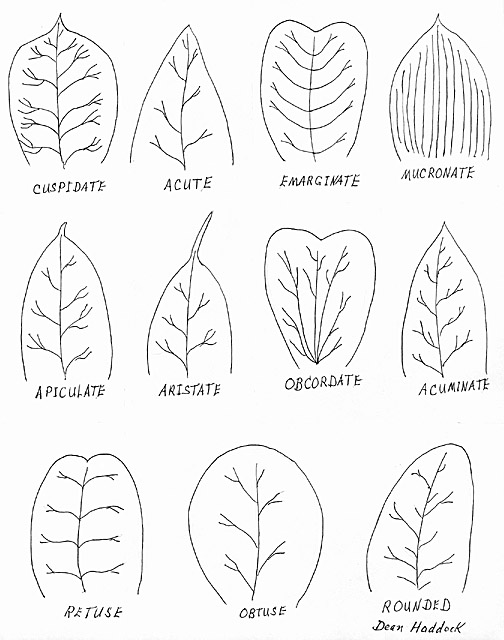
> mucronate or truncate or apiculate or obliquely rounded leaf mean. I paste
> below my homework!
>
>
> Leaflet apex  = rounded and mucronate = *Aeschynomene indica*
> L<http://www.fao.org/ag/AGP/AGPC/doc/Gbase/DATA/Pf000003.HTM>
> .
> Leaflet apex = obtuse or truncate-apiculate = *Sesbania cannabina* (Retz.)
> Poir. <http://www.fao.org/ag/AGP/AGPC/doc/Gbase/data/pf000169.htm>
>
>    1. http://web3.dnp.go.th/botany/BFC/image/leaf/leaf_apex.jpg
>    2.
>
> http://www.plantbiology.siu.edu/PLB304/Lecture02VegMorph/images/LeafApexLawrence.jpg
>    3. http://www.nswildflora.ca/glossary/Grays/Figs103ffTips.jpg
>    4.
>
> http://www.eeob.iastate.edu/classes/bio366/terminology/vegetative/images/leaves/apices.jpg
>    5. http://www.kswildflower.org/drawings/leafapex.jpg
>
> Leaflet base = obliquely rounded = *Aeschynomene indica*
> L.<http://www.fao.org/ag/AGP/AGPC/doc/Gbase/DATA/Pf000003.HTM>
>
>    1. http://www.pssc.ttu.edu/techhort/structur/leaves/bases.htm
>    2.
>
> http://www.environment.gov.au/biodiversity/abrs/online-resources/glossaries/vascular/images/lbase.jpg
>
> Leaflet size : *Aeschynomene indica* L = 2.5-6.5 mm long, 1.2-2.0 mm
> broad =
> http://www.efloras.org/florataxon.aspx?flora_id=5&taxon_id=200011865
> Leaflet size = .*Sesbania cannabina* (Retz.) Poir. = 8-20(-40) ×
> 2.5-4(-7) mm =
> http://www.efloras.org/florataxon.aspx?flora_id=2&taxon_id=200012310
>
> Description = *Aeschynomene indica* L. =
> http://www.prota4u.org/protav8.asp?g=psk&p=Aeschynomene+indica+L.
> Description = *Sesbania cannabina* (Retz.) Poir. =
> http://www.fao.org/ag/AGP/AGPC/doc/Gbase/data/pf000169.htm
>
> The above homework led me to *Aeschynomene* species. Only leaflet size
> doesn't match.
>
> Now, as i read the description of *Sesbania bispinosa* at FoP (
> http://www.efloras.org/florataxon.aspx?flora_id=5&taxon_id=242348734) the
> same size problem arises, leaflet in this species measures at about 4 cm x
> more than 7 mm.
>
> Thank you very much,
>
> Regards,
>
> surajit
>
>
>
> On Thu, Sep 27, 2012 at 10:16 AM, Neil Soares <[email protected]>wrote:
>
>> Hi,
>>  This one also looks like Sesbania bisphinosa.
>>                      With regards,
>>                        Neil Soares.
>>
>> --- On *Wed, 9/26/12, surajit koley <[email protected]>*wrote:
>>
>>
>> From: surajit koley <[email protected]>
>> Subject: [efloraofindia:132613] Fabaceae herb ID 26/9/2012 SK
>> To: "efloraofindia" <[email protected]>
>> Date: Wednesday, September 26, 2012, 11:36 PM
>>
>> Sir,
>>
>> I thought it was SHOLAPITH (*Aeschynomene*), i have been told so by
>> local residents, but leaflets are much bigger. I attach pictures of four
>> individuals, and also two old records of the same plant.
>>
>> Species : UNKNOWN
>> Habit & Habitat : wild under-shrub in ditches and flooded lowland at
>> village outskirts, 5 feet or more tall
>> Date : 18/8/12 & 25/9/10 (old, with flowers)
>> Place : Khanpur (Hooghly)
>>
>> Thank you & Regards,
>>
>> surajit
>>
>> --
>>
>>
>>
>>
>>
>  --
>
>
>
>

--