very nice
like it that you persevere
usha di

On Sat, Sep 29, 2012 at 10:05 PM, surajit koley <
[email protected]> wrote:
> Sir,
>
> I visited the place and recorded fresh images of plants scattered in an
> area covering only 50 meter or less.
>
> *FINDINGS :*
>
>    1. All my previous pictures, including those old flowered ones and
>    with pods, come from same species.
>    2. This plant is locally known as KATHSHOLA (where KATH = wood or
>    woody), it is entirely wild species
>    3. DHONCHE, a cultivated species used as green manure, is also growing
>    nearby areas. My previous uploads of DHONCHE is at -
>    https://groups.google.com/d/topic/indiantreepix/xaUdJoZOLeI/discussion
>    4. I do not know scientific names of both the species, but they are
>    surely either different species or varieties or cultivars or whatever
>    botany has in store for such plants
>    5. KATHSHOLA is branched shrub growing in submerged lowlands, in small
>    ponds, ditches and even on roadside
>    6. The overall appearance of DHONCHE is rather Jute Plant like , a
>    slender herb
>
> *Species Features :*
>
>    - The plant grows vigorously in submerged land, while they are weak on
>    relatively drier place (roadside plants are weak, 3-4 feet, slender, but,
>    those at the edges of ponds and in submerged unused lands do attain a
>    height of more than 8 feet above water surface)
>    - The stem is prickly at lower or base and without prickle in the
>    upper region+branches
>    - The diameter of the stem at base region is that of a mature sugarcane
>    - adventitious roots emerge from base region and can be seen just
>    above the water surface
>    - rachis and leaflets length varies according to plant health,
>    maturity, and growing area on the stems. The leaves and leaflets at
>    lower part is bigger than upper part of the stems
>
> *Searched for KATHSHOLA :*
>
>    1.
>
> http://www.google.co.in/url?sa=t&rct=j&q=&esrc=s&source=web&cd=6&cad=rja&ved=0CEgQFjAF&url=http%3A%2F%2Fwww.banglajol.info%2Findex.php%2FJPharma%2Farticle%2Fdownload%2F347%2F342&ei=6hxnUOaRKoHprAee2oHgAg&usg=AFQjCNFFDodZZKpCXp-R8_T30aV0zVy1HA
>    2. http://www.flickr.com/photos/dinesh_valke/2874821787/
>
> Attaching some of the pictures taken today, on roadside, pond edge,
> flooded lowland. I have many more stored in my hard disk.
>
> Thank you & Regards,
>
> surajit
>
>
> On Sat, Sep 29, 2012 at 7:19 AM, Gurcharan Singh <[email protected]>wrote:
>
>> Surajit ji
>> This is turning interesting. First make sure that all photographs belong
>> to the same plant/population. Obviously 3730 and 3797 don't belong to the
>> same plant.
>>     Your 6225 excludes the possibility of Aeschynomene, as pods are
>> clearly of Sesbania.
>>     Your first photograph 8735 raises the biggest doubt. the leaflet
>> shown starts from 5.6 cm and extends to about 9.8, a length of about 4.2
>> cm. same image at number 8 where whole width of leaf is shown the scale
>> covering pair of leaflets. It starts from 5.6 and extends up to slightly
>> less than 15. Taking into account the width of rachis the length comes to
>> around 4.2-4.3 cm.
>>      The number of leaflets in few leaves that I could count seems to be
>> 21-23 pairs.
>>      This strictly does not fit any species known in our Floras, although
>> S. sesban  with up to 25 pairs or so seems closest. The leaflet size in S.
>> cannabinus is 8-20 mm, S. bispinosa 10-16 mm, and S. sesban 13-25 mm, again
>> last being the closest.
>>       Please analyse your specimens keeping these in mind.
>>
>>
>>
>> --
>> Dr. Gurcharan Singh
>> Retired  Associate Professor
>> SGTB Khalsa College, University of Delhi, Delhi-110007
>> Res: 932 Anand Kunj, Vikas Puri, New Delhi-110018.
>> Phone: 011-25518297  Mob: 9810359089
>> http://www.gurcharanfamily.com/
>> http://people.du.ac.in/~singhg45/
>>
>>
>> On Fri, Sep 28, 2012 at 12:41 PM, surajit koley <
>> [email protected]> wrote:
>>
>>> Neil Sir & Dinesh Ji,
>>>
>>> This plants, be several individuals of the same species or belong to two
>>> different taxa, are neither *Aeschynomene
>>> aspera<http://www.efloras.org/florataxon.aspx?flora_id=5&taxon_id=220000272>
>>> * nor *A.
>>> indica<http://www.efloras.org/florataxon.aspx?flora_id=5&taxon_id=200011865>
>>> *, nor even *A.
>>> americana<http://www.efloras.org/florataxon.aspx?flora_id=2&taxon_id=242301487>
>>> *. Leaflets and pods are much bigger here. Moreover, pods are long, as
>>> can be seen in the attached picture *1024x_old_VSCN6225_25sept2010,jpg*.
>>>
>>> For the very leaflet size we can discard *S. sesban* (all varieties), *S.
>>> bispinosa*.
>>>
>>> *Sesbania concolor* in FoP = leaflet 1-3 cm x 3-8 mm =
>>> http://www.efloras.org/florataxon.aspx?flora_id=5&taxon_id=250064809
>>> *Sesbania cannabina* in FoC = leaflet  8-20(-40) × 2.5-4(-7) =
>>> http://www.efloras.org/florataxon.aspx?flora_id=2&taxon_id=200012310
>>>
>>> It appears to me that it is a *Sesbania* species, maybe *Sesbania
>>> cannabina<https://groups.google.com/d/topic/indiantreepix/xaUdJoZOLeI/discussion>
>>> * (Retz.)
>>> Pers<https://groups.google.com/d/topic/indiantreepix/xaUdJoZOLeI/discussion>.
>>> According to FoC, "....Stems green or sometimes brown, smooth, with
>>> inconspicuous light greenish stripes..." and the same feature can be seen
>>> in my original upload pic - *plant3_DSCN8793.jpg*. But, at the same
>>> time i fail to explain prickles in pic - *plant1_DSCN8730.jpg*.
>>>
>>> Thank you,
>>>
>>> Regards,
>>>
>>> surajit
>>>
>>>
>>> On Thu, Sep 27, 2012 at 11:45 PM, Dinesh Valke
>>> <[email protected]>wrote:
>>>
>>>> Surajit ji, can we get nearer to some flowers at whatever best focus -
>>>> by cropping original pictures (old_VSCN6223.jpg OR old_VSCN6225.jpg) ?
>>>> Hopefully some time later, you may even get to capture the seedpods --
>>>> may give us good lead.
>>>> My thought is - some species of *Aeschynomene*.
>>>> Regards.
>>>> Dinesh
>>>>
>>>>
>>>>
>>>> On Thu, Sep 27, 2012 at 11:34 PM, surajit koley <
>>>> [email protected]> wrote:
>>>>
>>>>> Neil Sir,
>>>>>
>>>>> I also thought that it might be a *Sesbania* species, specially, *Sesbania
>>>>> cannabina* (Retz.)
>>>>> Pers.<https://groups.google.com/d/topic/indiantreepix/xaUdJoZOLeI/discussion>
>>>>>  (or
>>>>> DHONCHE in Bengali), more so because DHONCHE is cultivated in many places
>>>>> in Hooghly, including that particular place and in this very rainy season.
>>>>>
>>>>> Yesterday, i worked for almost 2 hrs. just to understand what does
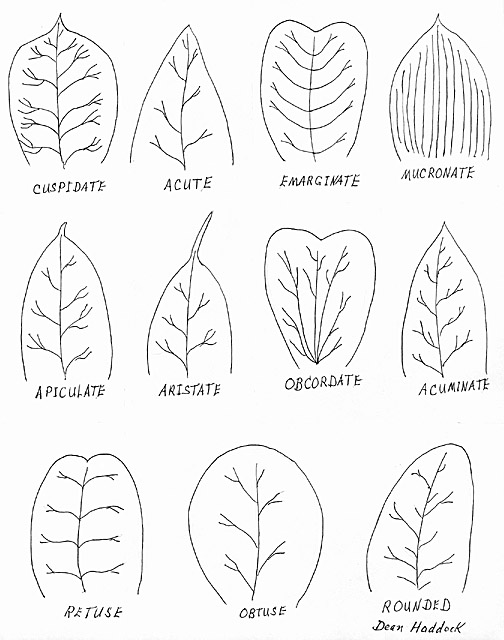
>>>>> mucronate or truncate or apiculate or obliquely rounded leaf mean. I paste
>>>>> below my homework!
>>>>>
>>>>>
>>>>> Leaflet apex  = rounded and mucronate = *Aeschynomene indica*
>>>>> L<http://www.fao.org/ag/AGP/AGPC/doc/Gbase/DATA/Pf000003.HTM>
>>>>> .
>>>>> Leaflet apex = obtuse or truncate-apiculate = *Sesbania cannabina* (Retz.)
>>>>> Poir. <http://www.fao.org/ag/AGP/AGPC/doc/Gbase/data/pf000169.htm>
>>>>>
>>>>>    1. http://web3.dnp.go.th/botany/BFC/image/leaf/leaf_apex.jpg
>>>>>    2.
>>>>>
>>>>> http://www.plantbiology.siu.edu/PLB304/Lecture02VegMorph/images/LeafApexLawrence.jpg
>>>>>    3. http://www.nswildflora.ca/glossary/Grays/Figs103ffTips.jpg
>>>>>    4.
>>>>>
>>>>> http://www.eeob.iastate.edu/classes/bio366/terminology/vegetative/images/leaves/apices.jpg
>>>>>    5. http://www.kswildflower.org/drawings/leafapex.jpg
>>>>>
>>>>> Leaflet base = obliquely rounded = *Aeschynomene indica*
>>>>> L.<http://www.fao.org/ag/AGP/AGPC/doc/Gbase/DATA/Pf000003.HTM>
>>>>>
>>>>>    1. http://www.pssc.ttu.edu/techhort/structur/leaves/bases.htm
>>>>>    2.
>>>>>
>>>>> http://www.environment.gov.au/biodiversity/abrs/online-resources/glossaries/vascular/images/lbase.jpg
>>>>>
>>>>> Leaflet size : *Aeschynomene indica* L = 2.5-6.5 mm long, 1.2-2.0 mm
>>>>> broad =
>>>>> http://www.efloras.org/florataxon.aspx?flora_id=5&taxon_id=200011865
>>>>> Leaflet size = .*Sesbania cannabina* (Retz.) Poir. = 8-20(-40) ×
>>>>> 2.5-4(-7) mm =
>>>>> http://www.efloras.org/florataxon.aspx?flora_id=2&taxon_id=200012310
>>>>>
>>>>> Description = *Aeschynomene indica* L. =
>>>>> http://www.prota4u.org/protav8.asp?g=psk&p=Aeschynomene+indica+L.
>>>>> Description = *Sesbania cannabina* (Retz.) Poir. =
>>>>> http://www.fao.org/ag/AGP/AGPC/doc/Gbase/data/pf000169.htm
>>>>>
>>>>> The above homework led me to *Aeschynomene* species. Only leaflet
>>>>> size doesn't match.
>>>>>
>>>>> Now, as i read the description of *Sesbania bispinosa* at FoP (
>>>>> http://www.efloras.org/florataxon.aspx?flora_id=5&taxon_id=242348734)
>>>>> the same size problem arises, leaflet in this species measures at about 4
>>>>> cm x more than 7 mm.
>>>>>
>>>>> Thank you very much,
>>>>>
>>>>> Regards,
>>>>>
>>>>> surajit
>>>>>
>>>>>
>>>>>
>>>>> On Thu, Sep 27, 2012 at 10:16 AM, Neil Soares
>>>>> <[email protected]>wrote:
>>>>>
>>>>>> Hi,
>>>>>>  This one also looks like Sesbania bisphinosa.
>>>>>>                      With regards,
>>>>>>                        Neil Soares.
>>>>>>
>>>>>> --- On *Wed, 9/26/12, surajit koley
>>>>>> <[email protected]>*wrote:
>>>>>>
>>>>>>
>>>>>> From: surajit koley <[email protected]>
>>>>>> Subject: [efloraofindia:132613] Fabaceae herb ID 26/9/2012 SK
>>>>>> To: "efloraofindia" <[email protected]>
>>>>>> Date: Wednesday, September 26, 2012, 11:36 PM
>>>>>>
>>>>>> Sir,
>>>>>>
>>>>>> I thought it was SHOLAPITH (*Aeschynomene*), i have been told so by
>>>>>> local residents, but leaflets are much bigger. I attach pictures of four
>>>>>> individuals, and also two old records of the same plant.
>>>>>>
>>>>>> Species : UNKNOWN
>>>>>> Habit & Habitat : wild under-shrub in ditches and flooded lowland at
>>>>>> village outskirts, 5 feet or more tall
>>>>>> Date : 18/8/12 & 25/9/10 (old, with flowers)
>>>>>> Place : Khanpur (Hooghly)
>>>>>>
>>>>>> Thank you & Regards,
>>>>>>
>>>>>> surajit
>>>>>>
>>>>>> --
>>>>>>
>>>>>>
>>>>>>
>>>>>>
>>>>>>
>>>>>  --
>>>>>
>>>>>
>>>>>
>>>>>
>>>>
>>>>
>>>  --
>>>
>>>
>>>
>>>
>>
>>
>>
>>
>  --
>
>
>
>


--
Usha di
===========

--