Thanks Surajit ji for excellent analysis.
Your first photograph seems to be settling the issue. I can count about 25
pairs of leaflets in one of the leaves. There don't seem any prickles, and
most important standard is wider than long. This seems to be confirming
your ID S. cannabina.
    You may focus on underside of some young leaves to check for pubescence.
--
Dr. Gurcharan Singh
Retired  Associate Professor
SGTB Khalsa College, University of Delhi, Delhi-110007
Res: 932 Anand Kunj, Vikas Puri, New Delhi-110018.
Phone: 011-25518297  Mob: 9810359089
http://www.gurcharanfamily.com/
http://people.du.ac.in/~singhg45/


On Sat, Sep 29, 2012 at 9:35 AM, surajit koley <
[email protected]> wrote:

> Sir,
>
> I visited the place and recorded fresh images of plants scattered in an
> area covering only 50 meter or less.
>
> *FINDINGS :*
>
>    1. All my previous pictures, including those old flowered ones and
>    with pods, come from same species.
>    2. This plant is locally known as KATHSHOLA (where KATH = wood or
>    woody), it is entirely wild species
>    3. DHONCHE, a cultivated species used as green manure, is also growing
>    nearby areas. My previous uploads of DHONCHE is at -
>    https://groups.google.com/d/topic/indiantreepix/xaUdJoZOLeI/discussion
>    4. I do not know scientific names of both the species, but they are
>    surely either different species or varieties or cultivars or whatever
>    botany has in store for such plants
>    5. KATHSHOLA is branched shrub growing in submerged lowlands, in small
>    ponds, ditches and even on roadside
>    6. The overall appearance of DHONCHE is rather Jute Plant like , a
>    slender herb
>
> *Species Features :*
>
>    - The plant grows vigorously in submerged land, while they are weak on
>    relatively drier place (roadside plants are weak, 3-4 feet, slender, but,
>    those at the edges of ponds and in submerged unused lands do attain a
>    height of more than 8 feet above water surface)
>    - The stem is prickly at lower or base and without prickle in the
>    upper region+branches
>    - The diameter of the stem at base region is that of a mature sugarcane
>    - adventitious roots emerge from base region and can be seen just
>    above the water surface
>    - rachis and leaflets length varies according to plant health,
>    maturity, and growing area on the stems. The leaves and leaflets at
>    lower part is bigger than upper part of the stems
>
> *Searched for KATHSHOLA :*
>
>    1.
>
> http://www.google.co.in/url?sa=t&rct=j&q=&esrc=s&source=web&cd=6&cad=rja&ved=0CEgQFjAF&url=http%3A%2F%2Fwww.banglajol.info%2Findex.php%2FJPharma%2Farticle%2Fdownload%2F347%2F342&ei=6hxnUOaRKoHprAee2oHgAg&usg=AFQjCNFFDodZZKpCXp-R8_T30aV0zVy1HA
>    2. http://www.flickr.com/photos/dinesh_valke/2874821787/
>
> Attaching some of the pictures taken today, on roadside, pond edge,
> flooded lowland. I have many more stored in my hard disk.
>
> Thank you & Regards,
>
> surajit
>
>
> On Sat, Sep 29, 2012 at 7:19 AM, Gurcharan Singh <[email protected]>wrote:
>
>> Surajit ji
>> This is turning interesting. First make sure that all photographs belong
>> to the same plant/population. Obviously 3730 and 3797 don't belong to the
>> same plant.
>>     Your 6225 excludes the possibility of Aeschynomene, as pods are
>> clearly of Sesbania.
>>     Your first photograph 8735 raises the biggest doubt. the leaflet
>> shown starts from 5.6 cm and extends to about 9.8, a length of about 4.2
>> cm. same image at number 8 where whole width of leaf is shown the scale
>> covering pair of leaflets. It starts from 5.6 and extends up to slightly
>> less than 15. Taking into account the width of rachis the length comes to
>> around 4.2-4.3 cm.
>>      The number of leaflets in few leaves that I could count seems to be
>> 21-23 pairs.
>>      This strictly does not fit any species known in our Floras, although
>> S. sesban  with up to 25 pairs or so seems closest. The leaflet size in S.
>> cannabinus is 8-20 mm, S. bispinosa 10-16 mm, and S. sesban 13-25 mm, again
>> last being the closest.
>>       Please analyse your specimens keeping these in mind.
>>
>>
>>
>> --
>> Dr. Gurcharan Singh
>> Retired  Associate Professor
>> SGTB Khalsa College, University of Delhi, Delhi-110007
>> Res: 932 Anand Kunj, Vikas Puri, New Delhi-110018.
>> Phone: 011-25518297  Mob: 9810359089
>> http://www.gurcharanfamily.com/
>> http://people.du.ac.in/~singhg45/
>>
>>
>> On Fri, Sep 28, 2012 at 12:41 PM, surajit koley <
>> [email protected]> wrote:
>>
>>> Neil Sir & Dinesh Ji,
>>>
>>> This plants, be several individuals of the same species or belong to two
>>> different taxa, are neither *Aeschynomene
>>> aspera<http://www.efloras.org/florataxon.aspx?flora_id=5&taxon_id=220000272>
>>> * nor *A.
>>> indica<http://www.efloras.org/florataxon.aspx?flora_id=5&taxon_id=200011865>
>>> *, nor even *A.
>>> americana<http://www.efloras.org/florataxon.aspx?flora_id=2&taxon_id=242301487>
>>> *. Leaflets and pods are much bigger here. Moreover, pods are long, as
>>> can be seen in the attached picture *1024x_old_VSCN6225_25sept2010,jpg*.
>>>
>>> For the very leaflet size we can discard *S. sesban* (all varieties), *S.
>>> bispinosa*.
>>>
>>> *Sesbania concolor* in FoP = leaflet 1-3 cm x 3-8 mm =
>>> http://www.efloras.org/florataxon.aspx?flora_id=5&taxon_id=250064809
>>> *Sesbania cannabina* in FoC = leaflet  8-20(-40) × 2.5-4(-7) =
>>> http://www.efloras.org/florataxon.aspx?flora_id=2&taxon_id=200012310
>>>
>>> It appears to me that it is a *Sesbania* species, maybe *Sesbania
>>> cannabina<https://groups.google.com/d/topic/indiantreepix/xaUdJoZOLeI/discussion>
>>> * (Retz.)
>>> Pers<https://groups.google.com/d/topic/indiantreepix/xaUdJoZOLeI/discussion>.
>>> According to FoC, "....Stems green or sometimes brown, smooth, with
>>> inconspicuous light greenish stripes..." and the same feature can be seen
>>> in my original upload pic - *plant3_DSCN8793.jpg*. But, at the same
>>> time i fail to explain prickles in pic - *plant1_DSCN8730.jpg*.
>>>
>>> Thank you,
>>>
>>> Regards,
>>>
>>> surajit
>>>
>>>
>>> On Thu, Sep 27, 2012 at 11:45 PM, Dinesh Valke
>>> <[email protected]>wrote:
>>>
>>>> Surajit ji, can we get nearer to some flowers at whatever best focus -
>>>> by cropping original pictures (old_VSCN6223.jpg OR old_VSCN6225.jpg) ?
>>>> Hopefully some time later, you may even get to capture the seedpods --
>>>> may give us good lead.
>>>> My thought is - some species of *Aeschynomene*.
>>>> Regards.
>>>> Dinesh
>>>>
>>>>
>>>>
>>>> On Thu, Sep 27, 2012 at 11:34 PM, surajit koley <
>>>> [email protected]> wrote:
>>>>
>>>>> Neil Sir,
>>>>>
>>>>> I also thought that it might be a *Sesbania* species, specially, *Sesbania
>>>>> cannabina* (Retz.)
>>>>> Pers.<https://groups.google.com/d/topic/indiantreepix/xaUdJoZOLeI/discussion>
>>>>>  (or
>>>>> DHONCHE in Bengali), more so because DHONCHE is cultivated in many places
>>>>> in Hooghly, including that particular place and in this very rainy season.
>>>>>
>>>>> Yesterday, i worked for almost 2 hrs. just to understand what does
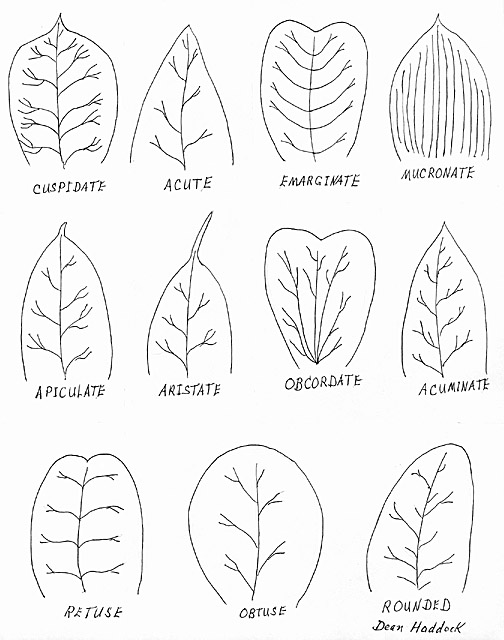
>>>>> mucronate or truncate or apiculate or obliquely rounded leaf mean. I paste
>>>>> below my homework!
>>>>>
>>>>>
>>>>> Leaflet apex  = rounded and mucronate = *Aeschynomene indica*
>>>>> L<http://www.fao.org/ag/AGP/AGPC/doc/Gbase/DATA/Pf000003.HTM>
>>>>> .
>>>>> Leaflet apex = obtuse or truncate-apiculate = *Sesbania cannabina* (Retz.)
>>>>> Poir. <http://www.fao.org/ag/AGP/AGPC/doc/Gbase/data/pf000169.htm>
>>>>>
>>>>>    1. http://web3.dnp.go.th/botany/BFC/image/leaf/leaf_apex.jpg
>>>>>    2.
>>>>>
>>>>> http://www.plantbiology.siu.edu/PLB304/Lecture02VegMorph/images/LeafApexLawrence.jpg
>>>>>    3. http://www.nswildflora.ca/glossary/Grays/Figs103ffTips.jpg
>>>>>    4.
>>>>>
>>>>> http://www.eeob.iastate.edu/classes/bio366/terminology/vegetative/images/leaves/apices.jpg
>>>>>    5. http://www.kswildflower.org/drawings/leafapex.jpg
>>>>>
>>>>> Leaflet base = obliquely rounded = *Aeschynomene indica*
>>>>> L.<http://www.fao.org/ag/AGP/AGPC/doc/Gbase/DATA/Pf000003.HTM>
>>>>>
>>>>>    1. http://www.pssc.ttu.edu/techhort/structur/leaves/bases.htm
>>>>>    2.
>>>>>
>>>>> http://www.environment.gov.au/biodiversity/abrs/online-resources/glossaries/vascular/images/lbase.jpg
>>>>>
>>>>> Leaflet size : *Aeschynomene indica* L = 2.5-6.5 mm long, 1.2-2.0 mm
>>>>> broad =
>>>>> http://www.efloras.org/florataxon.aspx?flora_id=5&taxon_id=200011865
>>>>> Leaflet size = .*Sesbania cannabina* (Retz.) Poir. = 8-20(-40) ×
>>>>> 2.5-4(-7) mm =
>>>>> http://www.efloras.org/florataxon.aspx?flora_id=2&taxon_id=200012310
>>>>>
>>>>> Description = *Aeschynomene indica* L. =
>>>>> http://www.prota4u.org/protav8.asp?g=psk&p=Aeschynomene+indica+L.
>>>>> Description = *Sesbania cannabina* (Retz.) Poir. =
>>>>> http://www.fao.org/ag/AGP/AGPC/doc/Gbase/data/pf000169.htm
>>>>>
>>>>> The above homework led me to *Aeschynomene* species. Only leaflet
>>>>> size doesn't match.
>>>>>
>>>>> Now, as i read the description of *Sesbania bispinosa* at FoP (
>>>>> http://www.efloras.org/florataxon.aspx?flora_id=5&taxon_id=242348734)
>>>>> the same size problem arises, leaflet in this species measures at about 4
>>>>> cm x more than 7 mm.
>>>>>
>>>>> Thank you very much,
>>>>>
>>>>> Regards,
>>>>>
>>>>> surajit
>>>>>
>>>>>
>>>>>
>>>>> On Thu, Sep 27, 2012 at 10:16 AM, Neil Soares
>>>>> <[email protected]>wrote:
>>>>>
>>>>>> Hi,
>>>>>>  This one also looks like Sesbania bisphinosa.
>>>>>>                      With regards,
>>>>>>                        Neil Soares.
>>>>>>
>>>>>> --- On *Wed, 9/26/12, surajit koley
>>>>>> <[email protected]>*wrote:
>>>>>>
>>>>>>
>>>>>> From: surajit koley <[email protected]>
>>>>>> Subject: [efloraofindia:132613] Fabaceae herb ID 26/9/2012 SK
>>>>>> To: "efloraofindia" <[email protected]>
>>>>>> Date: Wednesday, September 26, 2012, 11:36 PM
>>>>>>
>>>>>> Sir,
>>>>>>
>>>>>> I thought it was SHOLAPITH (*Aeschynomene*), i have been told so by
>>>>>> local residents, but leaflets are much bigger. I attach pictures of four
>>>>>> individuals, and also two old records of the same plant.
>>>>>>
>>>>>> Species : UNKNOWN
>>>>>> Habit & Habitat : wild under-shrub in ditches and flooded lowland at
>>>>>> village outskirts, 5 feet or more tall
>>>>>> Date : 18/8/12 & 25/9/10 (old, with flowers)
>>>>>> Place : Khanpur (Hooghly)
>>>>>>
>>>>>> Thank you & Regards,
>>>>>>
>>>>>> surajit
>>>>>>
>>>>>> --
>>>>>>
>>>>>>
>>>>>>
>>>>>>
>>>>>>
>>>>>  --
>>>>>
>>>>>
>>>>>
>>>>>
>>>>
>>>>
>>>  --
>>>
>>>
>>>
>>>
>>
>>
>>
>>
>

--