Dear Alexander,

   Many thanks for these pretty convincing examples of 4 course Italian
   guitars in figure8 shape from later 16th/early 17th century.
   regards

   Martyn
   --- On Mon, 28/1/13, Alexander Batov
   <[email protected]> wrote:

     From: Alexander Batov <[email protected]>
     Subject: [LUTE] Re: 4 course guitar in Italy
     To: "Martyn Hodgson" <[email protected]>
     Cc: [email protected], "Lutelist" <[email protected]>
     Date: Monday, 28 January, 2013, 15:42

   Martyn, Peter et all,
   First of all, this particular painting by Tibaldi (although with a
   different attribution, to A.Grammatica) was already illustrated in
   Meucci's article (published in 2000), so not much new here I'm afraid.
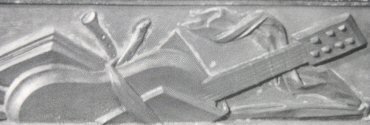
   The only evidence that I'm aware of for the existence of
   figure-of-eight shaped 4-course guitar in the 16th century Italy is
   found on a pilaster of the Duomo of Cremona (c.1560):
   [1]http://www.vihuelademano.com/vg-crossroads/LStalk/pilaster.jpg
   And in the context:
   [2]http://www.vihuelademano.com/rcmdias.htm#p5
   What is particularly remarkable about this fragment is that the
   instrument appears to be 'wrapped' in a book (presumably of music ...?)
   which, in a way, gives an idea of its size: unless, of course, the
   intentions of the artist or sculptor were purely symbolical.
   Generally I agree with most of the points in Meucci's article but the
   question still remains whether the name chitarra a sette corde /
   chitarra a nove corde (or chitara da sette corde, i.e. as in Barberiis'
   book) is of a lute or figure-of-eight shape. Meucci's logic here is
   based entirely on a presumption (unless I missed something ...) that
   the figure-of-eight shape would have to be categorised as 'Spanish' and
   if there is no such attribute than it is in the lute shape.
   Unfortunately, a sole reliance on language definitions is never going
   to be accurate and so we may never get to the bottom of it, until some
   new, more definitive evidence, comes to light; it may indeed will ...
   Alexander
   On 28/01/2013 10:27, Martyn Hodgson wrote:
   >     Thank you Peter,
   >
   >     Have you a precise date for this painting? You suggest later half
   of
   >     the 16th century (and I note Tibaldi died in 1596) so it might
   not
   >     actually predate the the mandore boom years.
   >
   >     As you also remark:  'Of course, nothing proves that the
   instrument
   >     depicted is a "chitarrino" but at least it proves some lute-like
   >     instrument of soprano range at that time and place.' ; and I
   wholly
   >     agree with you - nevertheless all these things add grist to the
   mill
   >     and I look forward to any other further discoveries.
   >
   >     What would be ideal would be an Italian representation similar to
   the
   >     cover of the Morlaye book ie unequivocally tying an instrument
   (of
   >     whatever shape!) to a tablature, but........
   >
   >     regards,
   >
   >     Martyn
   >
   To get on or off this list see list information at
   [3]http://www.cs.dartmouth.edu/~wbc/lute-admin/index.html

   --

References

   1. http://www.vihuelademano.com/vg-crossroads/LStalk/pilaster.jpg
   2. http://www.vihuelademano.com/rcmdias.htm#p5
   3. http://www.cs.dartmouth.edu/~wbc/lute-admin/index.html