What it would take to solve the metacrisis… Becomingness: The Unthinkable Metaphysic We Need Now 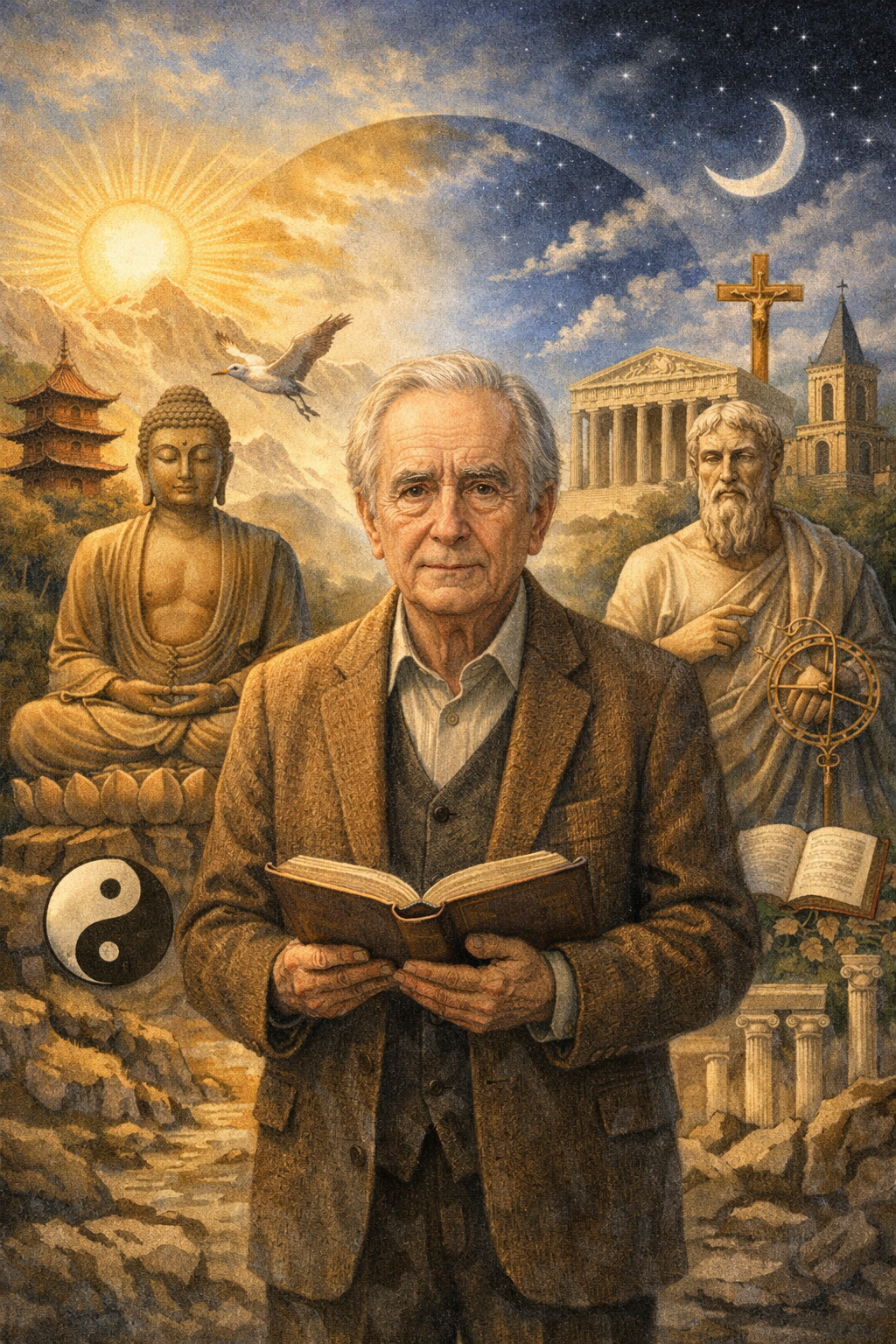
I. Philosophy as a Way of Life, Not a TheoryModern philosophy has forgotten something essential: In antiquity, metaphysics was inseparable from formation. From this perspective, the contemporary fixation on Being or Non-being is not merely an intellectual error. What has been lost is not a concept, but an exercise. II. The Blind Spot of BeingWestern philosophy, beginning with Parmenides and systematized by Plato and Aristotle, sought stability. To know reality meant to grasp what is. This produced extraordinary achievements:
But it also imposed a silent cost. Reality became something to be described, not entered. The question “What is real?” replaced the more ancient and more dangerous question:
III. Why Becoming Was Never EnoughSome modern thinkers attempted a correction by emphasizing becoming:
But becoming, left to itself, dissolves into neutrality. If everything becomes, then nothing is at stake. Ancient philosophy never accepted this neutrality. What was missing was not the idea of becoming, but a way to speak of better and worse forms of becoming without freezing them into static states. IV. Becomingness as a Spiritual CategoryBecomingness names precisely this forgotten dimension. Not:
But the degree to which a life remains capable of further transformation toward truth, unity, and participation. This is not a theoretical abstraction. Ancient philosophers would have recognized it immediately—not as a doctrine, but as a measure of spiritual progress.
These were never answered conceptually. V. Spiritual Exercises as the Guardians of BecomingnessIn the ancient schools, philosophy consisted of spiritual exercises:
Their function was not moral improvement in the modern sense. Their function was to increase becomingness:
From this perspective, vice is not primarily “wrong action.” And virtue is not rule-following. VI. Why This Metaphysic Is “Unthinkable”Modern philosophy resists becomingness because it cannot be cleanly systematized. Becomingness:
It therefore cannot be safely contained within academic discourse. It demands something more unsettling:
VII. Why We Need It NowContemporary culture offers:
Yet it quietly destroys becomingness. People feel intense, but become shallow. This is not a crisis of meaning. Becomingness names what is actually at risk. VIII. A Final Ancient InsightThe ancient philosophers never asked whether a doctrine was true in isolation. They asked:
By that criterion, becomingness is not merely plausible. Not because it solves a theoretical problem, the slow, demanding, and irreversible formation of a life capable of reality. Appendix: Pierre Hadot
A. WhoPierre Hadot (1922–2010) was a French philosopher and historian of ancient philosophy best known for radically reframing what philosophy is. He argued that, in antiquity, philosophy was not primarily:
but a way of life, sustained through practices meant to transform perception, desire, and character. Key identity markers:
B. When
Historical context matters:
Hadot’s work is, in part, a response to the modern loss of philosophy’s formative and existential power. C. Why He MattersC.1 His Central InsightHadot’s core claim can be stated simply:
Doctrines existed to support practices, not replace them. This reframes:
This is why his work resonates so strongly with the concept of becomingness. C.2 Spiritual ExercisesHadot recovered the idea of spiritual exercises — concrete practices meant to reshape how one inhabits reality. Examples include:
These were not “techniques for happiness,” but ontological disciplines — ways of increasing one’s capacity to live truthfully. C.3 Key Works
Across these works, Hadot shows that:
C.4 Why He Fits Becomingness So CleanlyHadot never used the word becomingness, but his entire project presupposes it. He assumes:
In the language of becomingness:
Hadot gives historical legitimacy to this claim without freezing it into metaphysical abstraction. D. Why Hadot Is Increasingly Relevant NowHadot becomes urgent in late modernity because:
What remains effective are formative practices. Hadot provides:
E. One-Line SummaryIf the modern crisis is that people are experiencing more and becoming less, That is why he would recognize becomingness not as a theory, Sent from my iPhone
-- -- Centroids: The Center of the Radical Centrist Community <[email protected]> Google Group: http://groups.google.com/group/RadicalCentrism Radical Centrism website and blog: http://RadicalCentrism.org --- You received this message because you are subscribed to the Google Groups "Centroids: The Center of the Radical Centrist Community" group. To unsubscribe from this group and stop receiving emails from it, send an email to [email protected]. To view this discussion visit https://groups.google.com/d/msgid/RadicalCentrism/E217060B-19BC-4B55-B947-722EE12452DF%40gmail.com. |
Title: Becomingness: The Unthinkable Metaphysic We Need Now – Radically Happy
- [RC] Becomingness: The Unthinkable Metaphysic We ... Ernest Prabhakar
- Re: [RC] Becomingness: The Unthinkable Metap... Beaches & Nature fan
- Re: [RC] Becomingness: The Unthinkable M... Ernest Prabhakar
- Re: [RC] Becomingness: The Unthinkab... Beaches & Nature fan
- Re: [RC] Becomingness: The Unthi... Beaches & Nature fan
- Re: [RC] Becomingness: The Unthi... Ernest Prabhakar
- Re: [RC] Becomingness: The ... Beaches & Nature fan
