surprising, it was Jim's trial-and-error directions that took this thread
south for me.
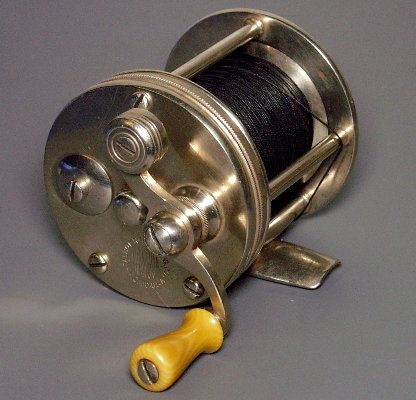
I work on valuable antique fishing reels for a hobby business.
<http://img.photobucket.com/albums/v728/bulldog1935/bluegrass/talbot/cP4220108.jpg>

often fabricating parts, and sometimes taking cutters or files to them.

<http://img.photobucket.com/albums/v728/bulldog1935/bluegrass/talbot/cP4170104c.jpg>

<http://img.photobucket.com/albums/v728/bulldog1935/bluegrass/talbot/niangua03.jpg>


start with the correct tools, plan everything, and know your limitations.
 E.g., if it's you can't readily remove a 40-year-seated bottom bracket
cup, take it to your LBS - they can afford much better tools than we can,
and will preclude your half-day of frustration and damage with a 3-minute
ah-ha.

On Friday, December 5, 2014 11:53:14 AM UTC-6, Cyclofiend Jim wrote:
>
> As others have said, parts aren't precious and steel will resist most
> efforts to damage it.
>
> I was lucky enough to be around a number of talented mechanics, and
> tutored by one in particular who was truly my sensei.  Some of the process
> is messing up a bit.  Rounding some bits off and solving problems which you
> caused.
>
> All of them demonstrated a Way of Working.  A mechanic's approach. Though
> they never articulated these points out loud, here are some of the things I
> felt they taught:
>
> Learn to recognize that point at which you are about to apply needless
> force.  Moving forward from that point is a choice. As is retreating.
> Understand that stepping back and staring at the problem is a vital step.
> By the time you have affixed wrench to part, you should know precisely
> what will happen.
> Smooth torque and leverage beats raining blows down upon things almost
> every time.
> I am not a rich enough man to buy cheap tools. (ok... this one I've seen
> written down).
>
> And some smack-you-on-the-back-of-the-head-reminders
> Don't clamp the tubes.  Pad nice frames.  Use a workstand.  Do not spin
> the pedals on a fixed gear without double checking where everyone's fingers
> are.  Hang up your tools (or use the same apron pocket each time).
>
> Understand what the TLR's are.  (Tools of Last Resort) Understand when to
> use them. Grease all threads.
>
> Also... when you go to use a crank puller.  Always check one more time
> that the little washer isn't still sitting in there before you thread on
> the tool.
>
> hope that helps!
>
> - Jim
>
> cyclofiend.com
>
>
>
>

--
You received this message because you are subscribed to the Google Groups "RBW
Owners Bunch" group.
To unsubscribe from this group and stop receiving emails from it, send an email
to [email protected].
To post to this group, send email to [email protected].
Visit this group at http://groups.google.com/group/rbw-owners-bunch.
For more options, visit https://groups.google.com/d/optout.