Fascinating stuff. As a self-taught, whatever sounds good, composer, I have not
given much thought to music theory, though there are certain things I will do
while refining a tune, to keep my ears from getting bored, yet maintaining a
thread for them to follow.
I build my songs on a spreadsheet-like interface, with each row being a track
to set samples on, that will then play linearly, left to right. I average 12
tracks per tune, though each track can have multiple instruments on it.

I control overall beat, timing, and key, for each composition, in addition to
having similar controls, and more, over each sample - I do a fair amount of
stretching, to sustain a note, allowing me to extend the number of beats for a
given sample. I sometimes also edit length, and/or reverse the sample.

Then burn multiple single song CD's, played *outside* my headphones, through
decent speakers, to get the mix right, then finally, render an mp3, and load it
into iTunes, to add publishing data.

Best toy, ever!

--- In [email protected], Bhairitu <noozguru@...> wrote:
>
> Musical theory was my forte in college probably because I had studied
> since I was a kid and writing compositions.  I would even tutor some of
> the scholarship performance students who could really play but were
> flummoxed by music theory.  But like the story beats, elements of music
> theory are fallbacks to help make a composition better.  You don't want
> to write a piece of music entirely by them or it would sound dreadful.
> Stuck on the next phrase of your tune?  Try a retrograde inversion of
> your current phrase.
>
> On 07/22/2013 02:37 PM, Share Long wrote:
> > Well noozguru, I mainly wrote screenplays as a student and as a hobby. And
> > yes, I realize those phrases are unparallel structures. Anyway, none
> > produced though somewhere I have a lovely rejection letter from Bob Redford
> > (-:
> >
> >
> > I think there are formulas and I think they can work wonderfully because
> > they are all based on the human brain and physiology. I know that doesn't
> > sound very creative but actually I think it is. To fire up enough neurons
> > in the brains of the audience so that they recognize the story as familiar.
> > And yet to have enough new elements in the script to fire up some new
> > neuronal pathways. Seen from one perspective, isn't this what all great art
> > does?
> >
> > Of course artists don't think in these terms. I think the great ones are
> > more plugged into totality than the rest of us. And they're not afraid to
> > express from that place. I'm thinking of Woody Allen now. Whatever I think
> > of him as I person, I admire him as an artist. I love that he was willing
> > to keep expressing, which means sometimes he made mediocre films and
> > sometimes he totally bombed. But IMHO he created a few masterpieces which
> > advanced the art form and fired up some new neuronal pathways for his
> > viewers. It's artists like this that we can easily watch and enjoy many,
> > many times. In my experience, there are some deeper elements at work that
> > go beyond the story.
> >
> > And all great art must have a rhythm that is compatible with our human
> > rhythm. More later.
> >
> >
> > ________________________________
> >   From: Bhairitu <noozguru@...>
> > To: [email protected]
> > Sent: Monday, July 22, 2013 3:57 PM
> > Subject: Re: [FairfieldLife] Re: Great review of a controversial (because
> > it's right) book on screenwriting
> >
> >
> >
> >
> > Chime in because you say you've studied screen writing and have written
> > scripts.  Any produced?  What do you think of these formulas?  Then
> > there are 8 and 9 act formulas too.
> >
> > I just came back from having lunch with a friend with connections at
> > Lionsgate who we can pitch TV series to if we come up with one.  Let's
> > see, "Adventures in a Funny Farm Lounge." :-D
> >
> > On 07/22/2013 12:33 PM, Share Long wrote:
> >> Really fun to read turqbarry noozbarry and merubarry talking about all
> >> this (-:
> >>
> >>
> >>
> >>
> >> ________________________________
> >>    From: merudanda <[email protected]>
> >> To: [email protected]
> >> Sent: Monday, July 22, 2013 1:32 PM
> >> Subject: [FairfieldLife] Re: Great review of a controversial (because it's
> >> right) book on screenwriting
> >>
> >>
> >>
> >>
> >> Splendid idea--
> >> For those who are not so familiar with the "beating" check out
> >> Blake Snyder's homepage
> >> http://www.blakesnyder.com/
> >> including "The Despicable Me 2 Beat Sheet" This Gru-some beat sheet breaks
> >> down the three-act structure into bite-size, manageable sections, each
> >> with a specific goal-pattern can be used for your overall FFL story posting
> >>
> >>
> >> millions of minions
> >> http://www.blakesnyder.com/category/beat-sheet/
> >> And , of course, for our  software lovers, and blank-filler and- or
> >> shooter:
> >> http://www.youtube.com/watch?v=ES-2pyCTzB0
> >>
> >> Story Structure Software 3.0 ,Save the Cat! Version 3  for only $99.95
> >> (Structure a story that resonates  with the hear beats of all your FFL
> >> posters by filling in this form with Blake's 15 beats.-In the mood for
> >> horror posting at FFL but can't nail the story? Unleash your inner Stephen
> >> King!-You have two days to visit Paris and, aspiring screenwriter /FFL
> >> poster that you are, you know those 48 hours have to count :15 beats for a
> >> rant!)
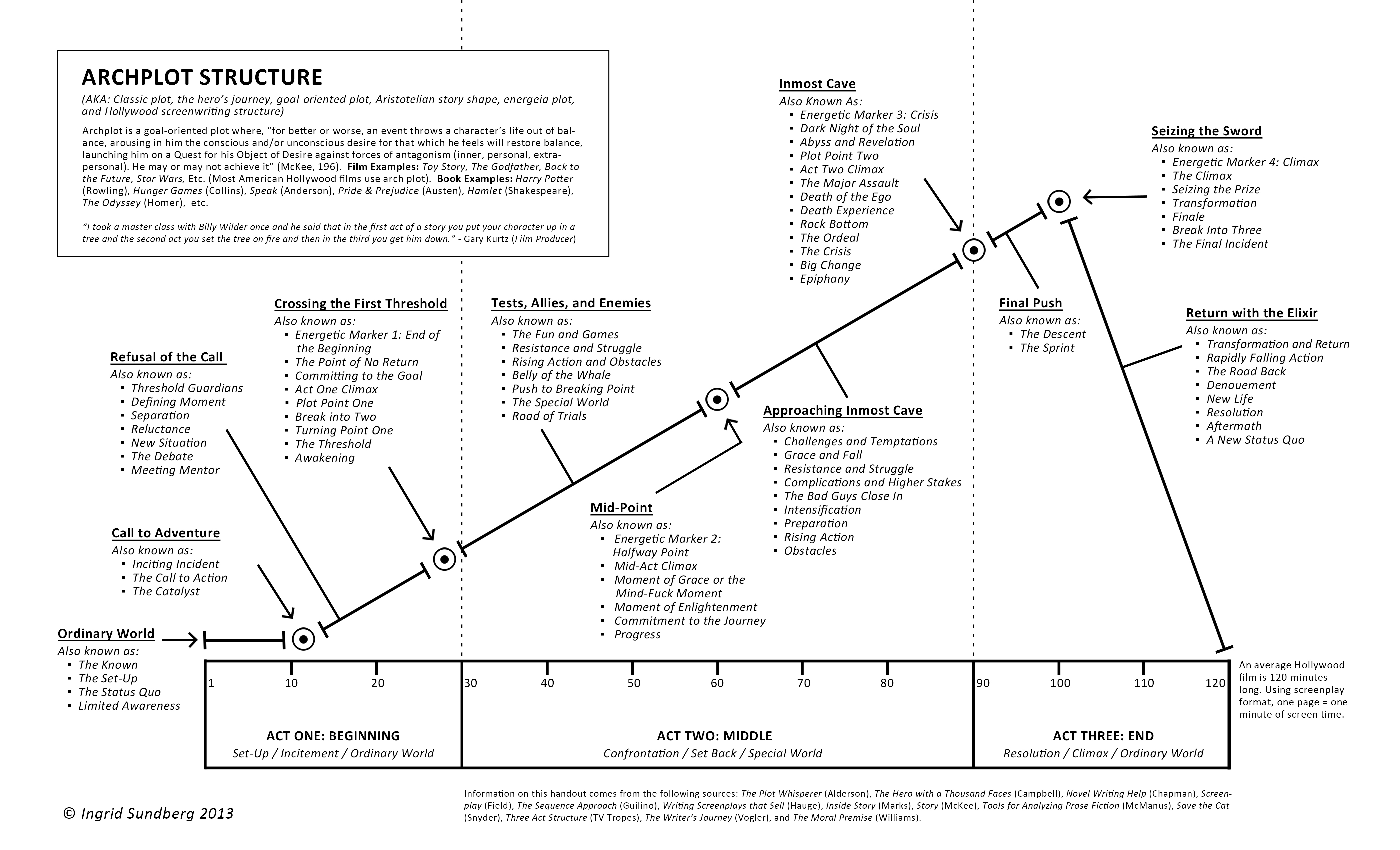
> >> Or accomplish this splendid idea and contest  with  some chart from "Plot
> >> whisperer"(no kidding)including Energetic Marker and Awakenings)
> >> Here:
> >> http://ingridsnotes.files.wordpress.com/2013/05/final-revision_traditional-mountain-structure-handout_8-5x14.jpg
> >>
> >>
> >> [email protected], Bhairitu  wrote:
> >>> I'm waiting for Turq's daily rant written using the 15 beats.  Or maybe
> >>> we ought to have a posting contest for posts using the 15 beats.  I was
> >>> looking through those and imagining posts written that way. :-D
> >>>
> >>> On 07/21/2013 01:34 PM, merudanda wrote:
> >>>> Thanks ,great post about cartoonish society of Hollywood and .... fill
> >>>> in the blank [:D]
> >>>> In Solving Equation of a Hit Film Script, With Data-Forget zombies. The
> >>>> data crunchers are invading Hollywood.
> >>>> http://tinyurl.com/kq3rfqr
> >>>> wrote Ol Parker( "The Best Exotic Marigold  Hotel.") "It's
> >>>> the enemy of creativity, nothing more than an attempt to  mimic that
> >>>> which has worked before. It can only result in an  increasingly bland
> >>>> homogenization, a pell-mell rush for the middle of  the road."
> >>>> and a comment by Pure Snake Oil from Kansas City wrote:
> >>>> "When you hire execs who can't read a script, have no movie, literature,
> >>>> or artistic insight or training, you create a mentality that everything
> >>>> can be measured by meta-data and statistics. The best film experience is
> >>>> an emotional experience, connecting to the heart and soul of an
> >>>> audience. These are not the elements that an algorithm can measure, it's
> >>>> a measure of humanity itself."
> >>>> and   Birgitte Rasine from  Silicon Valley:
> >>>> "Some tend to think that the American moviegoer is too uneducated and
> >>>> uncultured to choose the "art" film and that's why the mindless action
> >>>> thrillers rake in so much cash. Wrong. It's years of US distributors
> >>>> selecting mindless action flick after mindless action flick that has
> >>>> shaped our tastes (speaking very generally), while distributors in
> >>>> Europe chose films they felt had value as art and as great stories. In a
> >>>> word, it's habit."
> >>>> Yes When was it when the word "formulaic" was the ultimate insult for a
> >>>> script. Now it's seen as something positive?
> >>>> Yes its very late good night or better good morning.. [:x]
> >>>> Will see if there is time for "The Power of Few"
> >>>>
> >>>> --- In [email protected], Bhairitu  wrote:
> >>>>> Hollywood  started out as a "factory" operation.  It started because
> >>>> the
> >>>>> east coast entrepreneurs of nickelodeons wanted to make more money by
> >>>>> making their own films and Edison wanted his royalties for the
> >>>>> technology.  So they took off to the orchards of southern California
> >>>>> where they were out of reach of Edison's patent agents.  IOW,
> >>>> Hollywood
> >>>>> was founded by pirates so them going after people who download a few
> >>>>> movies (and sometimes may not even watch them) is a bit hypocritical.
> >>>>>
> >>>>> Frankly I don't have time to read all these articles right now but I
> >>>>> know what has been going on in the industry.  Doing movies or anything
> >>>>> by focus groups is fraught with error.  I've been on the other side of
> >>>>> the two-way mirror for focus groups and watched people struggle with
> >>>>> giving any kind of useful feedback.  We developers figured this was
> >>>>> happening only because marketing wanted it and not very useful.  This
> >>>> is
> >>>>> also why you have food that is too salty, too sweet and has MSG in it
> >>>>> because some focus groups told them "people like it."  You know what
> >>>>> people in focus groups like?  The check they get afterwards.
> >>>>>
> >>>>> That and formula film making don't work.  I happened to watch the
> >>>> "Evil
> >>>>> Dead" redo the other night and thought it was horrible.  I recall the
> >>>>> original was a bit of a dark comedy of errors.  This one was just a
> >>>>> "gore fest".  Much better though a little weak in the opening acts is
> >>>>> "The Power of Few" which has a bit of spiritual context and an
> >>>>> independent film where no formulaic bean counters were telling the
> >>>>> writer/director what to do.  It features Christopher Walken and
> >>>>> Christian Slater and a few other known actors.  I rented the DVD at
> >>>>> Redbox but I wouldn't be surprised if it shows up on Netflix WI in a
> >>>> few
> >>>>> weeks.  It's not horror and though R I still think Buck might even
> >>>> enjoy it.
> >>>>> http://www.youtube.com/watch?v=WJuovcCmL9k
> >>>>> (Let's see the trailer is an ad for the movie so why put an ad before
> >>>> it?)
> >>>>> The ideal is sorta like the way art galleries work.  The filmmaker
> >>>> makes
> >>>>> a movie and a distributor picks it up.  The distributor plays the role
> >>>>> the art gallery and art gallery don't generally go around telling
> >>>>> artists what to paint.  They pick stuff that they feel people will
> >>>> want
> >>>>> to buy.
> >>>>>
> >>>>> Of course making a movie can be very expensive or used to be.  You can
> >>>>> make really good looking movies with cameras that cost under $5000 and
> >>>>> own them instead of renting.  No need for bad actors either as
> >>>> colleges
> >>>>> generate plenty of aspiring drama grads who can actually act.d  It's
> >>>> all
> >>>>> about how creative you can be and economy of means.  If  you have a
> >>>>> compelling story people will want to see it.
> >>>>>
> >>>>> Art doesn't belong in an "factory" operation.  That may have worked
> >>>> back
> >>>>> when film didn't amount to much.  Now audiences want more.  TV
> >>>> networks
> >>>>> have been blindsided by Netflix, Amazon and VUDU.  People would rather
> >>>>> invest 90 minutes in one complete story than be strung out on a so-so
> >>>> TV
> >>>>> series that has turned in its later season to just be a paycheck for
> >>>> the
> >>>>> production company.
> >>>>>
> >>>>> Regarding formulaic script writing, I determined some time ago there
> >>>> is
> >>>>> no one way to write a script.  It's story telling.  In some cases you
> >>>>> one might do better either telling a story like you would to friends
> >>>> to
> >>>>> a voice recorder app rather than writing it down.  Or maybe writing an
> >>>>> outline and filling in the rest.  The academic structure is just a
> >>>> tool
> >>>>> to help you fix where your story has gone weak.  We have the same
> >>>> thing
> >>>>> in music where tools can help you fix a composition where it has
> >>>> fallen
> >>>>> down.
> >>>>>
> >>>>> Also I think a lot of aspiring screenplay writers just seem to write
> >>>> and
> >>>>> re-write one script over and over.  They should try writing a bunch of
> >>>>> them instead and will find like any other art form they learn each
> >>>> time
> >>>>> and get better at it.  And aspiring Joss Whedons need to remember it
> >>>> was
> >>>>> his family dharma as his grandfather even wrote for TV.
> >>>>>
> >>>>>
> >>>>> On 07/21/2013 11:07 AM, merudanda wrote:
> >>>>>> NICE!!
> >>>>>>
> >>>>>> Dear Bhairitu -guru please,please tell us "it was like a bomb ripped
> >>>>>> through Hollywood" and  movies are "America's greatest art form"
> >>>>>> are only self-serving and over-dramatic assertions of a nothing-new
> >>>> "a
> >>>>>> tunnel-visioned , flippant and misinformed article"about  Film 101
> >>>> and a
> >>>>>> merchandizing picking pocketing raucous hustling, an unbridled
> >>>> global
> >>>>>> carnival entertainmententertainmententertainment industry.
> >>>>>> BTW
> >>>>>> Correlation-digging  are fun but does not imply causation.
> >>>>>> HMMMh what was first
> >>>>>> formulaic-franchised thinking or formulaic -franchised writing-
> >>>>>> Wouldn't you agree with :Theory is for analyzing works that have
> >>>> already
> >>>>>> been created, it's not a manual to follow in creating them.
> >>>>>> And.
> >>>>>>       Having rules and certain guidelines to follow seems to be
> >>>> essential.
> >>>>>> for writing  instruction manual or a pharmaceutical regulatory
> >>>> document
> >>>>>> [:D]  or- well  [;)] -writing a scientific paper to be published
> >>>>>> Stay tuned for the next thrilling installment, for the shocking
> >>>>>> revelation by Suderman that there are only six plots in all of
> >>>>>> fiction!-and  spoiled people stop going to Snyderized movie
> >>>>>> Wasn't Snyder making very clear in his book that his formula
> >>>>>> sheet-whatever is/ought to be applied almost exclusively to comedies
> >>>> --
> >>>>>> something  Suderman  seems to miss--?
> >>>>>> Something to ponder...:
> >>>>>> Big Data analytic s   now being used by Hollywood.
> >>>>>>
> >>>> http://www.nytimes.com/2013/05/06/business/media/solving-equation-of-a-h\
> >>>> \
> >>>>>> it-film-script-with-data.html?pagewanted=all&_r=1&
> >>>>>>>> hit-film-script-with-data.html?pagewanted=all&_r=1&>
> >>>>>> --- In [email protected], turquoiseb  wrote:
> >>>>>>> Very well -- and wittily -- written up in this review by
> >>>>>>> Peter Suderman.
> >>>>>>>
> >>>>>>>
> >>>> http://www.slate.com/articles/arts/culturebox/2013/07/hollywood_and_blak\
> >>>> \
> >>>>>> e_snyder_s_screenwriting_book_save_the_cat.2.html
> >>>>>>> The wit comes from a link to a second version of the
> >>>>>>> article that many people will miss and not click on,
> >>>>>>> to their detriment. It's the same article they've just
> >>>>>>> been reading, but now with its beat-by-beat formula
> >>>>>>> -- the same one discussed in the article and in the
> >>>>>>> book -- inserted, to show you that he followed the
> >>>>>>> formula when writing the article.
> >>>>>>>
> >>>>>>>
> >>>> http://www.slate.com/content/slate/sidebars/2013/07/now_playing_at_your_\
> >>>> \
> >>>>>> local_multiplex_save_the_movie.html
> >>>>>>
> >
> >
>