Thanks Garg ji.
Regards.
Dinesh

On Mon, Jan 6, 2020 at 11:40 AM J.M. Garg <[email protected]> wrote:
> Hi, Dinesh ji,
> This is very easy to decipher in all our posted images.
> For meaning pl. see:
> http://lifeofplant.blogspot.com/2011/03/leaf-margins-tips-and-bases.html
>
> https://www.cactus-art.biz/note-book/Dictionary/Dictionary_S/dictionary_subobtuse.htm
>
> I found flowerless bracts are mucronate or cuspidate in most of our posts
> and not subobtuse. Thus, most of our postings are of R. pecinata
> <https://sites.google.com/site/efloraofindia/species/a---l/a/acanthaceae/justicia/rungia-pectinata>,
> including those shown at Justicia parviflora ?
> <https://sites.google.com/site/efloraofindia/species/a---l/a/acanthaceae/justicia/rungia-parviflora>
>
> On Mon, 6 Jan 2020 at 11:19, Dinesh Valke <[email protected]> wrote:
>
>> Thanks Garg ji.
>> Frankly, I will not be able to to discern the nature of the tiny bracts.
>> I will keep posting pictures of these plants with their IDs as I see, and
>> hope that they turn out alright.
>> Regards.
>> Dinesh
>>
>> On Mon, Jan 6, 2020 at 11:09 AM J.M. Garg <[email protected]> wrote:
>>
>>> I finally got the details in Flora of British India
>>> <https://books.google.co.in/books?id=jIRIAAAAYAAJ&pg=PA550&dq=rungia+pectinata+%2B+flora+of+british+India&hl=en&sa=X&ved=0ahUKEwjvnozrmu7mAhWx4jgGHSR3Bj4Q6AEIKTAA#v=onepage&q=rungia%20pectinata%20%2B%20flora%20of%20british%20India&f=false>.
>>> Pl. check.
>>>
>>> Top portion of it, I am copying and pasting from IBIS Flora
>>> <https://flora.indianbiodiversity.org/content/rungia-parviflora-nees-5>
>>> as below:
>>>
>>> *Nees in Wall. Pl. As. Rar.* iii. 110, and in DC. Prodr. xi. 469, excl.
>>> syn. ;* leaves small ovate or lanceolate nearly glabrous, bracts
>>> dimorphic barren elliptic or oblong subobtuse striate hardly margined,
>>> fertile obovate glabrous scarious-margined ciliate, bracteoles elliptic
>>> scarcely acute, corolla 1/4 in. **R. repens*, T. Anders, in Journ.
>>> Linn. Soc. ix. 518 partly, not of Nees. *R. longifolia*, Bedd. Ic. Pl.
>>> Ind. Or. t. 266, not of Nees.
>>>
>>> S. DECCAN PENINSULA ; Weight (2011, 2285 Herb. Propr.). CEYLON ;
>>> Thwaites (C. P., nn. 257, 3354).
>>>
>>> *A small, ramous weed. Lower leaves 1 by 1/4-1/2 in., petioled, ovate,
>>> upper narrow sometimes linear. Spikes 3/4 by 1/4 in., nearly all terminal,
>>> markedly 1-sided ; barren bracts not cuspidate. Capsule 1/5 in. ; seeds
>>> small, minutely verrucose*.—*This, the typical R. parviflora, Nees,
>>> appears a very rare plant *; Nees, however, referred numerous specimens
>>> with the fertile bracts hairy all over to R. parviflora, but which are R.
>>> pectinata, Nees, as far as the description goes.
>>>
>>> Lower portion of it, I am copying and pasting from IBIS Flora
>>> <https://flora.indianbiodiversity.org/node/87743/revisions/91047/view>
>>> as below:
>>> Revision of *Rungia parviflora var. pectinata (Nees) C.B.Clarke* from *Fri,
>>> 2014-03-07 13:48*
>>>
>>> *flowerless bracts mucronate often cuspidate flowering hairy*. *R.
>>> pectinata*, Nees in DC. Prodr. xi. 470 ; Wight Ic. t. 1547 ; T. Anders,
>>> in Journ. Linn. Soc. ix. 517. *R. parviflora*, Nees l. c. partly ;
>>> Griff. Notul, iv. 144 ; Dalz. & Gibs. Bomb. Fl. 195. *R. polygonoides*,
>>> Nees in Wall. Pl. As. Rar. Hi. 110, and Cat. 7181, and in DC. Prodr. xi.
>>> 471 ; Dalz. & Gibs. Bomb. Fl. 196. *Justicia pectinata*, Linn. Amoen.
>>> Acad. iv. 299 ; Lamk. Ill. i. t. 12, fig. 3 ; Roxb. Corom. Pl. ii. 29, t.
>>> 153, and Fl. Ind. i. 133 ; Wall. Cat. 2458. *J. parviflora*, Retz Obs.
>>> v. 9. J. infracta, Vahl Enum. i. 155.—*Throughout India, from the
>>> Himalaya to Ceylon and Pegu, a universal weed.*—Usually ramous. Leaves
>>> 3/4 by 1/3 in. ; petiole 1/8 in. Spikes 1 by 1/4 in., *terminal and
>>> axillary, clustered, subsessile, distinctly 1-sided ; *barren bracts
>>> 1/6 by 1/12 in., scarcely margined ; fertile 1/10 in. diam., orbicular,
>>> apiculate, scarious- marginate, hairy on back as well as on margins ;
>>> bracteoles 1/10 in., elliptic, subacute. Calyx 1/12 in. ; segments
>>> linear-lanceolate, pubescent. Corolla blue or whiteish, upper lip short.
>>> Anther-cells superposed, lower white-tailed.—The area of this abundant
>>> plant should perhaps be extended to Java, &c., but the examples thence
>>> (Dicliptera coerulea, Blume Bijd. 791) differ considerably from all the
>>> Indian material, which is very uniform in character, the size of the heads
>>> and bracts varying a little.
>>>  Thus from above *flowerless bracts mucronate often cuspidate flowering
>>> hairy for R.pectinata and **flowerless bracts subobtuse for R.
>>> parviflora *being the key.
>>>
>>>
>>> On Mon, 6 Jan 2020 at 10:24, J.M. Garg <[email protected]> wrote:
>>>
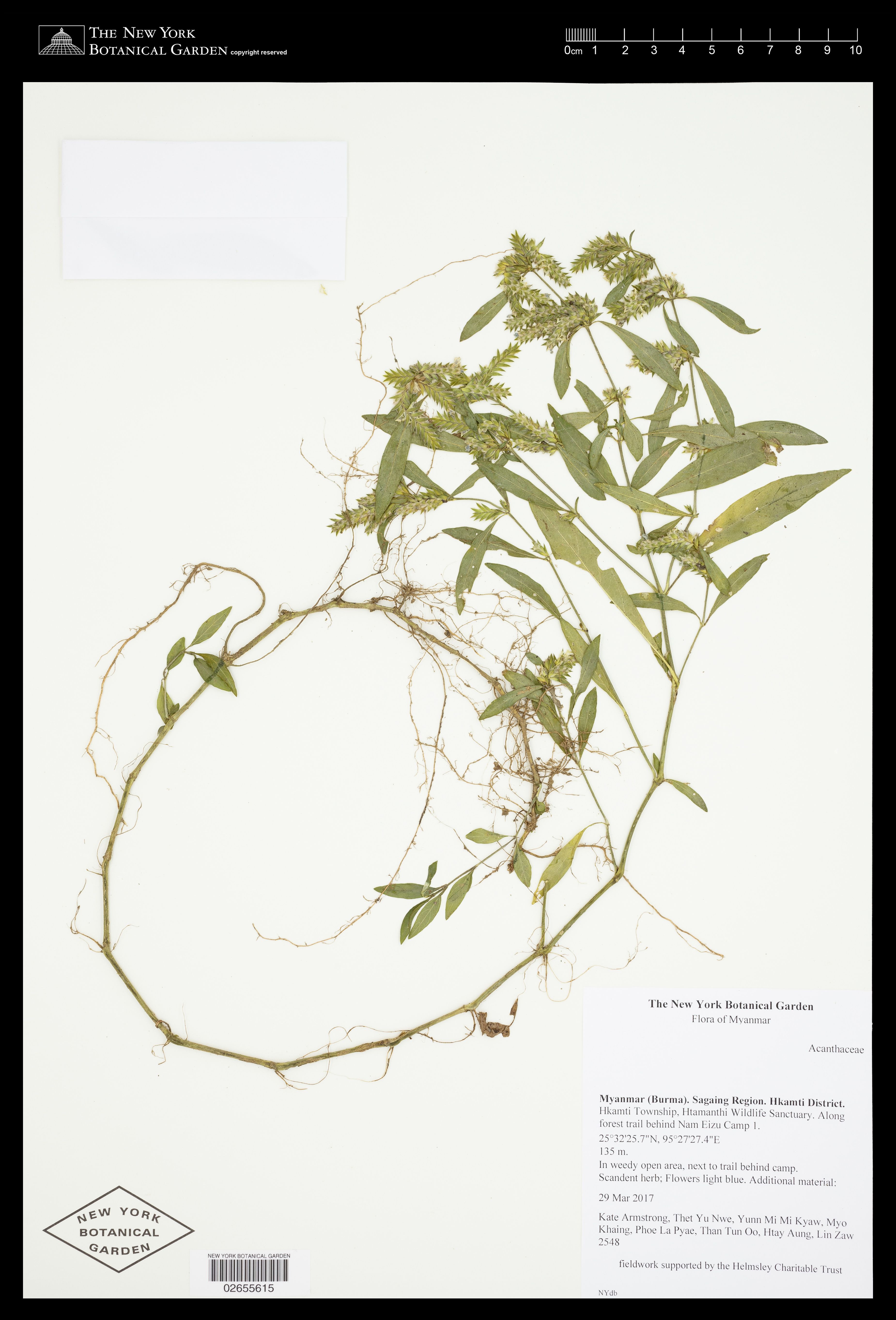
>>>> I decided to pursue 1st four specimens each from GBIf fro both species.
>>>> But there seems to be no clear cut demarcation between them as below:
>>>> *Rungia parviflora in GBIF:
>>>> <https://www.gbif.org/occurrence/gallery?taxon_key=3780135>*
>>>> *https://api.gbif.org/v1/image/unsafe/http%3A%2F%2Fsweetgum.nybg.org%2Fimages3%2F3131%2F353%2F02655615.jpg
>>>> <https://api.gbif.org/v1/image/unsafe/http%3A%2F%2Fsweetgum.nybg.org%2Fimages3%2F3131%2F353%2F02655615.jpg>*
>>>> *https://api.gbif.org/v1/image/unsafe/http%3A%2F%2Fcollections.nmnh.si.edu%2Fmedia%2Findex.php%3Firn%3D13018980
>>>> <https://api.gbif.org/v1/image/unsafe/http%3A%2F%2Fcollections.nmnh.si.edu%2Fmedia%2Findex.php%3Firn%3D13018980>*
>>>> *https://api.gbif.org/v1/image/unsafe/http%3A%2F%2Frepo.rbge.org.uk%2Fimage_server.php%3Fkind%3D1500%26path_base64%3DL2hlcmJhcml1bV9zcGVjaW1lbl9zY2Fucy9FMDAvNTQwLzIwMS83Mjc4NTUuanBn
>>>> <https://api.gbif.org/v1/image/unsafe/http%3A%2F%2Frepo.rbge.org.uk%2Fimage_server.php%3Fkind%3D1500%26path_base64%3DL2hlcmJhcml1bV9zcGVjaW1lbl9zY2Fucy9FMDAvNTQwLzIwMS83Mjc4NTUuanBn>*
>>>> *https://api.gbif.org/v1/image/unsafe/https%3A%2F%2Fmedialib.naturalis.nl%2Ffile%2Fid%2FL.2843456%2Fformat%2Flarge
>>>> <https://api.gbif.org/v1/image/unsafe/https%3A%2F%2Fmedialib.naturalis.nl%2Ffile%2Fid%2FL.2843456%2Fformat%2Flarge>*
>>>>
>>>> *Rungia pectinata* (Linnaeus) Nees in GBIF
>>>> <https://www.gbif.org/occurrence/gallery?taxon_key=7264305>
>>>>
>>>> https://api.gbif.org/v1/image/unsafe/https%3A%2F%2Fmedialib.naturalis.nl%2Ffile%2Fid%2FL.3704596%2Fformat%2Flarge
>>>>
>>>> https://api.gbif.org/v1/image/unsafe/https%3A%2F%2Fmedialib.naturalis.nl%2Ffile%2Fid%2FL.3725672%2Fformat%2Flarge
>>>>
>>>> https://api.gbif.org/v1/image/unsafe/https%3A%2F%2Fmedialib.naturalis.nl%2Ffile%2Fid%2FL.3725649%2Fformat%2Flarge
>>>>
>>>> https://api.gbif.org/v1/image/unsafe/https%3A%2F%2Fmedialib.naturalis.nl%2Ffile%2Fid%2FL.3725649%2Fformat%2Flarge
>>>>
>>>>
>>>>
>>>> On Mon, 6 Jan 2020 at 10:09, J.M. Garg <[email protected]> wrote:
>>>>
>>>>> Thanks, Dinesh ji, for the important feedback.
>>>>> Pl. see the descriptions below:
>>>>> Description as available for Rungia parviflora
>>>>> <http://flora-peninsula-indica.ces.iisc.ac.in/herbsheet.php?id=309&cat=7>
>>>>> is
>>>>> below:
>>>>> *A small, soft annual herb*. leaves membranous, variable, ovate,
>>>>> lanceolate or linear- spathulate. *flowers in small spikes; barren
>>>>> and flowering bracts very different, the former in 3 rows on one side of
>>>>> the spike, thick, elliptic, mucronate; the later with the flowers on the
>>>>> other side, conspicuously hyaline- margined, ovate or orbicular- ciliate*,
>>>>> *calyx- lobes 5, corolla blue.  *
>>>>>
>>>>> India biodiversity Portal gives the following description for *Rungia
>>>>> parviflora*:
>>>>> *Diffuse or ascending herbs*. Leaves elliptic or elliptic-ovate, 2 by
>>>>> 1 cm, base and apex acute, lateral veins c. 3 pairs. *Spikes c. 15 mm
>>>>> long; floral bracts glabrescent*; *corolla pinkish-white.* Capsule
>>>>> ellipsoid.  Flowering and fruiting: March-April. Wastelands in the
>>>>> plains. Peninsular India and Sri Lanka
>>>>>
>>>>> *Rungia pectinata* (Linnaeus) Nees in A. Candolle in Flora of China
>>>>> <http://www.efloras.org/florataxon.aspx?flora_id=2&taxon_id=200022026>
>>>>> :
>>>>> *Herbs 20-50 cm tall, annual or perennial*. *Stem basally prostrate
>>>>> and rooting at nodes then erect, *minutely pubescent. Petiole 0-7 mm;
>>>>> leaf blade oblong-elliptic, 1-4 × 0.4-1.4 cm, glabrous except for a few
>>>>> trichomes along veins, secondary veins ca. 4 on each side of midvein, base
>>>>> cuneate and decurrent onto petiole, margin entire, apex acute. *Spikes
>>>>> axillary or terminal, 0.5-2 cm, 1-sided, solitary or sometimes 2 or 3
>>>>> compound; bracts dimorphic; sterile bracts green, elliptic, ca. 4 × 0.7
>>>>> mm,
>>>>> glabrous, apex acute; fertile bracts circular to obovate, 4-5 × ca. 2 mm,
>>>>> pubescent, margin broadly hyaline, apex obtuse to rounded to emarginate
>>>>> and
>>>>> mucronulate; *bracteoles elliptic, 2-3 mm, margin ciliate, apex
>>>>> 2-cleft and subacute. Calyx colorless, pubescent; lobes linear-lanceolate,
>>>>> ca. 3 × 0.5 mm, margin narrowly hyaline, apex mucronulate. Corolla blue or
>>>>> white, ca. 5 mm, outside pubescent; lower lip 3-lobed, lobes triangular;
>>>>> upper lip ovate, 1-2 mm, apex emarginate. Staminal filaments glabrous.
>>>>> Ovary glabrous. Capsule ellipsoid, ca. 2.5 mm, glabrous, 2-4-seeded, apex
>>>>> apiculate. Seeds orbicular in outline, ca. 1 mm in diam., minutely
>>>>> verrucose. Fl. Nov-Jan, fr. Jan-Apr.
>>>>>
>>>>> Hi, Dinesh ji,
>>>>> Does they match with your observations ?
>>>>>
>>>>>
>>>>> On Mon, 6 Jan 2020 at 10:04, J.M. Garg <[email protected]> wrote:
>>>>>
>>>>>> From another thread:
>>>>>> I think the habit of *J. parviflora* is prostrate, mat-forming,
>>>>>> while *J.pectinata* is an erect herb with diffuse branching ... this
>>>>>> is what I have been considering.
>>>>>> If their descriptions are on this lines, then confusion is taken care
>>>>>> of.
>>>>>> Regards.
>>>>>> Dinesh
>>>>>>
>>>>>>
>>>>>> On Sat, 4 Jan 2020 at 13:05, J.M. Garg <[email protected]> wrote:
>>>>>>
>>>>>>> Description as available for Rungia parviflora
>>>>>>> <http://flora-peninsula-indica.ces.iisc.ac.in/herbsheet.php?id=309&cat=7>
>>>>>>>  is
>>>>>>> below:
>>>>>>> A small, soft annual herb. leaves membranous, variable, ovate,
>>>>>>> lanceolate or linear- spathulate. flowers in small spikes; barren and
>>>>>>> flowering bracts very different, the former in 3 rows on one side of the
>>>>>>> spike, thick, elliptic, mucronate; the later with the flowers on the
>>>>>>> other
>>>>>>> side, conspicuously hyaline- margined, ovate or orbicular- ciliate,
>>>>>>> calyx-
>>>>>>> lobes 5, corolla blue.
>>>>>>>
>>>>>>> India biodiversity Portal gives the following description for *Rungia
>>>>>>> parviflora*:
>>>>>>> Diffuse or ascending herbs. Leaves elliptic or elliptic-ovate, 2 by
>>>>>>> 1 cm, base and apex acute, lateral veins c. 3 pairs. Spikes c. 15 mm
>>>>>>> long;
>>>>>>> floral bracts glabrescent; corolla pinkish-white. Capsule ellipsoid.
>>>>>>> Flowering and fruiting: March-April. Wastelands in the plains.
>>>>>>> Peninsular
>>>>>>> India and Sri Lanka
>>>>>>>
>>>>>>> *Rungia pectinata* (Linnaeus) Nees in A. Candolle in Flora of China
>>>>>>> <http://www.efloras.org/florataxon.aspx?flora_id=2&taxon_id=200022026>
>>>>>>> :
>>>>>>> Herbs 20-50 cm tall, annual or perennial. Stem basally prostrate and
>>>>>>> rooting at nodes then erect, minutely pubescent. Petiole 0-7 mm; leaf
>>>>>>> blade
>>>>>>> oblong-elliptic, 1-4 × 0.4-1.4 cm, glabrous except for a few trichomes
>>>>>>> along veins, secondary veins ca. 4 on each side of midvein, base cuneate
>>>>>>> and decurrent onto petiole, margin entire, apex acute. Spikes axillary
>>>>>>> or
>>>>>>> terminal, 0.5-2 cm, 1-sided, solitary or sometimes 2 or 3 compound;
>>>>>>> bracts
>>>>>>> dimorphic; sterile bracts green, elliptic, ca. 4 × 0.7 mm, glabrous,
>>>>>>> apex
>>>>>>> acute; fertile bracts circular to obovate, 4-5 × ca. 2 mm, pubescent,
>>>>>>> margin broadly hyaline, apex obtuse to rounded to emarginate and
>>>>>>> mucronulate; bracteoles elliptic, 2-3 mm, margin ciliate, apex 2-cleft
>>>>>>> and
>>>>>>> subacute. Calyx colorless, pubescent; lobes linear-lanceolate, ca. 3 ×
>>>>>>> 0.5
>>>>>>> mm, margin narrowly hyaline, apex mucronulate. Corolla blue or white,
>>>>>>> ca. 5
>>>>>>> mm, outside pubescent; lower lip 3-lobed, lobes triangular; upper lip
>>>>>>> ovate, 1-2 mm, apex emarginate. Staminal filaments glabrous. Ovary
>>>>>>> glabrous. Capsule ellipsoid, ca. 2.5 mm, glabrous, 2-4-seeded, apex
>>>>>>> apiculate. Seeds orbicular in outline, ca. 1 mm in diam., minutely
>>>>>>> verrucose. Fl. Nov-Jan, fr. Jan-Apr.
>>>>>>>
>>>>>>> But I am unable to find out the clear cut difference between the two
>>>>>>> from the above.
>>>>>>>
>>>>>>> On Sat, 4 Jan 2020 at 10:25, J.M. Garg <[email protected]> wrote:
>>>>>>>
>>>>>>>> Checklist of Nepal, gives *Rungia parviflora* (Retz.) Nees as a
>>>>>>>> syn. of *Rungia pectinata* (L.) Nees
>>>>>>>> <http://www.efloras.org/florataxon.aspx?flora_id=110&taxon_id=200022026>
>>>>>>>> Flora of Pakistan did not mention any Rungia species.
>>>>>>>> Flora of China
>>>>>>>> <http://www.efloras.org/florataxon.aspx?flora_id=2&taxon_id=128875>
>>>>>>>> has only *Rungia pectinata* (Linnaeus) Nees
>>>>>>>> <http://www.efloras.org/florataxon.aspx?flora_id=2&taxon_id=200022026>
>>>>>>>> out
>>>>>>>> of these.
>>>>>>>> Pl. see FOC illustration
>>>>>>>> <http://www.efloras.org/object_page.aspx?object_id=119450&flora_id=2>
>>>>>>>> for this.
>>>>>>>>
>>>>>>>> As per Dr. Wood (who changed the names from Rungia to Justicia)"
>>>>>>>> *Rungia muralis* is usually seen as a variety of *Justicia
>>>>>>>> parviflora*. I have made no combinations for the varieties as they
>>>>>>>> are a chaos and need a thorough revision - most are probably of no
>>>>>>>> value.
>>>>>>>>
>>>>>>>> Thus, from the above discussions, there are broadly two complexes,
>>>>>>>> one related to *R. pectinata* (syn: *Rungia parviflora* var.
>>>>>>>> *pectinata* (L.) C. B. Cl.) and* Rungia parviflora* (*Bracts
>>>>>>>> dimorphic*) and other related to *R. repens* (*Bracts uniform*).
>>>>>>>>
>>>>>>>> Thus, Rakesh ji's posted species in this thread with uniform bracts
>>>>>>>> should be *R. repens*
>>>>>>>>
>>>>>>>> However, we have to still find keys and differences between *R.
>>>>>>>> pectinata* (syn: *Rungia parviflora* var. *pectinata* (L.) C. B.
>>>>>>>> Cl.) and* Rungia parviflora* (*Bracts dimorphic*)
>>>>>>>>
>>>>>>>> On Sat, 4 Jan 2020 at 10:12, J.M. Garg <[email protected]> wrote:
>>>>>>>>
>>>>>>>>> I check the related species in Flora of Peninsular India, but
>>>>>>>>> could not find the keys between the three species as per
>>>>>>>>> Rungia pectinata
>>>>>>>>> <http://flora-peninsula-indica.ces.iisc.ac.in/herbsheet.php?id=310&cat=7>
>>>>>>>>> Rungia repens
>>>>>>>>> <http://flora-peninsula-indica.ces.iisc.ac.in/herbsheet.php?id=311&cat=7>
>>>>>>>>> Rungia parviflora
>>>>>>>>> <http://flora-peninsula-indica.ces.iisc.ac.in/herbsheet.php?id=309&cat=7>
>>>>>>>>> Rungia muralis
>>>>>>>>> <http://flora-peninsula-indica.ces.iisc.ac.in/herbsheet.php?id=308&cat=7>
>>>>>>>>>
>>>>>>>>> Only description is available for Rungia parviflora
>>>>>>>>> <http://flora-peninsula-indica.ces.iisc.ac.in/herbsheet.php?id=309&cat=7>
>>>>>>>>>  as
>>>>>>>>> below:
>>>>>>>>> A small, soft annual herb. leaves membranous, variable, ovate,
>>>>>>>>> lanceolate or linear- spathulate. flowers in small spikes; barren and
>>>>>>>>> flowering bracts very different, the former in 3 rows on one side of
>>>>>>>>> the
>>>>>>>>> spike, thick, elliptic, mucronate; the later with the flowers on the
>>>>>>>>> other
>>>>>>>>> side, conspicuously hyaline- margined, ovate or orbicular- ciliate,
>>>>>>>>> calyx-
>>>>>>>>> lobes 5, corolla blue.
>>>>>>>>>
>>>>>>>>>
>>>>>>>>> On Sat, 4 Jan 2020 at 09:56, J.M. Garg <[email protected]> wrote:
>>>>>>>>>
>>>>>>>>>> Hi, Rakesh ji.
>>>>>>>>>> We will certainly go through the descriptions.
>>>>>>>>>> But before that we have to find *keys* between the three
>>>>>>>>>> species., in differences sources of literature.
>>>>>>>>>>
>>>>>>>>>>
>>>>>>>>>> On Fri, 3 Jan 2020 at 19:53, dr.rakesh Singh <
>>>>>>>>>> [email protected]> wrote:
>>>>>>>>>>
>>>>>>>>>>> We need to have descriptions of species .
>>>>>>>>>>> Garg  sir , the keys you have quoted are not enough .
>>>>>>>>>>> For one , leaf is highly variable in size , so is petiole .
>>>>>>>>>>> Two , bracts in all 3 are having papery white margin . While in
>>>>>>>>>>> bigger one margins do not overlap and they show prominently in
>>>>>>>>>>> contrasting
>>>>>>>>>>> colors , in two smaller ones bracts overlap and white papery margin
>>>>>>>>>>> is not
>>>>>>>>>>> visible on backside , though visible on side of flowers .
>>>>>>>>>>> Attached photos belong to larger one , spike going up to 20 cm
>>>>>>>>>>> long . Habit prostrate , erect when crowded .
>>>>>>>>>>> On Fri, Jan 3, 2020, 18:16 J.M. Garg <[email protected]> wrote:
>>>>>>>>>>>
>>>>>>>>>>>> Rakesh ji, in a recent thread, has expressed doubts about
>>>>>>>>>>>> clarity in these species in efi site.
>>>>>>>>>>>>
>>>>>>>>>>>> So let us look at these afresh with our literature.
>>>>>>>>>>>> Flora of Madhya Pradesh: Chhatarpur and Damoh (Description)
>>>>>>>>>>>> <http://books.google.co.in/books?id=nC-TikpU0sEC&pg=PA338&dq=Justicia+pectinata+%2B+INdia&hl=en&sa=X&ei=Pr-8UPaoMNCzrAfnkoDYDg&ved=0CC4Q6AEwAA#v=onepage&q=Justicia%20pectinata%20%2B%20INdia&f=false>
>>>>>>>>>>>>  gives
>>>>>>>>>>>> the following keys:
>>>>>>>>>>>> 1a. Sterile and fertile bracts dissimilar. Upper lip of Corolla
>>>>>>>>>>>> acute. Spikes 2.5-5 cm- *R. pectinata*
>>>>>>>>>>>> 1b. Sterile and fertile bracts similar. Upper lip of Corolla
>>>>>>>>>>>> emarginate. Spikes 2.5-5 cm- *R. repens*
>>>>>>>>>>>>
>>>>>>>>>>>> Flora Of Guntur District: Andhra Pradesh, India (Description)
>>>>>>>>>>>> <http://books.google.co.in/books?id=1kHNgLyXbJUC&pg=PA273&dq=Justicia+pectinata+%2B+INdia&hl=en&sa=X&ei=Pr-8UPaoMNCzrAfnkoDYDg&ved=0CDQQ6AEwAg#v=onepage&q=Justicia%20pectinata%20%2B%20INdia&f=false>
>>>>>>>>>>>>  gives
>>>>>>>>>>>> the following keys:
>>>>>>>>>>>> 1a. Bracts dimorphic. Fertile bracts villous, petiole ca. 2 cm
>>>>>>>>>>>> long- *R. pectinata*
>>>>>>>>>>>> 1b. Bracts uniform. Bracts with white membranous margin,
>>>>>>>>>>>> petiole ca. 5 mm long- *R. repens*
>>>>>>>>>>>>
>>>>>>>>>>>> Does anybody has keys involving Rungia parviflora ?
>>>>>>>>>>>> --
>>>>>>>>>>>> With regards,
>>>>>>>>>>>> J.M.Garg
>>>>>>>>>>>>
>>>>>>>>>>>> 'Creating awareness of Indian Flora & Fauna'
>>>>>>>>>>>> <http://en.wikipedia.org/wiki/User:Jmgarg1>
>>>>>>>>>>>>
>>>>>>>>>>>> Winner of Wipro-NFS Sparrow Awards 2014 for efloraofindia
>>>>>>>>>>>> <https://sites.google.com/site/efloraofindia/award-for-efloraofindia>
>>>>>>>>>>>> .
>>>>>>>>>>>>
>>>>>>>>>>>> For identification, learning, discussion & documentation of
>>>>>>>>>>>> Indian Flora, please visit/ join our Efloraofindia Google
>>>>>>>>>>>> e-group <https://groups.google.com/forum/#!forum/indiantreepix>
>>>>>>>>>>>> (largest
>>>>>>>>>>>> in the world- more than 3,000 members & 3,00,000 messages on
>>>>>>>>>>>> 23.8.18) or Efloraofindia
>>>>>>>>>>>> website <https://sites.google.com/site/efloraofindia/> (with a
>>>>>>>>>>>> species database of more than 13,000 species & 3,00,000 images of
>>>>>>>>>>>> which
>>>>>>>>>>>> more than 2,00,000 images are directly displayed on 30.8.19).
>>>>>>>>>>>>
>>>>>>>>>>>> The whole world uses my Image Resource
>>>>>>>>>>>> <http://commons.wikimedia.org/wiki/Category:J.M.Garg> of more
>>>>>>>>>>>> than a thousand species & eight thousand images of Birds,
>>>>>>>>>>>> Butterflies,
>>>>>>>>>>>> Plants etc. (arranged alphabetically & place-wise). You can also
>>>>>>>>>>>> use them
>>>>>>>>>>>> for free as per Creative Commons license attached with each image.
>>>>>>>>>>>>
>>>>>>>>>>>> Also author of 'A Photoguide to the Birds of Kolkata & Common
>>>>>>>>>>>> Birds of India'.
>>>>>>>>>>>>
>>>>>>>>>>>
>>>>>>>>>>
>>>>>>>>>> --
>>>>>>>>>> With regards,
>>>>>>>>>> J.M.Garg
>>>>>>>>>>
>>>>>>>>>> 'Creating awareness of Indian Flora & Fauna'
>>>>>>>>>> <http://en.wikipedia.org/wiki/User:Jmgarg1>
>>>>>>>>>>
>>>>>>>>>> Winner of Wipro-NFS Sparrow Awards 2014 for efloraofindia
>>>>>>>>>> <https://sites.google.com/site/efloraofindia/award-for-efloraofindia>
>>>>>>>>>> .
>>>>>>>>>>
>>>>>>>>>> For identification, learning, discussion & documentation of
>>>>>>>>>> Indian Flora, please visit/ join our Efloraofindia Google e-group
>>>>>>>>>> <https://groups.google.com/forum/#!forum/indiantreepix> (largest
>>>>>>>>>> in the world- more than 3,000 members & 3,00,000 messages on
>>>>>>>>>> 23.8.18) or Efloraofindia
>>>>>>>>>> website <https://sites.google.com/site/efloraofindia/> (with a
>>>>>>>>>> species database of more than 13,000 species & 3,00,000 images of
>>>>>>>>>> which
>>>>>>>>>> more than 2,00,000 images are directly displayed on 30.8.19).
>>>>>>>>>>
>>>>>>>>>> The whole world uses my Image Resource
>>>>>>>>>> <http://commons.wikimedia.org/wiki/Category:J.M.Garg> of more
>>>>>>>>>> than a thousand species & eight thousand images of Birds,
>>>>>>>>>> Butterflies,
>>>>>>>>>> Plants etc. (arranged alphabetically & place-wise). You can also use
>>>>>>>>>> them
>>>>>>>>>> for free as per Creative Commons license attached with each image.
>>>>>>>>>>
>>>>>>>>>> Also author of 'A Photoguide to the Birds of Kolkata & Common
>>>>>>>>>> Birds of India'.
>>>>>>>>>>
>>>>>>>>>
>>>>>>>>>
>>>>>>>>> --
>>>>>>>>> With regards,
>>>>>>>>> J.M.Garg
>>>>>>>>>
>>>>>>>>> 'Creating awareness of Indian Flora & Fauna'
>>>>>>>>> <http://en.wikipedia.org/wiki/User:Jmgarg1>
>>>>>>>>>
>>>>>>>>> Winner of Wipro-NFS Sparrow Awards 2014 for efloraofindia
>>>>>>>>> <https://sites.google.com/site/efloraofindia/award-for-efloraofindia>
>>>>>>>>> .
>>>>>>>>>
>>>>>>>>> For identification, learning, discussion & documentation of Indian
>>>>>>>>> Flora, please visit/ join our Efloraofindia Google e-group
>>>>>>>>> <https://groups.google.com/forum/#!forum/indiantreepix> (largest
>>>>>>>>> in the world- more than 3,000 members & 3,00,000 messages on 23.8.18)
>>>>>>>>> or Efloraofindia
>>>>>>>>> website <https://sites.google.com/site/efloraofindia/> (with a
>>>>>>>>> species database of more than 13,000 species & 3,00,000 images of
>>>>>>>>> which
>>>>>>>>> more than 2,00,000 images are directly displayed on 30.8.19).
>>>>>>>>>
>>>>>>>>> The whole world uses my Image Resource
>>>>>>>>> <http://commons.wikimedia.org/wiki/Category:J.M.Garg> of more
>>>>>>>>> than a thousand species & eight thousand images of Birds, Butterflies,
>>>>>>>>> Plants etc. (arranged alphabetically & place-wise). You can also use
>>>>>>>>> them
>>>>>>>>> for free as per Creative Commons license attached with each image.
>>>>>>>>>
>>>>>>>>> Also author of 'A Photoguide to the Birds of Kolkata & Common
>>>>>>>>> Birds of India'.
>>>>>>>>>
>>>>>>>>
>>>>>>>>
>>>>>>>> --
>>>>>>>> With regards,
>>>>>>>> J.M.Garg
>>>>>>>>
>>>>>>>> 'Creating awareness of Indian Flora & Fauna'
>>>>>>>> <http://en.wikipedia.org/wiki/User:Jmgarg1>
>>>>>>>>
>>>>>>>> Winner of Wipro-NFS Sparrow Awards 2014 for efloraofindia
>>>>>>>> <https://sites.google.com/site/efloraofindia/award-for-efloraofindia>
>>>>>>>> .
>>>>>>>>
>>>>>>>> For identification, learning, discussion & documentation of Indian
>>>>>>>> Flora, please visit/ join our Efloraofindia Google e-group
>>>>>>>> <https://groups.google.com/forum/#!forum/indiantreepix> (largest
>>>>>>>> in the world- more than 3,000 members & 3,00,000 messages on 23.8.18)
>>>>>>>> or Efloraofindia
>>>>>>>> website <https://sites.google.com/site/efloraofindia/> (with a
>>>>>>>> species database of more than 13,000 species & 3,00,000 images of which
>>>>>>>> more than 2,00,000 images are directly displayed on 30.8.19).
>>>>>>>>
>>>>>>>> The whole world uses my Image Resource
>>>>>>>> <http://commons.wikimedia.org/wiki/Category:J.M.Garg> of more than
>>>>>>>> a thousand species & eight thousand images of Birds, Butterflies,
>>>>>>>> Plants
>>>>>>>> etc. (arranged alphabetically & place-wise). You can also use them for
>>>>>>>> free
>>>>>>>> as per Creative Commons license attached with each image.
>>>>>>>>
>>>>>>>> Also author of 'A Photoguide to the Birds of Kolkata & Common Birds
>>>>>>>> of India'.
>>>>>>>>
>>>>>>>
>>>>>>>
>>>>>>> --
>>>>>>> With regards,
>>>>>>> J.M.Garg
>>>>>>>
>>>>>>> 'Creating awareness of Indian Flora & Fauna'
>>>>>>> <http://en.wikipedia.org/wiki/User:Jmgarg1>
>>>>>>>
>>>>>>> Winner of Wipro-NFS Sparrow Awards 2014 for efloraofindia
>>>>>>> <https://sites.google.com/site/efloraofindia/award-for-efloraofindia>
>>>>>>> .
>>>>>>>
>>>>>>> For identification, learning, discussion & documentation of Indian
>>>>>>> Flora, please visit/ join our Efloraofindia Google e-group
>>>>>>> <https://groups.google.com/forum/#!forum/indiantreepix> (largest in
>>>>>>> the world- more than 3,000 members & 3,00,000 messages on 23.8.18) or
>>>>>>> Efloraofindia
>>>>>>> website <https://sites.google.com/site/efloraofindia/> (with a
>>>>>>> species database of more than 13,000 species & 3,00,000 images of which
>>>>>>> more than 2,00,000 images are directly displayed on 30.8.19).
>>>>>>>
>>>>>>> The whole world uses my Image Resource
>>>>>>> <http://commons.wikimedia.org/wiki/Category:J.M.Garg> of more than
>>>>>>> a thousand species & eight thousand images of Birds, Butterflies, Plants
>>>>>>> etc. (arranged alphabetically & place-wise). You can also use them for
>>>>>>> free
>>>>>>> as per Creative Commons license attached with each image.
>>>>>>>
>>>>>>> Also author of 'A Photoguide to the Birds of Kolkata & Common Birds
>>>>>>> of India'.
>>>>>>>
>>>>>>
>>>>>>
>>>>>> --
>>>>>> With regards,
>>>>>> J.M.Garg
>>>>>>
>>>>>> 'Creating awareness of Indian Flora & Fauna'
>>>>>> <http://en.wikipedia.org/wiki/User:Jmgarg1>
>>>>>>
>>>>>> Winner of Wipro-NFS Sparrow Awards 2014 for efloraofindia
>>>>>> <https://sites.google.com/site/efloraofindia/award-for-efloraofindia>
>>>>>> .
>>>>>>
>>>>>> For identification, learning, discussion & documentation of Indian
>>>>>> Flora, please visit/ join our Efloraofindia Google e-group
>>>>>> <https://groups.google.com/forum/#!forum/indiantreepix> (largest in
>>>>>> the world- more than 3,000 members & 3,00,000 messages on 23.8.18) or
>>>>>> Efloraofindia
>>>>>> website <https://sites.google.com/site/efloraofindia/> (with a
>>>>>> species database of more than 13,000 species & 3,00,000 images of which
>>>>>> more than 2,00,000 images are directly displayed on 30.8.19).
>>>>>>
>>>>>> The whole world uses my Image Resource
>>>>>> <http://commons.wikimedia.org/wiki/Category:J.M.Garg> of more than a
>>>>>> thousand species & eight thousand images of Birds, Butterflies, Plants
>>>>>> etc.
>>>>>> (arranged alphabetically & place-wise). You can also use them for free as
>>>>>> per Creative Commons license attached with each image.
>>>>>>
>>>>>> Also author of 'A Photoguide to the Birds of Kolkata & Common Birds
>>>>>> of India'.
>>>>>>
>>>>>
>>>>>
>>>>> --
>>>>> With regards,
>>>>> J.M.Garg
>>>>>
>>>>> 'Creating awareness of Indian Flora & Fauna'
>>>>> <http://en.wikipedia.org/wiki/User:Jmgarg1>
>>>>>
>>>>> Winner of Wipro-NFS Sparrow Awards 2014 for efloraofindia
>>>>> <https://sites.google.com/site/efloraofindia/award-for-efloraofindia>
>>>>> .
>>>>>
>>>>> For identification, learning, discussion & documentation of Indian
>>>>> Flora, please visit/ join our Efloraofindia Google e-group
>>>>> <https://groups.google.com/forum/#!forum/indiantreepix> (largest in
>>>>> the world- more than 3,000 members & 3,00,000 messages on 23.8.18) or
>>>>> Efloraofindia
>>>>> website <https://sites.google.com/site/efloraofindia/> (with a
>>>>> species database of more than 13,000 species & 3,00,000 images of which
>>>>> more than 2,00,000 images are directly displayed on 30.8.19).
>>>>>
>>>>> The whole world uses my Image Resource
>>>>> <http://commons.wikimedia.org/wiki/Category:J.M.Garg> of more than a
>>>>> thousand species & eight thousand images of Birds, Butterflies, Plants
>>>>> etc.
>>>>> (arranged alphabetically & place-wise). You can also use them for free as
>>>>> per Creative Commons license attached with each image.
>>>>>
>>>>> Also author of 'A Photoguide to the Birds of Kolkata & Common Birds of
>>>>> India'.
>>>>>
>>>>
>>>>
>>>> --
>>>> With regards,
>>>> J.M.Garg
>>>>
>>>> 'Creating awareness of Indian Flora & Fauna'
>>>> <http://en.wikipedia.org/wiki/User:Jmgarg1>
>>>>
>>>> Winner of Wipro-NFS Sparrow Awards 2014 for efloraofindia
>>>> <https://sites.google.com/site/efloraofindia/award-for-efloraofindia>.
>>>>
>>>> For identification, learning, discussion & documentation of Indian
>>>> Flora, please visit/ join our Efloraofindia Google e-group
>>>> <https://groups.google.com/forum/#!forum/indiantreepix> (largest in
>>>> the world- more than 3,000 members & 3,00,000 messages on 23.8.18) or
>>>> Efloraofindia
>>>> website <https://sites.google.com/site/efloraofindia/> (with a species
>>>> database of more than 13,000 species & 3,00,000 images of which more than
>>>> 2,00,000 images are directly displayed on 30.8.19).
>>>>
>>>> The whole world uses my Image Resource
>>>> <http://commons.wikimedia.org/wiki/Category:J.M.Garg> of more than a
>>>> thousand species & eight thousand images of Birds, Butterflies, Plants etc.
>>>> (arranged alphabetically & place-wise). You can also use them for free as
>>>> per Creative Commons license attached with each image.
>>>>
>>>> Also author of 'A Photoguide to the Birds of Kolkata & Common Birds of
>>>> India'.
>>>>
>>>
>>>
>>> --
>>> With regards,
>>> J.M.Garg
>>>
>>> 'Creating awareness of Indian Flora & Fauna'
>>> <http://en.wikipedia.org/wiki/User:Jmgarg1>
>>>
>>> Winner of Wipro-NFS Sparrow Awards 2014 for efloraofindia
>>> <https://sites.google.com/site/efloraofindia/award-for-efloraofindia>.
>>>
>>> For identification, learning, discussion & documentation of Indian
>>> Flora, please visit/ join our Efloraofindia Google e-group
>>> <https://groups.google.com/forum/#!forum/indiantreepix> (largest in the
>>> world- more than 3,000 members & 3,00,000 messages on 23.8.18) or
>>> Efloraofindia
>>> website <https://sites.google.com/site/efloraofindia/> (with a species
>>> database of more than 13,000 species & 3,00,000 images of which more than
>>> 2,00,000 images are directly displayed on 30.8.19).
>>>
>>> The whole world uses my Image Resource
>>> <http://commons.wikimedia.org/wiki/Category:J.M.Garg> of more than a
>>> thousand species & eight thousand images of Birds, Butterflies, Plants etc.
>>> (arranged alphabetically & place-wise). You can also use them for free as
>>> per Creative Commons license attached with each image.
>>>
>>> Also author of 'A Photoguide to the Birds of Kolkata & Common Birds of
>>> India'.
>>>
>> --
>> You received this message because you are subscribed to the Google Groups
>> "efloraofindia" group.
>> To unsubscribe from this group and stop receiving emails from it, send an
>> email to [email protected].
>> To view this discussion on the web, visit
>> https://groups.google.com/d/msgid/indiantreepix/CABSQqC0wofLC%2B46KqWzGfQWE-CL9T3YrDW8XC8-NcWSfZaGkLw%40mail.gmail.com
>> <https://groups.google.com/d/msgid/indiantreepix/CABSQqC0wofLC%2B46KqWzGfQWE-CL9T3YrDW8XC8-NcWSfZaGkLw%40mail.gmail.com?utm_medium=email&utm_source=footer>
>> .
>>
>
>
> --
> With regards,
> J.M.Garg
>
> 'Creating awareness of Indian Flora & Fauna'
> <http://en.wikipedia.org/wiki/User:Jmgarg1>
>
> Winner of Wipro-NFS Sparrow Awards 2014 for efloraofindia
> <https://sites.google.com/site/efloraofindia/award-for-efloraofindia>.
>
> For identification, learning, discussion & documentation of Indian Flora,
> please visit/ join our Efloraofindia Google e-group
> <https://groups.google.com/forum/#!forum/indiantreepix> (largest in the
> world- more than 3,000 members & 3,00,000 messages on 23.8.18) or
> Efloraofindia
> website <https://sites.google.com/site/efloraofindia/> (with a species
> database of more than 13,000 species & 3,00,000 images of which more than
> 2,00,000 images are directly displayed on 30.8.19).
>
> The whole world uses my Image Resource
> <http://commons.wikimedia.org/wiki/Category:J.M.Garg> of more than a
> thousand species & eight thousand images of Birds, Butterflies, Plants etc.
> (arranged alphabetically & place-wise). You can also use them for free as
> per Creative Commons license attached with each image.
>
> Also author of 'A Photoguide to the Birds of Kolkata & Common Birds of
> India'.
>
> --
> You received this message because you are subscribed to the Google Groups
> "efloraofindia" group.
> To unsubscribe from this group and stop receiving emails from it, send an
> email to [email protected].
> To view this discussion on the web, visit
> https://groups.google.com/d/msgid/indiantreepix/CA%2BiuSFBVhmUp0%2Bqnzov45sfAwNQXqJ8o4DDrxod6t3tYSHxJ-g%40mail.gmail.com
> <https://groups.google.com/d/msgid/indiantreepix/CA%2BiuSFBVhmUp0%2Bqnzov45sfAwNQXqJ8o4DDrxod6t3tYSHxJ-g%40mail.gmail.com?utm_medium=email&utm_source=footer>
> .
>

--
You received this message because you are subscribed to the Google Groups
"efloraofindia" group.
To unsubscribe from this group and stop receiving emails from it, send an email
to [email protected].
To view this discussion on the web, visit
https://groups.google.com/d/msgid/indiantreepix/CABSQqC3L7%3Dx5DZaBfRS2osx8_nPgt4m4ON9Uy%2BOyN8sEaZ-nEQ%40mail.gmail.com.