Dear Mr. Garg,
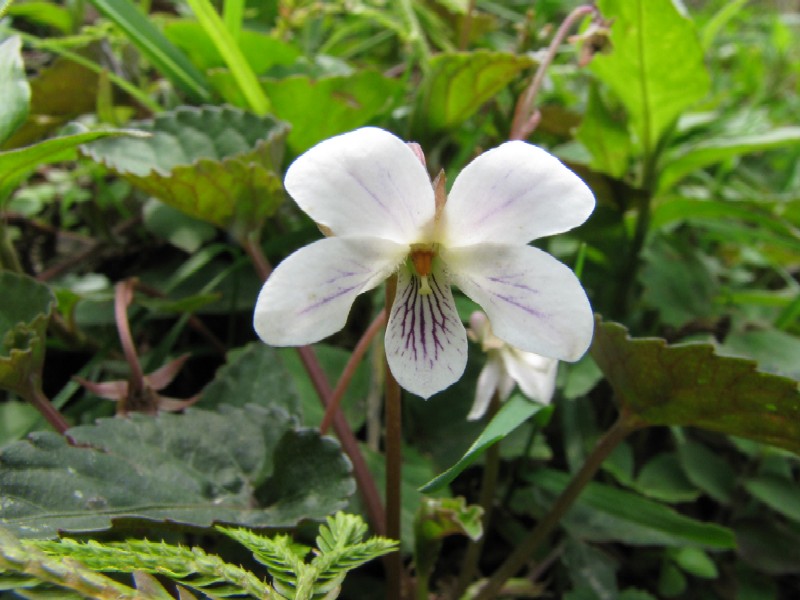
I agree with you that if we are certain about the flowers on our website
here
<https://sites.google.com/site/efloraofindia/species/m---z/v/violaceae/viola/viola-pilosa>
being *Viola pilosa*, then as certainly the flowers from Dharamshala are
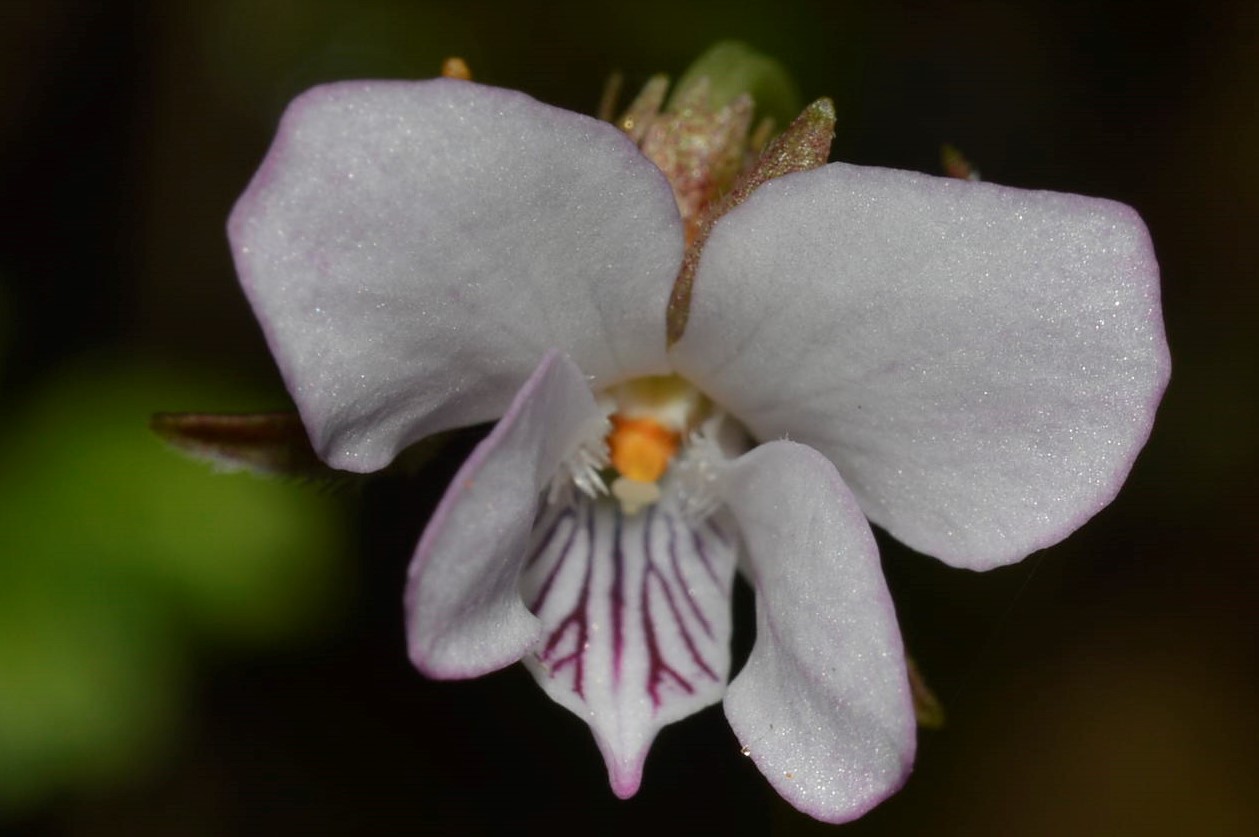
not *V. pilosa*. As the images below show, they have a three-lobed stigma
and the pointed lip.
https://08511630493324166816.googlegroups.com/attach/18709915a1a38/_DSC0732%20-%20Copy.JPG?part=0.3&view=1&vt=ANaJVrHtj7ZHsf69djLbP1FCOPxM2mjOS-k4-1BGLdC92xV0dz2p5eiPZpbhRnyxjj5OGCfw1gPFLC5YUga35lktvq0Cs9QL9BeT_Y4y4YwJqF-QdnCDEBw
https://08511630493324166816.googlegroups.com/attach/2f0eca70ef548d1e/ID.jpg?part=0.1&view=1&vt=ANaJVrHOJ5wqfYQZIWIRiwBTCrUsRrn21uwlgV_vAwPX0ZUnlZC05Ue92Ojidg7HhNiOnPsPuZ8hx9EuP4n30fgYYnDOuATzm_TJgcd8alVmOV54DAtrrCI

These should be the defining characters then. But that will also prove that
the illustration provided by Santosh Agarwal ji is not reliable and neither
is the description in FOP or FOC for that matter. The older literature such
as *Flora Simlensis* and *Flowers of the Himalaya* both win here.

Tabish ji has already included a 3-lobed stigma in his description on FOI,
which stand correct.

So if FOC, FOP and the illustration of styles cannot be relied upon, how
will we file flowers from Dharamshala under *V. canescens*?

Thank you.
Ashwini


On Sun, 12 Apr 2020 at 12:03, J.M. Garg <[email protected]> wrote:

> Attaching a plate provided by Santosh Agarwal ji in Viola confusa?/ABMAR21
> <https://groups.google.com/forum/#!topic/indiantreepix/v3iEgrK7nOU>
> Style is more closer to  Viola canescens
> <https://sites.google.com/site/efloraofindia/species/m---z/v/violaceae/viola/viola-canescens>
>  rather
> than Viola pilosa
> <https://sites.google.com/site/efloraofindia/species/m---z/v/violaceae/viola/viola-pilosa>
>
> I feel we have to rely more on  Flora of Pakistan
> <http://www.efloras.org/florataxon.aspx?flora_id=5&taxon_id=134607> as
> both the species are listed here (and found in the area) and this issue
> must have been deliberated for long times and keys framed accordingly due
> to confusing nature between the two.
>
> *Leaves* are clearly acuminate in Viola pilosa
> <https://sites.google.com/site/efloraofindia/species/m---z/v/violaceae/viola/viola-pilosa>
>  and
> not so in Viola canescens
> <https://sites.google.com/site/efloraofindia/species/m---z/v/violaceae/viola/viola-canescens>
> There is a clear difference as to how *style* is visible in the
> live flowers in both species at Viola canescens
> <https://sites.google.com/site/efloraofindia/species/m---z/v/violaceae/viola/viola-canescens>
>  and
> Viola pilosa
> <https://sites.google.com/site/efloraofindia/species/m---z/v/violaceae/viola/viola-pilosa>
> One more point is the *nature of the lower petal *being mostly acute or
> acuminate in Viola pilosa
> <https://sites.google.com/site/efloraofindia/species/m---z/v/violaceae/viola/viola-pilosa>
>  and
> obtuse in Viola canescens
> <https://sites.google.com/site/efloraofindia/species/m---z/v/violaceae/viola/viola-canescens>
>
>
> I think the above three point combined together should clinch the id in
> most of the cases.
>
>
>
> On Sun, 12 Apr 2020 at 11:14, Ashwini Bhatia <[email protected]> wrote:
>
>> Thank you Mr. Garg and Tabish ji for your comments. We can all appreciate
>> the difficulties involved.
>>
>> The issue boils down to which source(s) we trust the most in our
>> identifications. Especially when the sources we usually refer to do not
>> agree with each other.
>>
>> When I began looking at the two viola species in Dharamshala in 2015, the
>> first characteristic I looked at was the stipules. I was told that the
>> fringed ones meant canescens and toothed ones pilosa. Now I have learnt
>> that these can be variable. FOC describes them for V. Pilosa as "stipules
>> mostly free, brown or green, lanceolate, margin long or shortly
>> fimbriate-dentate, apex long acuminate”.
>>
>> Flora of China does not include *V. c**anescens* in its list of viola
>> species in China but makes a brief comment under *V. pilosa* description "In
>> FRPS (51: 90. 1991), the name *Viola canescens* Wallich was misapplied
>> to this species.” FRPS is Latin for Flora of China. This is not elaborated
>> further so we will not know if the author(s) does not approve of *V.
>> canescens* as a valid species or is merely suggesting that these
>> features were earlier confused with *V. canescens*.
>>
>> Next, I learnt that to know violas, one has to look at the style/stigma.
>> So I did my best to look at the style closely. I found out that the *style
>> is club-shaped, gradually thickening upwards culminating in a perforated
>> stigma placed on the side*.
>> This matches the description given by FOC for *V. pilosa*. But Flora of
>> Pakistan gives the stigma for *V. canescens* as club-shaped but does not
>> elaborate more.
>> FOP does not give the shape of the stigma for *V. pilosa* but tells us
>> that it is beaked. The perforation-like stigma, can be seen like a beak
>> from an angle but I am not sure if I want to base my identification on a
>> feature that is open to interpretation.
>>
>> * Flora Simlensis *says that *V. canescens* has a truncated stigma and
>> not beaked, and describes stigma for *V. serpens* (synonym of *V. pilosa*)
>> as being three-lobed and beaked. The stigma on our plant may look truncated
>> to the naked eye but under a modest magnification, the shape becomes
>> obvious.
>>
>> Flowers of the Himalaya lists *V. pilosa* as having a 3-lobed stigma
>> with a beak too but does not comment on the stigma of *V. canescens*.
>>
>> So neither the stipules nor the style/stigma shapes are agreed upon in
>> the literature. FOC pdf was compiled in 2007 and could be the most recent
>> study we have on the genus in China/Asia. I am not sure how often the Flora
>> of Pakistan is updated but the books I have consulted are all much older
>> than 2007. But since the study does not include *V. canescens* at all,
>> we are still left wondering.
>>
>> Our species matches the descriptions broadly for *V. pilosa* in FOC and *V.
>> canescens* in FOP. How do we move forward?
>>
>> Thank you and regards,
>> Ashwini
>>
>>
>>
>>
>>
>>
>>
>> On 12-Apr-2020, at 9:47 AM, Tabish <[email protected]> wrote:
>>
>> This is from FOC description of Viola pilosa:
>> "styles clavate, base slightly geniculate, gradually thickened upward;
>> stigmas ± flat, not margined, very inconspicuously short beaked in front,
>> with smaller stigma hole at tip of beak."
>>   best wishes
>>   Tabish
>>
>> On Sun, 12 Apr, 2020, 8:38 AM J.M. Garg, <[email protected]> wrote:
>>
>>> As both species are quite confusing, these key features are not visible
>>> in images of Viola canescens at FOI
>>> <http://www.flowersofindia.net/catalog/slides/Himalayan%20White%20Violet.html>
>>> .
>>> I have doubts about correctness of these images in FOI.
>>>
>>> On Sun, 12 Apr 2020 at 08:27, J.M. Garg <[email protected]> wrote:
>>>
>>>> Pl. see Viola canescens
>>>> <https://sites.google.com/site/efloraofindia/species/m---z/v/violaceae/viola/viola-canescens>.
>>>> I think style is the best clue. *Here style is club shaped. Leaves are
>>>> also not acuminate.*
>>>>
>>>> As per keys in Flora of Pakistan
>>>> <http://www.efloras.org/florataxon.aspx?flora_id=5&taxon_id=134607>:
>>>> 13 (12)
>>>> <http://www.efloras.org/florataxon.aspx?flora_id=5&taxon_id=134607#KEY-1-12>
>>>>  Stigma
>>>> beaked. Ovary glabrous   (14)
>>>> <http://www.efloras.org/florataxon.aspx?flora_id=5&taxon_id=134607#KEY-1-14>
>>>> + Stigma club shaped. Ovary hairy   2 Viola canescens
>>>> <http://www.efloras.org/florataxon.aspx?flora_id=5&taxon_id=200014339>
>>>>
>>>> 14 (13)
>>>> <http://www.efloras.org/florataxon.aspx?flora_id=5&taxon_id=134607#KEY-1-13>
>>>>  Leaves
>>>> acuminate. Sepals lanceolate, acute, ciliate-dentate   3 Viola pilosa
>>>> <http://www.efloras.org/florataxon.aspx?flora_id=5&taxon_id=200014403>
>>>> + Leaves obtuse. Sepals ovate, obtuse, entire   1 Viola odorata
>>>> <http://www.efloras.org/florataxon.aspx?flora_id=5&taxon_id=200014395>
>>>>
>>>> On Sat, 11 Apr 2020 at 23:36, Tabish <[email protected]> wrote:
>>>>
>>>>> This type of Viola, with all sepals equal and with ciliate margins, I
>>>>> would think it is
>>>>> *Viola pilosa. *
>>>>> *  Tabish*
>>>>> -------------------------------------------
>>>>> <http://www.flowersofindia.net/>www.flowersofindia.net
>>>>> The waterhole of flower lovers
>>>>>
>>>>>
>>>>> On Sat, Apr 11, 2020 at 6:24 PM Ashwini Bhatia <[email protected]>
>>>>> wrote:
>>>>>
>>>>>> This is the second species from Dharamshala which is still confusing.
>>>>>> The flowers can be from pure white to deep mauve and vary in size from
>>>>>> 1.5
>>>>>> to 2.2cm. Most are wider than long.
>>>>>>
>>>>>> The petals are of different shapes and sizes. The two uppermost are
>>>>>> the broadest at ca. 7mm, the laterals are roughly 5mm wide (both about
>>>>>> 13mm
>>>>>> long). The lowest petal (or the uppermost if you consider resupination,
>>>>>> but
>>>>>> for clarity I am using the lowest) is the narrowest at 4mm and excluding
>>>>>> the spur about 10mm long. The spur is cylindrical, white, and can be
>>>>>> hooked
>>>>>> or not and is 3mm long.
>>>>>>
>>>>>> The leaves are slightly paler underneath, hairy on both surfaces with
>>>>>> scattered white hairs. The petiole is hairy and the stipules are
>>>>>> laciniate
>>>>>> (with long hair-like projections on both long edges).
>>>>>>
>>>>>> The pedicel projects beyond the leaves mostly and is covered on white
>>>>>> hairs too. Sepals are lanceolate, equal and have hairy margins.
>>>>>>
>>>>>> The anthers are pale yellow, two with nectaries projecting into the
>>>>>> spur. The nectaries are yellow-green, hairy and about 2mm long.
>>>>>>
>>>>>> The ovary is hairy at the top. The stigma appears truncated at lower
>>>>>> magnification but up-close reveals a crater like perforation at the top
>>>>>> of
>>>>>> the club-shaped style.
>>>>>>
>>>>>> The seeds are yellow with dark purple warts on their surface.
>>>>>> Elaiosomes are prominent.
>>>>>>
>>>>>> Depending on how we interpret this data, we could either believe this
>>>>>> to be *Viola pilosa* or *Viola canescens*. All comments are welcome.
>>>>>>
>>>>>> Thanks.
>>>>>> Ashwini
>>>>>>
>>>>>> All photos taken between 1750 and 2200m in Dharamshala, Himachal
>>>>>> Pradesh. the flowering season is usually late February to June. A few
>>>>>> plants can be found well into autumn too.
>>>>>>
>>>>>>
>>>>>>
>>>>>>
>>>>>>
>>>>
>>>> --
>>>> With regards,
>>>> J.M.Garg
>>>> 'Creating awareness of Indian Flora & Fauna'
>>>> <http://en.wikipedia.org/wiki/User:Jmgarg1>
>>>> Winner of Wipro-NFS Sparrow Awards 2014 for efloraofindia
>>>> <https://sites.google.com/site/efloraofindia/award-for-efloraofindia>.
>>>> For identification, learning, discussion & documentation of Indian
>>>> Flora, please visit/ join our Efloraofindia Google e-group
>>>> <https://groups.google.com/forum/#!forum/indiantreepix> (largest in
>>>> the world- more than 3,000 members & 3,00,000 messages on 23.8.18) or
>>>> Efloraofindia
>>>> website <https://sites.google.com/site/efloraofindia/> (with a species
>>>> database of more than 13,000 species & 3,00,000 images of which more than
>>>> 2,50,000 images are directly displayed on 31.1.20).
>>>> The whole world uses my Image Resource
>>>> <http://commons.wikimedia.org/wiki/Category:J.M.Garg> of more than a
>>>> thousand species & eight thousand images of Birds, Butterflies, Plants etc.
>>>> (arranged alphabetically & place-wise). You can also use them for free as
>>>> per Creative Commons license attached with each image.
>>>> Also author of 'A Photoguide to the Birds of Kolkata & Common Birds of
>>>> India'.
>>>>
>>>
>>>
>>> --
>>> With regards,
>>> J.M.Garg
>>> 'Creating awareness of Indian Flora & Fauna'
>>> <http://en.wikipedia.org/wiki/User:Jmgarg1>
>>> Winner of Wipro-NFS Sparrow Awards 2014 for efloraofindia
>>> <https://sites.google.com/site/efloraofindia/award-for-efloraofindia>.
>>> For identification, learning, discussion & documentation of Indian
>>> Flora, please visit/ join our Efloraofindia Google e-group
>>> <https://groups.google.com/forum/#!forum/indiantreepix> (largest in the
>>> world- more than 3,000 members & 3,00,000 messages on 23.8.18) or
>>> Efloraofindia
>>> website <https://sites.google.com/site/efloraofindia/> (with a species
>>> database of more than 13,000 species & 3,00,000 images of which more than
>>> 2,50,000 images are directly displayed on 31.1.20).
>>> The whole world uses my Image Resource
>>> <http://commons.wikimedia.org/wiki/Category:J.M.Garg> of more than a
>>> thousand species & eight thousand images of Birds, Butterflies, Plants etc.
>>> (arranged alphabetically & place-wise). You can also use them for free as
>>> per Creative Commons license attached with each image.
>>> Also author of 'A Photoguide to the Birds of Kolkata & Common Birds of
>>> India'.
>>>
>>
>>
>
> --
> With regards,
> J.M.Garg
>
> 'Creating awareness of Indian Flora & Fauna'
> <http://en.wikipedia.org/wiki/User:Jmgarg1>
>
> Winner of Wipro-NFS Sparrow Awards 2014 for efloraofindia
> <https://sites.google.com/site/efloraofindia/award-for-efloraofindia>.
>
> For identification, learning, discussion & documentation of Indian Flora,
> please visit/ join our Efloraofindia Google e-group
> <https://groups.google.com/forum/#!forum/indiantreepix> (largest in the
> world- more than 3,000 members & 3,00,000 messages on 23.8.18) or
> Efloraofindia
> website <https://sites.google.com/site/efloraofindia/> (with a species
> database of more than 13,000 species & 3,00,000 images of which more than
> 2,50,000 images are directly displayed on 31.1.20).
>
> The whole world uses my Image Resource
> <http://commons.wikimedia.org/wiki/Category:J.M.Garg> of more than a
> thousand species & eight thousand images of Birds, Butterflies, Plants etc.
> (arranged alphabetically & place-wise). You can also use them for free as
> per Creative Commons license attached with each image.
>
> Also author of 'A Photoguide to the Birds of Kolkata & Common Birds of
> India'.
>

--
You received this message because you are subscribed to the Google Groups
"efloraofindia" group.
To unsubscribe from this group and stop receiving emails from it, send an email
to [email protected].
To view this discussion on the web, visit
https://groups.google.com/d/msgid/indiantreepix/CAAKUM9B_SFg2yEmtt_EWzgxnAV8_yn09oqFHF%3Dd6Zwinu-7LWA%40mail.gmail.com.