In fact all this new learning has been because of your persistence and
super follow up presentations.
On Sun, 12 Apr 2020 at 20:51, J.M. Garg <[email protected]> wrote:

> Thanks a lot, Ashwini ji.
> We are always open and change our ids and pages when we ourselves find new
> evidence.
>
> On Sun, 12 Apr 2020 at 18:29, Ashwini Bhatia <[email protected]> wrote:
>
>> Thank you Mr. Garg. We can conclude for the time being that the flowers
>> here are *V. canescens*.
>>
>>
>> Warm regards,
>> Ashwini
>>
>>
>> On 12-Apr-2020, at 1:58 PM, J.M. Garg <[email protected]> wrote:
>>
>> Hi, Ashwini ji.
>> I think style matches with the illustration. Ovary is also hairy.
>> If we may examine hundreds of specimens, we may find little variation
>> here and there in most of the characters.
>> All hundreds of specimens can not be put in an image, only a
>> representative images can be made. Same is for the description.
>> As far as style of Viola pilosa
>> <https://sites.google.com/site/efloraofindia/species/m---z/v/violaceae/viola/viola-pilosa>
>>  is
>> concerned, we have not seen the close up as you have shown for the other
>> species.
>>
>>
>>
>> On Sun, 12 Apr 2020 at 13:10, Ashwini Bhatia <[email protected]>
>> wrote:
>>
>>> Sending here a combined image for reference and comparison.
>>>
>>> Thanks.
>>> Ashwini
>>>
>>> On Sun, 12 Apr 2020 at 13:03, Ashwini Bhatia <[email protected]>
>>> wrote:
>>>
>>>> Dear Mr. Garg,
>>>> I agree with you that if we are certain about the flowers on our website
>>>>  here
>>>> <https://sites.google.com/site/efloraofindia/species/m---z/v/violaceae/viola/viola-pilosa>
>>>>  being *Viola pilosa*, then as certainly the flowers from Dharamshala
>>>> are not *V. pilosa*. As the images below show, they have a three-lobed
>>>> stigma and the pointed lip.
>>>>
>>>>
>>>> https://08511630493324166816.googlegroups.com/attach/18709915a1a38/_DSC0732%20-%20Copy.JPG?part=0.3&view=1&vt=ANaJVrHtj7ZHsf69djLbP1FCOPxM2mjOS-k4-1BGLdC92xV0dz2p5eiPZpbhRnyxjj5OGCfw1gPFLC5YUga35lktvq0Cs9QL9BeT_Y4y4YwJqF-QdnCDEBw
>>>>
>>>> https://08511630493324166816.googlegroups.com/attach/2f0eca70ef548d1e/ID.jpg?part=0.1&view=1&vt=ANaJVrHOJ5wqfYQZIWIRiwBTCrUsRrn21uwlgV_vAwPX0ZUnlZC05Ue92Ojidg7HhNiOnPsPuZ8hx9EuP4n30fgYYnDOuATzm_TJgcd8alVmOV54DAtrrCI
>>>>
>>>> These should be the defining characters then. But that will also prove
>>>> that the illustration provided by Santosh Agarwal ji is not reliable and
>>>> neither is the description in FOP or FOC for that matter. The older
>>>> literature such as *Flora Simlensis* and *Flowers of the Himalaya* both
>>>> win here.
>>>>
>>>> Tabish ji has already included a 3-lobed stigma in his description on
>>>> FOI, which stand correct.
>>>>
>>>> So if FOC, FOP and the illustration of styles cannot be relied upon,
>>>> how will we file flowers from Dharamshala under *V. canescens*?
>>>>
>>>> Thank you.
>>>> Ashwini
>>>>
>>>>
>>>>
>>>>
>>>>
>>>> On Sun, 12 Apr 2020 at 12:03, J.M. Garg <[email protected]> wrote:
>>>>
>>>>> Attaching a plate provided by Santosh Agarwal ji in Viola
>>>>> confusa?/ABMAR21
>>>>> <https://groups.google.com/forum/#!topic/indiantreepix/v3iEgrK7nOU>
>>>>> Style is more closer to  Viola canescens
>>>>> <https://sites.google.com/site/efloraofindia/species/m---z/v/violaceae/viola/viola-canescens>
>>>>>  rather
>>>>> than Viola pilosa
>>>>> <https://sites.google.com/site/efloraofindia/species/m---z/v/violaceae/viola/viola-pilosa>
>>>>>
>>>>> I feel we have to rely more on  Flora of Pakistan
>>>>> <http://www.efloras.org/florataxon.aspx?flora_id=5&taxon_id=134607> as
>>>>> both the species are listed here (and found in the area) and this issue
>>>>> must have been deliberated for long times and keys framed accordingly due
>>>>> to confusing nature between the two.
>>>>>
>>>>> *Leaves* are clearly acuminate in Viola pilosa
>>>>> <https://sites.google.com/site/efloraofindia/species/m---z/v/violaceae/viola/viola-pilosa>
>>>>>  and
>>>>> not so in Viola canescens
>>>>> <https://sites.google.com/site/efloraofindia/species/m---z/v/violaceae/viola/viola-canescens>
>>>>> There is a clear difference as to how *style* is visible in the
>>>>> live flowers in both species at Viola canescens
>>>>> <https://sites.google.com/site/efloraofindia/species/m---z/v/violaceae/viola/viola-canescens>
>>>>>  and Viola pilosa
>>>>> <https://sites.google.com/site/efloraofindia/species/m---z/v/violaceae/viola/viola-pilosa>
>>>>> One more point is the *nature of the lower petal *being mostly acute
>>>>> or acuminate in Viola pilosa
>>>>> <https://sites.google.com/site/efloraofindia/species/m---z/v/violaceae/viola/viola-pilosa>
>>>>>  and
>>>>> obtuse in Viola canescens
>>>>> <https://sites.google.com/site/efloraofindia/species/m---z/v/violaceae/viola/viola-canescens>
>>>>>
>>>>>
>>>>> I think the above three point combined together should clinch the id
>>>>> in most of the cases.
>>>>>
>>>>>
>>>>>
>>>>> On Sun, 12 Apr 2020 at 11:14, Ashwini Bhatia <[email protected]>
>>>>> wrote:
>>>>>
>>>>>> Thank you Mr. Garg and Tabish ji for your comments. We can all
>>>>>> appreciate the difficulties involved.
>>>>>>
>>>>>> The issue boils down to which source(s) we trust the most in our
>>>>>> identifications. Especially when the sources we usually refer to do not
>>>>>> agree with each other.
>>>>>>
>>>>>> When I began looking at the two viola species in Dharamshala in 2015,
>>>>>> the first characteristic I looked at was the stipules. I was told that
>>>>>> the
>>>>>> fringed ones meant canescens and toothed ones pilosa. Now I have learnt
>>>>>> that these can be variable. FOC describes them for V. Pilosa as "stipules
>>>>>> mostly free, brown or green, lanceolate, margin long or shortly
>>>>>> fimbriate-dentate, apex long acuminate”.
>>>>>>
>>>>>> Flora of China does not include *V. c**anescens* in its list of
>>>>>> viola species in China but makes a brief comment under *V. pilosa*
>>>>>> description "In FRPS (51: 90. 1991), the name *Viola canescens* Wallich
>>>>>> was misapplied to this species.” FRPS is Latin for Flora of China. This
>>>>>> is
>>>>>> not elaborated further so we will not know if the author(s) does not
>>>>>> approve of *V. canescens* as a valid species or is merely suggesting
>>>>>> that these features were earlier confused with *V. canescens*.
>>>>>>
>>>>>> Next, I learnt that to know violas, one has to look at the
>>>>>> style/stigma. So I did my best to look at the style closely. I found out
>>>>>> that the *style is club-shaped, gradually thickening upwards
>>>>>> culminating in a perforated stigma placed on the side*.
>>>>>> This matches the description given by FOC for *V. pilosa*. But Flora
>>>>>> of Pakistan gives the stigma for *V. canescens* as club-shaped but  does
>>>>>> not elaborate more.
>>>>>> FOP does not give the shape of the stigma for *V. pilosa* but tells
>>>>>> us that it is beaked. The perforation-like stigma, can be seen like a
>>>>>> beak
>>>>>> from an angle but I am not sure if I want to base my identification on a
>>>>>> feature that is open to interpretation.
>>>>>>
>>>>>> * Flora Simlensis *says that *V. canescens* has a truncated stigma
>>>>>> and not beaked, and describes stigma for *V. serpens* (synonym of *V.
>>>>>> pilosa*) as being three-lobed and beaked. The stigma on our plant
>>>>>> may look truncated to the naked eye but under a modest magnification, the
>>>>>> shape becomes obvious.
>>>>>>
>>>>>> Flowers of the Himalaya lists *V. pilosa* as having a 3-lobed stigma
>>>>>> with a beak too but does not comment on the stigma of *V. canescens*.
>>>>>>
>>>>>> So neither the stipules nor the style/stigma shapes are agreed upon
>>>>>> in the literature. FOC pdf was compiled in 2007 and could be the most
>>>>>> recent study we have on the genus in China/Asia. I am not sure how often
>>>>>> the Flora of Pakistan is updated but the books I have consulted are all
>>>>>> much older than 2007. But since the study does not include *V.
>>>>>> canescens* at all, we are still left wondering.
>>>>>>
>>>>>> Our species matches the descriptions broadly for *V. pilosa* in FOC
>>>>>> and *V. canescens* in FOP. How do we move forward?
>>>>>>
>>>>>> Thank you and regards,
>>>>>> Ashwini
>>>>>>
>>>>>>
>>>>>>
>>>>>>
>>>>>>
>>>>>>
>>>>>>
>>>>>> On 12-Apr-2020, at 9:47 AM, Tabish <[email protected]> wrote:
>>>>>>
>>>>>> This is from FOC description of Viola pilosa:
>>>>>> "styles clavate, base slightly geniculate, gradually thickened
>>>>>> upward; stigmas ± flat, not margined, very inconspicuously short beaked
>>>>>> in
>>>>>> front, with smaller stigma hole at tip of beak."
>>>>>>   best wishes
>>>>>>   Tabish
>>>>>>
>>>>>> On Sun, 12 Apr, 2020, 8:38 AM J.M. Garg, <[email protected]> wrote:
>>>>>>
>>>>>>> As both species are quite confusing, these key features are not
>>>>>>> visible in images of Viola canescens at FOI
>>>>>>> <http://www.flowersofindia.net/catalog/slides/Himalayan%20White%20Violet.html>
>>>>>>> .
>>>>>>> I have doubts about correctness of these images in FOI.
>>>>>>>
>>>>>>> On Sun, 12 Apr 2020 at 08:27, J.M. Garg <[email protected]> wrote:
>>>>>>>
>>>>>>>> Pl. see Viola canescens
>>>>>>>> <https://sites.google.com/site/efloraofindia/species/m---z/v/violaceae/viola/viola-canescens>.
>>>>>>>> I think style is the best clue. *Here style is club shaped. Leaves
>>>>>>>> are also not acuminate.*
>>>>>>>>
>>>>>>>> As per keys in Flora of Pakistan
>>>>>>>> <http://www.efloras.org/florataxon.aspx?flora_id=5&taxon_id=134607>
>>>>>>>> :
>>>>>>>> 13 (12)
>>>>>>>> <http://www.efloras.org/florataxon.aspx?flora_id=5&taxon_id=134607#KEY-1-12>
>>>>>>>>  Stigma
>>>>>>>> beaked. Ovary glabrous   (14)
>>>>>>>> <http://www.efloras.org/florataxon.aspx?flora_id=5&taxon_id=134607#KEY-1-14>
>>>>>>>> + Stigma club shaped. Ovary hairy   2 Viola canescens
>>>>>>>> <http://www.efloras.org/florataxon.aspx?flora_id=5&taxon_id=200014339>
>>>>>>>>
>>>>>>>> 14 (13)
>>>>>>>> <http://www.efloras.org/florataxon.aspx?flora_id=5&taxon_id=134607#KEY-1-13>
>>>>>>>>  Leaves
>>>>>>>> acuminate. Sepals lanceolate, acute, ciliate-dentate   3 Viola
>>>>>>>> pilosa
>>>>>>>> <http://www.efloras.org/florataxon.aspx?flora_id=5&taxon_id=200014403>
>>>>>>>> + Leaves obtuse. Sepals ovate, obtuse, entire   1 Viola odorata
>>>>>>>> <http://www.efloras.org/florataxon.aspx?flora_id=5&taxon_id=200014395>
>>>>>>>>
>>>>>>>> On Sat, 11 Apr 2020 at 23:36, Tabish <[email protected]> wrote:
>>>>>>>>
>>>>>>>>> This type of Viola, with all sepals equal and with ciliate
>>>>>>>>> margins, I would think it is
>>>>>>>>> *Viola pilosa. *
>>>>>>>>> *  Tabish*
>>>>>>>>> -------------------------------------------
>>>>>>>>> <http://www.flowersofindia.net/>www.flowersofindia.net
>>>>>>>>> The waterhole of flower lovers
>>>>>>>>>
>>>>>>>>>
>>>>>>>>> On Sat, Apr 11, 2020 at 6:24 PM Ashwini Bhatia <
>>>>>>>>> [email protected]> wrote:
>>>>>>>>>
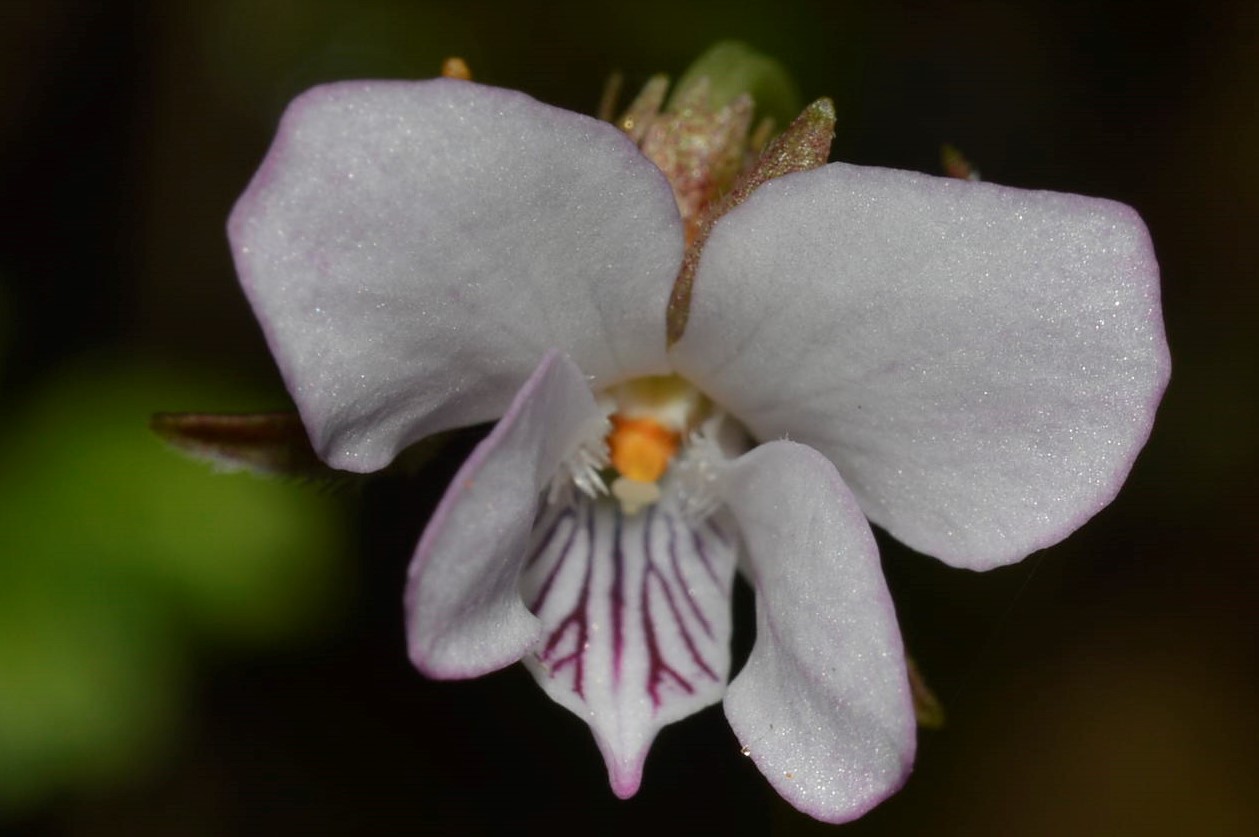
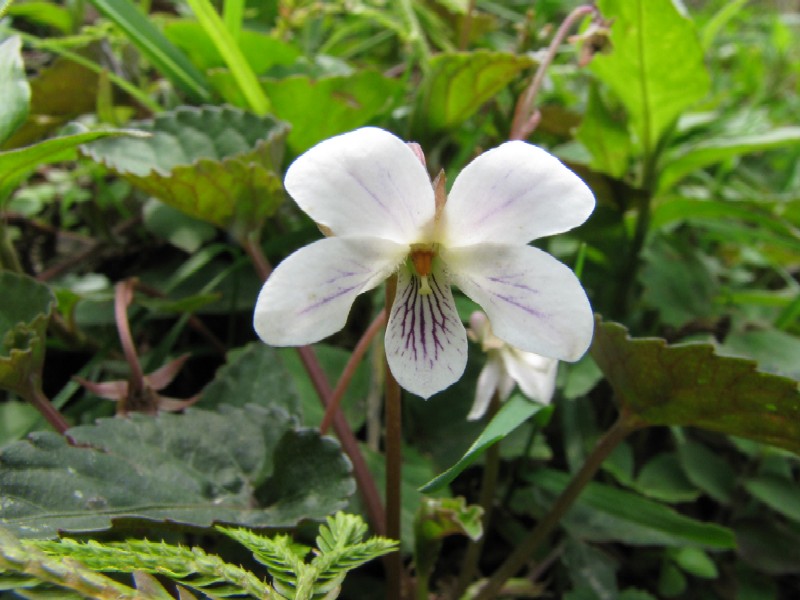
>>>>>>>>>> This is the second species from Dharamshala which is still
>>>>>>>>>> confusing. The flowers can be from pure white to deep mauve and vary
>>>>>>>>>> in
>>>>>>>>>> size from 1.5 to 2.2cm. Most are wider than long.
>>>>>>>>>>
>>>>>>>>>> The petals are of different shapes and sizes. The two uppermost
>>>>>>>>>> are the broadest at ca. 7mm, the laterals are roughly 5mm wide (both
>>>>>>>>>> about
>>>>>>>>>> 13mm long). The lowest petal (or the uppermost if you consider
>>>>>>>>>> resupination, but for clarity I am using the lowest) is the
>>>>>>>>>> narrowest at
>>>>>>>>>> 4mm and excluding the spur about 10mm long. The spur is cylindrical,
>>>>>>>>>> white,
>>>>>>>>>> and can be hooked or not and is 3mm long.
>>>>>>>>>>
>>>>>>>>>> The leaves are slightly paler underneath, hairy on both surfaces
>>>>>>>>>> with scattered white hairs. The petiole is hairy and the stipules are
>>>>>>>>>> laciniate (with long hair-like projections on both long edges).
>>>>>>>>>>
>>>>>>>>>> The pedicel projects beyond the leaves mostly and is covered on
>>>>>>>>>> white hairs too. Sepals are lanceolate, equal and have hairy margins.
>>>>>>>>>>
>>>>>>>>>> The anthers are pale yellow, two with nectaries projecting into
>>>>>>>>>> the spur. The nectaries are yellow-green, hairy and about 2mm long.
>>>>>>>>>>
>>>>>>>>>> The ovary is hairy at the top. The stigma appears truncated at
>>>>>>>>>> lower magnification but up-close reveals a crater like perforation
>>>>>>>>>> at the
>>>>>>>>>> top of the club-shaped style.
>>>>>>>>>>
>>>>>>>>>> The seeds are yellow with dark purple warts on their surface.
>>>>>>>>>> Elaiosomes are prominent.
>>>>>>>>>>
>>>>>>>>>> Depending on how we interpret this data, we could either believe
>>>>>>>>>> this to be *Viola pilosa* or *Viola canescens*. All comments are
>>>>>>>>>> welcome.
>>>>>>>>>>
>>>>>>>>>> Thanks.
>>>>>>>>>> Ashwini
>>>>>>>>>>
>>>>>>>>>> All photos taken between 1750 and 2200m in Dharamshala, Himachal
>>>>>>>>>> Pradesh. the flowering season is usually late February to June. A few
>>>>>>>>>> plants can be found well into autumn too.
>>>>>>>>>>
>>>>>>>>>>
>>>>>>>>>>
>>>>>>>>>>
>>>>>>>>>>
>>>>>>>>
>>>>>>>> --
>>>>>>>> With regards,
>>>>>>>> J.M.Garg
>>>>>>>> 'Creating awareness of Indian Flora & Fauna'
>>>>>>>> <http://en.wikipedia.org/wiki/User:Jmgarg1>
>>>>>>>> Winner of Wipro-NFS Sparrow Awards 2014 for efloraofindia
>>>>>>>> <https://sites.google.com/site/efloraofindia/award-for-efloraofindia>
>>>>>>>> .
>>>>>>>> For identification, learning, discussion & documentation of Indian
>>>>>>>> Flora, please visit/ join our Efloraofindia Google e-group
>>>>>>>> <https://groups.google.com/forum/#!forum/indiantreepix> (largest
>>>>>>>> in the world- more than 3,000 members & 3,00,000 messages on 23.8.18)
>>>>>>>> or
>>>>>>>>  Efloraofindia website
>>>>>>>> <https://sites.google.com/site/efloraofindia/> (with a species
>>>>>>>> database of more than 13,000 species & 3,00,000 images of which more
>>>>>>>> than
>>>>>>>> 2,50,000 images are directly displayed on 31.1.20).
>>>>>>>> The whole world uses my Image Resource
>>>>>>>> <http://commons.wikimedia.org/wiki/Category:J.M.Garg> of more than
>>>>>>>> a thousand species & eight thousand images of Birds, Butterflies,
>>>>>>>> Plants
>>>>>>>> etc. (arranged alphabetically & place-wise). You can also use them for
>>>>>>>> free
>>>>>>>> as per Creative Commons license attached with each image.
>>>>>>>> Also author of 'A Photoguide to the Birds of Kolkata & Common Birds
>>>>>>>> of India'.
>>>>>>>>
>>>>>>>
>>>>>>>
>>>>>>> --
>>>>>>> With regards,
>>>>>>> J.M.Garg
>>>>>>> 'Creating awareness of Indian Flora & Fauna'
>>>>>>> <http://en.wikipedia.org/wiki/User:Jmgarg1>
>>>>>>> Winner of Wipro-NFS Sparrow Awards 2014 for efloraofindia
>>>>>>> <https://sites.google.com/site/efloraofindia/award-for-efloraofindia>
>>>>>>> .
>>>>>>> For identification, learning, discussion & documentation of Indian
>>>>>>> Flora, please visit/ join our Efloraofindia Google e-group
>>>>>>> <https://groups.google.com/forum/#!forum/indiantreepix> (largest in
>>>>>>> the world- more than 3,000 members & 3,00,000 messages on 23.8.18) or
>>>>>>>  Efloraofindia website
>>>>>>> <https://sites.google.com/site/efloraofindia/> (with a species
>>>>>>> database of more than 13,000 species & 3,00,000 images of which more
>>>>>>> than
>>>>>>> 2,50,000 images are directly displayed on 31.1.20).
>>>>>>> The whole world uses my Image Resource
>>>>>>> <http://commons.wikimedia.org/wiki/Category:J.M.Garg> of more than
>>>>>>> a thousand species & eight thousand images of Birds, Butterflies, Plants
>>>>>>> etc. (arranged alphabetically & place-wise). You can also use them for
>>>>>>> free
>>>>>>> as per Creative Commons license attached with each image.
>>>>>>> Also author of 'A Photoguide to the Birds of Kolkata & Common Birds
>>>>>>> of India'.
>>>>>>>
>>>>>>
>>>>>>
>>>>>
>>>>> --
>>>>> With regards,
>>>>> J.M.Garg
>>>>> 'Creating awareness of Indian Flora & Fauna'
>>>>> <http://en.wikipedia.org/wiki/User:Jmgarg1>
>>>>> Winner of Wipro-NFS Sparrow Awards 2014 for efloraofindia
>>>>> <https://sites.google.com/site/efloraofindia/award-for-efloraofindia>
>>>>> .
>>>>> For identification, learning, discussion & documentation of Indian
>>>>> Flora, please visit/ join our Efloraofindia Google e-group
>>>>> <https://groups.google.com/forum/#!forum/indiantreepix> (largest in
>>>>> the world- more than 3,000 members & 3,00,000 messages on 23.8.18) or
>>>>> Efloraofindia
>>>>> website <https://sites.google.com/site/efloraofindia/> (with a
>>>>> species database of more than 13,000 species & 3,00,000 images of which
>>>>> more than 2,50,000 images are directly displayed on 31.1.20).
>>>>> The whole world uses my Image Resource
>>>>> <http://commons.wikimedia.org/wiki/Category:J.M.Garg> of more than a
>>>>> thousand species & eight thousand images of Birds, Butterflies, Plants
>>>>> etc.
>>>>> (arranged alphabetically & place-wise). You can also use them for free as
>>>>> per Creative Commons license attached with each image.
>>>>> Also author of 'A Photoguide to the Birds of Kolkata & Common Birds of
>>>>> India'.
>>>>>
>>>>
>>
>> --
>> With regards,
>> J.M.Garg
>> 'Creating awareness of Indian Flora & Fauna'
>> <http://en.wikipedia.org/wiki/User:Jmgarg1>
>> Winner of Wipro-NFS Sparrow Awards 2014 for efloraofindia
>> <https://sites.google.com/site/efloraofindia/award-for-efloraofindia>.
>> For identification, learning, discussion & documentation of Indian Flora,
>> please visit/ join our Efloraofindia Google e-group
>> <https://groups.google.com/forum/#!forum/indiantreepix> (largest in the
>> world- more than 3,000 members & 3,00,000 messages on 23.8.18) or
>> Efloraofindia
>> website <https://sites.google.com/site/efloraofindia/> (with a species
>> database of more than 13,000 species & 3,00,000 images of which more than
>> 2,50,000 images are directly displayed on 31.1.20).
>> The whole world uses my Image Resource
>> <http://commons.wikimedia.org/wiki/Category:J.M.Garg> of more than a
>> thousand species & eight thousand images of Birds, Butterflies, Plants etc.
>> (arranged alphabetically & place-wise). You can also use them for free as
>> per Creative Commons license attached with each image.
>> Also author of 'A Photoguide to the Birds of Kolkata & Common Birds of
>> India'.
>>
>>
>>
>
> --
> With regards,
> J.M.Garg
>
> 'Creating awareness of Indian Flora & Fauna'
> <http://en.wikipedia.org/wiki/User:Jmgarg1>
>
> Winner of Wipro-NFS Sparrow Awards 2014 for efloraofindia
> <https://sites.google.com/site/efloraofindia/award-for-efloraofindia>.
>
> For identification, learning, discussion & documentation of Indian Flora,
> please visit/ join our Efloraofindia Google e-group
> <https://groups.google.com/forum/#!forum/indiantreepix> (largest in the
> world- more than 3,000 members & 3,00,000 messages on 23.8.18) or
> Efloraofindia
> website <https://sites.google.com/site/efloraofindia/> (with a species
> database of more than 13,000 species & 3,00,000 images of which more than
> 2,50,000 images are directly displayed on 31.1.20).
>
> The whole world uses my Image Resource
> <http://commons.wikimedia.org/wiki/Category:J.M.Garg> of more than a
> thousand species & eight thousand images of Birds, Butterflies, Plants etc.
> (arranged alphabetically & place-wise). You can also use them for free as
> per Creative Commons license attached with each image.
>
> Also author of 'A Photoguide to the Birds of Kolkata & Common Birds of
> India'.
>


--
With regards,
J.M.Garg

'Creating awareness of Indian Flora & Fauna'
<http://en.wikipedia.org/wiki/User:Jmgarg1>

Winner of Wipro-NFS Sparrow Awards 2014 for efloraofindia
<https://sites.google.com/site/efloraofindia/award-for-efloraofindia>.

For identification, learning, discussion & documentation of Indian Flora,
please visit/ join our Efloraofindia Google e-group
<https://groups.google.com/forum/#!forum/indiantreepix> (largest in the
world- more than 3,000 members & 3,00,000 messages on 23.8.18) or Efloraofindia
website <https://sites.google.com/site/efloraofindia/> (with a species
database of more than 13,000 species & 3,00,000 images of which more than
2,50,000 images are directly displayed on 31.1.20).

The whole world uses my Image Resource
<http://commons.wikimedia.org/wiki/Category:J.M.Garg> of more than a
thousand species & eight thousand images of Birds, Butterflies, Plants etc.
(arranged alphabetically & place-wise). You can also use them for free as
per Creative Commons license attached with each image.

Also author of 'A Photoguide to the Birds of Kolkata & Common Birds of
India'.

--
You received this message because you are subscribed to the Google Groups
"efloraofindia" group.
To unsubscribe from this group and stop receiving emails from it, send an email
to [email protected].
To view this discussion on the web, visit
https://groups.google.com/d/msgid/indiantreepix/CA%2BiuSFBq4Qf_9cUo4FM%3Dpjw6qgi_hTL0-2xTKKAH%2BeGusi1QLA%40mail.gmail.com.