2011/9/1 Horace Heffner <[email protected]>:
> If you want to see wet steam as I have described it, as generated by the
> peroclator effect
Your description is wrong, because percolator effect does not produce
wet steam, but hot water and little dry steam (steam quality ca. 98%).
What you are here saying that coffee maker produces ultra wet steam
instead of hot water, what is as a concept silly. Using such a silly
concepts like "wet steam" in context where they do not belong gives
quite clear message that you are not familiar with the field you are
trying to analyze. It is not good sign that you give own definitions
for the physical concepts. (I know this, because I have done this also
some times)

But instead of calling percolator effect, you should calculate what
portion of inlet water is evaporated. It is quite clear that the whole
E-Cat is quite quickly emptied from water due to percolator effect.


> The measurements required for even an amateur level of calorimetry were not
> taken.  The products that went into the hose went down the drain.  This
> leaves us with guesswork at best.
>

That it is untrue. In December demonstration there was measured 100
kPa excess steam pressure. This is more than enough to estimate quite
accurately the total enthalpy. If your data is flawed in many ways,
then you need to be creative and try to reconstruct as much as you
can. As I showed quite clearly, that there are several methods to try
to calculate the total enthalpy. None of them is alone accurate, but
together they may be significant.

This is why it is useless to relay on expert knowledge, because we are
in the situation that no expert knowledge is available, because
situation is unique. In unique situations, we must be creative.

But Horace, why do you constantly ignore the fact that steam
generation in closed container is always generating excess pressure?
And in this case, excess pressure was 100 kPa.

Here are the three creative methods for calculating total enthalpy.
And please do not just ignore them:

–There was 100 kPa overpressure, and from Mats Lewan E-Cat we get one
reference point (there was 32 kPa overpressure). Therfore 6-9kW is
likely explanation for 100 kPa. Steam engineers could also calculate
directly the amount of steam needed for generating 100 kPa excess
pressure.
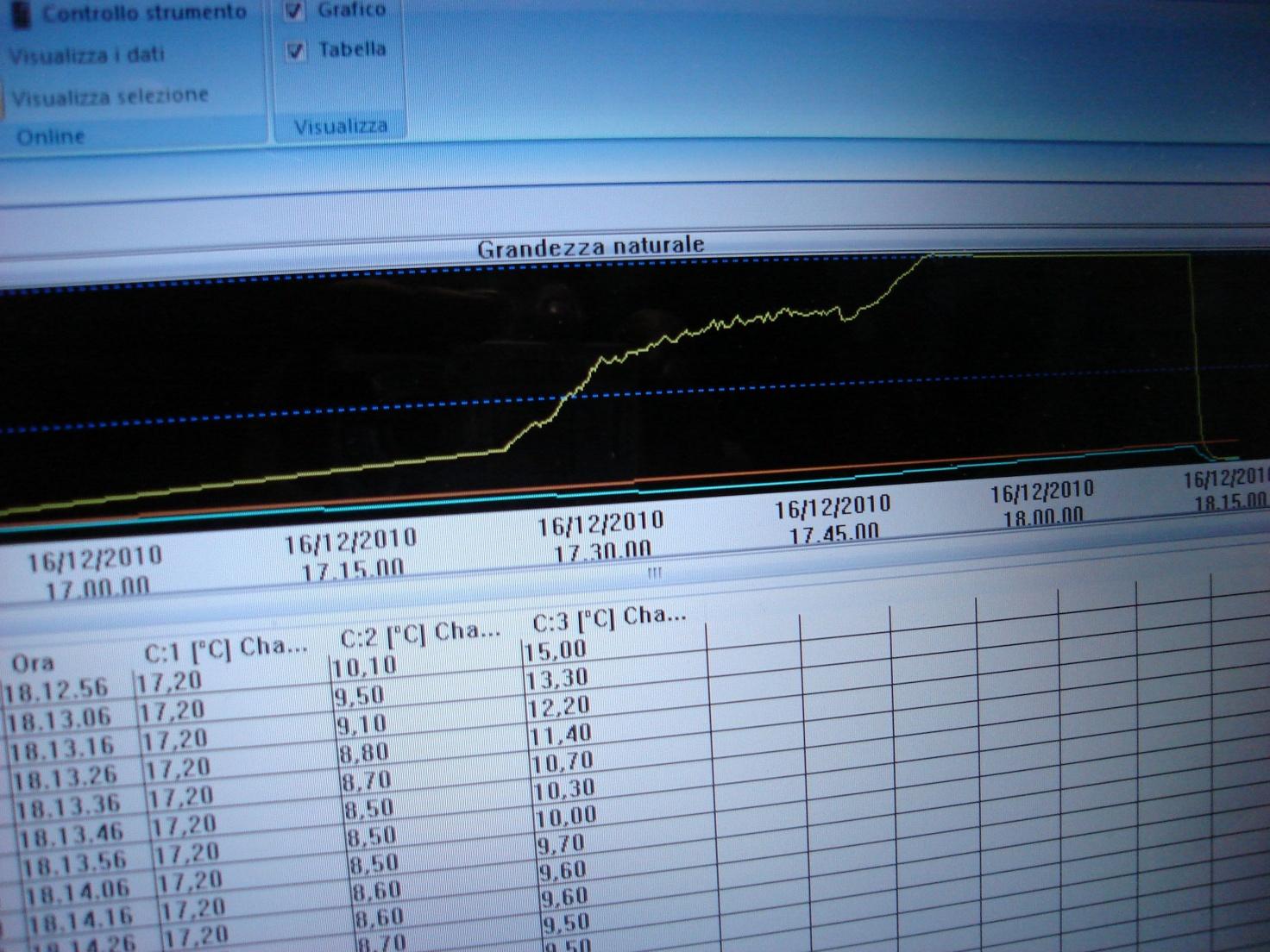
–During the two approximately 6min power surge at 17:30 and 17:50
temperature rose approximately 1.5 times more than during the first 30
minutes when only 1.2 kW electric heater was active. Therefore total
heating power when E-Cat was producing excess heat, was approximately
9kW. (This is most reliable estimation, because it calculates the
enthalpy in sub-boiling temperatures. and data all necessary data is
measured.)
http://2.bp.blogspot.com/_852Sj2_TNC4/TTwDi8cYrtI/AAAAAAAAE1E/TT603dSfpzs/s1600/report3.jpg
–And for third method, the enthalpy can be calculated using an
estimation of total
thermal mass of E-Cat. This is where I got that 6 kW for minimum possible
power output.