Hi Emmor
What i wanted to insist - I believe that we should focus on the main goal of
this wiki page (ie. the role of the road) and describe in other sections the
other keys that describe physical aspects of the roads, the practicability, the
access, etc.
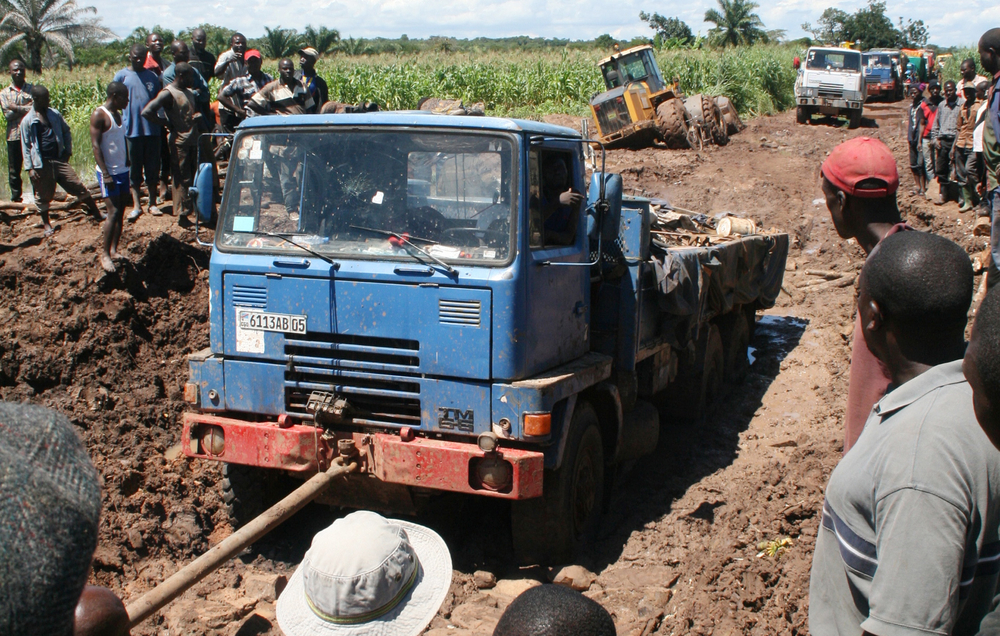
For the North Mali Activation in 2013, we were faced with the problem of dirty
main roads at rainy season with highway=track tag and duplicates where people
make derivations while a section is impassable. There were no infrastructures
and vehicules would move in parallel tracing 1, 2, 3 ... new segments. The
remote contributors from northern countries did not understand this reality and
traced all these segments and classified the main road has highway=track. This
was the spark that brought in discussions on IRC and the HOT discussion list
about writing a specific highway tag wiki page to support better routing
information.
The OSM highway routing information helps the WFP and other organizations to
monitor the distribution programmes across various countries and they
collaborate to document the condition of the road. See this map for Sierra
Leone in 2015.
http://www.logcluster.org/map/sierra-leone-road-practicability-map-october-2015.
 It is now common for the various NGO's to use OSM maps on mobile devices. This
info is also accessible to the population in general.
WFP images, Sierra Leone
http://www.wfp.org/sites/default/files/imagecache/600x400/BigTruck.jpghttp://www.wfp.org/sites/default/files/imagecache/600x400/ireland-select-1.jpg
 Irinnews - Kataga, Democratic republic of
Congohttp://assets.irinnews.org/s3fs-public/styles/responsive_large/public/images/201402181409460470.jpg?_PTwe9KMKsalYC_bySRO7Lyt781s6WWq&itok=HX0sFdy3

Pierre
      De : Vao Matua <[email protected]>
 À : Pierre Béland <[email protected]>
Cc : HOT Openstreetmap <[email protected]>
 Envoyé le : jeudi 3 août 2017 10h34
 Objet : Re: [HOT] Highway Tag Africa wiki

Pierre,
Thank you for your thoughtful email.I also want to thank you for your work over
the years for OSM and HOT, I truly appreciate your efforts.I also want to
apologize if you take offense by my efforts, please know that I am trying to
contribute in a way that improves the way OSM develops and refine resources to
help HOT tasks.A little background on myself; for more than 25 years I have
worked as a geospatial professional and have designed and contributed to many
GIS data construction efforts and have lead projects that transitioned from a
legacy product to a more streamlined design. The frustration and mistakes
associated with inconsistent design cannot be underestimated.If we were to
start the tagging design for OSM today I believe that our collective experience
would give us something different than what we have now.  I realize that this
is not possible and I am trying to help clarify the existing tagging to help
ensure future contributions are consistent as possible.It is unfortunate that
you were not able to be in Kampala for the State of the Map Africa conference.
The discussion highway tagging workshop there was very positive and
constructive, and did not have strong disagreements.Following that discussion
my intent in editing the wiki was an attempt to have the descriptions in a
similar format without a long description.  I also am trying to develop a one
page guide that can be used in a mapathon or carto-party as a tool to help new
mappers. It would be best if the language of the guide and the wiki were the
same.In terms of classification I am very sensitive to the arrogance that
sometimes can be communicated by expatriates regarding infrastructure in a
developing countries. A rough road that would not be considered worth mapping
in Europe could be a vital transportation link for a settlement were the same
construction found in Africa. I have seen many roads tagged as highway=track
when in reality the road should be either unclassified or even tertiary. We
also have the challenge of describing major routes within an urban area. The
words used in US transportation language are "collector" and "arterial" which
imply that traffic is collected from several residential streets and then
joined with other collectors to an arterial route. This is less of an issue
than a rural setting in Africa, but still should be addressed in the wiki.
Again, I appreciate your efforts and hope you understand that I want to
contribute to the OSM in a positive fashion.
Regards,
Emmor

On Wed, Aug 2, 2017 at 2:44 PM, Pierre Béland <[email protected]> wrote:

Hi Emmor
The Highway Tag Africa wiki page is used in Africa and other countries with
similar realities. It has often been discussed since 2013, contributors being
in favor in general to bring in this classification that insist on the role of
roads vs the infrastructure and other aspects. Be assure that we do consider
paths as important elements of mapping. Either in training sessions or for the
various OSM Responses like Congo, Mali, Ebola, Nepal, Haiti, etc. we have
always given instructions to trace paths either in urban areas or between
villages and hamlets, mountains in Nepal, etc.
Comparing the wiki page July 9 vs July 22, I see that important segments of
this wiki page have been rewritten. https://wiki.openstreetmap.
org/w/index.php?title=Highway_ Tag_Africa&type=revision&diff=
1493742&oldid=1489377

As the architect of this page in 2013, I believe that the modifications made
add confusion to the economic an social role of each class of highways.  Some
descriptions added to each class about passable (access ?), plus road width and
surface bring back the notion of infrastructure to describe each class. These
additions should be discussed and we have to decide the best place where to
introduce these concepts.
We can group roads in three blocks
1. Major interconnecting roads : highway=tertiary and over, that assure the
intercity traffic or intra-urban collector traffic in major towns
2. Local interconnecting roads : highway=unclassified, interconnection at the
local level, between villages / hamlets . There are also paths that connect
villages.
3. Local roads and paths: higway=residential, track, path
When we make the distinction between roads and paths it is important to
evaluate if a car or a 4x4 can circulate on this way. This is important to
evaluate the population that have access to roadways, to evaluate if any access
is possible by car to offer services or for emergency support.  If information
about motorbike access is important, a tag motorcycle=yes could be added.

If a 4x4 can circulate on a way, we do not specify highway=path. If there are
seasonal restrictions, (ie. at rainy season in Africa or winter in northern
countries), we simply add a restriction to indicate the non-accessibiliy for
this period.
The same with tracks. These are important. But we dont want contributors to
mark all roads as track making the infrastructure aspects overrule the economic
and social role. There are other keys to describe the other aspects.

See my analysis of the modifications comparing wiki page July 9 vs July 22.

The addition below to the wiki page is a bit confusing, not clear what we want
to insist on here

   - Please note that a highway = track is not a more primitive construction
class of a residential road

Road passable, road width and surface : Additions made to the various classes
reduce the clarity.
1. road passable - we talk here of access permitted to piedestrians, motos,
etc. For more clarity and keep the classification easier to understand, I
suggest that this access description should be in a distinct section an not
repeated in each class (ie. primary, secondary, tertiary, etc.)
2. road width - My objective writing this wiki page in 2013 was to insist about
the distinction between the economic / social role of a road vs the
infrastructures and road condition. This insistance on widths is confusing,
bringing in the concept of the state of the road vs it's role. A note to say
this is simply indicative?
3. surface - there are other sections to talk about surface - not necessary to
add in each class.

Highway=secondary, New description is less clearOriginal :

   - The roads connecting with regional capital cities and the towns of some
importance (health services, commerce, etc.).
The new description, the first sentence added is less clear.

   - Major transportation routes connecting cities and large towns. Collector
function in urban areas.

highway=tertiary, New description, the first sentence added is less
clear.Original

   - The roads interconnecting villages and the major streets in towns of some
importance.
The new description added

   - Major transportation routes connecting towns and larger villages.
Collector function in urban areas.

highway=unclassified
This class is used to distinguish rural roads interconnecting villages VS
tracks going to the outskirts of villages. We should clarify that the section
that cross a village, even if housings on each side should still be classified
higway=unclassified.The new definition is ambiguous
   - Minor collector roads that allow travel and commerce from paths and
residential roads to and between settlements. Generally not residential


highway=residential- Previous description was
   - Used for roads in the residential areas except the major streets that
interconnect with various roads (ie. primary, secondary, tertiary). Should not
be used to connect villages and hamlets.

- New description is unclear, adds confusion talking of urban and rural

   -  In urban or rural setting roads which serve as an access to housing,
without function of connecting settlements . Often lined with housing .

highway=track
- Previous description was
   - The small roads going outside the residential areas, mainly for
'''agricultural and forestry''' purposes. Tracks can also be found in National
Parks and Game Reserves. In general these roads do not have connecting function
with other roads, and do not connect villages/hamlets.}}}
- New description, the first sentence is unclear
   - Access route from dwellings to agricultural and forestry areas. Roads
within National Parks and Game Reserves may be tagged as tracks. No connection
function between settlements.


Regard
Pierre


      De : Vao Matua <[email protected]>
 À : Jens Mueller (Historical Research Services) <[email protected]>
Cc : HOT Openstreetmap <[email protected]>
 Envoyé le : Dimanche 30 juillet 2017 11h03
 Objet : Re: [HOT] Highway Tag Africa wiki


Ukundji

Thank you for you comments, yes Ethiopia needs to have an OSM restart.For the
last 10 months I was living in SNNPR and was not able to meet a single OSM
contributor.The infrastructure, unfortunately, makes OSM contributions and even
use very difficult.Ethiopians would be very interested in getting OSMAnd on
their phones, however, it appears to be a restricted app.
In terms of paths to Ethiopian villages it is indeed the case that the primary
or only transportation route to a population may only be by foot or donkey
traffic on a path.I think the perception that a path is not important is quite
common and is not true.  Important or significant paths need to be mapped for
commerce, food safety, and potential relief efforts, not only in Ethiopia but
in other parts of Africa and places throughout the world.
The discussion about importance doesn't seem to have moved forward but could
have some value.
At SOTM Africa earlier this month there was quite a bit of discussion on
highway tags, including paths. Based on that discussion I have updated the
Africa Highway Tagging guide to help clarify that a road has not only a
construction class as well as an economic or social function.
Regards
Emmor(Palolo)
_______________________________________________
HOT mailing list
[email protected]
https://lists.openstreetmap.org/listinfo/hot