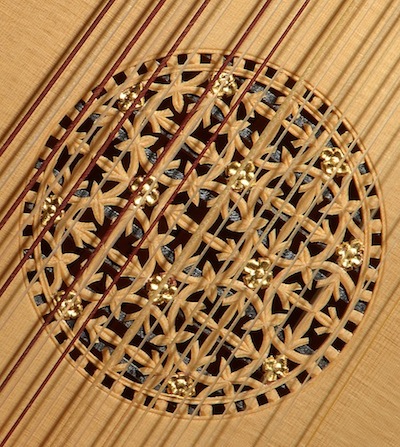
I'm sorry Martyn, the thread is very long. Just mention the book, image, quote,
etc.
On 29/11/2012, at 8:37 PM, Martyn Hodgson <[email protected]> wrote:

>
> Dear Shaun,
>
> With respect, I think I've already answered this - see below
>
> regards
>
> Martyn
>
> --- On Thu, 29/11/12, Shaun Ng <[email protected]> wrote:
>
> From: Shaun Ng <[email protected]>
> Subject: Re: [LUTE] Re: Lute bass strings - was Re: Are Pistoys prone to rot
> according to Mace?
> To: "Martyn Hodgson" <[email protected]>
> Cc: "Lute Dmth" <[email protected]>
> Date: Thursday, 29 November, 2012, 9:34
>
> Dear Martyn,
>
> Yes, I am aware of these things. The evidence for loading on strings is? Or
> has the lute world already made a collective decision not to ask this
> question anymore?
>
> Shaun
>
> On 29/11/2012, at 7:30 PM, Martyn Hodgson <[email protected]> wrote:
>
> >
> >   Dear Shaun,
> >
> >   You ask: 'But then what is the explanation for thin bass strings on
> >   lutes? For loaded strings, what is the evidence that one would expect
> >   to find?'
> >
> >   The explanation for thin bass strings on at least some lutes (I presume
> >   you're referring to measurements of bidge hole diametrs) is either very
> >   low (elastic band) tensions or denser strings. The latter achieved by
> >   loading or wire winding - the weight of evidence suggesting that before
> >   1660 (and, in my view, after too - did wound strings ever become common
> >   for the Dm lute?) the denser string was achieved by loading.
> >
> >   But we've all been here before..................
> >
> >   regards
> >
> >   Martyn
> >
> >     From: Shaun Ng <[email protected]>
> >     Subject: Re: [LUTE] Lute bass strings - was Re: Are Pistoys prone to
> >     rot according to Mace?
> >     To: "Martyn Hodgson" <[email protected]>
> >     Cc: "Lute Dmth" <[email protected]>
> >     Date: Wednesday, 28 November, 2012, 19:43
> >
> >   Dear Martyn,
> >   Thanks for these sources. I don't think they were making it up, but I
> >   do find the Playford source questionable, being an advertisement. I
> >   know this sounds nitpicky, but all it says is 'silver wire' on string
> >   is the new invention. It doesn't say what came before. Kapsberger used
> >   a wire strung theorbo, if I remember rightly, and it predates both
> >   these sources, so that's at least evidence of non gut string use.
> >   But then what is the explanation for thin bass strings on lutes? For
> >   loaded strings, what is the evidence that one would expect to find?
> >   Shaun Ng
> >   On 29/11/2012, at 2:02, Martyn Hodgson <[1][email protected]>
> >   wrote:
> >>
> >>  Dear Shaun,
> >>
> >>  When you write   'The better explanation for seemingly thin,
> >   coloured
> >>  strings on the basses of lutes.......',  what do you mean by
> >>  'better''?: - better in relation to the historical evidence (if so
> >>  precisely what)?; better for modern ears?; better for the cost?;
> >   better
> >>  than currently available coloured /loaded strings?; better than
> >   what?
> >>
> >>  And why would we wish to ignore clear iconographic evidence (eg the
> >>  numerous paintings) and the historical record (eg  wound strings
> >   were
> >>  new in the 1660s:  Hartlib papers 1659 "Goretsky hath an invention
> >   of
> >>  lute strings covered with silver wyer, or strings which make a most
> >>  admirable musick. Mr Boyle. [...] "String of guts done about with
> >>  silver wyer makes a very sweet musick, being of Goretskys
> >   invention")
> >>  and 1664 John Playford: "An Introduction to the Skill of Musik...":
> >>  There is a late invention of strings...... it is a small wire
> >   twisted
> >>  or gimp'd upon a gut string or silk...".   Were they making it up
> >   as
> >>  being a new invention?
> >>
> >>  MH
> >>
> >>  --- On Wed, 28/11/12, Shaun Ng <[2][email protected]> wrote:
> >>
> >>    From: Shaun Ng <[3][email protected]>
> >>    Subject: [LUTE] Re: Are Pistoys prone to rot according to Mace?
> >>    To: "<[4][email protected]>" <[5][email protected]>
> >>    Cc: "<[6][email protected]>" <[7][email protected]>
> >>    Date: Wednesday, 28 November, 2012, 0:45
> >>
> >>  Just a short comment: I recently did some research on historical
> >>  stringing and in regards to pistoy loaded strings, there is no
> >>  evidence. The better explanation for seemingly thin, coloured
> >   strings
> >>  on the basses of lutes is wound strings. At least we know such a
> >>  technology existed, even though their mention mostly comes a bit
> >   too
> >>  late when we compare paintings of the time, which is not a good way
> >   to
> >>  get credible information about musical instruments anyway.
> >>  Shaun Ng
> >>  0426240 775 | [1][8][email protected] | shaunng.blogspot.com
> >>  On 28/11/2012, at 5:35, <[2][9][email protected]> wrote:
> >>> Dear Anthony,
> >>>
> >>> Once more my apologies for such a hiatus in writing. As I said
> >>  before, the
> >>> change of internet provider caused a lot of connection problems, and
> >>  then
> >>> traveling (a concert tour) didn't give me a chance to write longer
> >>  messages.
> >>> I'll try to catch up now, so please excuse me if I write too long.
> >>> You touched a couple of related topics in your last email, so I will
> >>  try to
> >>> address them separately.
> >>>
> >>> ROTTEN GUT
> >>>
> >>> Obviously the word "rotten" can have at least 2 meanings, however I
> >>  am
> >>> afraid in this case Mace very clearly writes about decay of gut
> >>  strings.
> >>> Just one example:
> >>>
> >>> "for that colour is a general sign of rottenness, or of the DECAY of
> >>  the
> >>> string"
> >>>
> >>> The word "decay" reappears several times in the technical part of
> >>  Music's
> >>> Monument, always in conjunction with the word "rottenness". This
> >>  can't be
> >>> coincidental.
> >>> Now, one can consider why it is so difficult for us to accept that
> >>  decay
> >>> process of a gut string could be real. I can see two reasons,
> >   namely:
> >>  1/
> >>> none of us saw a rotting gut  2/ Mace is viewed as a very eccentric
> >>  man
> >>> thence unreliable source of historical information.
> >>> I would like to challenge both of these notions.
> >>>
> >>> 1/ Is this possible for a gut to decay? Gut is an organic substance
> >>  so if
> >>> unprotected it would start to decay very fast. Modern gut strings
> >   are
> >>  very
> >>> well chemically protected against such a possibility. In Mace times
> >>  gut was
> >>> treated with Griepoli i.e. tartar and a small quantity of Roch Allum
> >>  (as
> >>> Philip Skippon an English traveller who visited an Italian string
> >>> manufacture testifies in 1663). In general gut absorbs humidity very
> >>  easily
> >>> during which process it swells putting on some weight and volume.
> >   The
> >>  porous
> >>> structure of gut and the way strands are assembled into a string
> >>  makes it
> >>> even more susceptible to decay. Now, if we try to recreate
> >   conditions
> >>  that
> >>> people were used to live in an average English household in 17c.
> >>  (maybe
> >>> excluding aristocracy), and Mace was not a wealthy man, it is not
> >>  difficult
> >>> to imagine that walls of such a building that had never seen a
> >>  central
> >>> heating system would be prone to keep constant humidity inside. In
> >>  that
> >>> light Mace's advice to keep a lute in the room with fireplace and
> >>  even his
> >>> amusing remark to wrap it in blankets seems to be quite practical.
> >   We
> >>  don't
> >>> know what was the climate in 17c., but we can easily assume that in
> >>  England
> >>> it would be definitely humid. Mace's remarks seem to confirm this:
> >>  "for the
> >>> bed will dry up all the moisture and clamminess, which moist weather
> >>> constantly ocassions to any thing made of wood etc." I can only try
> >>  to
> >>> imagine that clammy furniture and other wooden things. Therefore
> >   Mace
> >>  says
> >>> that old lutes are better than new because: "if this
> >>> thick-strong-lusty-sturdy-oak will (in 100 years) decay, by such
> >>  usage; how
> >>> much more easily then, must a lute (made of gentle wood, and so very
> >>  thin)
> >>> with such like ill usage decay? Yet we see, that many lutes there
> >   are
> >>  of a
> >>> great age and I myself have at this present a lute made of ayre,
> >   that
> >>  is
> >>> above 100 years old, a very strong lute..." To complement this
> >>  picture one
> >>> has to add the level of hygiene and knowledge of elementary
> >>  microbiological
> >>> processes during that time. We don't even know under what conditions
> >>  strings
> >>> were transported and stored before selling by merchants.
> >>> I am not surprised Mace writes a lot about rotting strings and even
> >>  whole
> >>> instruments.
> >>>
> >>> COLOURED STRINGS
> >>>
> >>> Since I began to play lutes which was many years ago, the passage
> >>  from
> >>> chapter VI p.65-66, was always interpreted one way, suggesting that
> >>  the red
> >>> colour of Pistoys is something different than gut colours described
> >>  further
> >>> under a heading of "coloured strings". I don't know who was the
> >>  initial
> >>> source of this information, but it must have been suggested very
> >   long
> >>  time
> >>> ago. Unfortunately, as usual in such cases, people repeat ideas
> >>  without
> >>> considering another possibilities.
> >>>
> >>> Mace writes: "There are several sorts of coloured strings, very
> >   good;
> >>  But
> >>> the best (to my observation) was always the clear blue; the red,
> >>  commonly
> >>> rotten, sometimes green very good."
> >>>
> >>> Lets presume that as you suggest he is talking only about some
> >   shades
> >>  of
> >>> clear gut strings. Now, I have to ask this question - have you ever
> >>  seen a
> >>> clear gut string which would have a blue, green or red shade ? Hm, I
> >>  haven't,
> >>> and I am afraid this is not the same type of question as - have you
> >>  ever
> >>> seen decaying gut string. Why? Because decay of a gut is possible
> >   and
> >>  it's
> >>> only a matter of some conditions that could trigger this process,
> >>  whereas
> >>> such a palette of colours understood as a raw gut shading (without
> >>  any
> >>> additional procedure like dyeing) is very unlikely, because we use
> >>  very
> >>> similar if not identical processes to make HT or LT gut strings. I
> >>  have seen
> >>> only gut strings that were either clear, yellowish or whitish.
> >>  Besides the
> >>> heading of this paragraph would be something like "Minikins" if Mace
> >>  had
> >>> thought of clear trebles. On the other hand the process of dyeing
> >>  strings in
> >>> 17-18c. seams to be proved at least for harps. If for harps, why not
> >>  for
> >>> lutes? Mace clearly writes that bass strings were: "commonly dyed,
> >>  with a
> >>> deep dark red colour". If basses were coloured then other strings
> >>  could be
> >>> dyed too, as some iconography confirms like Van der Bilcius's
> >>  painting.
> >>> Strings could have been dyed for several reasons: 1/ some
> >>  manufactures could
> >>> want to stand out from a competition 2/ for ease of playing (finding
> >>  a
> >>> proper string with a finger) especially for beginners (amateurs) 3/
> >>  for
> >>> aesthetic reasons etc.
> >>> I don't know why dyed strings for lutes are so rare nowadays. As far
> >>  as I
> >>> know Dan sells some red gut strings, but no other colours (anyone
> >>  ells?).
> >>> Why aren't they more popular? They would sell easily IMO. Maybe
> >>  that's an
> >>> idea for some string manufactures?
> >>>
> >>> PISTOYS
> >>>
> >>> "There is another sort of strings, which they call Pistoy basses,
> >>  which I
> >>> conceive are none other than thick Venice-Catlines, which are
> >>  commonly dyed,
> >>> with a deep dark red colour. They are indeed the very best for the
> >>  basses,
> >>> being smooth and well-twisted strings, but are hard to come by;" MM
> >>  p.66
> >>>
> >>> This passage is often quoted in the context of loaded strings. Mace
> >>  calls
> >>> this another sort of strings Pistoy basses and suggests that they
> >   are
> >>  (and
> >>> this part draws my attention) "none other than thick
> >>  Venice-Catlines". Why
> >>> "none other than"? Maybe because they were imported and people
> >   didn't
> >>  know
> >>> how they were produced so they speculated about it. However for Mace
> >>  they
> >>> looked and worked exactly like thick Venice-Catlines. Normaly
> >>> Venice-Catlines were manufactured in Bologna, but then transported
> >   to
> >>  Venice
> >>> (that's why the name Venice). The "Catline" part of the name comes
> >>  from
> >>> naval terminology. Catline on a ship was a very elastic rope used to
> >>  lash an
> >>> anchor to a "cathead" which was a special beam. The rope had to be
> >>  extremely
> >>> flexible. Therefore they were twisted from several ropes in opposite
> >>> directions. Very similar construction was later used for production
> >>  of
> >>> middle register lute strings. Not much was written about their use
> >>  for
> >>> basses though, however Mace's statement could correspond well with
> >>  George
> >>> Stoppani's idea of rope strings. Ephraim Segerman suggested once
> >   that
> >>  to
> >>> make a proper Venice-Catline bass string one would have to use a
> >>  special
> >>> Catline twisting process. Only this could produce an extremely
> >>  elastic
> >>> Catline rope-like string. Normally I use Venice-Catlines for middle
> >>> register, but haven't tried Stoppani's or Gamut's Pistoys for basses
> >>  yet.
> >>> However  some reports are very promising.
> >>> How about a deep dark red colour? Mace claims they were commonly
> >>  dyed. He
> >>> hadn't noticed anything unusual about them like rare thickness,
> >>> construction, weight etc.
> >>> Then, how about loading?
> >>>
> >>> LOADED STRINGS
> >>>
> >>> Nothing can be excluded just by reading MM, but there are no traces
> >>  that
> >>> could point to loading in Mace's text. Personally I don't think the
> >>  sentence
> >>> about Pistoys can be used as an argument in favour of loaded gut
> >>  theory.
> >>> Pistoy (thick Venice-Catline) roped string is good enough to cope
> >>  with a
> >>> problem of dull sounding basses, and loading is not necessary in
> >   this
> >>  case.
> >>> It could however have been loaded during light saturation process
> >>  which was
> >>> to protect against decay, but this is only a guess as Mace says
> >>  nothing
> >>> about it. The historical evidence on string manufacturing doesn't
> >>  help
> >>> either.
> >>> There is a very detailed description of gut string manufacturing in
> >>  18c.
> >>> France in "Encyclopedie ou dictionnaire raisonne de sciences, des
> >>  arts et
> >>> des metiers" by Denis Diderot and Jean le Rond D'Alembert from
> >>  1751-65,
> >>> under an entry of Boyaudier or Corde. It describes even
> >   over-spinning
> >>  of gut
> >>> with a wire. All stages from a raw material to a ready string are
> >>  covered
> >>> including such details as clothes used by workers during production
> >>  and  all
> >>> needed accessories. Unfortunately there is no mention of a "loading"
> >>  stage.
> >>> It would be quite difficult to keep away such a messy business as
> >>  loading
> >>> from an inquisitive eye of Diderot. It is possible that after 1750
> >>  loaded
> >>> strings were already out of use as overwound basses were
> >   manufactured
> >>  as he
> >>> describes their production in detail. However he also  says that the
> >>  best
> >>> strings come from Rome, and later that Italians have their secrets,
> >>  which
> >>> they do not communicate to strangers. On the other hand neither
> >>  Barbieri's
> >>> (as you rightly pointed out) nor Philip Skippon's description of gut
> >>> production in Italy confirms this. This could indicate that in Italy
> >>  it
> >>> would be rather a speciality treatment kept in secret but not a
> >>  common
> >>> procedure.
> >>> All in all, coming back to my question concerning a connection
> >>  between red
> >>> colour of strings Mace described, loading and decay, I'd say that
> >   the
> >>> strings he described weren't loaded, or if they were it was rather
> >>> non-invasive process which didn't change the string properties in a
> >>  way it
> >>> would be visible to an eye (like unusual diameter). At least Mace
> >>  haven't
> >>> noticed it. One could say that he didn't mention it because it was
> >>  obvious
> >>> that all basses would be loaded. This is exactly the point were my
> >>  question
> >>> originated from. If bridge holes on his lute were so tiny that he
> >>  could use
> >>> only heavily loaded bass strings, then how was it possible that he
> >>  used
> >>> Lyons which were ordinary thick gut strings often rotten (according
> >>  to Mace
> >>> , not loaded) interchangeably with Pistoys (which are suggested to
> >   be
> >>> loaded) ? Moreover Diderot's description coincide with Lady Susi
> >>  Jeans's in
> >>> "Manufacture of strings in England". Again, no sign of loading. I am
> >>  not
> >>> trying to say that the loaded gut theory can't be true. On the
> >>  contrary,
> >>> modern loaded gut strings are good alternative for basses in case of
> >>> stringing some 17c. lutes, no matter how they will prove to be
> >>  historical in
> >>> future. We discuss only Mace's remarks, and these are only some of
> >   my
> >>> impressions after reading chapter VI of MM once more.
> >>>
> >>> ECCENTRIC MACE
> >>>
> >>> This a very difficult subject. There is a little bit of psychology
> >>  and
> >>> philosophy in it ,so probably someone that is a professional could
> >>  say much
> >>> more (and better) than me, but I have a feeling that it's very
> >>  relative.
> >>> Reading a book such as  Music's Monument is like time-traveling. You
> >>  go back
> >>> in time, and the same time you enter absolutely unknown reality. You
> >>  try to
> >>> project your experiences into the past, but unfortunately it doesn't
> >>  work.
> >>> Well, you may think it does, but it doesn't.
> >>> Eccentricity is usually measured by a comparison to the general
> >>  public's
> >>> standards. If you compared Mace to our modern society he would be
> >>  terribly
> >>> eccentric. We are used to reading of old texts, and in spite they
> >>  feel very
> >>> old-fashioned there is some level of universalism that one can
> >   relate
> >>  to. In
> >>> most books from that time there are things that a modern reader
> >   would
> >>  most
> >>> probably skip. When Burwell writes on many pages about Angels, the
> >>  most
> >>> usual reaction would be that she is a little bit potty in this
> >>  matter, but
> >>> in general it's easier to accept some unusual believes as most
> >   people
> >>  know
> >>> something about basic concepts of spiritual life in old ages.
> >   However
> >>  Music's
> >>> Monument is more unique as it is more personal. It shows Mace's most
> >>> personal views and ideas. One of the reasons for that is that
> >   Music's
> >>> Monument wasn't written just for one rich sponsor (which would be a
> >>  normal
> >>> way to go) like a king/queen, prince/princesse etc. He wrote it
> >>  encouraged
> >>> by some of his pupils, and printed using his own means and those
> >>  collected
> >>> from subscribers, however he says: "It cannot well be afforded at
> >>  that price
> >>> (12s.), to return me any tollerable, or reasonable requital."
> >>> On the subscription list there are around 300 names among which
> >   there
> >>  are
> >>> only 2 barons, 4 baronets, 2 bishops, 4 knights - the rest being
> >>  scholars,
> >>> clergyman and ordinary gentleman. Not writing for a court he took a
> >>> different attitude: "But if I had only to have spoke to those of
> >>  experience
> >>> and to show the elegancy of my tongue, I should have contriv'd my
> >>  discourse
> >>> into another shape; But in that I intend it chiefly for learners, I
> >>  conceive
> >>> I have not spoke much too much." If he was to write for a king he
> >>  would be
> >>> afraid of saying much too much, and eccentricity of his book would
> >   be
> >>> comparable to some French tutors written for a court.
> >>>
> >>> Therefore, when reading Music's Monument one has to remember that if
> >>  we were
> >>> allowed to spend just an hour in the reality people in 17c. lived
> >   in,
> >>  we
> >>> would be extremely surprised by some standards they were used to. It
> >>  is in
> >>> fact like traveling to another planet, and we can not do justice to
> >>  this
> >>> kind of sources without making some necessary adjustments.
> >>>
> >>> It was a pleasure to talk to you again Anthony.
> >>>
> >>> Best regards
> >>>
> >>> Jaroslaw
> >>>
> >>>
> >>>
> >>> ----- Original Message ----- From: "Anthony Hind"
> >>  <[3][10][email protected]>
> >>> To: "JarosAA'aw Lipski" <[4][11][email protected]>
> >>> Cc: <[5][12][email protected]>
> >>> Sent: Saturday, October 20, 2012 1:19 PM
> >>> Subject: [LUTE] Are Pistoys prone to rot according to Mace?
> >>>
> >>>
> >>>> Dear Jaroslaw
> >>>> A' A' A' A' As promised, back now in Paris, I will try to
> >>>> respond, with a few new thoughts on Mace's string remarks, along
> >>  with
> >>>> the old, as when we talked last at
> >>>> [6][13]http://tinyurl.com/cugfph2
> >>>> MaceA-c-s remarks can be found at
> >>>> [7][14]http://www.luteshop.co.uk/stringsmace.htm
> >>>> But the CNRS facsimile is such a bargain, every lutenist should
> >>  surely have
> >>>> one; unless, like a lute maker I know, you are lucky enough to be
> >>  given
> >>>> an original edition for your birthday ...
> >>>> %
> >>>> First, I must say that my previous message, about loaded strings
> >>  being fairly
> >>>> immune to humidity, only concerned modern loaded strings, which are
> >>>> coated with copper in a sort of glue. If historic "deep dark red"
> >>>> Pistoys had been loaded through saturation, with say a solution of
> >>  red
> >>>> mercury oxide (akin to a dyeing procin to a dyeing process), I
> >>  donA-c-t know if they would
> >>>> have been quite so immune to water absorption. But probably oxide
> >>>> loading (rather like salting hams) might have prevented them
> >>  rotting, or
> >>>> at leastA' slowed the process down (are there any chemists among
> >   you
> >>  who
> >>>> could say if this is likely?).
> >>>> %
> >>>> I will reply to your messages, but breaking up my responses to
> >>  lighten the load:
> >>>> I) Why MaceA-c-s Pistoy Basses dyed Deep dark red are quite
> >>  different from
> >>>> his omnipurpose plain red coloured strings, and are not therefore
> >>>> particularly prone to rotting according to Mace.
> >>>> II) How reliable, and not just excentric, is Mace, a few arguments
> >>  in his favour?
> >>>> A) Meanes used for octaves? B) Why were the Lyons Burwell thought
> >   so
> >>  good,
> >>>> now so bad, according to Mace? (some data on out sourcing from
> >>>> Barbieri)
> >>>> %
> >>>> I) Are Pistoys prone to rot according to Mace?
> >>>> In relation to the rotting tendency of red strings, you ask me,
> >>>> A' A' A' A' A' A' A' A' A' A' A' A' A' A' "how will you explain a
> >>  quote from Mace p.66:
> >>>>> A' A' "I have sometimes seen strings of a yellowish color very
> >>  good; yet but
> >>>>> A' A' seldom; for that color is a general sign of rottenness, or
> >   of
> >>  the decay
> >>>>> A' A' of the string. There are several sorts of colored strings,
> >>  very good;
> >>>>> A' A' but the best was always the clear blue; the red commonly
> >>  rotten."
> >>>>> A' A' As far as I understand red color is a most popular color of
> >>  loaded
> >>>>> A' A' string. If this is so, how then they could be commonly
> >>  rotten?" Jaroslaw
> >>>> Perhaps the "underlying" question, here (please tell me if I am
> >>  wrong), is
> >>>> whether, when Mace describes Red coloured strings as "commonly
> >>  rotten"
> >>>> (your quote above), he is including in this description, all red
> >>  strings
> >>>> without exception (dyed or coloured), even those from Pistoy, which
> >>  are
> >>>> dyedA' "deep dark red". In other words, is he saying Pistoys are
> >>>> commonly rotten? and if so, would this rule them out as being
> >   loaded
> >>>> strings?
> >>>> %
> >>>> Here, is my reasoning: Mace had a very strong preoccupation with
> >>  rotten gut,
> >>>> clearly from personal experience (althoughxperience (although I
> >   have
> >>  never encountered this
> >>>> problem), and he therefore gives detailed advice on how to store
> >>>> strings to make sure they don't "take any wet, or moist air."
> >>  Further,
> >>>> whenever he mentions a string liable to rot, he immediately states
> >>  this
> >>>> within the next few sentences, as in all these cases :
> >>>> "There is a small sort of lyons, which many use for the Octaves.
> >   But
> >>  I care
> >>>> not for them, they being constantly rotten, and good for little,
> >   but
> >>  to
> >>>> make frets of."
> >>>> (...)
> >>>> "I have sometimes seen strings of a yellowish colour, very good;
> >>  yet, but
> >>>> seldom; for that colour is a general sign of rottenness, or of the
> >>  decay
> >>>> of the string."
> >>>> (...)
> >>>> "There are several sorts of coloured strings, very good; But the
> >>  best (to my
> >>>> observation) was always the clear Blue; the Red, commonly rotten,
> >>>> sometimes green, very good."
> >>>> %
> >>>> It would therefore be very surprising if he had not done the same
> >>  for
> >>>> Pistoy Basses, if he had really thought they were often rotten,
> >>>> especially as they were rare. Why allow a student to waste time
> >>>> searching them out, if they are both rare, and often rottenA' ? But
> >>  he
> >>>> only speaks of their excellent quality (next to the heading, "And
> >>  what
> >>>> sort of strings are best?"), and clearly contrasts them with the
> >>>> inferior Lyons, "They are indeed the very best, for the basses,
> >>  being
> >>>> smooth and well twisted strings, but are hard to come by; however
> >>  out of
> >>>> a good parcel of Lyons strings, you may (with care) pick those
> >   which
> >>>> serve very well." Wouldn't he have immediately (within the next few
> >>>> sentences) warned the reader about this danger, if there had been
> >>  any;
> >>>> but follows a number of paragraphs, in which he explains "How to
> >>  chuse
> >>>> your strings", giving rules for choosingA' Minikins, Venice
> >   Catlins,
> >>  and
> >>>> Lyons, but not for Pistoys, presumably either because they are too
> >>  rare,
> >>>> or because they are always good, in which case just the "deep dark
> >>>> red", is sign enough to vouch for this stringA-c-s quality. During
> >>  these
> >>>> explanations, he again insists that Lyons basses are inferior ey
> >   are
> >>  much more inferior strings than the other", but he does
> >>>> not extend this criticism to Pistoys, which seem therefore to be
> >>>> unparalleled in quality (indeed "the other" may actually be
> >>  referring
> >>>> back to "Pistoys", the other type of bass string).
> >>>> %
> >>>> Finally, under the completely new heading "Coloured strings", he
> >>  talks of
> >>>> yellowish, clear blue, red, and green strings, without giving any
> >>>> indication of their use (while for all strings with a name which at
> >>>> least originally implied a provenance, Minikin, Venices, Lyons, and
> >>>> Pistoys, he took great care to discuss their uses. In this he does
> >>>> exactly the same as Dowland, who mentions the same colours., but
> >>  gives
> >>>> no indication of their use (while he does for other string types)A'
> >>  :
> >>>> "Some strings there are which are coloured, out of which choose the
> >>  lightest
> >>>> colours, viz. among the Greene choose the Sea- water, of Red the
> >>>> Carnation, and of Blew the Watchet." Dowland (VLL, 1610, sig.Dv.)
> >>>> [8][15]http://www.luteshop.co.uk/stringsdowland.htm
> >>>> %
> >>>> I suppose there are three possible interpretations for this,A' : 1)
> >>  the
> >>>> colours discussed could be a natural coloration that can effect ANY
> >>>> string type, except possibly Pistoys which are dyed dark red
> >   already
> >>>> (indeed there are naturally coloured yellow, and brown strings, I
> >>  have
> >>>> yellow and brown Venices, there are also red and black, but perhaps
> >>  not
> >>>> green and blueA' ?); 2) they could be omnipurpose strings coloured
> >>  simply
> >>>> for decorative use, for making an interesting pattern; 3) they
> >   could
> >>  be
> >>>> general purpose strings that were coloured to work as position
> >>  markers,
> >>>> just as with the synthetic harp strings shown here:
> >>>> Position marking coloured synthetic harp strings:
> >>>> [9][16]http://tinyurl.com/cdgsm5l
> >>>> as indeed, Dan Larson can do for Lyons; here is an example of
> >>  coloured theorbo strings.
> >>>> Position marking coloured gut theorbo strings:
> >>>> [10][17]http://tinyurl.com/9gcf9z6
> >>>> In all these cases above the red strings are not restricted to
> >>  basses, as they are in this one below:
> >>>> Loaded basses, a modern lute strung in loaded Venices:
> >>>> [11][18]http://www.luthiste.com/images/rosace.jpg
> >>>> A mixed case: before I had all loaded basses, I did tend to use my
> >>  Gimped
> >>>> 7c as a position marker, while the colour from 8c down to 11c were
> >>  just
> >>>> loaded basses :
> >>>> [12][19]http://tinyurl.com/czf8oy7
> >>>> %
> >>>> Does the iconography show similar patterns for historic lutes?
> >>>> See [13][20]http://www.aquilacorde.com/images/pdf/9e.pdf
> >>>> There is a possible example of case 2, decorative use on P. 62/102
> >>  (of text
> >>>> above) Bilcius (?), 2nd half of the 17th C. detail of the bridge of
> >>  a 12
> >>>> course (but I have no modern example of this decorative use).
> >>>> A' An example of case 3 position marker, could be RubensA-c- Lute
> >>  player:
> >>>> [14][21]http://tinyurl.com/9sjtjuf
> >>>> Ambiguous situation (case 2 or 3?), see P64/102 A-c-Dyed strings
> >   for
> >>  aesthetical purposesA-c- MP
> >>>> [15][22]http://www.aquilacorde.com/images/pdf/9e.pdf
> >>>> It would be difficult to differentiate use (2) and (3) with
> >>  iconography,
> >>>> and nothing could prevent a luthenist just using any colour he
> >>  happened
> >>>> to have for any position, with no aesthetic or other intention what
> >>  ever.
> >>>> Contrast these with the red basses, presumably Pistoys, shown here:
> >>>> [16][23]http://tinyurl.com/9ry3r7b
> >>>> %
> >>>> Now all I can conclude from Mace, is that Pistoys dyed deep dark
> >   red
> >>  were
> >>>> the very best basses of his time. We can not directly conclude from
> >>  this
> >>>> that they were loaded, but it is highly likely they underwent some
> >>  sort
> >>>> of special dyeing process, which, if loading with mercury salts was
> >>>> involved, would be an integral part of their bass string quality;
> >>  but
> >>>> conceivably it could also be the result of a curing preservation
> >>  process
> >>>> involving these same oxides, or the same chemicals usedA' just to
> >>>> distinguish them from any other bass string types (as a sort of
> >   seal
> >>  of
> >>>> quality), but possibly all three purposes came together.
> >>>> They were probably rare compared to Lyons (see IInd part) and
> >>  therefore
> >>>> appear only on some of the best or most wealthy playerA-c-s lutes
> >>  (Charles
> >>>> Mouton for example).
> >>>> We can not expect to be able to recognize loading (over other
> >>  purposes) in a
> >>>> painting (indeed it is hard to distinguish in the photos above);
> >>  even
> >>>> if, in the hand, they might look and feel very different from the
> >>  simple
> >>>> red coloured strings.
> >>>> We only have indirect evidence for loading: the small bridge holes,
> >>  descriptions
> >>>> of bass strings having been quite loud, and yet the French lutes
> >>  being
> >>>> quite small (Charles Mouton), all this, including the colour, makes
> >>>> loading a plausible hypothesis, but that has not been entirely
> >>  proved,
> >>>> there are just strong indications.
> >>>> To go further than this, we would need to discover a list of
> >>  chemicals
> >>>> including mercury salts, etc, in the atelier of a string maker, or
> >>>> similar chemical deposits. To my knowledge this has not been found,
> >>  as
> >>>> yet (Barbieri did not find such data in Roman ateliers).
> >>>> %
> >>>> This is just my non-specialist musings around the data, Jaroslaw,
> >>  but I have very much enjoyed thinking about all this again.
> >>>> %
> >>>> Regards
> >>>> Anthony
> >>>> A'
> >>>> A' A' A' A' DeA' : JarosAe^1aw Lipski
> >   <[17][24][email protected]>
> >>>> Ae'A' : Anthony Hind <[18][25][email protected]>
> >>>> EnvoyAe'AA  le : Samedi 6 octobre 2012 23h49
> >>>> ObjetA' : Re: [LUTE] Re: the point of synthetics - Rather the
> >>  movement of the whole lute
> >>>>
> >>>> Dear Anthony,
> >>>>
> >>>> I understood from MP's website that one of the strong arguments for
> >>>> loaded basses is iconography which quite consistently shows red or
> >>>> brown-red bass strings, which are supposed to had been loaded using
> >>>> oxides of lead, copper, iron etc. We know from pictures that mainly
> >>>> basses were red or reddish and if they were only dyed (as Mace
> >>>> described), how can one discern them from loaded strings, and how
> >>  one
> >>>> can take iconography as an evidence of loading if there is no
> >>  difference
> >>>> between 2 types of strings on paintings? From Mace's descriptionA'
> >   I
> >>  get
> >>>> an impression that he talks about ordinary red dyed guts:
> >>>> "There
> >>>> is another sort of strings, which they call Pistoy basses, which I
> >>>> conceive are none other then thick Venice-catlines, which are
> >>  commonly
> >>>> dyed, with a deep dark red color"
> >>>> The same person
> >>>> writes
> >>>> on the same page that red colored strings are commonly rotten. For
> >>  me
> >>>> it signifies that they were rather normally dyed, but not loaded.
> >>>> Obviously there is an argument about bridge holes etc, but I
> >>  wouldn't
> >>>> like to return to our old discussion which in my opinion is quite
> >>>> difficult to solve at the moment without any new data.
> >>>> Meanwhile
> >>>> (returning to our topic), I don't think one needs to prove
> >>  superiority
> >>>> of one string material over another. Everything has its advantages
> >>  and
> >>>> disadvantages.
> >>>> Nice to hear from you too.
> >>>> Best wishes
> >>>>
> >>>> Jaroslaw
> >>>>
> >>>> P.S. I am not against loaded bass theory, I'm just trying to asses
> >>  all information objectively.
> >>>>
> >>>>
> >>>> WiadomoAe^1A" napisana przez Anthony Hind w dniu 6 paAe^1AAY 2012,
> >   o
> >>  godz. 22:13:
> >>>>
> >>>>> A' A' Oh I was only speaking about modern loaded strings, that at
> >>  present are
> >>>>> A' A' covered in the copper loading.
> >>>>> A' A' I don't know what would happen with loading by saturation of
> >>>> an oxide,
> >>>>> A' A' although presumably that
> >>>>> A' A' should also prevent rotting. Oxide loading, however, could
> >>  result in
> >>>>> A' A' various colours.
> >>>>> A' A' But according to Charles Besnainou thick untreated gut can
> >>  also be
> >>>>> A' A' reddish or yellowish in hue.
> >>>>> A' A' I don't think colour is necessarilly always a sign of
> >>  loading. Aren't
> >>>>> A' A' Georges Stoppani's strings rather red.
> >>>>> A' A' I am not of course suggesting tht they are prone to rot, but
> >>  nor are
> >>>>> A' A' they loaded (although he may have made a few in
> >   experiments).
> >>>>> A' A' Nice to hear from you again
> >>>>> A' A' Best wishes
> >>>>> A' A' Anthony
> >>>>> A' A' A'
> >>  __________________________________________________________________
> >>
> >>  --
> >>
> >> References
> >>
> >>  1.
> >   [26]http://us.mc817.mail.yahoo.com/mc/[email protected]
> >>  2.
> >   [27]http://us.mc817.mail.yahoo.com/mc/[email protected]
> >>  3.
> >   [28]http://us.mc817.mail.yahoo.com/mc/[email protected]
> >>  4.
> >   [29]http://us.mc817.mail.yahoo.com/mc/[email protected]
> >>  5.
> >   [30]http://us.mc817.mail.yahoo.com/mc/[email protected]
> >>  6. [31]http://tinyurl.com/cugfph2
> >>  7. [32]http://www.luteshop.co.uk/stringsmace.htm
> >>  8. [33]http://www.luteshop.co.uk/stringsdowland.htm
> >>  9. [34]http://tinyurl.com/cdgsm5l
> >> 10. [35]http://tinyurl.com/9gcf9z6
> >> 11. [36]http://www.luthiste.com/images/rosace.jpg
> >> 12. [37]http://tinyurl.com/czf8oy7
> >> 13. [38]http://www.aquilacorde.com/images/pdf/9e.pdf
> >> 14. [39]http://tinyurl.com/9sjtjuf
> >> 15. [40]http://www.aquilacorde.com/images/pdf/9e.pdf
> >> 16. [41]http://tinyurl.com/9ry3r7b
> >> 17.
> >   [42]http://us.mc817.mail.yahoo.com/mc/[email protected]
> >> 18.
> >   [43]http://us.mc817.mail.yahoo.com/mc/[email protected]
> >>
> >>
> >> To get on or off this list see list information at
> >> [44]http://www.cs.dartmouth.edu/~wbc/lute-admin/index.html
> >
> >   --
> >
> > References
> >
> >   1. http://us.mc817.mail.yahoo.com/mc/[email protected]
> >   2. http://us.mc817.mail.yahoo.com/mc/[email protected]
> >   3. http://us.mc817.mail.yahoo.com/mc/[email protected]
> >   4. http://us.mc817.mail.yahoo.com/mc/[email protected]
> >   5. http://us.mc817.mail.yahoo.com/mc/[email protected]
> >   6. http://us.mc817.mail.yahoo.com/mc/[email protected]
> >   7. http://us.mc817.mail.yahoo.com/mc/[email protected]
> >   8. http://us.mc817.mail.yahoo.com/mc/[email protected]
> >   9. http://us.mc817.mail.yahoo.com/mc/[email protected]
> >  10. http://us.mc817.mail.yahoo.com/mc/[email protected]
> >  11. http://us.mc817.mail.yahoo.com/mc/[email protected]
> >  12. http://us.mc817.mail.yahoo.com/mc/[email protected]
> >  13. http://tinyurl.com/cugfph2
> >  14. http://www.luteshop.co.uk/stringsmace.htm
> >  15. http://www.luteshop.co.uk/stringsdowland.htm
> >  16. http://tinyurl.com/cdgsm5l
> >  17. http://tinyurl.com/9gcf9z6
> >  18. http://www.luthiste.com/images/rosace.jpg
> >  19. http://tinyurl.com/czf8oy7
> >  20. http://www.aquilacorde.com/images/pdf/9e.pdf
> >  21. http://tinyurl.com/9sjtjuf
> >  22. http://www.aquilacorde.com/images/pdf/9e.pdf
> >  23. http://tinyurl.com/9ry3r7b
> >  24. http://us.mc817.mail.yahoo.com/mc/[email protected]
> >  25. http://us.mc817.mail.yahoo.com/mc/[email protected]
> >  26. http://us.mc817.mail.yahoo.com/mc/[email protected]
> >  27. http://us.mc817.mail.yahoo.com/mc/[email protected]
> >  28. http://us.mc817.mail.yahoo.com/mc/[email protected]
> >  29. http://us.mc817.mail.yahoo.com/mc/[email protected]
> >  30. http://us.mc817.mail.yahoo.com/mc/[email protected]
> >  31. http://tinyurl.com/cugfph2
> >  32. http://www.luteshop.co.uk/stringsmace.htm
> >  33. http://www.luteshop.co.uk/stringsdowland.htm
> >  34. http://tinyurl.com/cdgsm5l
> >  35. http://tinyurl.com/9gcf9z6
> >  36. http://www.luthiste.com/images/rosace.jpg
> >  37. http://tinyurl.com/czf8oy7
> >  38. http://www.aquilacorde.com/images/pdf/9e.pdf
> >  39. http://tinyurl.com/9sjtjuf
> >  40. http://www.aquilacorde.com/images/pdf/9e.pdf
> >  41. http://tinyurl.com/9ry3r7b
> >  42. http://us.mc817.mail.yahoo.com/mc/[email protected]
> >  43. http://us.mc817.mail.yahoo.com/mc/[email protected]
> >  44. http://www.cs.dartmouth.edu/~wbc/lute-admin/index.html
> >
>


--