<https://lh3.googleusercontent.com/-hU4HAVYQzHY/VQscFd6GbkI/AAAAAAAAAF0/eI3-YwGd4ZM/s1600/Nimbus_1024.jpg>
Some halo paintings make them look like space-helmets.  Deities on Earth
were often depicted with clouds around them, the nimbus being a dark,
perhaps spiky rain bearer.  Rain was probably revered in hot dry places.
 Many sub god representations are spiky haloes.  Once the original is in
the public domain, copying copies starts, as does the phony forger in the
relics business.  You can look at this painting as you might look for faces
in clouds.  Did our cave painting ancestors draw any haloes?

What would a radical-conservative-futurologist halo be Tony?


On Thursday, March 19, 2015 at 6:12:01 PM UTC, facilitator wrote:
>
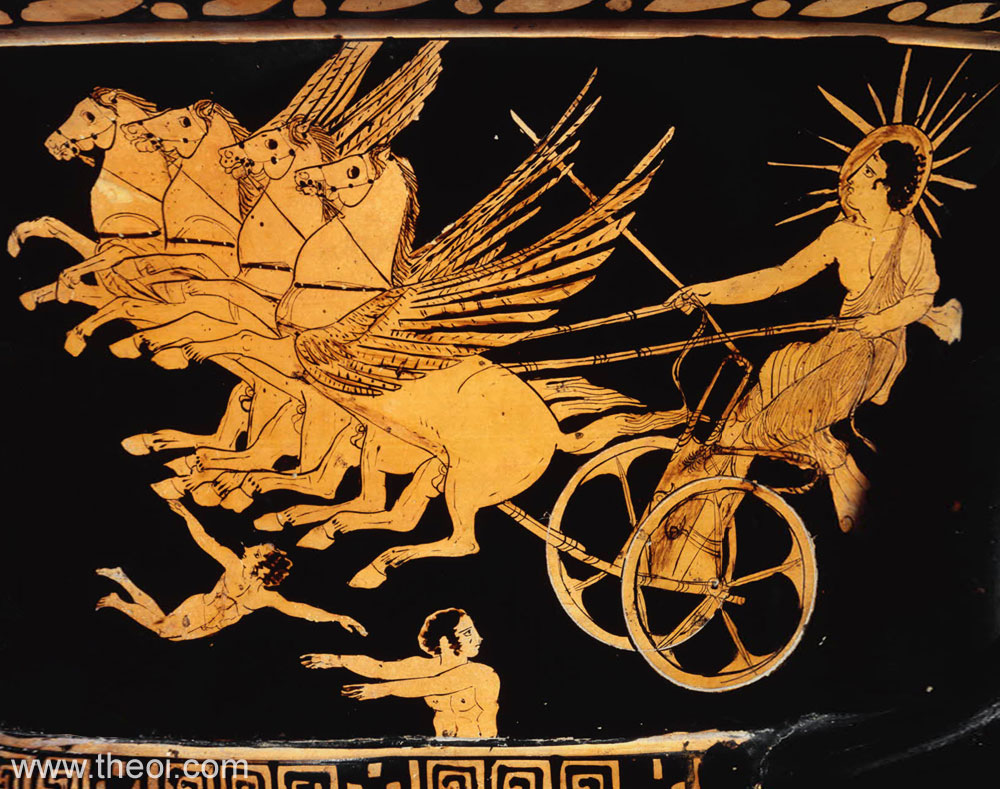
>     The halo may have come from several different sources, including
> classical culture. For example, the Greek god Helios is depicted with rays
> <http://www.theoi.com/image/T17.1Helios.jpg>emanating from his head.
> There also are a few depictions of Apollo with halos. A Roman floor
> mosaic in Tunisia
> <http://upload.wikimedia.org/wikipedia/commons/2/21/Apollo1.JPG> which
> has one such depiction. I’ve also heard discussions about how laurel
> wreaths (used to crown victors in classical societies) could be related to
> the halo.
>
>       In addition to classical sources, the sun disk found in Egyptian
> crowns may have been an early manifestation of a halo-like form.  There
> also are similar forms related to the halo (like the nimbus or aureola)
> found in non-Western art, too. Some think that the halo form traveled from
> West to East, ending up in Ghandara and influencing depictions of the
> Buddha (see one example from the Tokyo National Museum
> <http://upload.wikimedia.org/wikipedia/commons/b/b8/Gandhara_Buddha_%28tnm%29.jpeg>
>  from
> the 1st-2nd centuries CE).1
>        Christians adopted the round halo from their contemporaries, using
> the circular shape to connote perfection, divinity, and holiness. I know of
> one early image, a ceiling mosaic from the necropolis underneath St.
> Peter’s (see above), which may depict Christ or Sol Invictus (the later sun
> god of the Roman empire). This image pre-dates the 4th century, and could
> be a very early example of the halo in a Christian context. After this
> point, halos were used for Christ and the Lamb of God, angels, the Virgin,
> and eventually saints.
>

--

---
You received this message because you are subscribed to the Google Groups
""Minds Eye"" group.
To unsubscribe from this group and stop receiving emails from it, send an email
to [email protected].
For more options, visit https://groups.google.com/d/optout.