On 03/30/2010 11:20 AM, Jones Beene wrote:
>
> This came up a few years ago as a possible explanation to the Moller
> MAHG which was claimed to have a gigantic COP >20 until Naudin’s silly
> measurement error was discovered by George Holz. BTW – side note - to
> his discredit, JLN has never acknowledged the error, and it is probably
> still on his site, alone with the MEG BS. You cannot trust Naudin’s
> measurements, as a general rule.
Jones, I know this is old news, but could you either summarize Holtz's
argument or post a link to it?  I didn't find anything more than a very
vague overview of it in a quick web search, where it was asserted that
he multiplied the duty cycle in twice in computing the power.

I just looked over Naudin's page on this:

http://jlnlabs.online.fr/mahg/tests/mahg2c.htm

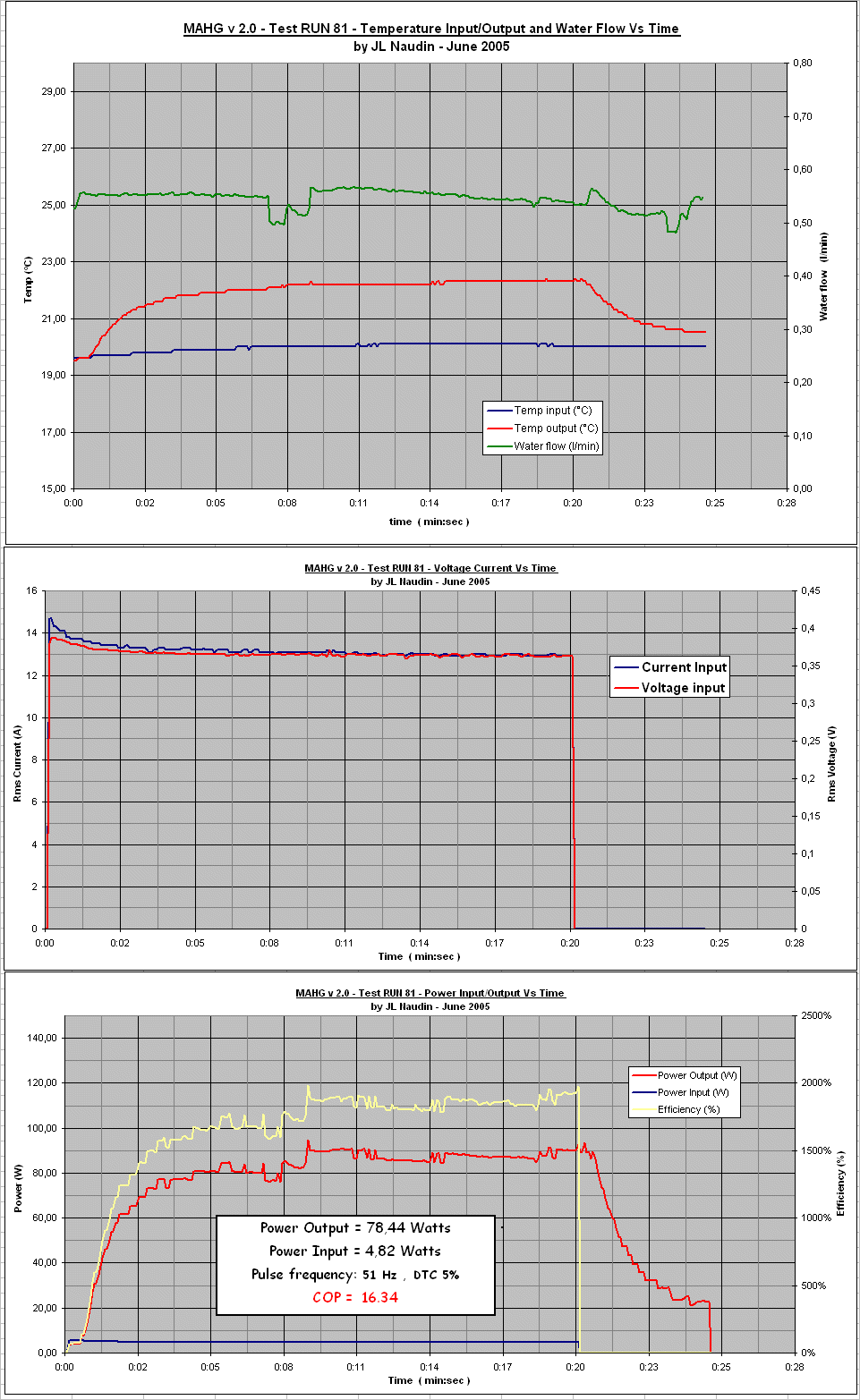
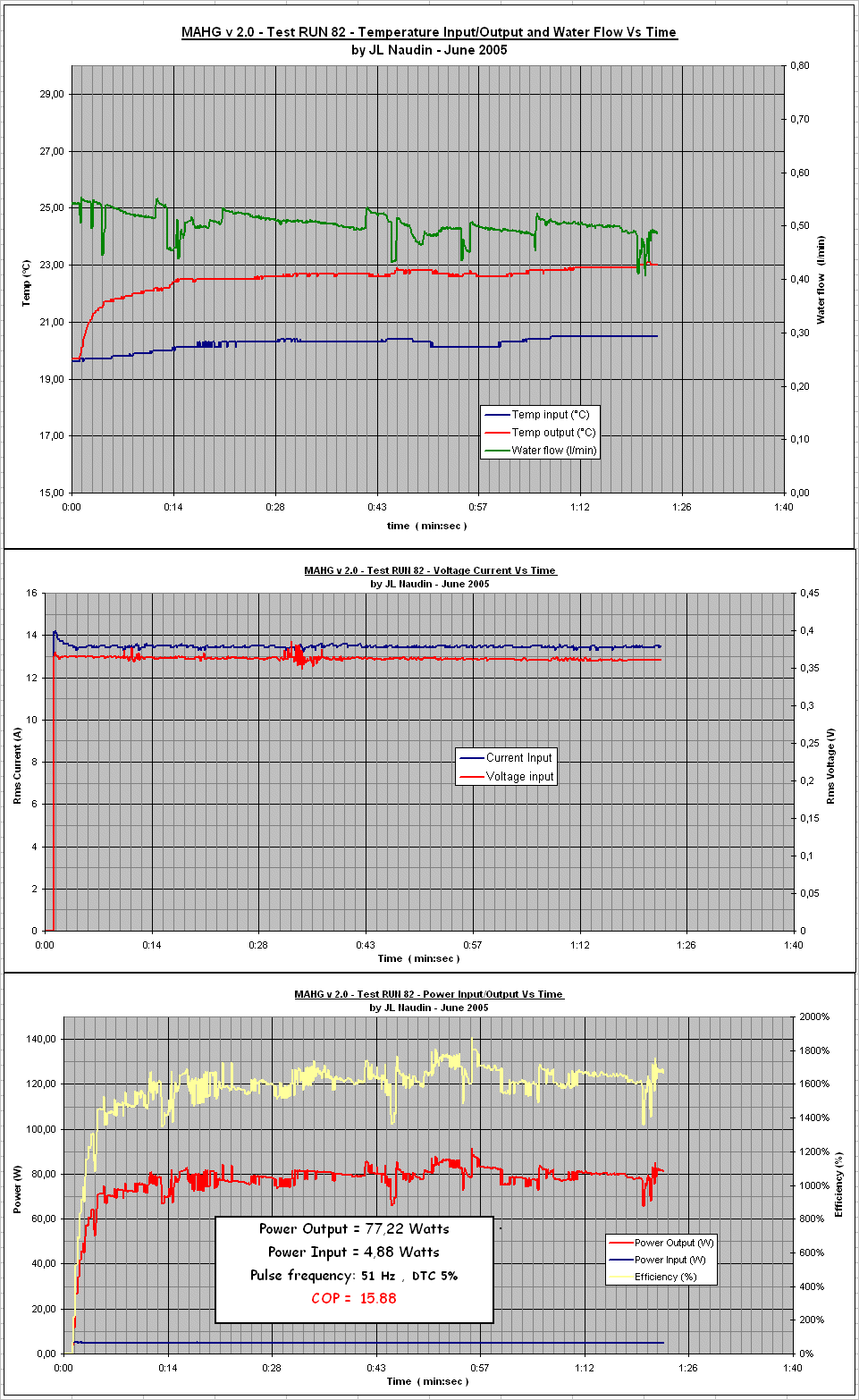
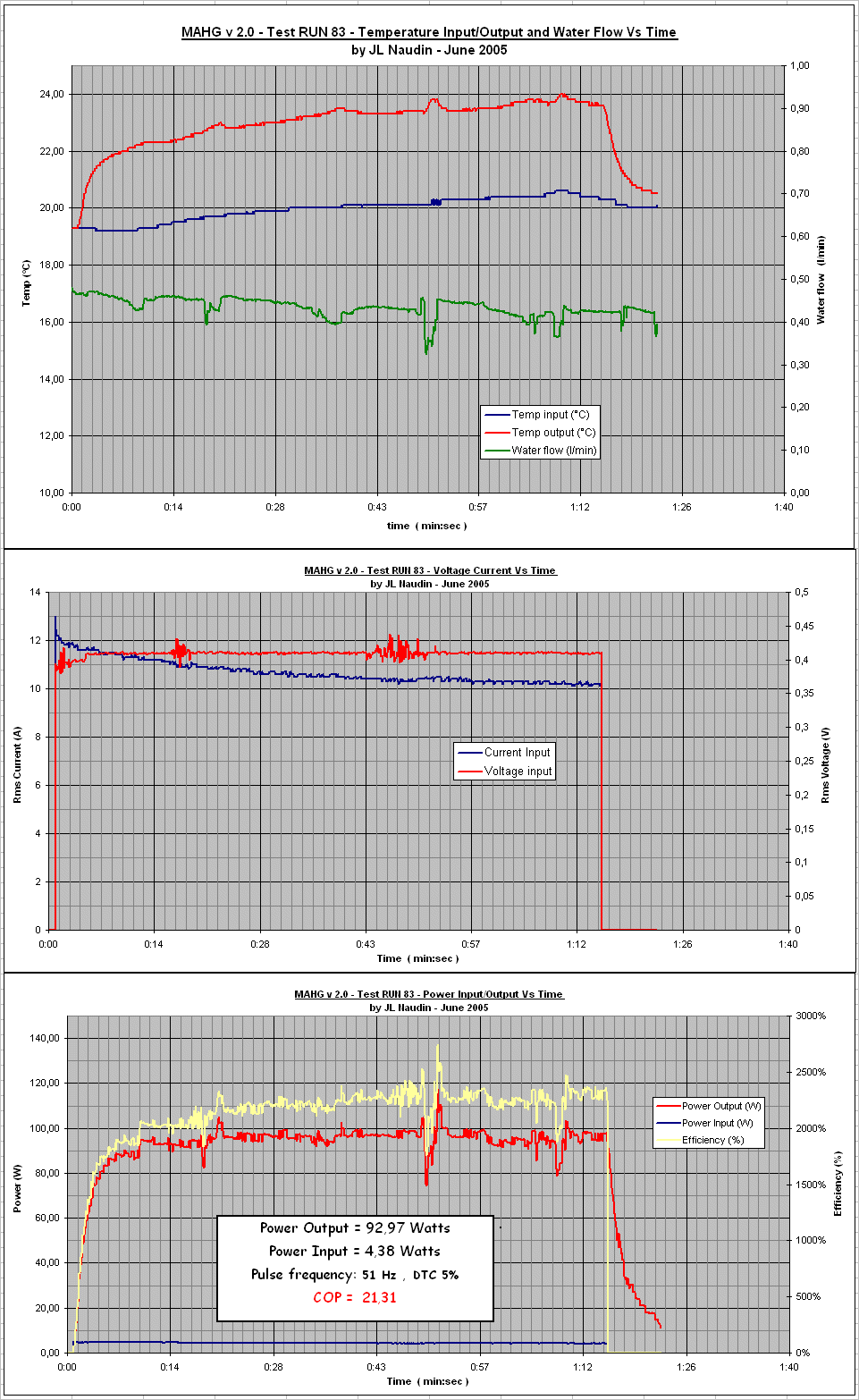
and, as you noted in a Vortex post long-long-ago, JLN's measuring RMS
volts and RMS amps going into the device:

http://jlnlabs.online.fr/mahg/tests/mahg2r81data.gif
http://jlnlabs.online.fr/mahg/tests/mahg2r82dat.gif
http://jlnlabs.online.fr/mahg/tests/mahg2r83dat.gif

If the "true RMS" measurements are reasonably true, and if the I and V
signals are in phase, then their product should be the average power
regardless of the duty cycle, and that would match what JLN claims; I
don't see how you could get a factor of 20 error there.  (If I and V are
not in phase then input power was less than measured.)

Unfortunately he never showed actual real time volts and amps going in,
so it's anybody's guess how "true" the RMS numbers from the Fluke 123
really are (unless you've run your own tests on that particular meter).
 Sticking the label "true RMS" on something is a lot easier than making
it really produce a true RMS reading, particularly when it's generating
a real time trace rather than a single number.  Presumably the input
signal is an asymmetric square wave, and doing the power calculation by
hand starting from scope shots of the raw volts and amps would have been
pretty easy, and would have produced a solid sanity check of the RMS
numbers.

As to Naudin's measurements ... In general I think you can trust them
just fine.  He documents and measures with care.  The problem is, IMHO,
you can't trust his conclusions.  In this case, as noted, we're missing
two of the most vital measurements, which are raw volts and amps, so to
some extent we're just looking at his conclusions.

*  *  *

For a pulsed voltage of duty cycle p, peak volts v, and peak current i,
average squared volts are

   p * v^2

and RMS volts is the square root of that, so

  v(RMS) = sqrt(p) * v

Similarly RMS current is

  i(RMS) = sqrt(p) * i

And their product will be

  p * i * v

and that's certainly the average power, assuming, again, that the volts
and amps are square waves, in phase, going up from zero to a fixed peak,
with duty cycle p.