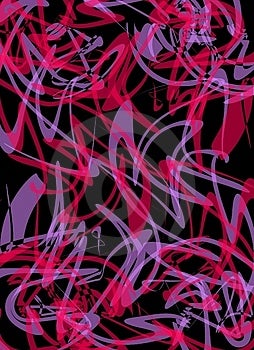
Mike,
Invariant representations are not adapted. They are *created* each time
you
see something. Then they are compared to determine if the image is
familiar
to you. Some may be kept in storage for all your life.

Your challenge is very easy. I already explained how to do each and every
detail: automatically, with a camera that looks at the picture and applies
EI to obtain the invariant representations. I do not anticipate this
actually happening for a few years because new hardware would be
required,
which does not exist yet.

You must also account for the fact that you can't keep asking me to
endlessly explain the same thing.

Sergio


-----Original Message-----
From: Mike Tintner [mailto:[email protected]]
Sent: Saturday, July 21, 2012 11:38 AM
To: AGI
Subject: Re: [agi] Re: How the Brain Works -- new H+ magazine article, by
me
DRAW what you mean.

Here are examples of a "line".Explain visually how an existing
concept/invariant representation of "line" can be adapted - VISUALLY - to
embrace the endless new lines that you may be presented with.

http://freethumbs.dreamstime.com/267/big/free_2672831.jpg

http://media.smithsonianmag.com/images/Jackson-Pollock-1943-Mural-631.jpg
Saying there are infinite line representations explains nothing. You have
to
recognize how all the examples you may have in your head classify as a
"line" - what they have in common. And to distinguish a "line" from
another
shape - for example, a blob or blot.
I am pretty sure, Sergio, that you have v. little idea what you are
talking
about. Show - draw - me wrong.
(So far you've always backed out and disappeared when seriously
challenged).
--------------------------------------------------
From: "Sergio Pissanetzky" <[email protected]>
Sent: Saturday, July 21, 2012 5:14 PM
To: "AGI" <[email protected]>
Subject: RE: [agi] Re: How the Brain Works -- new H+ magazine article, by
me
Mike,

you are wrong, and I have explained why not too long ago. The number
of invariant representations - or hierarchies of block systems, as I
call them
- is infinite numerable. That accounts for all, repeat, all possible
invariant representations of "line" that can exist in the brain,
because the brain is discrete.

There is one invariant representation for *each* line. It is invariant
because you would recognize *that* particular line even if I turned it
upside down for you.

No, all those invariant represntations are not stored in thebrain
ready to use. They are created, one at a time, when you see that line.
Compare R and Я. Many are stored. For example R is stored, but Я is
usually not unless you speak Russian.

Mike, you need to refine your arguments. Your second step is routine,
it is behind us now. Try to say something new.

Sergio


-----Original Message-----
From: Mike Tintner [mailto:[email protected]]
Sent: Saturday, July 21, 2012 3:14 AM
To: AGI
Subject: Re: [agi] Re: How the Brain Works -- new H+ magazine article,
by me

Arakawa:When a neural system learns some pattern, say that of a line
segment, it recognizes line segments regardless of their orientation
or length (hence 'invariant").

What Sergio was saying was : "wait a moment, do I really understand
this - what Hawkins is saying...?"

To do that, you first have to say as you have done: "ok what say would
be an invariant representation of a line...?"

At this stage, you can casually float over the problem, and think: "
oh well, there must be an invariant representation of  a line...
stands to reason"

But if you take the second step, and actually start thinking about
different kinds of line, and what could possibly be an invariant
representation of them all - that could be transformed into them all -
you will find there is no such invariant representation - and Hawkins
has neither posited one in relation to any object, incl. Jennifer
Aniston (or a line), nor explained how it could be universally
transformed into any variation of a given object.

Similarly, people are thinking : "of course the world consists of
patterns..

stands to reason.. I know that this is a "street" and by god it looks
like that "street" to me, and that  other one - I recognize all these
"streets"
without a problem - therefore there must be a common
"pattern",invariant representation" which enables me to recognize them
all.
But people never go to the second step, and start thinking about what
form those patterns (of things like a street) could take. If you do,
you'll find there are neither such patterns in the world, nor in your
mind.

That's not how the brain achieves its magic feat of recognizing the
similarity between diverse forms, objects and scenes.

Everyone here tends to be Platonist - "of course there is an essential
idea/ invariant representation/ pattern for objects - an essential
"chair".."

But Plato didn't say what it was, Hawkins hasn't said what it is, in
fact no one has said it  ... and it doesn't exist.

--------------------------------------------------
From: "ARAKAWA Naoya" <[email protected]>
Sent: Saturday, July 21, 2012 3:10 AM
To: "AGI" <[email protected]>
Subject: Re: [agi] Re: How the Brain Works -- new H+ magazine article,
by me
On 2012/07/21, at 4:59, Mike Tintner wrote:
Sergio: I noticed that Jeff Hawkins in On Intelligence writes about
"invariant representations," which are hierarchies, but never
explains how they come into existence. I am just a little confused.
I wonder whether you have an outstanding point there. Everyone
*talks* about "invariant representations". Does anyone anywhere have
any AI-worthy explanation of their nature/origin whatsoever?

(Of course, invariant representations overlap with concepts. There
are psych/phil. explanatory theories of concepts, but that's why I
put in "AI-worthy". I suspect they are all v. vague).
I interpreted "invariant representations" in the writing of Hawkins
as learned patterns.
When a neural system learns some pattern, say that of a line segment,
it recognizes line segments regardless of their orientation or length
(hence 'invariant").
"Invariant representations" in a neural network would be distributed
so that one cannot point out saying, for example, *this* is the
representation of a line segment...

* The Gibsonian invariance might be a different notion while he may
have made the term popular among cognitive scientists (?).
--
Naoya ARAKAWA


-------------------------------------------
AGI
Archives: https://www.listbox.com/member/archive/303/=now
RSS Feed:
https://www.listbox.com/member/archive/rss/303/6952829-59a2eca5
Modify Your Subscription:
https://www.listbox.com/member/?&;
Powered by Listbox: http://www.listbox.com
-------------------------------------------
AGI
Archives: https://www.listbox.com/member/archive/303/=now
RSS Feed:
https://www.listbox.com/member/archive/rss/303/18883996-f0d58d57
Modify Your Subscription:
https://www.listbox.com/member/?&;
d2
Powered by Listbox: http://www.listbox.com


-------------------------------------------
AGI
Archives: https://www.listbox.com/member/archive/303/=now
RSS Feed:
https://www.listbox.com/member/archive/rss/303/6952829-59a2eca5
Modify Your Subscription:
https://www.listbox.com/member/?&;
Powered by Listbox: http://www.listbox.com
-------------------------------------------
AGI
Archives: https://www.listbox.com/member/archive/303/=now
RSS Feed: https://www.listbox.com/member/archive/rss/303/18883996-f0d58d57
Modify Your Subscription:
https://www.listbox.com/member/?&;
d2
Powered by Listbox: http://www.listbox.com


-------------------------------------------
AGI
Archives: https://www.listbox.com/member/archive/303/=now
RSS Feed: https://www.listbox.com/member/archive/rss/303/6952829-59a2eca5
Modify Your Subscription:
https://www.listbox.com/member/?&;
Powered by Listbox: http://www.listbox.com